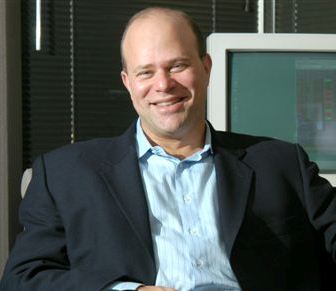
David Alan Tepper is a billionaire hedge fund manager and sports team owner (the Carolina Panthers) who built his fortune through distressed debt investing. He developed an early aptitude for numbers, memorizing baseball statistics on cards from his grandfather and displaying what he claims is a photographic memory. His first two investments were given to him by his father, and both went bankrupt.
This did not deter Tepper from continuing to invest. He worked as a credit analyst at Equibank after graduation, then earned his MBA from Carnegie Mellon University in 1982. He also worked in Republic Steel’s treasury department and at Keystone Mutual Funds in Boston.
Goldman Sachs recruited him in 1985 to join its high-yield group. He became the head trader within six months. He launched Appaloosa Management in early 1993. Appaloosa generated a 61% return in 2001, and in 2009, it made $7 billion by buying financial stocks at bargain-basement levels before they recovered.
Here are 10 stocks Tepper piled into in Q3 2025.
#10 Mohawk Industries Inc. (MHK)
Mohawk Industries is one of the world’s largest flooring manufacturers. It sells carpet, ceramic tile, laminate, wood, stone, and vinyl flooring. Tepper’s position in Mohawk is quite small relative to his other holdings. This might be more of a value play or cyclical bet. Housing and construction markets drive flooring demand, and Tepper likely sees opportunity in the stock trading below historical valuations. He may be betting on a housing market recovery.
As of the third quarter, Tepper held 161.50k shares, with a market value of $20.82 million. This represented 0.28% of his portfolio. His investment increased by 148.46%.
#9 Goodyear Tire & Rubber Co. (GT)
Despite currently sitting at a loss, Tepper likely sees significant upside potential as the tire industry is cyclical and capital-intensive, and GT stock can spearhead a rebound.
Tepper held 5.14M shares, with a market value of $38.45 million. This represented 0.52% of the portfolio, and his purchases increased by 496.44%.
#8 iShares China Large-Cap ETF (FXI)
The iShares China Large-Cap ETF provides exposure to large Chinese companies listed on the Hong Kong Stock Exchange. It tracks the FTSE China 50 Index. It concentrates holdings in major Chinese financials, technology, and consumer companies.
China remains a contrarian play for many Western investors, but Tepper is betting that stimulus measures or simply valuation mean-reversion could lead to more upside. Using FXI gives him broad exposure without the risk that comes with buying individual Chinese stocks.
1.11M shares were held by Appaloosa at the end of Q3, with a market value of $45.66 million. 110,000 shares were added (an increase of 11%).
#7 Baidu Inc. (BIDU)
Baidu is China’s leading search engine and AI technology company, often called the “Google of China.” China’s tech sector has faced a litany of problems in recent years, but AI is not one of them. Tepper’s probably betting that Baidu’s AI technology is undervalued compared to Western peers.
Appaloosa held 1.04M shares, with a market value of $137.70 million. This represents 1.86% of the portfolio. Tepper’s buys increased by 67.2%.
#6 Taiwan Semiconductor Manufacturing (TSM)
Taiwan Semiconductor Manufacturing Company is the world’s largest and most advanced semiconductor foundry. It makes chips for virtually every major tech company, be it Nvidia or AMD.
TSM is one of Tepper’s larger positions (4.01% of the portfolio) and it’s working beautifully. He keeps adding to it steadily, which tells you he’s not worried about taking profits yet. The AI boom has been a massive tailwind for TSMC since they fabricate the most advanced chips. Tepper’s essentially betting that AI infrastructure spending stays strong and that TSM maintains its technological lead over competitors like Samsung and Intel.
1.06M shares were held with a market value of $296.05 million.
#5 Nvidia Corp. (NVDA)
Nvidia sells GPUs and AI accelerators that power AI computing and data centers. The company has become synonymous with the AI build-out.
Tepper is sitting on a 53% gain while still adding shares. Perhaps Tepper believes the AI infrastructure boom can continue, with Nvidia maintaining its stranglehold on the market for training chips. The company’s software ecosystem (CUDA) creates massive switching costs, and competitors are still years behind on performance. Tepper’s probably comfortable with the valuation because he sees continued earnings growth justifying it, even if the multiple doesn’t expand further. Q3 2025 was a blockbuster, though many are worried about Nvidia’s increasing inventory figures.
Tepper owned 1.90M shares (4.8% of the portfolio), an increase of 8.57% in the third quarter.
#4 KraneShares Trust (KWEB)
KraneShares Trust is an ETF that targets Chinese internet and technology companies like Alibaba, Tencent, JD.com, and others. KWEB is one of Tepper’s largest positions (4.21% of the portfolio), and he’s been buying aggressively (an increase of 85% in Q3). He’s already up 15% on the position and clearly thinks there’s more juice left.
This is a big, concentrated bet on Chinese internet stocks recovering from their brutal 2021-2023 drawdown. Tepper’s timing here hints that he thinks the worst of China’s tech crackdown is over and that these companies are trading way below their intrinsic value. With the Chinese government now pivoting to support the economy and tech sector, he’s positioning for what could be a major mean-reversion trade.
#3 Qualcomm Inc. (QCOM)
Qualcomm is a leading designer of mobile processors and wireless technology. It sells chips and licensing essential patents for smartphones, automotive, and IoT devices. The company’s Snapdragon processors power many of the world’s smartphones, and it’s expanding into automotive and AI applications.
Unlike pure-play AI stocks, Qualcomm has a steady cash-cow business from licensing and established relationships with every major phone manufacturer. Tepper likely sees this as a safer way to play tech growth with less volatility than some of his other holdings.
Tepper held 1.25M shares, with a market value of $207.12 million. His purchases were up by 255.71% in the quarter.
#2 Advanced Micro Devices (AMD)
Advanced Micro Devices sells high-performance CPUs and GPUs. The company has gained significant market share from Intel in processors and competes with Nvidia in AI accelerators and data center GPUs.
This was a new position for Tepper, and the size shows serious conviction in AMD’s story. Appaloosa bought 950k shares, with a market value of $153.70 million. That represents about 2% of overall holdings.
Tepper is likely betting on AMD continuing to take server market share from Intel, plus gaining traction in AI accelerators where Nvidia currently dominates. AMD’s MI300 chips are competitive in certain AI workloads already. AMD might offer better risk-reward if you believe the AI spending continues but gets more diversified across chip suppliers.
#1 Whirlpool Corp. (WHR)
Whirlpool Corp. is one of the world’s largest home appliance manufacturers. It makes refrigerators, washers, dryers, ovens, and other major appliances under brands like Whirlpool, Maytag, KitchenAid, and others.
Tepper massively increasing his position (by 1966.95%) in a rapidly declining stock seems to be a deep value conviction. Whirlpool has been beaten down by several serious problems, but Tepper seems to think that the market is pricing in too much pessimism. At some point, appliances need replacing regardless of economic conditions, and Whirlpool’s brands and distribution network are hard to replicate. Tepper’s likely betting on a cyclical recovery in housing and consumer spending, or possibly even sees the company as a takeover target given how cheap it’s gotten.
Appaloosa held 5.50M shares, with a market value of $432.30 million.