












Why $3 Million Isn’t Enough to Guarantee Financial Security
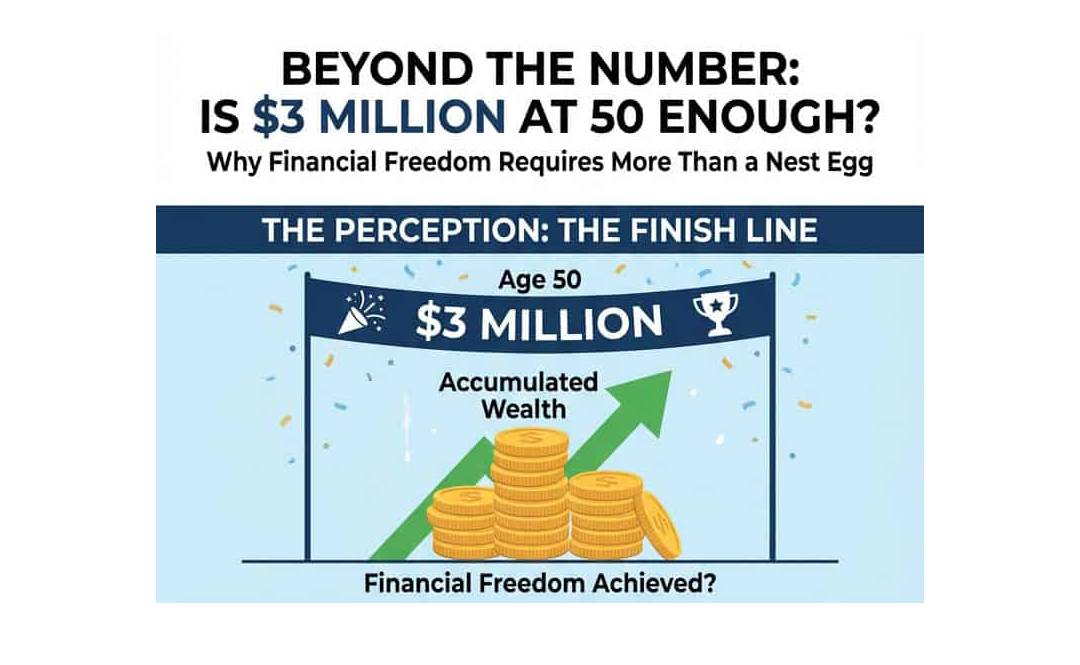
Most people would probably be thrilled to reach the age of 50 with $3 million and a $1 million house. But this Reddit poster is having doubts about how well they’re actually doing. And while that might seem surprising, the reality is that $3 million doesn’t automatically guarantee financial freedom in today’s economy, not when rising costs, longer lifespans, and shifting expectations can make even a large nest egg feel surprisingly fragile.
You may be in a similar situation where you’ve managed to accumulate a nice amount of wealth by age 50, but just aren’t feeling as financially secure as expected. That feeling is more common than you might think, and in many cases, it’s rooted in real financial pressures, not just mindset.
Give Credit Where Credit Is Due
Reaching the age of 50 with $3 million saved is not a small accomplishment. Many people never come close to that level of financial security at any point in their lives. If you are feeling uncertain about your finances, it helps to pause and recognize what you have already achieved. Building that kind of portfolio usually requires discipline, consistency, and long-term thinking. Those efforts deserve acknowledgment before any concerns are addressed.
Success Usually Comes With Sacrifice
Financial progress at this level rarely happens without trade-offs. You may have stayed in a demanding job longer than you wanted, lived below your means, or delayed lifestyle upgrades others enjoyed. You may have spent years learning how to invest wisely rather than chasing quick wins. These choices add up over time. Remembering the sacrifices behind your success can help ground your perspective.
Financial Freedom Looks Different Today
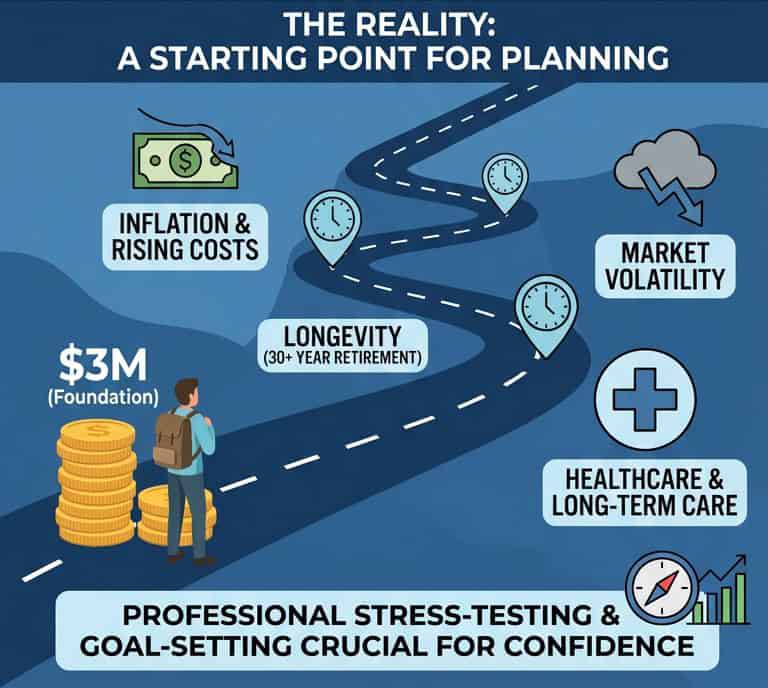
Even after recognizing success, it is reasonable to feel unsure. Retirement today is more expensive and more complex than it was for prior generations. Health care costs alone can reach well into the millions over a long retirement. Inflation and market volatility also reduce how far a portfolio stretches over time. As a result, a number that once symbolized complete freedom may now feel less certain.
Set Clear Goals to Understand Your Position
Confidence often comes from clarity, not just from having a large balance. Setting a specific retirement goal helps you understand whether you are truly on track. For example, someone with $3 million at age 50 who wants $6 million by age 65 may already be well positioned, even without additional contributions. A higher goal, such as $10 million, may require continued saving, but that does not mean failure or poor planning. It simply means aligning actions with expectations.
Why $3 Million Can Still Feel Uncomfortable
A $3 million portfolio might generate roughly $120,000 per year under a commonly cited withdrawal guideline, before taxes. That income must still cover housing, health care, family responsibilities, and unexpected expenses. For households with higher spending or long-term care concerns, that amount may not feel especially secure. This disconnect often explains why even financially successful individuals experience anxiety. The concern is not irrational, but it does need context.
Professional Guidance Can Ease Uncertainty
When confidence is low despite strong savings, an outside perspective can help. A financial advisor can translate abstract worries into concrete numbers and realistic scenarios. They can show how your portfolio holds up under market downturns, inflation spikes, longer lifespans, and medical costs. This type of stress testing often provides reassurance, even when adjustments are needed. Clarity tends to reduce anxiety more effectively than guessing.
Financial Freedom Is a Process, Not a Number
Modern financial freedom is rarely defined by a dollar amount alone. For many people, $3 million feels like a finish line, but in practice, it is the starting point for thoughtful planning. Some people with far less saved feel confident because they understand their plan and trust it. Adopting that mindset can be just as important as growing the balance itself. With planning, confidence often follows.