
Where we heard itCNBC interview, “Redwire CEO Peter Cannito: We’re at the start of massive growth in space,” Oct. 6, 2026. Speaker: Peter Cannito, chairman and CEO of Redwire. Watch at CNBC
Shares of RedwireRDW rose 3.36% in Tuesday’s regular session after Chairman and CEO Peter Cannito appeared on CNBC. The stock traded at $10.78 as of 12:15 PM ET on October 6, 2026, and closed at $10.62, up 1.8% on the day.
His core claim was that orbital data centers represent “the early days” of a new infrastructure capability that, in his words, “is going to be global.”

Cannito’s Case: Every Space Market Is an Infrastructure Market
Cannito describes Redwire as “a space infrastructure company.” In his framing, commercial space stations, pharmaceutical development with SpaceX on Starfall, orbital data centers and a future permanent human presence on the lunar surface are all “infrastructure projects” at their core. That central claim is the whole argument. If each of those markets rests on the same foundation of power, structures and hardware, a company supplying that foundation can participate in whichever one scales first.
He then reached for history. Cannito said people are starting to reference the arrival of satellite television broadcasting. He noted that skeptics had argued then that launch capacity was insufficient and orbital mechanics were unproven. It grew into “a really big market” anyway.
The analogy is a reasonable one. It frames today’s doubts about computing in orbit as the kind of engineering and logistics objections a young industry can work through with time and capital.
Cannito extended the idea further. He said Redwire is extending infrastructure into “low Earth orbit and beyond, ultimately to the moon, and probably if you ask Elon Musk, ultimately to Mars,” adding that there are lots of great uses of space coming online now.
What Redwire Looks Like Today
Cannito is the chief executive describing the market for his own company’s products, and no outside party has validated his outlook as a forecast.
Redwire carries a market capitalization of about $2.65 billion. There is no price-to-earnings ratio on file for the company, so investors cannot ground its valuation to a standard earnings multiple.
Redwire’s second quarter at a glance
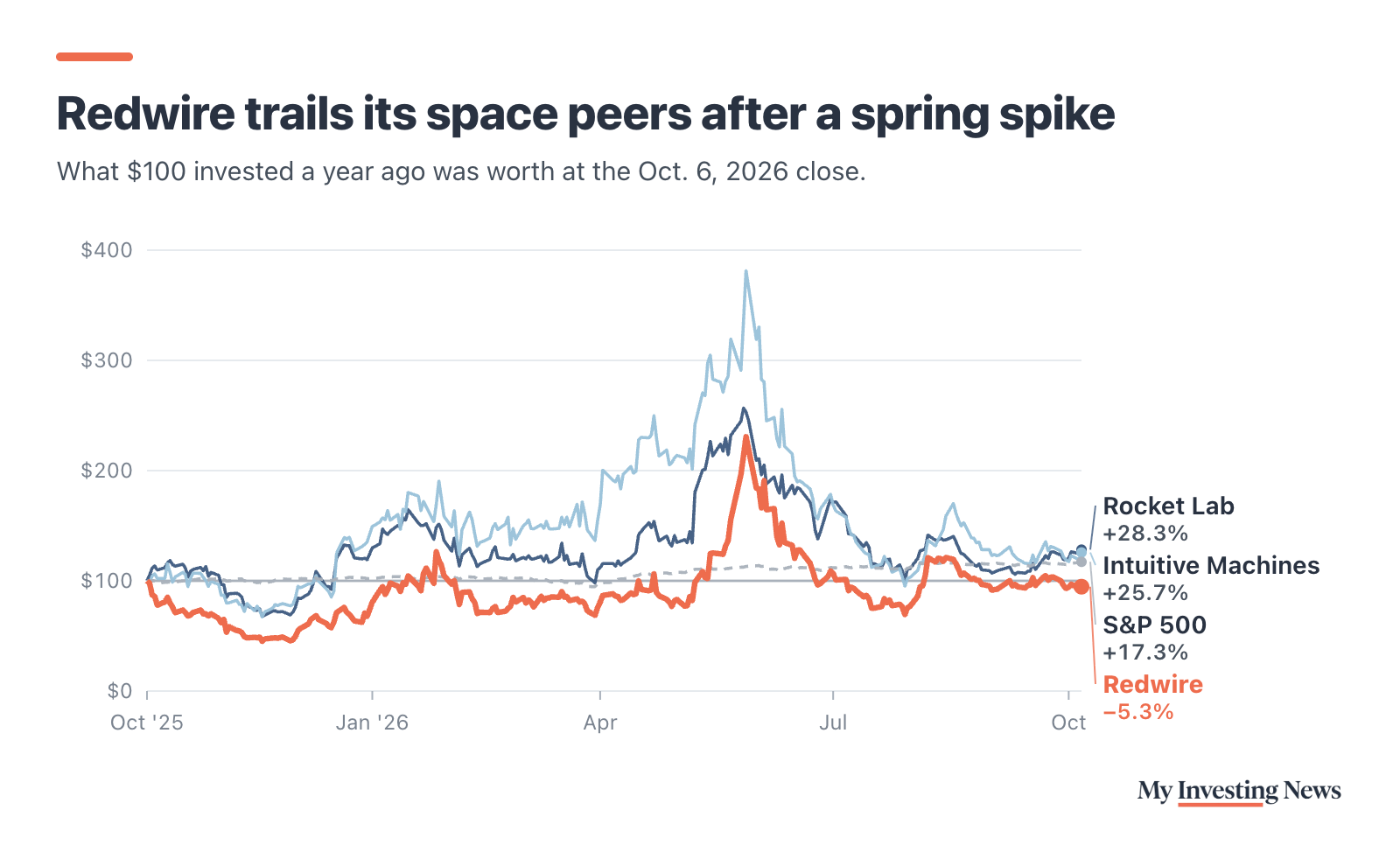
The stock gained 39.7% this year through the October 6 close. Over the past twelve months, though, it fell 5.3%, after more than doubling into late May and then giving those gains back. Over the past week the shares slipped 1.0%, which means Tuesday’s gain followed a soft stretch rather than extending a run.
Drones and Defense Hardware Share the Spotlight
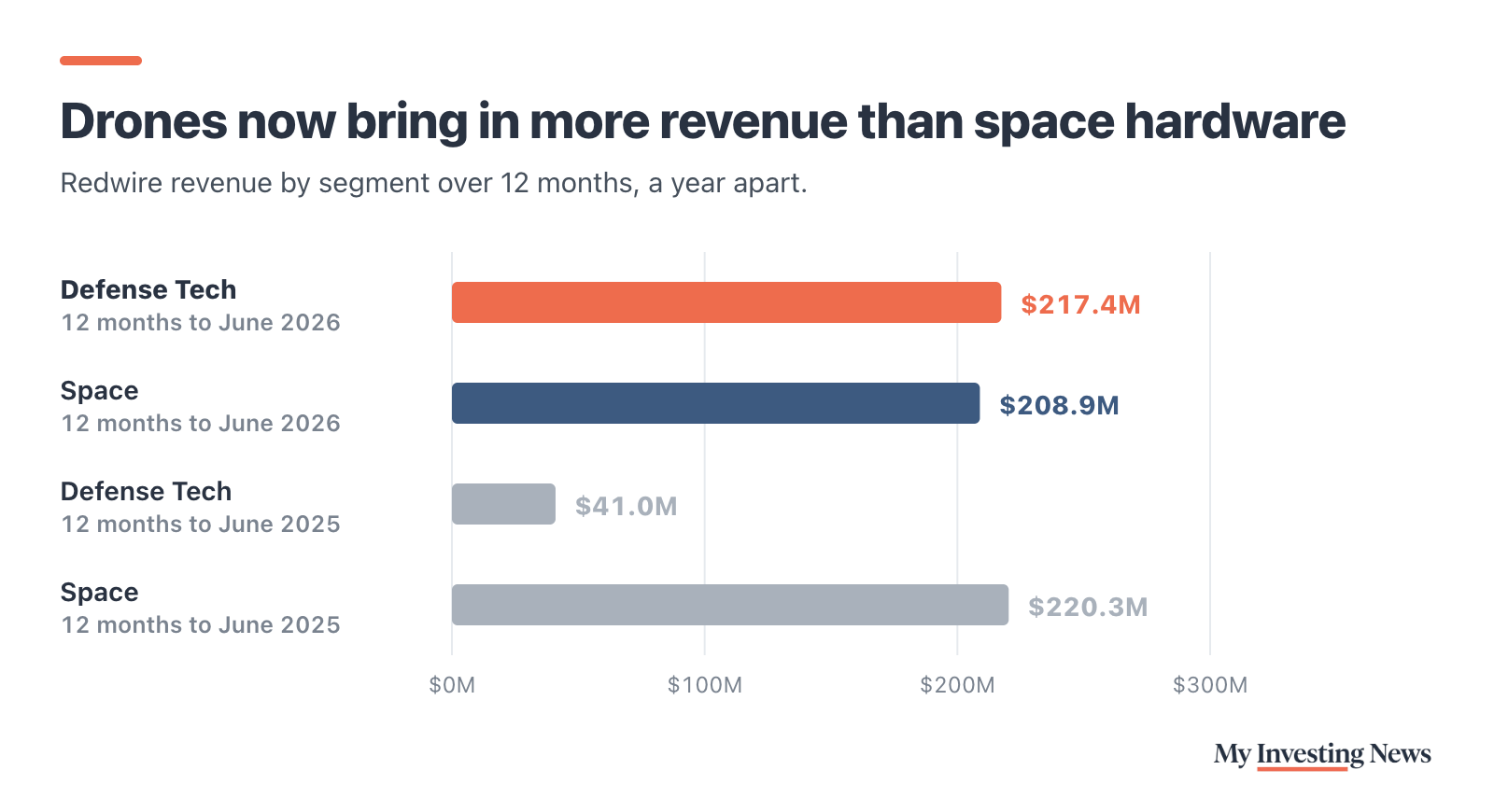
Redwire reports in two segments, Space and Defense Tech. The Defense Tech segment was significantly expanded by the Edge Autonomy acquisition completed in 2025. It delivers autonomous uncrewed aerial systems, intelligence and surveillance payloads and tactical drone systems to military and government customers, including U.S. military branches and NATO allies.
The orbital infrastructure story Cannito told on television describes one part of a company that also sells drones and defense hardware. Redwire reveals this openly in its SEC filings. A reader who heard only the space pitch would still have an incomplete picture of the business behind the ticker. The company employs approximately 1,400 people across North America and Europe.
The space segment ties directly to the Starfall work Cannito described. It includes PIL-BOX, Redwire’s on-orbit pharmaceutical research hardware. Redwire’s SpaceMD subsidiary said in August 2026 that it plans to fly 32 PIL-BOX units on a Starfall mission in 2028.
A Vision Measured Against a Track Record
A chief executive has laid out a market he believes is arriving, with orbital data centers framed as the next chapter of an infrastructure expansion that began with satellite broadcasting. Redwire’s hardware is real and flying, from pharmaceutical research units to solar arrays and defense systems. The timeline Cannito pointed to runs years out, and the stock sits a little below where it stood a year ago despite this year’s gains.
Investors can weigh his vision against that record. Useful markers ahead include the Starfall mission schedule, any named orbital data center customers or contracts, and how the Space and Defense Tech segments contribute as each new quarterly earnings report arrives.
Cannito sees orbital data centers as the start of a global infrastructure build, much like satellite TV once was, and he pitches Redwire as a supplier to whichever space market grows first. The risk is timing: his vision runs years out, Redwire still loses money, and its drone business now brings in more revenue than its space business.