Few market events create more fear of missing out than a blockbuster IPO. A famous founder, a compelling growth story, and a limited supply of publicly traded shares can send a new stock far above its offering price before investors have seen even one quarterly report. SpaceX (NASDAQ:SPCX | SPCX Price Prediction) has now delivered a dramatic example. The company priced its IPO at $135 a share, opened at $150, climbed as high as $225.64, and traded near $113.50 on July 29.
That puts the stock about 50% below its peak and roughly 16% below its IPO price. For My Investing News readers, the story is less about Elon Musk losing a title and more about what can happen when excitement gets ahead of price discipline. Investors building retirement savings, drawing income from a portfolio, or protecting money they may need within the next several years cannot treat a celebrated IPO as a substitute for diversification, valuation work, and a clear limit on risk.
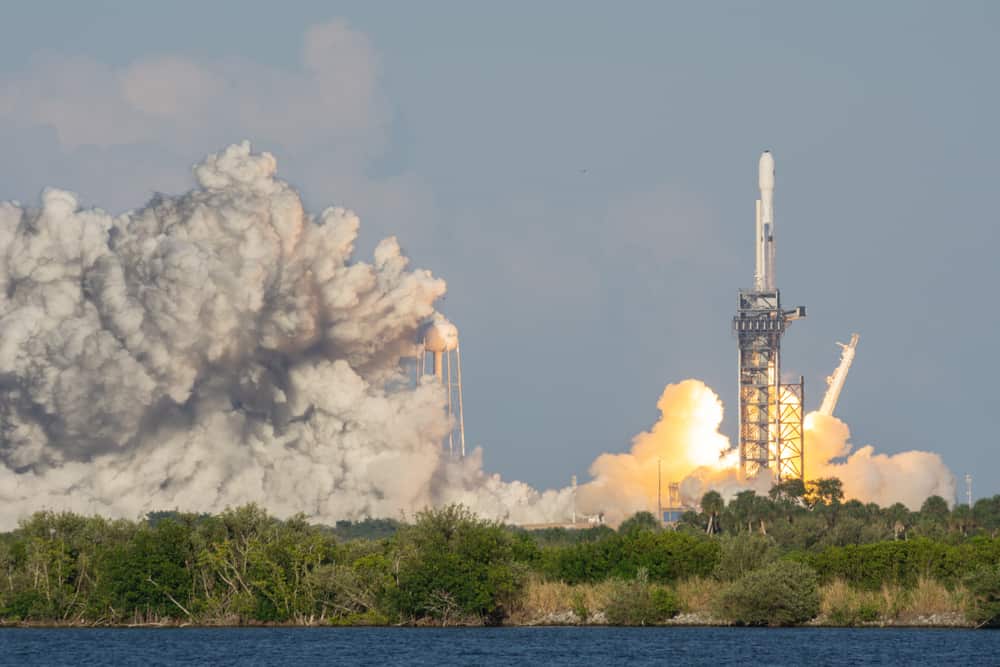
SpaceX’s $225 Surge Has Completely Reversed
SpaceX’s debut initially looked unstoppable. Nasdaq says the shares opened at $150 and finished their first session near $160.95, about 19% above the $135 offering price. Within days, the stock reached an intraday high of $225.64 as demand for a piece of Musk’s space and satellite business overwhelmed concerns about valuation. That momentum has since reversed. At approximately $113.50, a $10,000 investment made at the peak would be worth about $5,030, while the same amount invested at the IPO price would be worth roughly $8,410.
Those figures exclude taxes and trading costs, but they show why entry price matters. A company can have strong technology, valuable assets, and long-term growth potential while its stock still produces painful losses for buyers who pay too much. After a decline near 50%, the shares must almost double just to return to their former high. That recovery math is especially important for retirees and near-retirees, who may have less time to wait through a multiyear rebound.
The Next Share Unlock Could Bring More Volatility
The stock’s next test may come from SpaceX’s unusually detailed lockup schedule. The final prospectus does not identify one date when every insider can sell. Instead, it provides for staged releases tied to quarterly results and fixed dates running through the remainder of 2026, with some holders restricted into 2027. For shares covered by the 180-day schedule, up to 20% may be released after second-quarter results, followed by several potential tranches later in the year.
A lockup release does not mean employees or early investors will sell, and company policies, securities rules, brokerage controls, and individual agreements may still limit transactions. It does, however, increase the number of shares that could reach the market. That can create extra volatility when demand is already weakening. Long-term investors should watch trading volume, the company’s first public earnings reports, and the market’s ability to absorb added supply instead of assuming the first large decline has automatically created a bargain.

Musk’s $600 Billion Loss Was Mostly on Paper
SpaceX’s rise and fall also caused an extraordinary swing in estimates of Elon Musk’s net worth. Recent calculations placed his fortune above $1 trillion at the market peak, with some estimates approaching $1.45 trillion. After SpaceX and Tesla shares retreated, published estimates put the decline in his paper wealth at roughly $600 billion to $650 billion over about five weeks. The exact figure changes with the date, closing prices, and the methodology used to value his holdings, so $600 billion should be understood as an estimate rather than money removed from a bank account.
Musk did not necessarily sell shares or realize a loss. His wealth is concentrated in ownership stakes whose quoted value can change by billions in a single session. That distinction matters for ordinary investors, too. A large position in one employer, one technology theme, or one high-growth stock can make a portfolio look much richer during a rally, but that wealth can disappear quickly before it is converted into cash, bonds, or other diversified assets.
A Great Company Can Still Be an Expensive Investment
The most useful lesson is not that SpaceX is a bad company or that its stock cannot recover. It is that business quality and investment value are not the same thing. Retail investors often do not receive shares at the official IPO price. They may first gain access after trading begins, when a rush of demand has already driven the price higher. At that point, the investor is paying for the company’s prospects plus a sizable excitement premium.
Before buying a newly public stock, it is worth reviewing revenue growth, profit margins, free cash flow, capital spending, dilution, voting control, customer concentration, and valuation relative to realistic future results. Investors should also decide in advance how much they can afford to lose. For someone living on portfolio withdrawals, a speculative holding should be small enough that a 50% decline would not force spending cuts or the sale of other assets at an unfavorable time. Patience is not merely caution. It gives investors more financial information and a better view of how the market values the business after the launch-day excitement fades.

Robots and artificial intelligence are likely to make someone experience the uncanny valley.
OpenAI and Anthropic Could Face the Same Test
SpaceX is also a useful warning for investors anticipating possible public offerings from OpenAI and Anthropic. Both companies have taken steps toward potential IPOs, but the timing is less certain than previously suggested. OpenAI confirmed in June that it confidentially submitted a draft S-1 to the Securities and Exchange Commission, while explicitly saying that it had not decided when to go public and that the process could take a while.
Anthropic has also filed confidentially, but its timing remains dependent on market conditions and regulatory review. A confidential filing gives a company flexibility. It does not guarantee that shares will begin trading within months. If either offering proceeds, investors should wait for the public filing and study revenue quality, computing costs, cash requirements, customer concentration, strategic partnerships, governance, and the proposed valuation. A familiar name and a fast-growing industry can attract huge demand, but neither guarantees that the stock will reward buyers who enter at the first available price.
Key Takeaway for Long-Term Investors
SpaceX’s rapid round trip shows why a successful IPO and a successful investment are not always the same thing. The company raised a record amount of capital and remains a major force in launch services and satellite communications, yet investors who bought during the early surge have suffered steep losses. The decline does not prove the stock is now cheap, just as the original rally did not prove it was worth $225 a share.
The practical response is to set a maximum position size, avoid using money needed for near-term expenses, and resist buying solely because a founder or technology dominates the headlines. Retirees and investors approaching retirement should be particularly careful because a major early loss, combined with ongoing withdrawals, can permanently weaken a portfolio’s ability to recover. Investors interested in SpaceX, OpenAI, Anthropic, or another heavily promoted IPO may be better served by waiting for several earnings reports, watching how share unlocks affect supply, and buying only when the valuation fits a written long-term plan.