
July was ugly for big technology stocks. The Nasdaq-100 dropped 6.61%, its worst month since March 2025, as some of the market’s biggest growth names came under pressure. For investors who depend on their portfolios for income, though, the selloff highlighted an interesting corner of the ETF market: funds that sell call options against Nasdaq exposure to generate monthly distributions.
Three of the better-known choices take noticeably different approaches. The NEOS Nasdaq-100 High Income ETF (NASDAQ: QQQI) leans hardest into monthly distributions and tax-aware options management. The JPMorgan Nasdaq Equity Premium Income ETF (NASDAQ: JEPQ) combines an actively selected stock portfolio with an options overlay. The Global X Nasdaq 100 Covered Call & Growth ETF (NASDAQ: QYLG) writes calls against only about half its portfolio, leaving more room to participate when technology stocks rebound. None eliminates market risk, and a big distribution should not be confused with a guaranteed return.
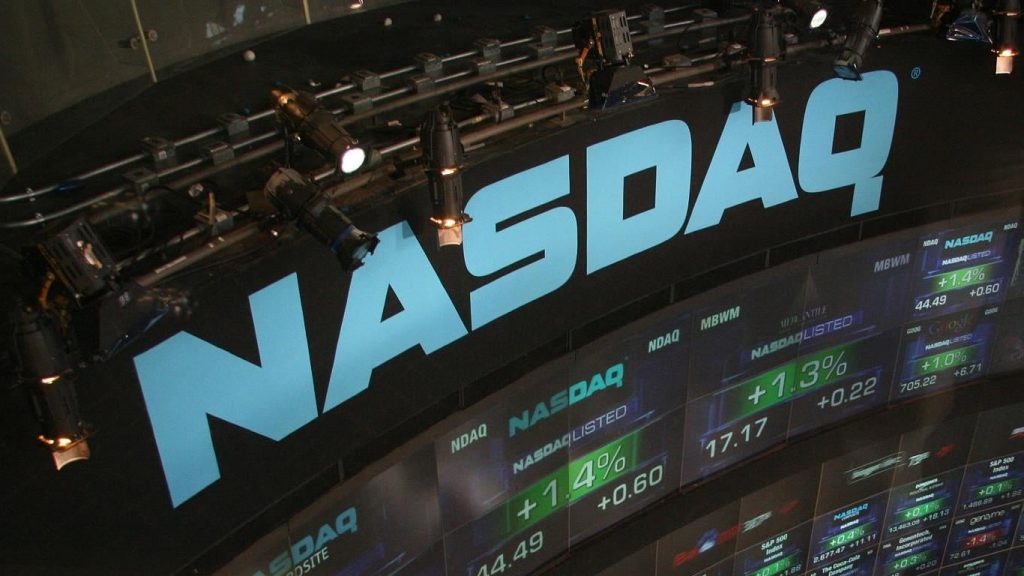
Why a Nasdaq Selloff Can Help Call Writers
Covered-call funds own stocks and sell call options against some or all of that exposure. The buyer pays a premium for the right to participate in future price gains above a specified level. The fund keeps that premium and can use it as part of the cash available for distributions. When implied volatility rises, option prices generally rise as well, all else equal, which can make periods of market stress more productive for option sellers. That is the attraction. The catch is just as important: selling calls gives away some upside if stocks surge, and the premium does not prevent the underlying portfolio from losing money in a serious decline.
That tradeoff matters more for retirees than the headline yield might suggest. Monthly cash flow can be useful when a portfolio is helping cover living expenses, but the distributions are not fixed like the coupon on an individual bond held to maturity. They can change from month to month, and some may represent capital gains or return of capital instead of ordinary investment income. Investors should look at total return, taxes, expenses and the amount of Nasdaq risk they are taking, not simply whichever fund currently displays the biggest distribution percentage.
QQQI: The High-Distribution Choice With a Tax Twist
QQQI is the most income-focused of the three. As of July 31, NEOS listed a 14.01% distribution rate and a 0.68% management fee. Its July distribution was $0.6346 per share, following $0.6572 in June. The fund held about $14.15 billion in net assets as of Aug. 13. NEOS owns a portfolio tied to the Nasdaq-100 and actively manages an index-options strategy around it, including NDX options that qualify as Section 1256 contracts. Under federal tax rules, gains and losses on qualifying Section 1256 contracts are generally treated as 60% long-term and 40% short-term regardless of the holding period.
There is an important catch for anyone seeing 14% and mentally turning it into a 14% investment return. QQQI’s July Rule 19a-1 notice estimated that the entire $0.6346 distribution was return of capital for book purposes. NEOS warns that these are preliminary estimates, not final tax reporting, and that return of capital can reduce an investor’s cost basis, potentially increasing taxable gain later when shares are sold. Final tax treatment comes on Form 1099-DIV. For retirees holding QQQI in a taxable brokerage account, that tax structure may matter. It still does not make the distribution free money or protect the portfolio from a falling Nasdaq.

JEPQ: The Lower-Cost Giant of the Group
JEPQ is the heavyweight here, although not remotely as large as the original draft suggested. JPMorgan reported about $41.4 billion in fund assets in early August, compared with roughly $14.2 billion for QQQI and $169 million for QYLG. JEPQ charges 0.35% annually and, as of Aug. 4, JPMorgan reported a 10.69% 12-month rolling dividend yield. Its June 30 fact sheet showed a 12.87% 30-day SEC yield. Those are different measurements, which is another reason investors should be careful when comparing a fund’s displayed “yield” or “distribution rate.”
JPMorgan builds JEPQ around a portfolio of large U.S. growth stocks and an options strategy designed to produce monthly cash flow while seeking lower volatility than the Nasdaq-100. Its disclosures also note risks from equity-linked notes, including liquidity and counterparty risk. For retirement accounts, JEPQ’s lower 0.35% expense ratio deserves attention because fees compound year after year. QQQI’s specialized Section 1256 tax treatment is also less directly important inside an IRA because earnings and gains in a traditional IRA generally are not taxed annually while they remain in the account. Traditional IRA withdrawals are generally taxed later, while qualifying Roth IRA withdrawals can be tax-free.
QYLG: More Room for Growth, but Read the Distribution Carefully
QYLG takes the middle road. Instead of writing calls against essentially all of its Nasdaq exposure, Global X sells calls against approximately 50% of the portfolio. That means only part of the portfolio has its upside constrained by the option strategy, giving QYLG more room to participate when technology stocks rally. As of Aug. 13, the fund charged 0.35%, had about $169.3 million in net assets and reported a 10.53% distribution rate. Its trailing 12-month distribution figure was much higher at 16.51%, but Global X specifically notes that the trailing figure can include income, capital gains and return of capital and does not imply future distributions.
That distinction is especially important here. QYLG paid $0.2679 per share in July, and its Rule 19a notice estimated that 99.98% of that payment was return of capital. So an investor should not look at a 10% or 16% distribution figure and assume the portfolio is simply earning that much income from dividends and option premiums. For someone who still wants meaningful Nasdaq growth exposure, QYLG’s half-covered structure is arguably the cleanest compromise of these three. QQQI puts more emphasis on distributions and tax-aware option management, while JEPQ offers the scale, liquidity and lower fee of a much larger active fund. For retirees, the bigger decision is how much technology-stock risk belongs in the portfolio in the first place. These funds change the way that risk produces cash flow. They do not make the risk disappear.