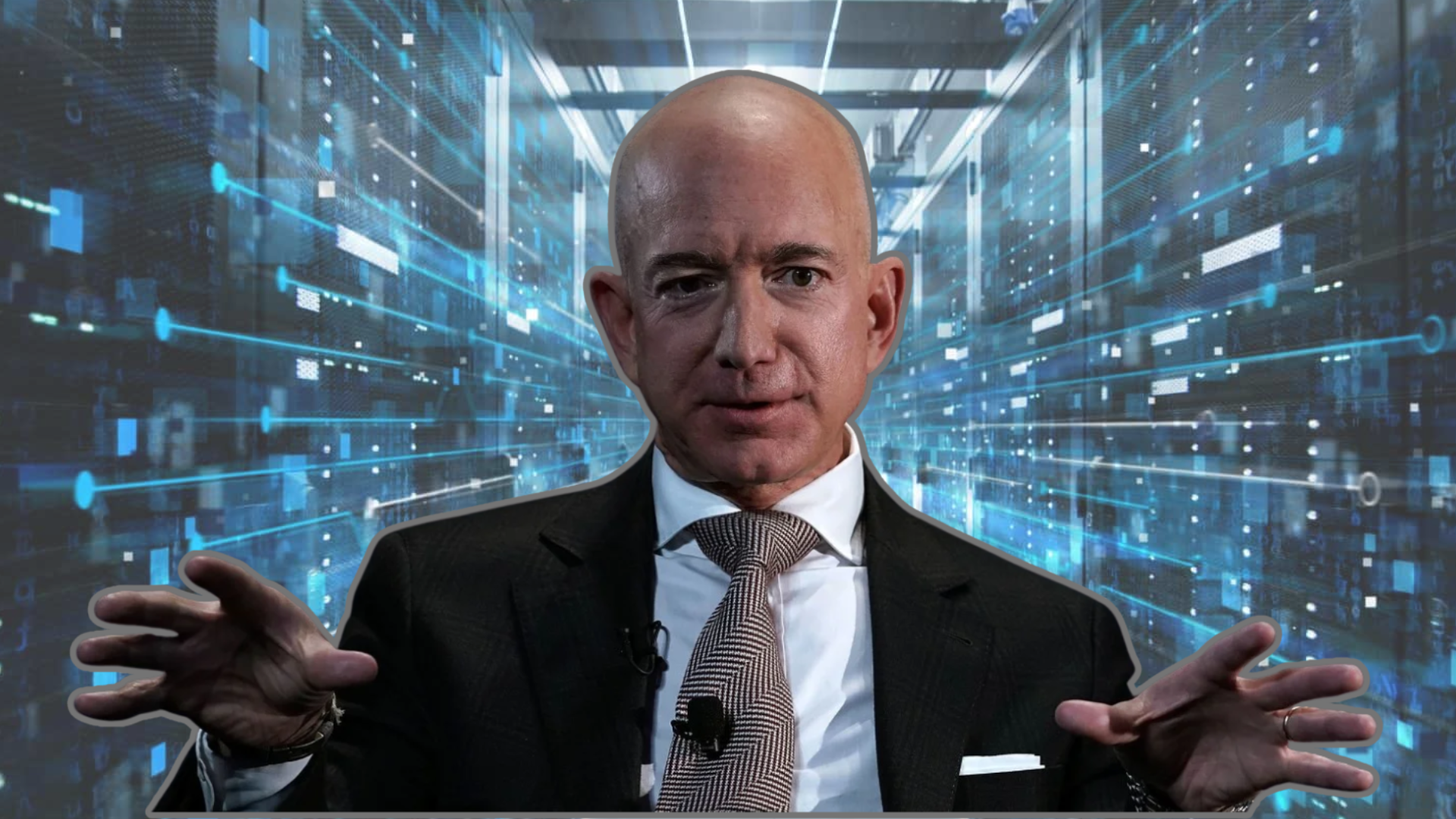
Jeff Bezos is making one of the biggest private AI bets of the current boom, and it is not just another chatbot company. His new focus is Prometheus, a physical AI startup built around a much larger idea: using artificial intelligence to accelerate the process of inventing and manufacturing real-world products. That means chips, batteries, jet engines, solar panels, pharmaceuticals, and other hard-technology markets where design, testing, materials science, and production can take years.
The size of the bet is difficult to ignore. Prometheus raised $12 billion in Series B funding in June 2026 at a valuation of about $41 billion, making it one of the most heavily funded AI startups in the world. Bezos co-founded the company with Vik Bajaj, a scientist and entrepreneur who previously helped launch Alphabet’s life-sciences company Verily. For Bezos, this is also notable because it puts him back in an operating role. He is serving as co-CEO of Prometheus, his first CEO role since stepping down as Amazon’s chief executive in 2021.

The “Civilizational Wealth” Thesis
Bezos has described the purpose of Prometheus in unusually broad terms. The basic argument is that invention is what drives long-term wealth creation. A new tool, a new machine, or a new manufacturing process does not just help one company. It can make entire economies more productive. Prometheus is built around that idea. The company is trying to create AI systems that shorten the loop between an idea, a working prototype, and a manufactured product.
That is different from the consumer-facing AI tools most people know. Prometheus is not simply trying to answer questions, summarize documents, or generate images. Its stated focus is physical engineering. The company is trying to build what it has called an “artificial general engineer,” meaning AI tools that can help with the design and production of real objects. If that works, the opportunity could be enormous. Bezos has pointed to the physical economy as the target market, a category that includes manufacturing, energy, transportation, health care, aerospace, and industrial production. That is why this startup is being framed less like a software company and more like an attempt to change how physical products are invented.
A Full-Stack Bet Across the AI Frontier
Prometheus is the biggest piece of the story, but it is not the only AI investment tied to Bezos. Bezos Expeditions, his family office, has also been active across several areas of AI, including chemistry, robotics, spatial intelligence, and brain-inspired models. That matters because these categories all connect to the same broad theme: AI moving out of the purely digital world and into physical science, engineering, materials, robotics, and manufacturing.
This is where the current AI cycle may start to look different from earlier software booms. The first wave of generative AI was largely about text, images, coding, and productivity tools. The next wave could involve AI systems that help discover new materials, design better chips, optimize manufacturing lines, or control robots in the real world. Those are harder problems, but they are also potentially larger markets. If AI can reduce the time it takes to design a battery, test a drug compound, or improve a jet engine component, the payoff would not just be a better app. It could be a faster path from invention to production.

Mechanized industry robot and human worker working together in future factory . Concept of artificial intelligence for industrial revolution and […]
The Bubble Question
There is still a real question about whether the AI boom has run too far, too fast. Huge funding rounds, giant valuations, and aggressive capital spending have made investors nervous about whether every company in the sector can justify the money being poured into it. That concern is reasonable. Not every AI startup will survive. Some will burn through capital without building durable products, and some public companies tied to the boom may eventually disappoint investors.
Bezos’ view appears to be that even if parts of AI look bubbly, the investment surge can still produce lasting value. That is how many major technology cycles have worked. There were excesses in railroads, the internet, telecom, and cloud computing, but the infrastructure that survived helped reshape the economy. The key for investors is not assuming that every AI company will be a winner. It is figuring out where the durable value might collect. In this case, Prometheus is private, so most individual investors cannot buy the company directly. The more realistic question is which public companies could benefit from the buildout around physical AI, advanced manufacturing, and semiconductor infrastructure.
Where Public-Market Investors Can Look
Prometheus, CuspAI, Flourish, Generalist, and General Intuition are private companies, which means retail investors generally cannot buy into them directly. The closest public-market exposure is likely not the startups themselves, but the infrastructure layer underneath them. Physical AI needs advanced chips, semiconductor manufacturing equipment, cloud infrastructure, power, memory, data centers, and industrial automation. That makes the “picks and shovels” companies worth watching.
Semiconductor equipment is one of the clearest adjacent areas. If AI demand keeps pushing companies to build more advanced chips, the businesses that make chipmaking possible may benefit. Lam Research is one example. The company reported March-quarter revenue of $5.84 billion in fiscal Q3 2026, up about 24% year over year, and guided for $6.60 billion in revenue for the following quarter. CEO Tim Archer specifically tied the record results to AI-driven demand reshaping the semiconductor industry. Lam is not a pure-play Prometheus investment, but it sits in the manufacturing chain that AI infrastructure depends on.

KLA and the Inspection Layer
KLA Corporation is another public company connected to the same theme. KLA specializes in process control and inspection tools, which are essential for manufacturing advanced semiconductors. As chips become more complex, manufacturers need more precise ways to detect defects, improve yields, and manage production quality. That makes KLA part of the less flashy but critical layer of the AI hardware buildout.
The company has also been returning capital to shareholders. In 2026, KLA authorized an additional $7 billion share repurchase program and raised its quarterly dividend to $2.30 per share, marking its 17th consecutive annual dividend increase. For investors, that combination is important. KLA is tied to a major growth theme, but it is not a speculative startup. It is an established semiconductor equipment company with large customers, strong margins, and a shareholder-return program. That does not remove cyclical risk, because semiconductor equipment spending can swing sharply, but it gives investors a more grounded way to participate in the AI manufacturing trend than chasing private startup valuations.
Amazon Still Has a Seat at the Table
Amazon is another indirect way public investors already have exposure to the AI infrastructure cycle. Bezos no longer runs Amazon day to day, but he remains closely associated with the company and is still its largest individual shareholder. Amazon Web Services is one of the biggest cloud platforms in the world, and cloud infrastructure remains central to AI development. In the first quarter of 2026, Amazon reported that AWS sales rose 28% year over year to $37.6 billion, while AWS operating income reached $14.2 billion.
That growth matters because AI workloads require massive cloud capacity, custom chips, and data-center investment. Amazon has its own Trainium chip franchise, and AWS is competing with Microsoft Azure, Google Cloud, Oracle, and others for AI customers. Amazon is not a direct investment in Prometheus, and investors should not treat it that way. But if the larger AI economy keeps expanding, AWS remains one of the major public companies with a direct role in providing the compute layer that many AI businesses need.

The Investor Takeaway
The most important point for investors is that Bezos’ AI bet is not just about consumer software. Prometheus is aimed at the physical economy, which could make it one of the more ambitious startups of the AI era. If the company succeeds, the payoff would come from helping engineers and manufacturers move faster across industries that are usually slow, capital-intensive, and difficult to disrupt. That is why the “civilizational wealth” framing matters. Bezos is not talking about a better search box. He is talking about speeding up invention itself.
Still, investors should separate the story from the investable opportunity. Prometheus is private. The most practical public-market angle is the infrastructure around it: semiconductor equipment, cloud computing, advanced manufacturing, and AI hardware. Companies like Lam Research, KLA, and Amazon offer indirect exposure, but they also carry their own risks, valuations, and business cycles. The AI boom may create enormous winners, but it will not reward every company equally. For investors, the better question is not how big the hype sounds. It is where the spending becomes revenue, where the revenue becomes earnings, and where the earnings can last.