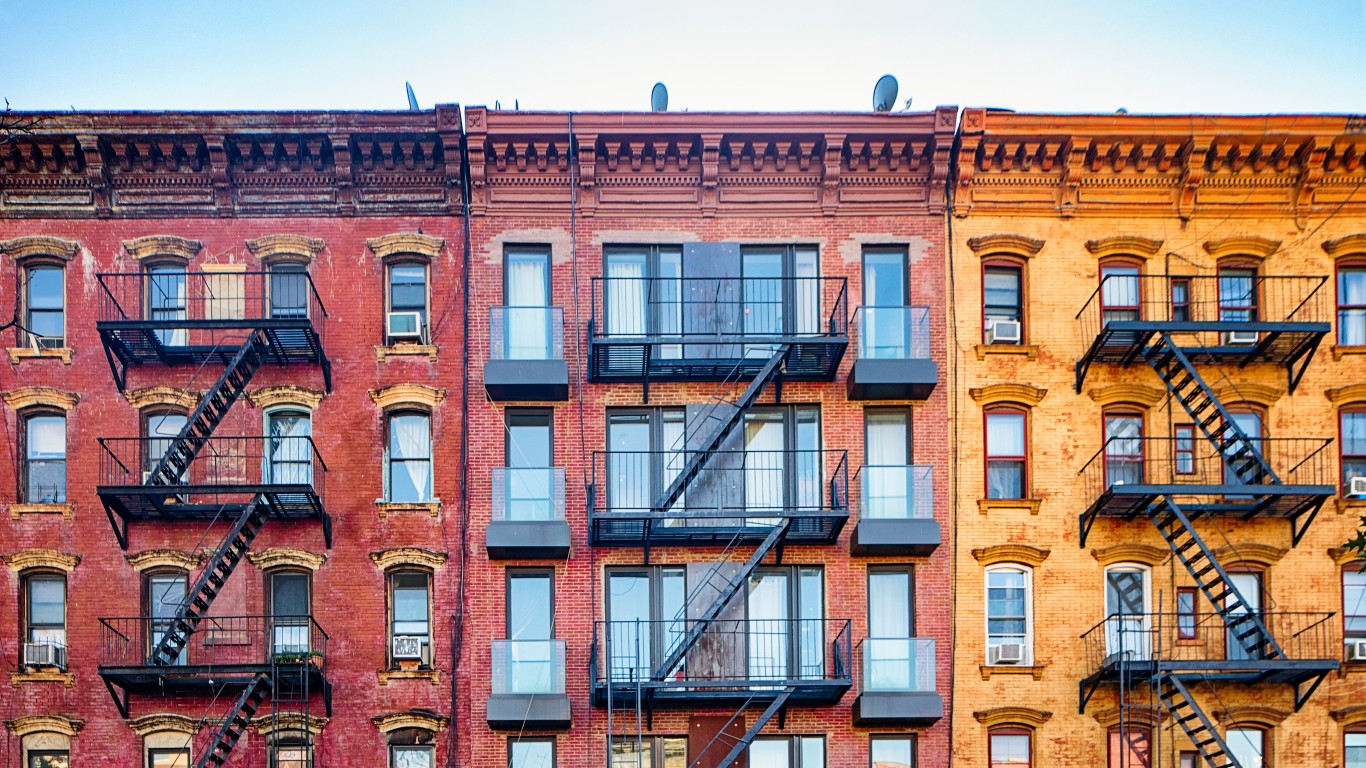
New York City has 2.3 million rental units. According to Kenny Burgos, 1 million of them are rent-stabilized, which means their rents can rise only within legal limits, whatever the surrounding market does. Burgos, a New York housing policy expert, laid out the numbers in a conversation with host Paula Pant on the Afford Anything podcast.
“There are 1 million rent-stabilized apartments throughout the city of New York in a city of 2.3 million rental units,” Burgos said. He added that “most people are very shocked when they hear that.”
Pant framed the scale in a single line: “A million units is, in context, that’s 41% of all rental housing stock.” Burgos confirmed the figure. That puts legally limited pricing at the center of the largest rental market in the country, far from a small corner of it.
Median Stabilized Rent Sits Just Under $1,500
Burgos said the median rent being paid in New York City today is about $1,600. Inside rent stabilization, he put the median at just under $1,500. By his account, that means 500,000 apartments rent for below $1,500.
Pant set those numbers against a figure anyone who has browsed listings would recognize: a Zillow estimate of $5,200 for a one-bedroom in Manhattan. The typical stabilized tenant and a renter shopping the open Manhattan market are operating in two very different price worlds.
Central Park Views at Cincinnati Prices
Burgos offered the most vivid illustration of the interview. Some Manhattan tenants living beside Central Park, he said, are “probably paying rents lower than that of market rate in Cincinnati, Ohio, or Houston, Texas, just because of when they got their apartment and how long they’ve been in there.”
The final clause of that quote carries the whole explanation. By Burgos’s description, those tenants’ rents reflect two things: the year they moved in and how long they have stayed. Location on one of the most famous parks in the world does not reset the number.
How a Single Lease Can Run for Decades
Rent stabilization does two things. It limits how much a landlord can raise the rent on a covered unit, and it gives the tenant the right to renew the lease. A tenant who stays put sees rent rise only by the permitted increases. Market rents around that apartment move freely.
With time, the gap between those two paths compounds. Burgos framed the tenure point directly: a tenant can hold the same apartment for thirty, forty or fifty years. Each renewal carries the regulated price forward, one permitted step at a time, while the unregulated market keeps repricing around it.
This is the single most misunderstood feature of the system. The price is attached to the apartment and the occupancy. The tenant’s income lies outside the equation entirely. A renter’s paycheck can rise for decades while the rent follows its own legally limited path.
Rent Control Is a Different, Far Smaller Program
Headlines often use “rent control” and “rent stabilization” as if they mean the same thing. They are two different programs. Burgos said the older rent-controlled program has been sunsetting for five decades, with only about 24,000 units remaining.
Keep the numbers sorted this way. The about 24,000 figure refers to rent control. The 1 million figure refers to rent stabilization, the program behind every other number in this piece.
A 1974 Law Still Governs Today’s Leases
Burgos traced the modern framework to the Emergency Tenant Protection Act of 1974, which he called “the true implementation of rent stabilization as we know it today.” He said the system went through major developments in 1994 and again in 2019.
That long history helps explain the tenure effect. A framework in place for generations gives tenants who signed early an continuous chain of regulated renewals, each one building on the last.
Same Building, Same Layout, Very Different Rent Checks
Taken together, Burgos’s numbers describe a city where the date you signed your lease matters more than what you earn. Two neighbors in the same building can pay wildly different rents for the same apartment, separated by nothing but tenure.