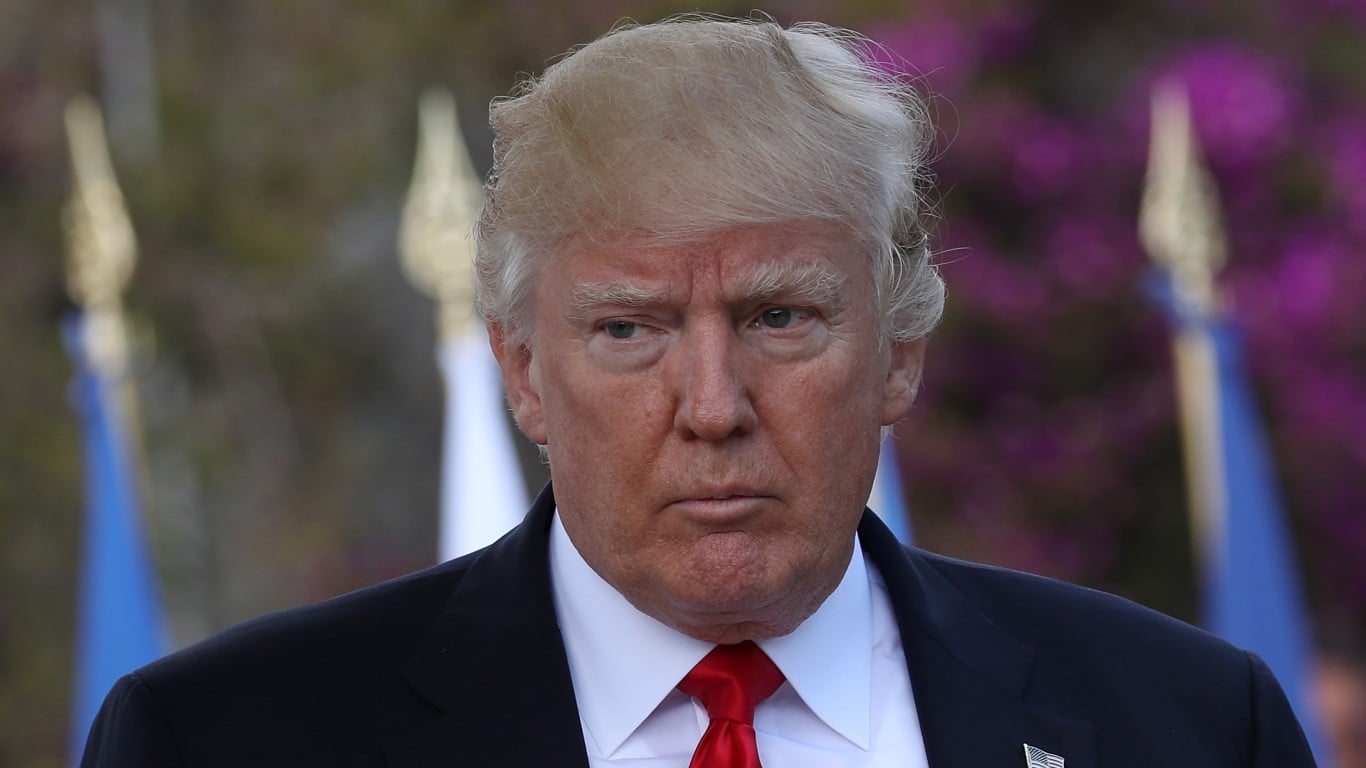
In a March 31, 2016, interview published by The Washington Post that April, Donald Trump said the United States needed to eliminate its roughly $19 trillion national debt. When asked how long that would take, he answered eight years. Budget analysts immediately challenged the promise. The government was already running annual deficits, so Washington first would have needed to balance the budget and then generate trillions of dollars in surpluses. Trump argued that stronger growth and better trade agreements, particularly with China, could produce the necessary revenue. Analysts countered that no realistic combination of growth, spending restraint, and trade policy could erase the entire balance on that schedule.
The Debt Has More Than Doubled
A decade later, the promise is even further out of reach. Treasury’s daily Debt to the Penny data placed total public debt outstanding at approximately $39.4 trillion in mid-July 2026. That total includes about $31.7 trillion held by the public and roughly $7.7 trillion held by federal government accounts. The quarterly FRED series showed $39.065 trillion at the end of the first quarter, but it is not a competing estimate; it is simply an older, quarterly observation drawn from Treasury data. Both measures confirm the central point: gross federal debt has more than doubled since Trump made his $19 trillion pledge, and the government continues borrowing to cover the gap between annual spending and revenue.

The Road Toward $50 Trillion
The recent pace makes $50 trillion a plausible early-2030s milestone, but saying the debt is already “near” that level overstates the current total. Quarterly debt rose from $37.638 trillion in July 2025 to $38.514 trillion in October and $39.065 trillion in early 2026. Treasury’s daily count reached roughly $39.4 trillion by July. CBO projects gross federal debt of about $40 trillion at the end of fiscal 2026 and $64 trillion by 2036 under current law. That does not produce a guaranteed crossing date because deficits, legislation, economic growth, inflation, and interest rates will change. It does, however, show that $50 trillion is no longer a remote possibility if Washington remains on its current fiscal path.
Higher Rates Make Every New Dollar More Expensive
The size of the debt is only part of the problem. The interest rate attached to it determines how much of the federal budget must be devoted to servicing past borrowing. On July 16, 2026, the 10-year Treasury yield was 4.57% and the 30-year yield was 5.09%, while the Federal Reserve’s target range remained 3.5% to 3.75%. Treasury does not refinance all $39 trillion at once, so market yields do not instantly become the government’s average rate. The cost rises gradually as bills, notes, and bonds mature and are replaced. CBO estimates the average rate on publicly held federal debt at 3.4% in 2026 and projects net interest outlays will climb from about $1 trillion this year to $2.1 trillion in 2036.
Why Trade Deals Could Never Do All the Work
Trump’s original argument placed weight on economic growth and renegotiated trade agreements. Better growth can raise tax revenue, while tariffs can generate customs receipts, but neither produces a budget surplus. CBO now projects a $1.9 trillion deficit for fiscal 2026 despite elevated tariff revenue. Its February outlook estimated that higher tariffs would reduce cumulative deficits by about $3 trillion over a decade, while the 2025 reconciliation law would increase them by about $4.7 trillion, including related economic and interest effects. CBO also estimated that recent tariff changes would leave productivity in 2030 about 0.4% lower than it otherwise would have been, illustrating the trade-off between revenue and economic growth.

What the Debt Means for American Households
No household receives a bill for its share of the national debt, and comparing federal debt with personal income can be misleading. The effects arrive indirectly. Heavy government borrowing can place upward pressure on interest rates, making mortgages, auto loans, and business investment more expensive. Rising interest costs also leave lawmakers with less flexibility to fund programs, reduce taxes, or respond to recessions and emergencies. CBO expects Social Security, Medicare, and interest payments to account for much of the growth in spending over the coming decade. Those pressures force choices involving taxes, benefits, eligibility rules, or government services—even if no politician describes the changes as a debt payment.
The Numbers That Matter From Here
The number to watch is Treasury’s daily total public debt outstanding, which separates debt held by the public from intragovernmental holdings. CBO’s budget outlook provides projections for deficits and net interest costs. Treasury’s monthly statements show how much the government is collecting, spending, borrowing, and paying in interest, while quarterly refunding announcements reveal how officials plan to finance their needs. A move toward $50 trillion would not be caused by one weak auction or one change in Treasury yields. It would result from years of persistent primary deficits combined with compounding interest—the same structural problem that made eliminating $19 trillion in eight years unrealistic from the beginning.