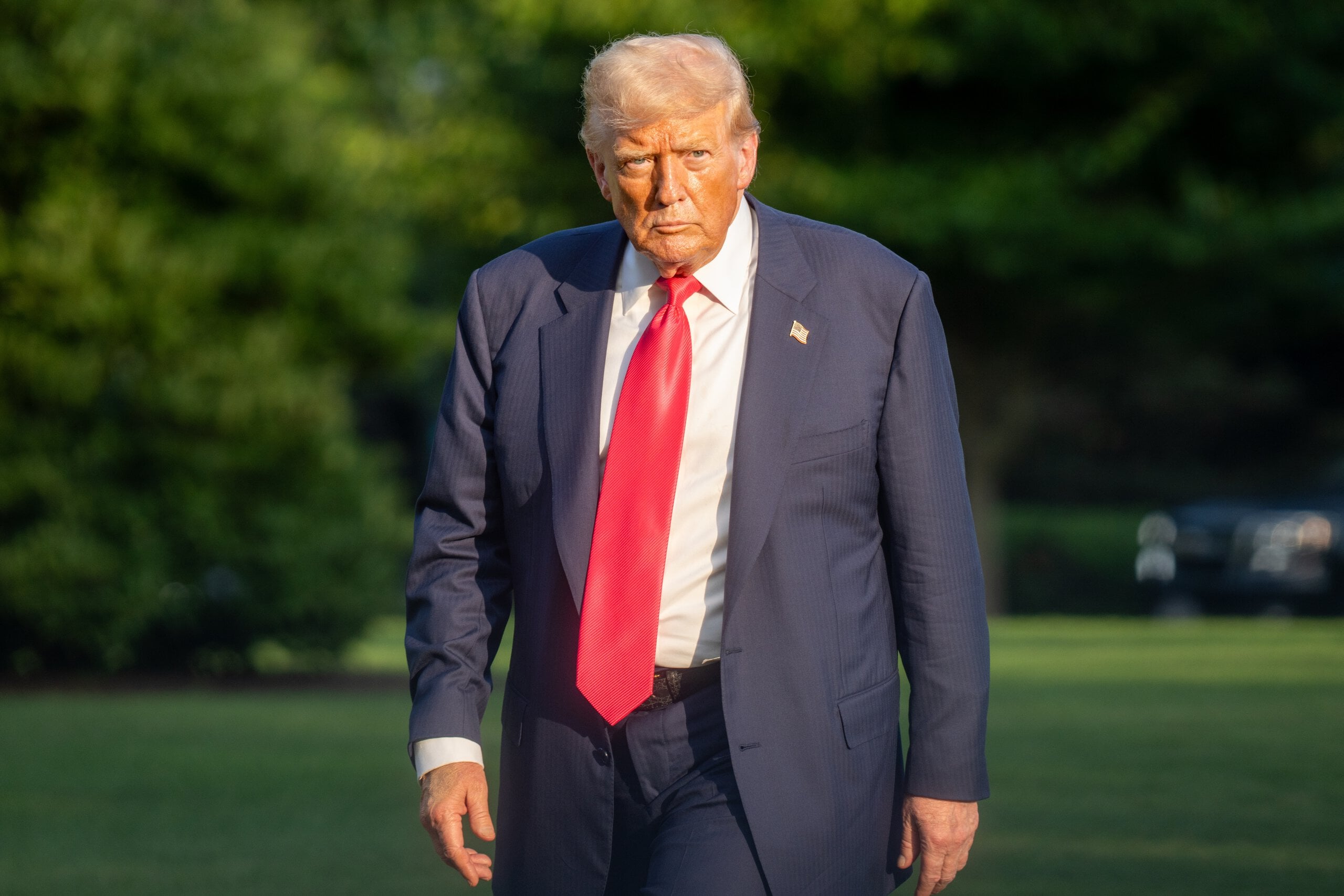
The diplomatic scene at the United Nations this week sits on top of a war that, per NewsCord, is nearing its eighth month. President Trump signaled he is open to meeting Iranian President Masoud Pezeshkian on the sidelines of the General Assembly, and CNBC Africa reported on September 21, 2026 that Pezeshkian was heading to New York as Trump warned of consequences without a deal. Crude reacted before the diplomats did: TradingView reported on September 21, 2026 that crude oil dipped below $100 after Trump said he may be open to talking to Iran.
That move is the market pricing hope. What the Gulf Arab states arriving in New York want is something a price screen does not capture.
What the Gulf Actually Wants
On Bloomberg, Stuart Livingstone-Wallace said the Gulf Arab states will be telling Trump this needs to be resolved, and that the Hormuz issue and continuing regional attacks are having a very serious economic impact on all those countries. He then drew the distinction that matters. Livingstone-Wallace pointed to Riyadh’s first air alerts, as far as he can see, since April over the weekend, saying that does not necessarily impact the oil price but certainly impacts investment confidence. Oil can flow and prices can ease while the thing these governments actually need, long-horizon investor confidence for economic diversification, stays broken. Missile alerts land on capital allocation timelines more than on barrel counts, and that gap is the reader’s takeaway.
Flows In Partial Recovery
The flow figures support a recovery framing without settling it. Livingstone-Wallace said about a billion barrels had gone through the strait in the last couple of months, something like 500 supertankers by his characterization, or something like eight, nine a day, and that the principal transit routes had been demined. The oil price, he said, is in some respect reflecting that sort of far less pessimism, according to Bloomberg. Alongside that, NDTV Profit reported Secretary of State Rubio saying 60-70% of oil is coming out of Hormuz, and that he did not rule out a Trump meeting with the Iranian president. Call it a partial recovery.
The price context prevents any read that oil is now cheap. The last settled Brent quote in the Federal Reserve Economic Data series, dated September 15, 2026, was $130.80, with West Texas Intermediate at $107.02. That reading predates the decline being discussed. Brent’s trailing-year high was $138.21 on April 7, 2026, and as of the September 15 reading Brent sat in the 99.2nd percentile of its trailing-year range. Even after falling, this remains historically expensive oil.
Escalation Track Is Live Too
Diplomacy and pressure are running on the same clock. Radio Free Europe/Radio Liberty reported that the US Treasury chief said all Iranian airlines will be shut down from September 23. The Cradle reported that the US denied visas to members of the Iranian president’s UN delegation. Il Sole 24 Ore reported that the Pentagon puts the cost of the war with Iran at $43 billion, and that the UK said an oil tanker was struck in the Strait of Hormuz.
The signal to watch is the one Livingstone-Wallace flagged: an atmosphere quiet enough to underwrite decade-long capital commitments in the Gulf. That takes longer to build than a tape rally, and it has not arrived. Flows can recover and prices can ease, and both can reverse in a week.