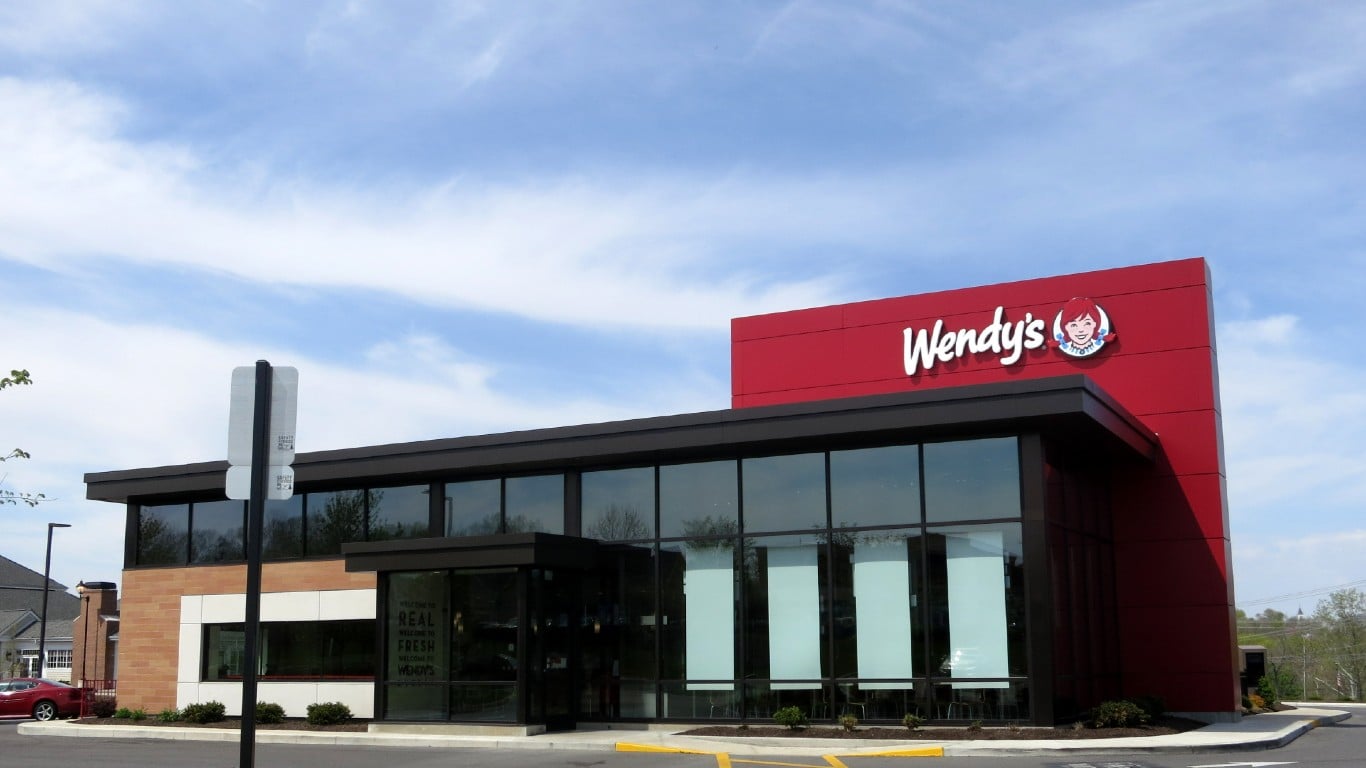
Wendy’s (NASDAQ: WEN) shares were down roughly 13% Thursday morning after Reuters reported that Nelson Peltz’s Trian Fund Management does not currently plan to make a take-private offer for the restaurant chain. The news removes much of the takeover premium that entered the stock after an Aug. 12 report that Trian was preparing a possible bid with other investors.
Wendy’s jumped nearly 15% when that possibility first surfaced, so the reversal is a useful reminder of how quickly a deal-driven rally can disappear when no formal offer is on the table. For long-term investors, and especially anyone holding Wendy’s for dividend income, the more important question is what the company looks like once the takeover speculation is stripped away.
The Takeover Premium Is Coming Out of Wendy’s Stock
Reuters reported that Trian has no plans to bid for Wendy’s “at this time,” citing concerns that include the company’s performance, valuation and strategic direction. That wording matters. It does not rule out a future transaction, but investors no longer have the same reason to price an imminent buyout into the shares. Wendy’s had climbed as high as roughly $9 after Reuters reported on Aug. 12 that Trian was working on a possible bid with a group that included BlueFive Capital and Wendy’s franchisee Flynn Group.
Trian remains enormously influential at Wendy’s, but its ownership needs to be described carefully. Wendy’s 2026 proxy statement lists Nelson Peltz as beneficially owning 16.2% of the company, a figure that includes shares held by Trian entities and other related holdings. Trian Fund Management itself was listed with 7.9%. Those percentages cannot simply be added together because they overlap. With the takeover catalyst fading for now, shareholders are being pushed back toward the same question they faced before the bid reports: whether Wendy’s operating turnaround can justify owning the stock on its own merits.
Wendy’s Turnaround Has a Lot to Prove
The underlying numbers explain why investors were so interested in a potential transaction in the first place. Wendy’s reported that second-quarter 2026 global systemwide sales fell 6.5% from a year earlier, while U.S. same-restaurant sales declined 7.0%. Net income dropped to $32.6 million from $55.1 million, and adjusted earnings per share fell to $0.18 from $0.29. Management withdrew its full-year 2026 financial outlook while the new leadership team reassesses the business and builds a broader turnaround plan.

CEO Bob Wright has identified five priorities: improving menu quality and value, strengthening marketing, tightening restaurant operations, building a better digital experience and using restaurants as an engine for growth. Wendy’s ended the quarter with 7,180 restaurants worldwide, down from 7,334 a year earlier. U.S. restaurant count fell particularly sharply, although international locations continued to grow. That makes the next several earnings reports more important than takeover rumors. Investors need evidence that customer demand is stabilizing and that Wendy’s can improve profitability without relying on a buyer to create shareholder value.
The Dividend Cut Matters for Income Investors
For retirees and other income-focused shareholders, one of the biggest changes has nothing to do with Trian. Wendy’s cut its quarterly dividend in August from $0.14 per share to $0.07, reducing the annualized payout to $0.28. The company said the lower dividend would give it additional flexibility to invest in its turnaround. The new $0.07 quarterly dividend is scheduled to be paid Sept. 15, 2026, to shareholders of record as of Sept. 1.
That decision is significant because a falling share price can make a stock’s dividend yield look unusually attractive even when the underlying payout has become less generous. Investors who bought Wendy’s for income should therefore focus on the actual dollars being distributed rather than the headline yield. Wendy’s paid $0.14 per share in each of the first two quarters of 2026, so the new payout represents a 50% reduction from that rate. The company has also withdrawn its 2026 outlook, making future earnings and cash-generation trends especially important when judging how sustainable the revised dividend will be.
What Wendy’s Investors Should Watch Next
The next useful signals will come from the business rather than the rumor mill. U.S. same-restaurant sales are an obvious place to start because they show whether established Wendy’s locations are beginning to regain customers and sales. Investors should also watch restaurant margins, net restaurant openings and closures, franchise economics and any updated 2026 or 2027 guidance once management is ready to provide it. Those measures will tell shareholders much more about the turnaround than whether the stock happens to cross a particular price level on a given day.
Any genuine takeover development would also be important, but investors should distinguish an actual proposal or SEC filing from renewed market chatter. Trian’s current position is that it does not plan to make an offer at this time, not that a transaction can never happen. Until that changes, buying Wendy’s mainly because another takeover rumor might emerge adds another layer of risk to a company already working through declining U.S. sales, a smaller dividend and a major turnaround. Investors relying on their portfolios for retirement income have an additional reason to keep that distinction clear.