















Jamie Dimon’s Biggest Money Warnings for Older Investors in 2026
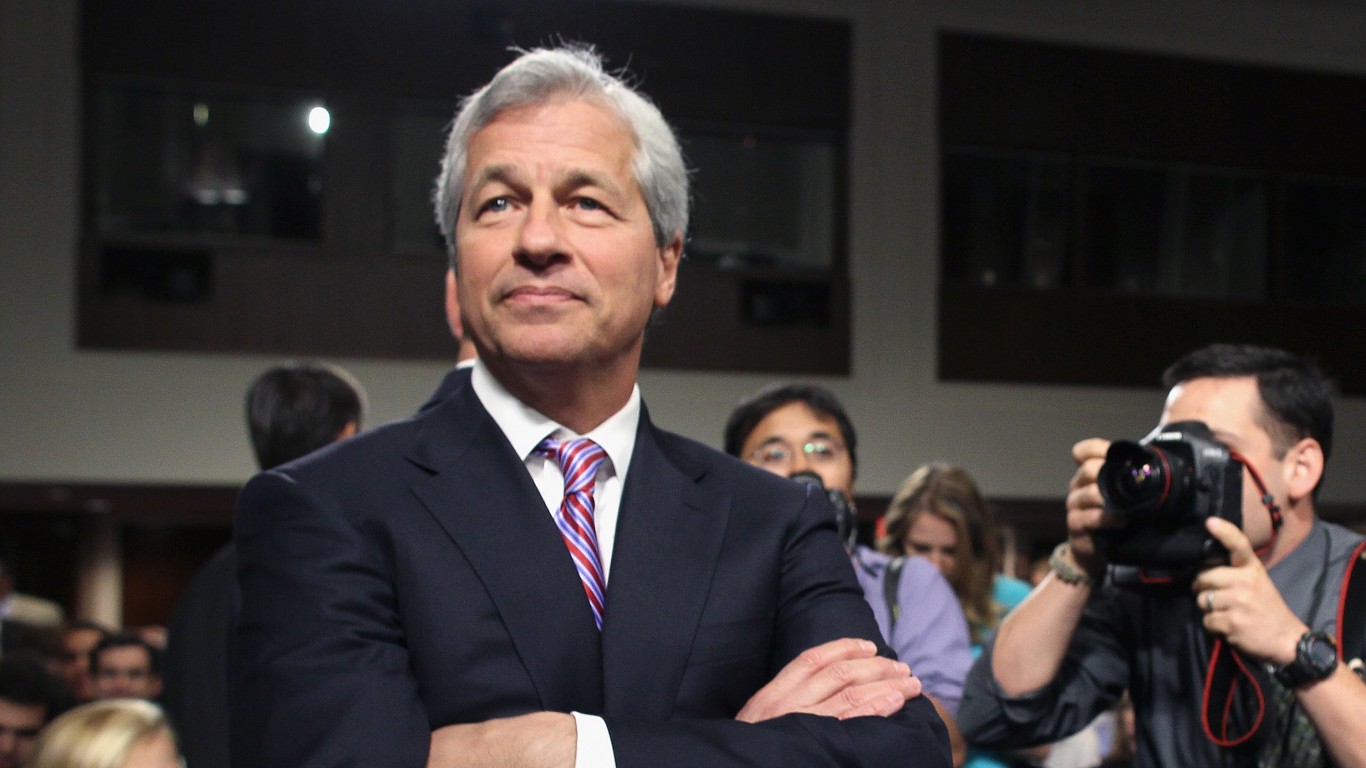
Jamie Dimon has been one of the most closely watched voices in finance for the better part of two decades, and not because he tends to say what people want to hear. The JPMorgan Chase chairman has built a reputation for calling risks early, speaking plainly about what markets are getting wrong, and backing his views with the kind of institutional perspective that comes from running the largest bank in the country.
His recent warnings carry particular weight for older investors. The concerns he has raised around deficit spending, inflation persistence, geopolitical instability, and the potential for market volatility well beyond what current conditions suggest are not just random abstract macroeconomic observations. For someone living on portfolio income or drawing down retirement savings, those risks translate directly into purchasing power, sequence of returns, and the durability of a financial plan that was built for a calmer environment.
This list pulls together the most significant warnings Dimon has issued that apply directly to investors in or near retirement. Not every prediction will land on schedule and reasonable people disagree with some of his conclusions. Howevever, when someone with Dimon's track record and his information flow raises a flag, it's well worth understanding exactly what he is pointing at.
11. Cybersecurity and AI-Driven Financial Risk
This one comes straight from Dimon's 2026 shareholder letter in his own words: AI will introduce serious new risks, including deepfakes, misinformation, and cybersecurity vulnerabilities. He has since reinforced that view publicly, calling the threat level "very heightened" as AI capabilities advance and their applications in financial fraud become more sophisticated.
For older investors, this is both a portfolio risk and a personal one. On the portfolio side, a significant breach or AI-driven fraud event at a major financial institution can erode confidence in a sector constantly.
On the personal side, the same tools Dimon warns about at the institutional level are already being deployed against individual investors and retirees, who remain the most frequently targeted demographic for financial fraud.
10. The Hidden Risk in Shadow Lending
Dimon's concern here is less about the credit losses themselves and more about the fact that no one can see them coming in real time. Because a significant portfion of lending now sits outside the regulated banking system, in hedge funds, private firms, and non-bank lenders that operate without the same oversight, so the stress builds quietly.
His comments following the Q1 2026 10-Q filings suggested that event major banks' own exposure to this ecosystem was larger than markets had appreciated.
For retirees, the practical implication is that products offering above-market yields with claims of stability deserve extra scrutiny right now. The opacity that makes private lending attractive to originators is the same opacity that makes it difficult for investors to assess actual risk.
When liquidity gates start going up, it is rarely the first sign of trouble, it is usually confirmation of something that was already underway.
9. Labor Market Disruption From AI
Dimon acknowledged directly in his 2026 letter that AI will eliminate some jobs while enhancing others, and that JPMorgan itself has developed workforce redeployment plans in anticipation of that shift. The longer-term concern he raised is that AI could displace workers faster than the economy creates equivalent new roles, which carries implications beyond individual employment.
In the case of older investors, the relevance is indirect, but real. Large-scale workforce displacement tends to generate political pressure for higher social spending, new regulations, and tax policy changes that affect investment returns over time.
It can also shift consumption patterns in ways that reshape which sectors hold up and which ones face structural headwinds. These are slow-moving risks, but retirement portfolios are, by nature, long-duration instruments.
8. The Disconnect Between Markets and Underlying Hazards
In both his 2026 shareholder letter and January earnings call comments, Dimon pointed a growing gap between where equity markets are trading and the underlying risks he has been describing. He wrote that high asset prices feel good in the short run but create additional risk if anything goes wrong, and he has cautioned that the current calm sits on the top of unresolved tensions that have not gone away.
This should be top of mind for older investors, as complacency is especially costly because the recovery timeline after a significant drawdown is shorter than it is for younger investors. A portfolio that is positioned as though none of these risks will materialize is taking on more exposure than the price action suggests, and this is the key point that Dimon keeps returning to.
7. The Federal Deficit and the Bond Market
Dimon was warned repeatedly that the United States cannot run $2 trillion annual deficits indefinitely without consequences. His concern is not just abstract as he believes the sheer volume of Treasury supply will eventually overwhelm demand, forcing rates higher than the Fed intends, and creating what he has described as a potential "bond market bite."
For older investors who are dependent on fixed income as a stability anchor, this scenario is worth modeling as higher long-term rates compress the value of existing bond holdings, and a sudden repricing of rate expectations has historically been one of the fastest ways a conservative retirement portfolio loses ground.
Rest assured that Dimon is not predicting a crisis, but he is warning that markets have been underpricing this risk for a while.
6. The "Cockroach" Signal in Private Credit
This one came with a direct quote that definitely got lots of attention. On his Q3 2025 earnings call, after JPMorgan disclosed losses tied to a subprime auto lender collapse and a major auto parts supplier bankruptcy, Dimon told analysts: "I probably shouldn't say this, but when you see one cockroach, there are probably more." The implication was clear in that isolated defaults in private credit are not necessarily isolated.
Older investors who have moved yield-seeking money into private credit vehicles, business development companies, or non-traded REITs with indirect exposure to leveraged lending should understand what that warning means in practice.
In a higher-for-longer rate environment, debt service will become harder for weaker borrowers, and the defaults that have already surfaced may be early signals of a longer, slower deterioration.
5. Artificial Intelligence: Opportunity With a Catch
One thing Dimon has been clear about is that AI is not just a short-term trend. With his 2026 letter, he called it potentially as transformative as the printing press or electricity, and JPMorgan has invested heavily to reflect that conviction.
He has also been honest about what he does not know, writing that the firm cannot predict the ultimate winners and losers in AI-related industries.
For older investors, the risk is on the allocation side, as the AI investment story is real, but current market enthusiasm tends to lift every company with AI in its pitch deck, regardless of whether the underlying business model holds up. Dimon's own uncertainty about who captures the value is worth taking seriously before concentrating in this space.
4. Regulatory Overreach and "Nonsensical" Rules
Having used the word "nonsensical" directly when describing capital requirements and bank regulatory proposals, particularly around Basel III Endgame and the GSIB surcharge structure.
Dimon's argument is that forcing large banks to hold significantly more capital than smaller lenders does not make the system safer. Instead, Dimon believes that it just shifts credit activity to less-regulated corners of the market.
If you are an older investor or retiree who is dependent on predictable access to credit, whether for a home equity line, a refinance, or business purposes in retirement, tighter bank lending has real consequences. When credit migrates to less regulated lenders, the risk does not disappear, it just becomes harder to see.
3. The Fragility of Private Credit Markets
If you are following Dimon, you know that he has flagged the private credit market, which is now approaching $2 trillion, as a source of risk that is not getting the attention it deserves. Understanding standards have loosened, credit quality is beginning to erode, and actual losses in leveraged lending are coming in above expectations.
He does not call it a systemic threat on the scale of 2008, but he has been clear that the structural flaws are real.
The specific concern for retirees is that private credit has been marketed aggressively as a yield alternative at a time when traditional fixed income felt inadequate. Many investors entered this space without fully understanding its liquidity profile. In a real credit cycle, the exit is not as orderly as the entry.
2. Geopolitical Volatility as an Economic Driver
Dimon has consistently flagged geopolitics as the top risk in the current environment, and his 2026 letter made it the centerpiece. The Iran conflict, the ongoing war in Ukraine, and escalating tensions with China are not background noise in his view. They are active forces disrupting supply chains, driving energy price volatility, and reshaping global trade relationships in ways that have direct economic consequences.
For older investors, the relevance is straightforward as energy shocks filter into broader inflation, which pressures the Fed, which affects bond prices, interest rates, and the income that fixed-income portfolios generate. Geopolitical risk is no longer something you can treat as separate from your portfolio.
1. The Persistence of "Sticky" Inflation
Something that Dimon has been very direct about is claling inflation the "skunk at the party" in his 2026 annual shareholder letter. His concern is not that prices are spiraling out of control, but they are not coming down the way markets have been pricing in.
Structural forces, deficit spending, trade disruption, and ongoing geopolitical market, are keeping pressure elevated well above the Fed's 2% target.
Older investors living on a fixed income or portfolio withdrawals should know that this gap matters more than it does for working households. Purchasing power erosion is slow and quiet, and it compounds. A retirement income plan built around an assumption that inflation normalizes quickly may need a second look.