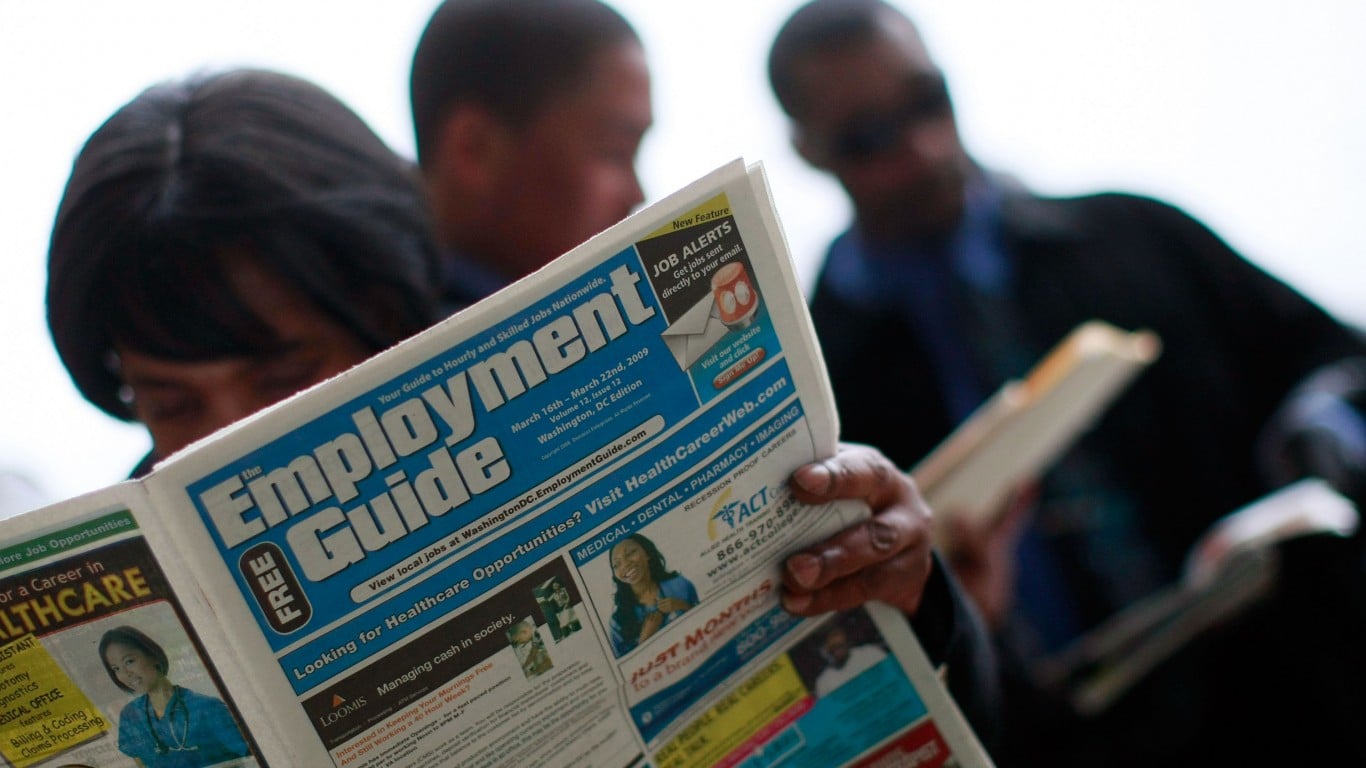
The June 2026 jobs report delivered a reassuring headline and a more complicated warning underneath it. The unemployment rate edged down to 4.2%, while employers added 57,000 jobs. At the same time, the labor force shrank by 720,000 people, the participation rate fell to 61.5%, and the number of Americans outside the labor force reached 105.8 million. That does not mean more than 100 million people are unsuccessfully searching for work. Most are retirees, students, caregivers, or people unavailable for employment. Still, falling participation matters to retirees because weaker hiring and consumer spending can eventually affect stocks, interest rates, and retirement income plans.
A Record Number Are Outside the Labor Force
The seasonally adjusted number of Americans outside the labor force rose by 832,000 in June, reaching 105.8 million. That was about 2.2 million above the April 2020 pandemic peak and roughly 2.5 million higher than in December 2025. The record sounds alarming, but the United States also has a larger and older population than it did six years ago. Millions of baby boomers are reaching retirement age, which naturally pushes the total higher even without a recession. A more useful warning sign is the participation rate. It fell from 62.3% in June 2025 to 61.5% in June 2026, near levels last seen outside the pandemic in the mid-1970s.

Why This Is Not the Real Unemployment Rate
The official unemployment rate counts people without jobs who are available to work and actively searched during the previous four weeks. Someone who retires, attends school, cares for family, becomes disabled, or stops searching is classified as outside the labor force instead. That is why the 105.8 million figure should not be added to the unemployment total or described as hidden unemployment. BLS data show that about 6 million people outside the labor force said they currently wanted a job. Around 1.8 million were marginally attached, meaning they wanted work and had searched within the past year, while roughly 477,000 were classified as discouraged workers.
The Job Market Still Shows Signs of Weakness
Even after correcting the headline, June contained several signs of a softer job market. Household survey employment fell by 507,000, the labor force declined by 720,000, and the employment-to-population ratio slipped to 59%. Long-term unemployment remained near 1.9 million and was 286,000 higher than a year earlier. Payroll growth was positive but modest at 57,000 jobs, while earlier estimates for April and May were revised down by a combined 74,000. Leisure and hospitality lost 61,000 positions, while most gains came from professional services, health care, and social assistance. The economy was not collapsing, but momentum was uneven and increasingly dependent on a limited group of industries.
Not Everyone Is Leaving Because of Retirement
An aging population explains part of the decline, but it does not explain everything. Participation among Americans ages 55 and older stood at 37.1% in June, reflecting the growing number of people reaching traditional retirement ages. However, participation among prime-age workers between 25 and 54 also fell to 83.3%, down from 83.9% in May. The decline was especially noticeable among workers ages 25 to 34, whose participation rate fell to 82.4%. Monthly figures can be volatile, so one report should not be treated as proof of a lasting trend. Still, weakness among younger and prime-age workers deserves more attention than an increase caused entirely by older Americans choosing to retire.

Why Retirees Should Pay Attention
Employment supports the consumer spending that drives a large share of corporate revenue. When fewer people are working or confident about finding work, households may postpone travel, restaurant meals, vehicles, home improvements, and other discretionary purchases. That can pressure companies whose profits depend on strong consumer demand. A softer labor market can also influence Federal Reserve decisions and market interest rates, affecting bond prices, savings yields, and borrowing costs. None of these outcomes follows automatically from one report, but the figures argue against assuming that a low unemployment rate guarantees strong economic conditions or uninterrupted growth in retirement portfolios.
What It Means for a Retirement Portfolio
For someone already drawing from a portfolio, the lesson is not to abandon stocks after one weak labor report. It is to check whether the retirement plan can withstand slower growth or a market decline without forcing large sales. Essential expenses may be better supported by Social Security, pensions, cash reserves, and high-quality bonds, while equities remain invested for longer-term growth. Retirees who own large positions in retailers, restaurants, travel companies, or other consumer-sensitive businesses may also want to review concentration risk. The goal is not to predict the next recession. It is to avoid needing perfect economic conditions for the retirement plan to continue working.
What Retirees Should Take Away
June’s labor data do not prove that unemployment is secretly several times higher than reported. They do show that the headline rate leaves out important information. The participation rate fell, household employment declined, payroll growth remained modest, and a record 105.8 million people were outside the labor force. Demographics explain part of that total, but they do not erase the recent weakening. Retirees should watch participation, employment growth, long-term unemployment, and consumer spending together rather than reacting to one number. A diversified portfolio, a dependable income floor, and enough liquid savings can provide more protection than trying to guess which monthly report marks the turning point.