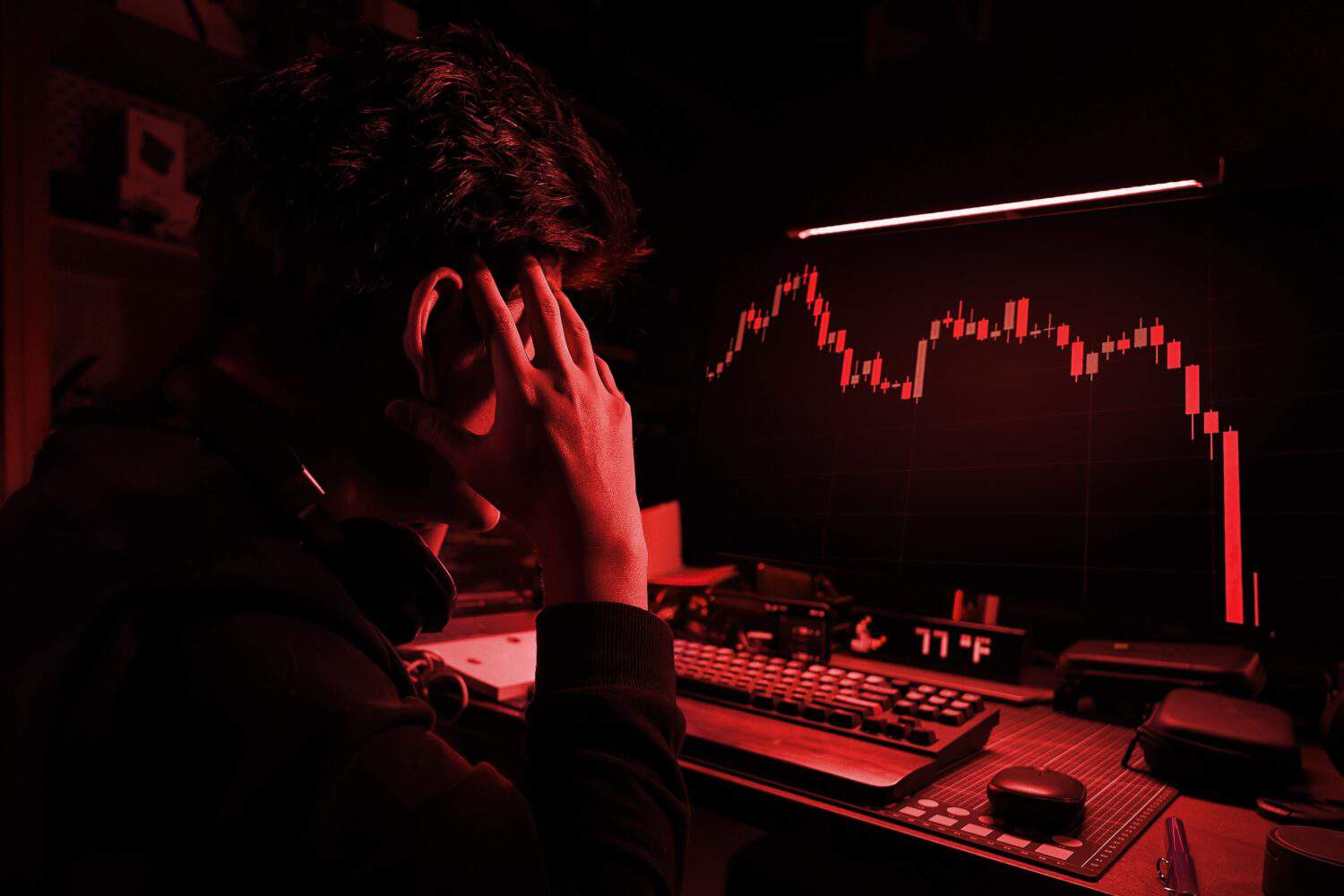
Jim Cramer is warning investors that the biggest near-term risk in several high-flying technology stocks may not be weak earnings or deteriorating demand. It may be leverage. His message is aimed at traders who used borrowed money to buy Micron Technology, Corning, Seagate Technology, or similar AI-linked winners after their rallies became nearly vertical. In that situation, a sharp pullback can force a broker to demand more cash or liquidate positions, even when the underlying company has just reported strong results. That distinction matters for long-term shareholders. Cramer is not arguing that every investor should abandon these businesses. He is arguing that a sound company can still become a dangerous trade when an investor owns it with too much borrowed money and no room for volatility.
The warning also arrives after dramatic price swings across the semiconductor, memory, optical networking, and storage trades. Micron recently posted record quarterly results, Seagate reported strong growth and cash generation, and Corning remains tied to major data center and connectivity spending. Even so, all three stocks have experienced periods of violent selling after enormous advances. Cramer’s broader point is simple: fundamentals can influence value over time, but margin requirements can dictate who is forced to sell today. Investors deciding whether to hold, trim, or buy the dip should separate the business story from the financing risk inside their own brokerage accounts.

Why Leverage Can Overwhelm Strong Fundamentals
Cramer’s central argument is that leverage changes the rules of a selloff. An investor who owns a stock outright can choose to wait through volatility, reassess the company’s earnings, or hold for a recovery. A margin investor may not have that freedom. When the value of securities in a margin account falls below a broker’s maintenance requirement, the broker can demand additional cash or securities. It may also sell positions without advance notice to restore the required equity level. That is why a fundamentally strong stock can fall much farther than its earnings outlook alone might suggest during a rapid unwind. Cramer described the recent rallies as parabolic moves driven partly by overconfidence and speculative borrowing. His concern is not that Micron, Corning, or Seagate suddenly lost their customers. It is that leveraged owners may become forced sellers at the same time, adding supply to a market that is already moving lower.
Corning Shows How Quickly Momentum Can Reverse
Corning (NYSE: GLW) became Cramer’s clearest example because its rise and reversal were so extreme. Shares reached a 52-week high of $271.78 on June 30, 2026, after trading as low as $54.89 during the preceding year. By July 24, the stock was trading near $151, roughly 44% below that peak. Cramer referred to the stock’s move from about $77 to roughly $271 as evidence that traders should have considered taking profits or reducing oversized positions before the momentum broke. The exact starting point matters less than the scale of the advance. Corning still has exposure to optical fiber, data center connectivity, specialty glass, and other long-term growth markets, but a good business does not guarantee a smooth stock chart. When valuation, momentum, and borrowed money all rise together, even a normal correction can become severe enough to trigger forced selling and turn a crowded winner into a liquidity problem.

How a Margin Call Becomes Forced Selling
The mechanics of a forced unwind are more important than the phrase “margin clerk” may suggest. Margin accounts use securities as collateral for money borrowed from a brokerage firm. If the collateral falls sharply, the account can slip below the broker’s maintenance requirement. The investor may then need to deposit cash, add securities, or reduce the loan by selling holdings. Brokers can also raise their own house requirements, and regulators warn that firms may liquidate positions without consulting the customer first. That creates a feedback loop during fast declines: falling prices trigger margin calls, forced sales create more supply, and the additional selling can push prices down again. Cramer’s reference to watching the market around 2 p.m. is his trading observation, not a fixed rule for when liquidations end. Investors should not assume that a bottom must appear at a particular hour or after a single wave of selling.
Micron’s Record Quarter Did Not Eliminate the Risk
Micron Technology (NASDAQ: MU) shows why Cramer separated company fundamentals from trading risk. For fiscal third-quarter 2026, Micron reported revenue of $41.46 billion, up from $23.86 billion in the prior quarter and $9.30 billion one year earlier. GAAP gross margin reached 84.6%, while non-GAAP diluted earnings were $25.11 per share. The company also generated $25.39 billion in operating cash flow and guided for fiscal fourth-quarter revenue of $50 billion, plus or minus $1 billion, with non-GAAP earnings of $31 per share, plus or minus $1. Those figures support the view that AI-related memory demand remains exceptionally strong. Yet by July 24, Micron shares were trading roughly 25% below the record high reached in late June. That is the heart of Cramer’s warning: a powerful earnings story can coexist with a painful selloff, especially for investors who bought after a huge run and financed the purchase with margin.

Seagate’s Results Remain Strong Despite the Volatility
Seagate Technology (NASDAQ: STX) offers a similar lesson, although its business is focused on mass-capacity storage rather than memory chips. The company reported fiscal third-quarter 2026 revenue of $3.11 billion, up from $2.16 billion a year earlier, which works out to growth of roughly 44%. GAAP gross margin reached 46.5%, non-GAAP earnings were $4.10 per diluted share, and free cash flow totaled $953 million. Seagate also retired $641 million of debt and returned $191 million to shareholders through dividends and repurchases during the quarter. Management said AI applications are increasing data creation and supporting sustained demand for storage. Those are meaningful positives, but they do not eliminate market risk after a large advance. If investors own the stock with borrowed money, a sudden decline can force them to sell before the long-term storage thesis has time to play out.
What Cramer’s Warning Really Means
Cramer’s most dramatic line was directed at investors who continued borrowing after the selloff had already begun. His point was that they might still have time to exit with their capital largely intact, but continued leverage could leave them exposed to forced liquidation by the next trading session. The imagery was blunt, but the underlying lesson is practical. Margin magnifies gains when prices rise and magnifies losses when they fall. It also gives the brokerage firm control over whether and when positions are sold to cover a shortfall. That means an investor can be correct about Micron’s earnings, Corning’s data center opportunity, or Seagate’s storage demand and still suffer a devastating result because the position was financed too aggressively. The risk comes not only from choosing the wrong company, but from using a structure that removes the investor’s ability to wait.
The Bottom Line for Micron and AI Stock Investors
For long-term investors, the takeaway is not that Micron, Corning, and Seagate are automatically broken businesses or that every pullback should be sold. Recent company reports show strong demand, improving profitability, and substantial cash generation in important parts of the AI infrastructure market. The more useful lesson is that position size, purchase price, and financing method matter as much as the underlying story. Investors using cash can decide whether a decline creates value, whether estimates remain realistic, and whether the business still fits their time horizon. Investors using margin may be forced to act before any of those questions can be answered. Cramer’s warning is therefore less a prediction about where these three stocks trade next and more a reminder that borrowed money can transform ordinary volatility into permanent loss. In a crowded market, reducing leverage may be more important than trying to call the exact bottom.