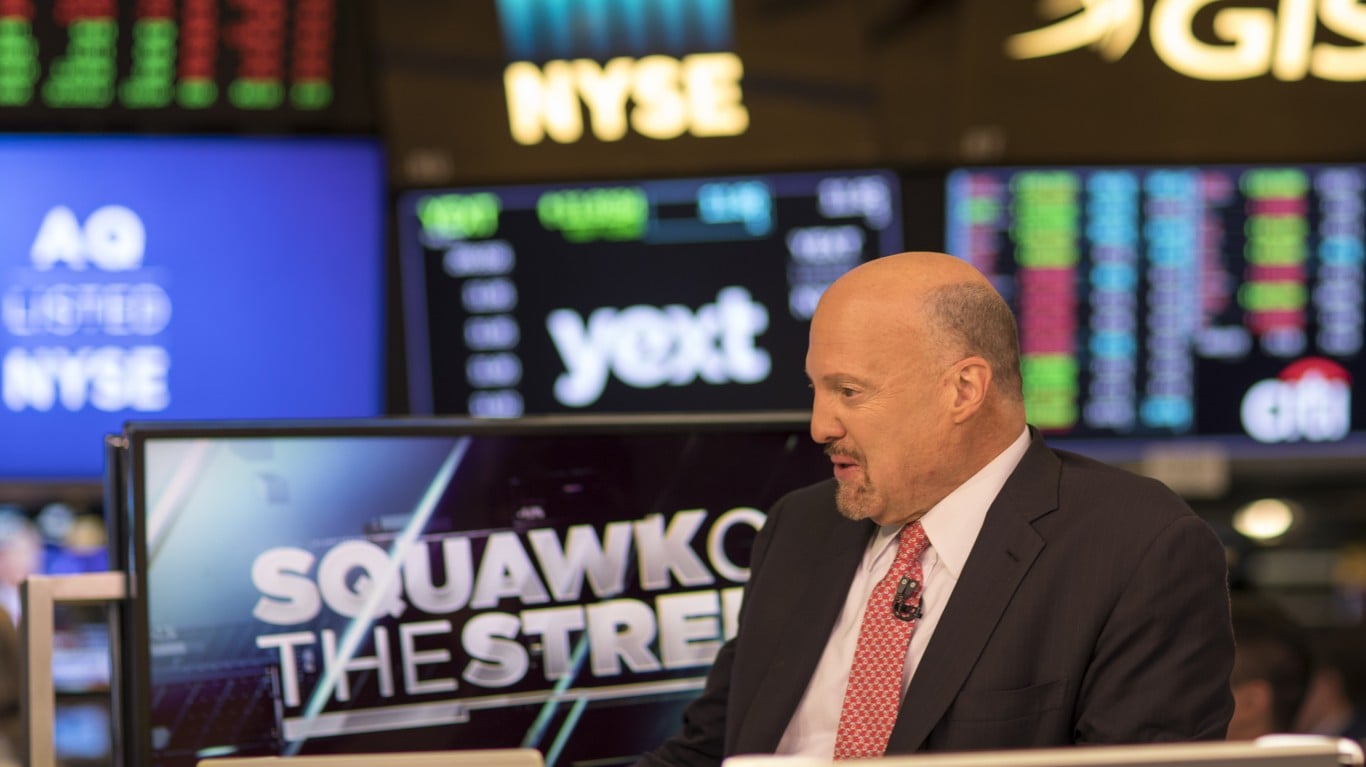
On June 30, Jim Cramer told Mad Money viewers that his favorite stock right now is a company many investors had written off just two years ago: Intel.
“Intel, currently my favorite stock. CEO Lip-Bu Tan has turned this company around,” Cramer said, making a surprising call in a market still obsessed with mega-cap AI winners. Instead of chasing the hyperscalers spending billions on artificial intelligence, Cramer pointed to the chipmaker they increasingly depend on.
His Intel pick fits a larger point he made that same night. According to Cramer, Wall Street is now rewarding tech companies that make high-demand products while putting more pressure on the customers buying them. In that environment, he sees Intel as a comeback story investors can no longer ignore.
Why Cramer Flipped on Intel
Intel has quickly gone from a left-for-dead chip stock to one of the loudest turnaround stories in tech. After years of missed opportunities, manufacturing delays, and investor frustration, the company is suddenly back in the market’s good graces. Jim Cramer now says Intel is his favorite stock, largely because CEO Lip-Bu Tan appears to have changed the narrative. Tan took over when Intel was still viewed as a broken semiconductor name, but the company has since posted six straight quarters of revenue above expectations. For investors, that matters. Intel is no longer being judged only by its past failures. It is being evaluated on whether its turnaround is real, durable, and tied directly to the next wave of AI demand.
The Numbers Behind the Comeback
Intel’s latest results gave Cramer more ammunition for his bullish call. In its Q1 fiscal 2026 report, released April 23, the company posted revenue of $13.577 billion, up 7.2% from the prior year. The most important growth came from the areas investors care about most: Data Center and AI revenue rose 22% year over year to $5.052 billion, while Intel Foundry revenue climbed 16% to $5.421 billion. Non-GAAP earnings per share also came in far ahead of consensus estimates. For a company that had spent years trying to convince Wall Street it could still compete, this was the kind of report that forced investors to take the turnaround seriously.
Three Growth Engines Cramer Wants Investors to Notice
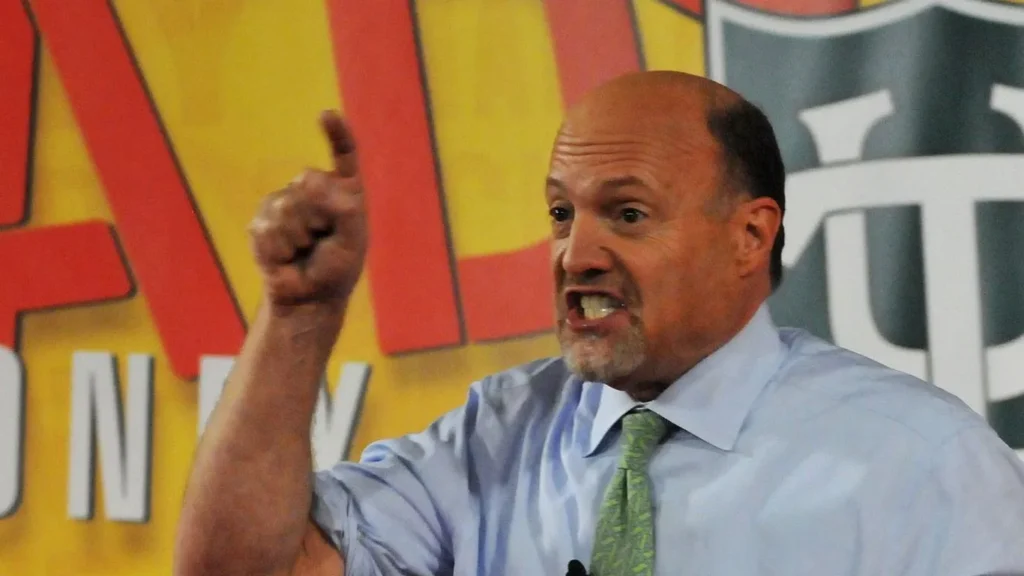
Cramer’s Intel thesis is not just about one good quarter. He sees three major growth engines behind the stock. First, Intel’s CPUs remain important as AI shifts from training giant models to running inference closer to users and devices. Second, advanced packaging and automotive chips give Intel exposure to high-demand markets where better margins may be possible. Third, the foundry business is finally showing momentum. Intel 18A has moved into high-volume manufacturing in Arizona and Oregon, and Intel’s Xeon 6 was selected as the host CPU for NVIDIA’s DGX Rubin NVL8 systems. Together, those pieces make Intel look less like an old chipmaker and more like a central player in the AI supply chain.
Why the Balance Sheet Looks Different Now
One reason investors had abandoned Intel was fear that the company’s turnaround would simply cost too much. Foundry expansion, new manufacturing technology, and AI infrastructure all require enormous capital. But the picture looks different now. NVIDIA’s $5 billion equity investment gave Intel a major vote of confidence from the most important AI chip company in the world. The $5.7 billion CHIPS Act disbursement also helped support Intel’s domestic manufacturing ambitions. Add in recent insider buying from CFO David Zinsner, and the story looks stronger than it did a year ago. For Cramer, the message is clear: Intel is no longer just asking investors to believe. It is showing evidence that powerful players are backing the comeback.
The Memory Boom Cramer Is Riding Alongside
Machine Learning, Artificial Intelligence, Circuit Board, Computer
Cramer’s Intel call also fits into a broader theme he has been repeating: AI spending has to be justified by profits, not just press releases. That is why memory suppliers have become such a major part of the current chip rally. Micron has surged as demand for AI-related memory explodes, with huge revenue growth, stronger margins, and bullish guidance pulling more investors into the stock. SanDisk has also rallied sharply on booming datacenter demand. Cramer’s point is that the market is rewarding the companies selling the products AI builders desperately need. Intel is not a pure memory play, but it sits in the same larger trade: companies that provide the hardware backbone of AI are getting rewarded.
The Customers Are Taking the Punishment
The other side of Cramer’s argument is more cautious. He believes Wall Street is rewarding the suppliers of high-demand AI hardware while putting more pressure on the customers spending billions to buy it. That creates a risk for companies tied to hyperscaler spending. Marvell and AMD have both benefited from custom silicon, GPUs, and AI infrastructure demand, but they remain vulnerable if investors start questioning whether massive AI spending will produce enough profit. Cramer is not saying these companies are weak. He is saying expectations are high, and any slowdown in hyperscaler capital spending could trigger a sharp repricing. In this market, winning stocks can still be punished if the math stops working.
What Intel Has to Prove Next

Intel’s comeback story is powerful, but the stock now has much less room for disappointment. The company still has to prove it can ship 18A wafers at scale, win more Xeon placements in next-generation AI systems, and keep narrowing foundry losses. That is the difference between a real turnaround and a short-term comeback trade. Cramer believes Lip-Bu Tan is doing exactly what Intel needs, but investors still have to weigh valuation against execution risk. With the stock already up sharply, the biggest question is no longer whether Intel has improved. It is whether enough future success is already priced in. For investors, Intel may be back, but it still has to keep delivering.