
Where we heard itCNBC’s Squawk Box, “Experts react to weaker-than-expected September jobs report,” Oct. 2, 2026. Speakers: Saira Malik, chief investment officer at Nuveen; Kitty Richards, Groundwork Collaborative; Peter Earle, American Institute for Economic Research. Watch at CNBC
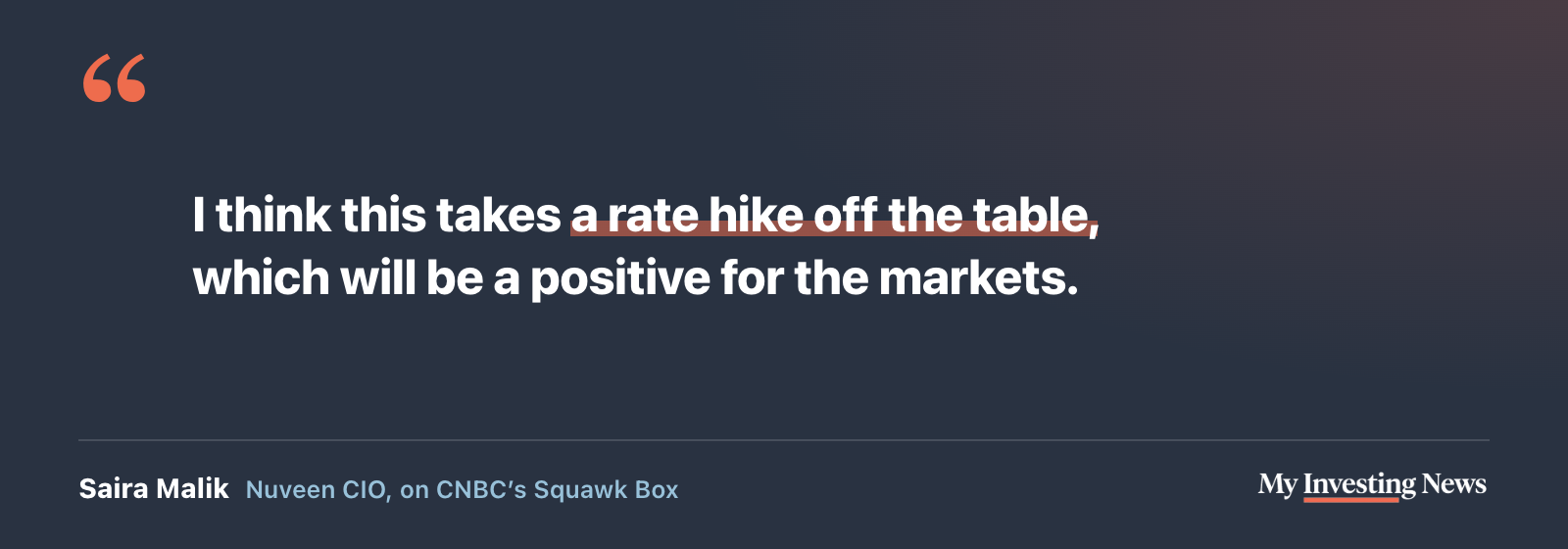
Nuveen Chief Investment Officer Saira Malik went on CNBC Friday and said a soft September payroll number is good news for investors: “Payrolls missing expectations are a relief for the markets because markets have been focused on two headwinds. Number one, is the FOMC going to raise rates in October? And number two, this consistently march higher of Treasury yields. On the FOMC, I think this takes a rate hike off the table, which will be a positive for the markets.”
The first challenge is the risk of more Federal Reserve tightening at the October Federal Open Market Committee meeting. The second is the steady rise at the long end of the Treasury curve. After the report, traders put the odds that the Fed holds rates steady in October at 77%, according to CNBC, citing the CME Group’s FedWatch tool.
Ten-Year Yield Sits Near Its Highest Level in a Year
The ten-year Treasury yield closed at 5.28% on October 2, 2026, the latest reading in the St. Louis Fed’s ten-year Treasury series. That was just below the 5.29% it reached on September 30, the highest ten-year yield in the trailing year, and left it at about 99% of the past year’s range.
One soft report that cools hike expectations gives stock investors room to breathe, though a yield near a one-year high still signals an intact upward trend.
Stocks Move Higher After the Report
The broad market is up. The SPDR S&P 500 ETFSPY closed at $769.64 on October 2, 2026, up 0.74% on the day. The fund is up 12.9% year to date and up 15.0% over the past year, before dividends.
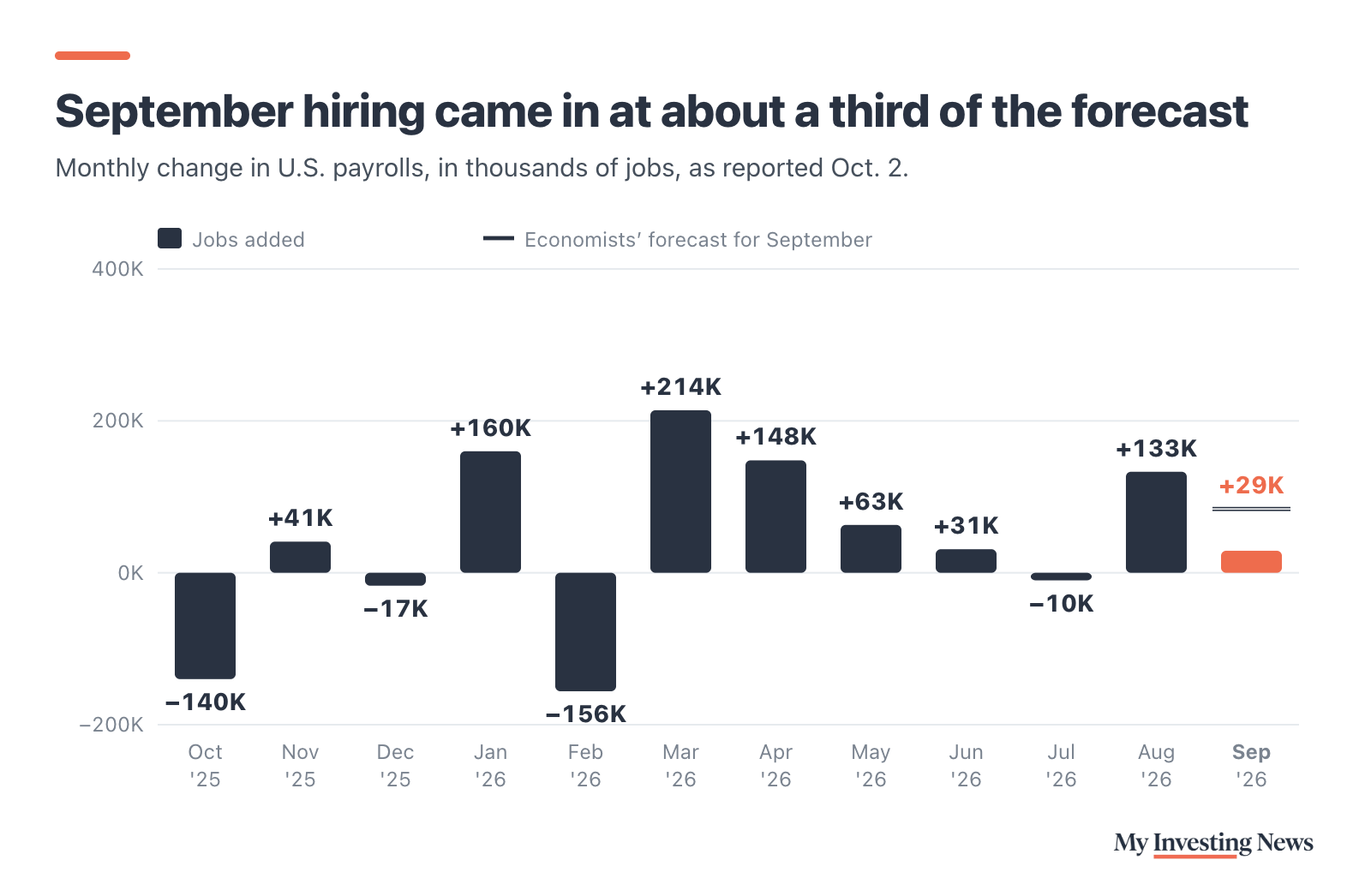
The September jobs report at a glance
Dissent: Good for Markets, Hard on Households
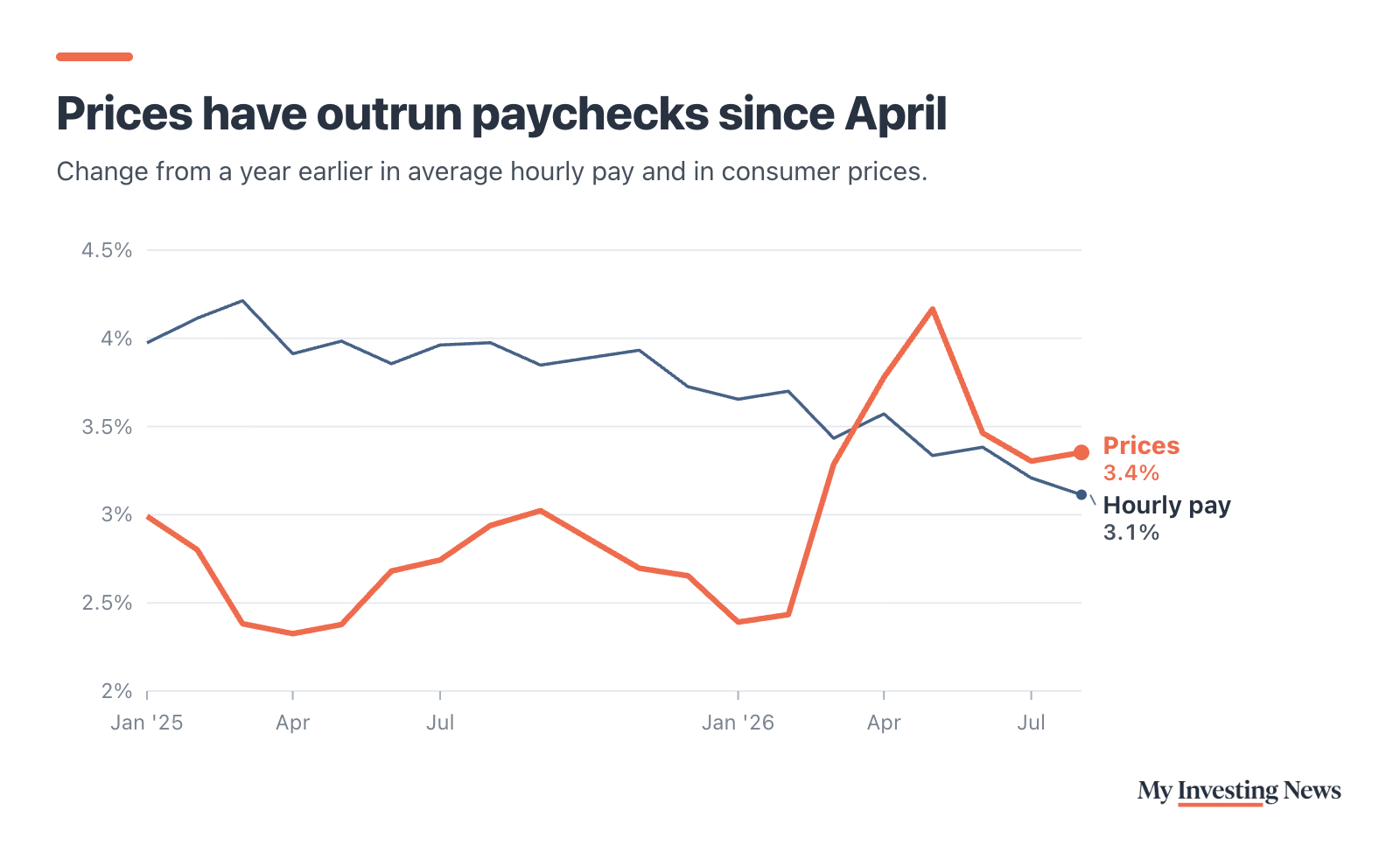
Kitty Richards, a senior fellow at Groundwork Collaborative and a former Treasury Department official, offered a sharp response on the same CNBC panel. She called it unfortunate “the degree to which the good news for the market has become decoupled from good news for working families.” She added: “We’ve got unemployment ticking up slightly. It’s true that, you know, this is a pretty steady labor market at this point, but it’s not delivering wage gains that are keeping up with inflation. So families are getting squeezed.”
The Bureau of Labor Statistics data released that morning put the September unemployment rate at 4.2%, up from 4.1% in August, and average hourly earnings for private employees at $37.81, up 3.0% from a year earlier. Those are the figures cited on the broadcast.
Counterpoint: Output Keeps Expanding
Peter Earle, research director at the American Institute for Economic Research, pointed to output: “We’ve got an economy that’s expanding robustly, despite subdued hiring. The most recent real GDP was the greatest outside of the pandemic recovery since 2006.”
The CNBC host also pushed back on the gloom: “It’s hard to look at this economy and think, wow, this is an economy that is not working,” he said, pointing to 3% wage growth and a 4.2% unemployment rate.
One Report, Three Different Economies
All three speakers looked at the same report and described different economies. Markets care about the policy path. Households care about purchasing power. Economists care about output. A soft payroll number can help stock valuations, mean little for growth, and hurt a worker whose raise doesn’t cover rising costs, all at once.
Is a Weak Jobs Report Good News?
For stock investors, the answer is yes in the near term, because it eases both challenges Malik named. For workers, it depends on whether pay is keeping up with costs. Watch whether the ten-year yield breaks its upward trend, what the Federal Open Market Committee signals at its October meeting, and whether the next wage and inflation reports settle the debate between Richards and her critics.
Malik sees the weak September jobs report as relief for stocks because it makes an October rate hike unlikely. The risk is that the other headwind she named has not gone away: the ten-year yield closed at 5.28% on report day, a hair below its one-year high, and pay is still rising more slowly than prices.