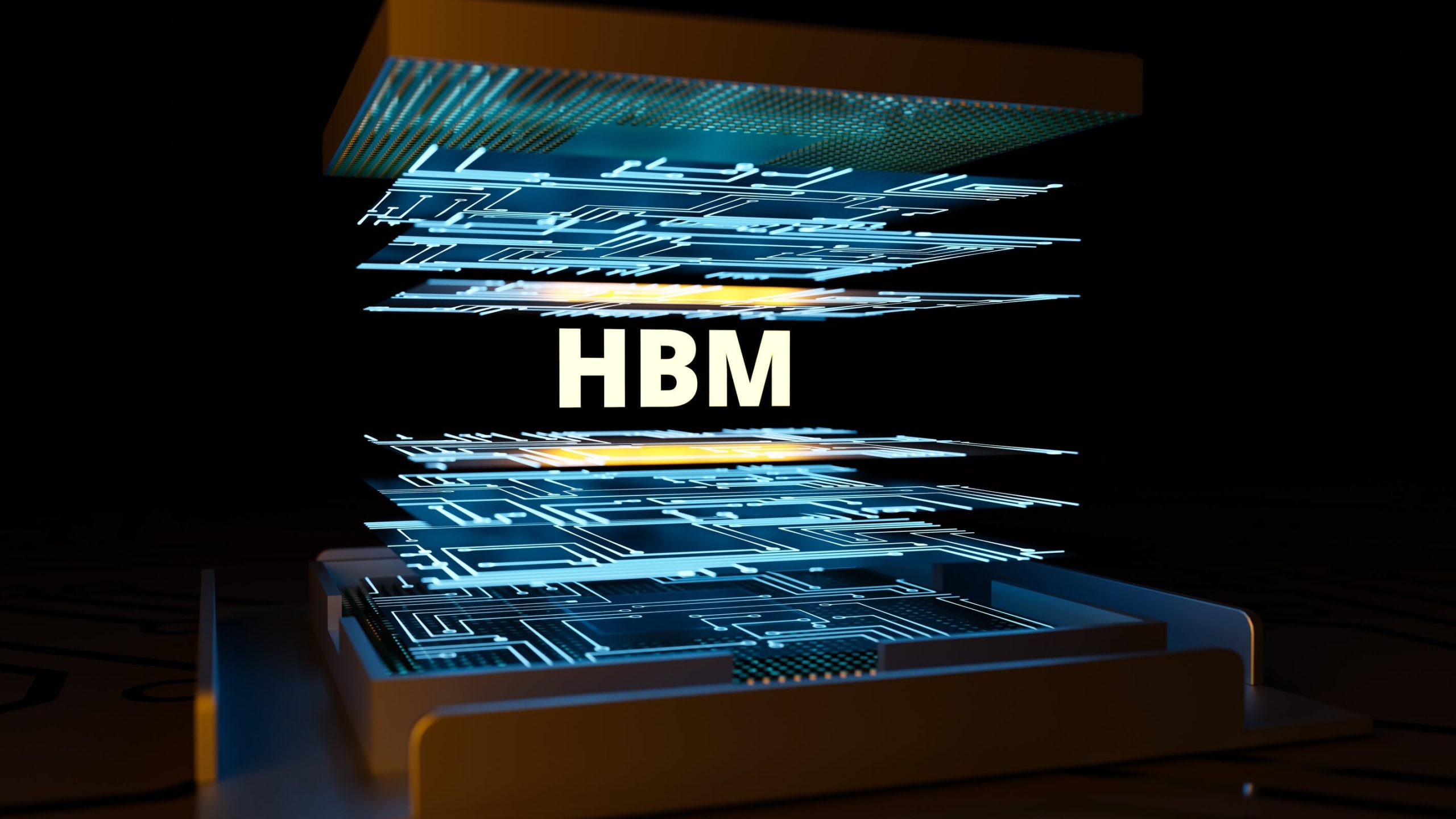
The AI boom is reshaping the memory-chip business in a way investors have not seen in previous semiconductor cycles. High-bandwidth memory, or HBM, has become essential to advanced AI accelerators, and manufacturers cannot add meaningful capacity overnight.
That is why a new report out of South Korea matters. Samsung Electronics has reportedly allocated roughly 70% of its memory production capacity through 2031 to long-term agreements with large customers including Nvidia, Microsoft, and Google. Seoul Economic Daily
For investors, that does not mean memory will remain scarce for the next five years. It does suggest that some of the world’s largest technology companies are treating access to memory as strategic infrastructure rather than something they can simply buy when needed.
Big Tech Is Reserving Memory Years in Advance
According to Seoul Economic Daily, Samsung has committed about 70% of its memory capacity through 2031 under long-term agreements. The report says major counterparties include Nvidia, Microsoft, and Google. It also cited a 36GB HBM3E product at roughly $2,100 on the spot market, compared with long-term contract pricing of about 500,000 to 700,000 won, or roughly $350 to $500 depending on exchange rates. Seoul Economic Daily
Those numbers come from industry reporting rather than Samsung’s own disclosures, so investors should treat them as market estimates rather than company guidance. But the broader trend is independently supported by TrendForce, which says U.S. cloud providers are increasingly using multiyear contracts to secure memory supply. TrendForce also expects HBM and server-memory demand to remain tight in 2027 as AI infrastructure spending continues to absorb DRAM capacity. TrendForce
That is important for companies such as Micron because customers appear increasingly willing to trade purchasing flexibility for guaranteed access.
New Factories Will Help, but Supply Takes Time to Arrive
Samsung, SK hynix, and Micron are all expanding capacity, but semiconductor fabs take years to build, equip, qualify, and ramp. TrendForce expects additional DRAM capacity to begin coming online in 2027, yet says substantial output from those projects is unlikely before 2028. HBM also consumes more wafer capacity than conventional DRAM, which limits how quickly additional factory space translates into usable supply. TrendForce
SK hynix provides a good example of the scale and timing involved. The company recently broke ground on a more than $4 billion HBM packaging operation in Indiana, with mass production scheduled for the second half of 2029. Its CEO has said the current memory shortage could persist through the end of 2030. SK hynix Newsroom
SK hynix also approved roughly 54.3 trillion won, about $38 billion at the time of announcement, for new fabs in Yongin and Cheongju. The investment runs through 2031 and is intended to expand long-term memory production capacity. SK hynix Newsroom

Falling AI Costs Could Actually Increase Memory Demand
There is another reason investors should be careful about assuming additional supply automatically ends the squeeze. If AI computing becomes cheaper, companies may simply use more of it.
Economists sometimes describe this as the Jevons paradox. In 1865, British economist William Stanley Jevons argued that making steam engines more efficient did not necessarily reduce coal consumption because cheaper energy encouraged greater use. Yale Energy History
A similar dynamic could develop in AI. Lower inference costs could make it economical to run more models, serve more users, automate more business processes, and deploy AI in applications that are currently too expensive. That would not guarantee permanently high memory prices, but it could keep HBM demand growing even as individual systems become more efficient.
That distinction matters for investors. Memory demand does not depend only on how much HBM each accelerator needs. It also depends on how many accelerators, servers, and AI workloads companies ultimately deploy.
Micron and Its Rivals Still Have a Strong Tailwind, but It Is Not Risk-Free
The current setup is favorable for memory producers. TrendForce expects AI-related demand to continue crowding out conventional DRAM capacity in 2027, while negotiations for next year’s HBM supply remain difficult as manufacturers push for higher prices. TrendForce
Micron is already benefiting from that environment. The company says HBM4 is shipping in high volume for its lead customer platform and that HBM4E is expected to enter volume production in calendar 2027. Micron Technology
Still, investors should not assume today’s pricing power lasts indefinitely. Memory has historically been cyclical, and billions of dollars of new capacity are now under construction. A slowdown in AI capital spending, customer over-ordering, better manufacturing yields, or faster-than-expected supply growth could eventually pressure prices.
The more defensible investment thesis is not that memory will stay scarce forever. It is that AI demand has created a multiyear period in which new capacity may struggle to catch up quickly, while the largest customers are already reserving future supply years before those factories are fully operational.