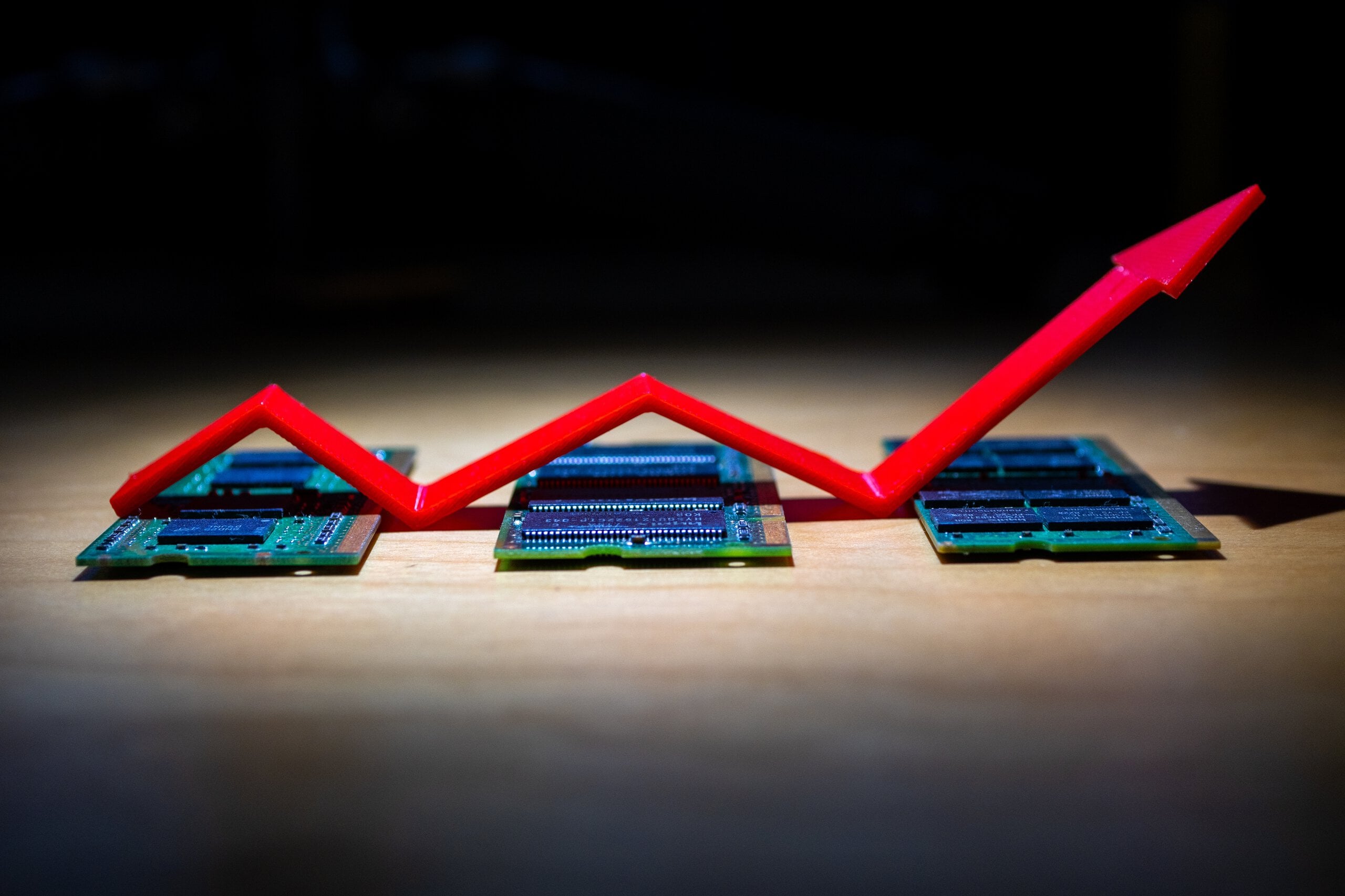
Gene Munster, managing partner at Deepwater Asset Management, says the market is underestimating how much the largest cloud spenders will put into AI next year. He expects a multi-year hardware supercycle running from 2027-2029. One of the two public stocks he owns has already priced in a lot of that optimism. Micron Technology (NASDAQ:MU | MU Price Prediction) traded at $1,062.82 as of 1:52 PM ET on October 5, 2026, up 479.34% over the past year.
Munster made the comments on CNBC’s Fast Money. His figures are his own estimates.
Munster Says Wall Street’s Capex Estimate Is Too Low
His most concrete claim is about spending. By Munster’s account, Wall Street expects hyperscaler capex to grow 40% next year. His own estimate is 60% or better. Both numbers are his own estimates.
Capex forecasts set earnings expectations for everything sold into data centers, including memory. If consensus is too low, the supply chain makes more than investors expect. Micron management agrees. In its latest earnings release, the CEO said “we expect an even stronger fiscal 2027.” On the call, he added: “We do not have line of sight to when supply and demand will return to balance.”
Local Inference Is His 12-Month Theme
Munster pointed to local inference, meaning AI that runs directly on your phone or computer, as the major theme to watch about 12 months out. “That means that the hardware that you have is likely going to have to be upgraded. We’re going to see an AI multi-year supercycle on hardware,” he said. Hardware companies, “as boring as they are,” could have “a great run” over those years, he noted.
Munster made his name covering Apple (NASDAQ:AAPL), and his argument runs straight through it. On Apple’s July call, the CEO called rising memory costs “a 100-year flood on the memory pricing.” That same memory is what devices need to run AI locally.
Under 1% Daily Adoption Cuts Both Ways
Munster says less than 1% of Americans use personal AI agents daily, signaling the wave is still early. Low adoption also fits a product people haven’t found a use for yet; the number alone can’t tell which story is true.
A “Go Fast” Message Versus September’s Selloff
Munster said the federal position on AI self-regulation was great news for the AI trade, and he summed up the message as “go fast.” That is his take.
The market reacted differently in mid-September. Global AI stocks fall as industry leaders called for slowing development, Reuters reported. The Guardian reported that the slide followed calls to slow “reckless” development. Fast Company reported that chip stocks led the selloff. Micron fell 5% after warnings from industry leaders, according to Startup Fortune. Munster says the regulatory mood has switched since then. One analyst called the selloff overblown, citing zero GPU slowdown, according to finance.yahoo.com.
Considering a Bold Forecast Against a Huge Run
| Period (through Oct. 5, 2026 afternoon) | Micron | Apple |
|---|---|---|
| Today | -1.12% | -0.22% |
| Past month | +11.16% | +2.46% |
| Year to date | +272.61% | +22.82% |
| Past year | +479.34% | +29.98% |
Apple traded at $332.97 as of 1:52 PM ET today. Munster’s core claim is that spending is underestimated, yet the clearest stock linked to that view has already had an extraordinary run. He could still be right if earnings keep up, but the argument and valuation background are very different today than a year ago.
Munster disclosed owning both Apple and Micron. Anyone publicly forecasting a hardware supercycle while holding a memory stock has an interest in that view being correct.
A panelist cited economist Robert Solow’s 1987 observation that the computer age was visible everywhere except in productivity statistics, and noted that earlier general-purpose technologies took a long time to reach broad adoption.
Two Calls Investors Can Check
Munster’s capex call has a defined window, and hyperscaler guidance will settle it. His local inference call has a stated 12-month horizon. Both can be checked against what actually happens.