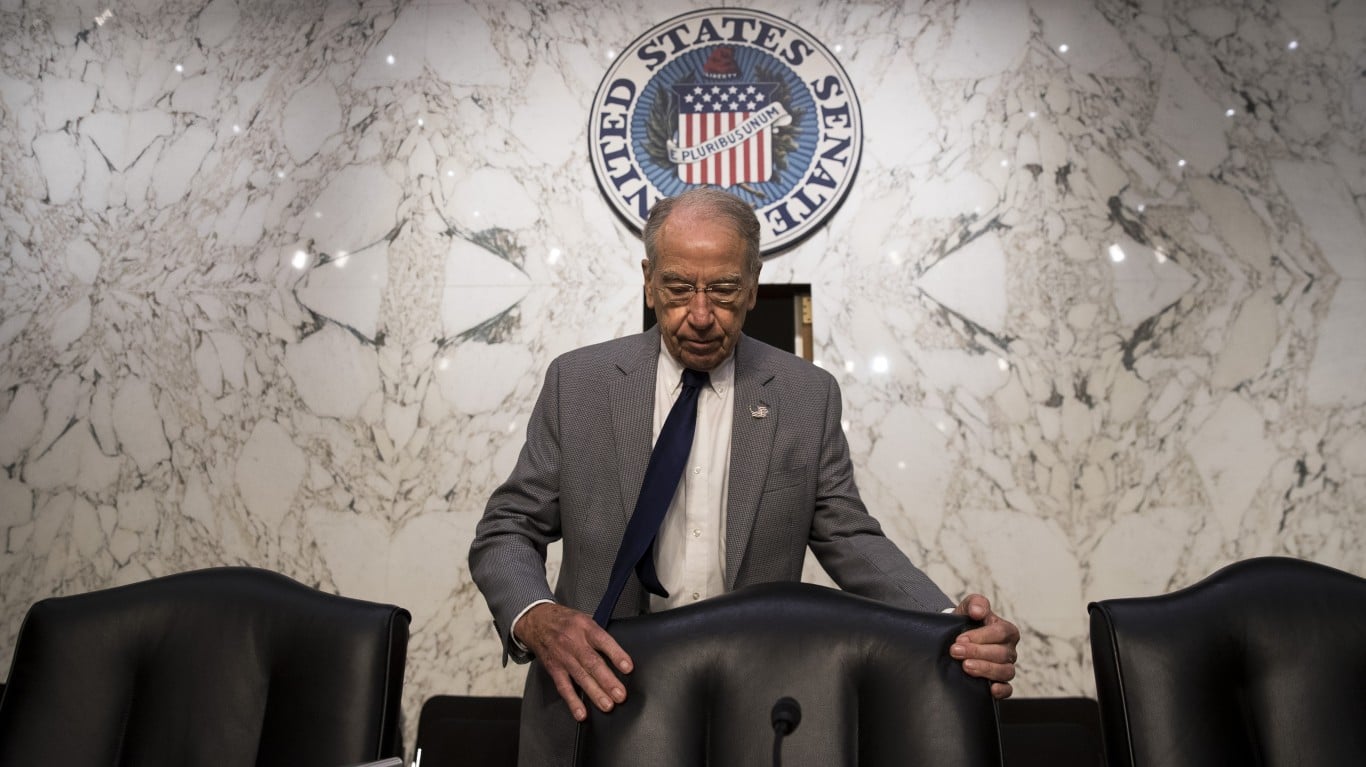
A preliminary Senate vote on the CLARITY Act, the long-awaited U.S. crypto market structure bill, fell short in the Senate on September 15, 2026, amid an ethics fight over the president’s crypto wealth. Reporting has framed the failure as a fight about conflicts of interest rather than a technical disagreement about how digital assets should be regulated, and that distinction is doing most of the work in today’s market reaction, according to Bloomberg.
On Bloomberg’s Balance of Power, the host said “This seemed to come down to conflicts of interest, ethics language around the president’s own personal finances. He is a frequent trader.” Bloomberg correspondent Kailey Leinz added that “A lot of this came down to the president’s interest in the space where he has made billions of dollars tied to his crypto holdings.” Bloomberg’s own reporting cited in the segment put the president’s trading activity at approximately 29,000 trades, more than all members of Congress combined.
The sequence matters. Fortune reported on September 14, 2026 that Clarity Act odds had soared as Trump approved new ethics provisions for the bill. The concessions did not save the vote. Unchained reported that Democrats cited Trump’s crypto conflicts in blocking the Clarity Act, and Bitcoin Magazine reported that the Senate blocking the bill likely kills it for 2026, with attention shifting toward a possible lame-duck session.
Downing Breaks With the Administration on Two Fronts
Rep. Troy Downing, a Montana Republican, used his Balance of Power appearance to distance himself from two separate administration positions. On the Treasury’s floated direct-payment idea, Downing said of the proposed $5,000 checks discussed by Secretary Bessent: “I think Secretary Bessent’s comments touched on that a little bit. Obviously that would be a big expensive thing, not knowing where the money is coming from, which would add to the deficit and would be inflationary.” That comment was about the direct-payment proposal, separate from the crypto bill.
On monetary policy, Downing said “I expect an increase. Watching inflation numbers not hitting the target, and all the things coming in to contribute to that, I think Kevin Warsh has no choice but to have a slight increase there.” The Federal Reserve decision is scheduled for 2 p.m. ET today and had not been announced at the time of writing. The rates backdrop is live: CNBC reported that the 10-year Treasury yield reached 5%, its highest level since 2007.
Market Reaction: Token Steady, Crypto Equities Hit Harder
Bitcoin (CRYPTO:BTC) traded at $75,794.99 as of 11:52 a.m. ET on September 16, 2026, down 0.88% over the trailing 24 hours and down 3.16% over the past week from $78,283.98 on September 9, 2026, according to Bitcoin Magazine. The token moved modestly. Crypto-linked equities absorbed the harder blow: TradingView reported that Coinbase (NASDAQ:COIN | COIN Price Prediction) stock sank 10% as the Clarity Act stalled.
Coinbase has been the most visible corporate voice pushing for market structure legislation. On the Q2 2026 earnings call, CEO Brian Armstrong told analysts that failure would be manageable for the company, saying “we already do many of the things that would be required by the Clarity Act as just sort of a good best practice” and that “it’s really the American consumers, as you mentioned, who would lose if clarity doesn’t pass. I think Coinbase would be fine.” Armstrong also argued a bill would create “durability through multiple administrations” that supports longer-term investment.
Coinbase’s own Q2 numbers underline why regulatory clarity has become a rallying cry. The company posted revenue of $1.22B, down 18.5% year over year, and a net loss of $359.5M versus a $1.43B profit a year earlier, per its 8-K filed July 30, 2026. Armstrong told analysts Bitcoin-related revenue has fallen to 12% of the business, with prediction markets, perpetual futures, subscriptions, and stablecoins now doing more of the work.
What to Watch Next
Two catalysts sit on top of each other. The Fed decision lands this afternoon, and reporting suggests the CLARITY Act’s near-term path has narrowed sharply, according to Unchained. Coinbase shares are down 26.55% year to date and down 49.21% over the trailing year, so the equity is already carrying a heavy discount for regulatory uncertainty going into whatever comes next, according to CNBC.