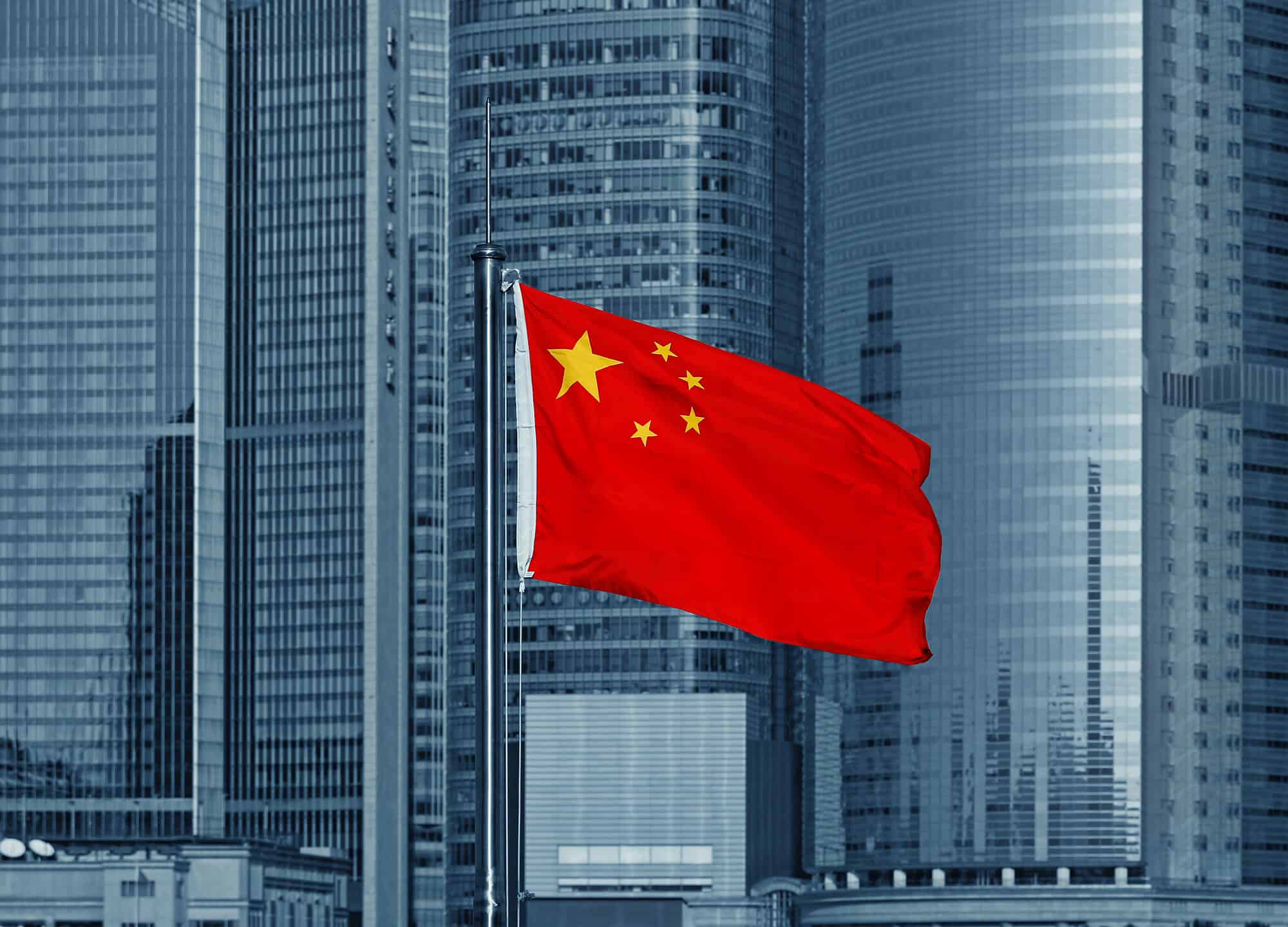
Treasury Secretary Scott Bessent is meeting Chinese Vice Premier He Lifeng in New York this weekend, and artificial intelligence is one of the reasons. The Financial Times reported on September 15, 2026 that the sit-down would come ahead of a Trump-Xi summit, and the South China Morning Post reported the same day that Bessent had confirmed the weekend meeting days before Xi’s US visit. The Hindu, reporting on September 16, 2026, said Bessent indicated the US is open to discussing shared AI risks with China, according to Reuters. This has been building for weeks. CNBC reported on September 5, 2026 that the two countries were gearing up for mid-September AI safety talks, the South China Morning Post reported on September 11, 2026 that an AI fight was shadowing final preparations for Xi Jinping’s White House visit, and Reuters reported on September 16, 2026 that AI rivalry hangs over the Trump-Xi talks.
Anja Manuel, executive director of the Aspen Security Forum, spoke on CNBC after returning from track-two dialogue in China, unofficial talks between non-government experts who can speak more freely than officials.
Same Fears, Different Flags
Manuel found that safety worries look similar on both sides. Anja Manuel said “the American, the Chinese safety community in AI is worried about similar things than ours are, loss of control, having limited things like notifications when something goes wrong, when agents do something wrong, thinking about AI enabled cyber attacks.”
Skip the Grand Bargain
Manuel welcomed Bessent’s planned discussion with He Lifeng and was explicit that a sweeping deal is the wrong ambition. Anja Manuel said “Maybe there will be more in depth dialog. This is all fantastic. It doesn’t mean there has to be a grand bargain. It just means that the Chinese and Americans have to understand each other’s positions more carefully and maybe agree on some very limited protections.”, according to Aspen Security Forum
Her Cold War analogy is instructive. Anja Manuel said “We talked to the Soviet Union about nuclear weapons for 60 years. There was no trust. But over time, humans understood what the other humans were likely to do. And that made for much more stability. So again, I don’t think we’re looking for a big breakthrough here. We’re looking for small things, saying, let’s notify each other when our agents are out of control. Let’s have the same criteria for testing our models for dangerous cyber bio chemical types of capabilities. Those are small steps, but they’re really important.” Two proposals: mutual notification when agents malfunction, and shared testing criteria for dangerous cyber, biological and chemical capabilities.
Not Naive About Beijing
Anja Manuel said “The Chinese are not going to let AI or any other technology threaten the rule of the Chinese Communist Party. So the censorship of AI in China is extreme, according to Aspen Security Forum. We all understand that.” Coordination on catastrophic risk is possible. Alignment on values is not.
Public Opinion and Buildout
Manuel cited a striking gap in public perception. Anja Manuel said 83% of Chinese think AI is going to help them, while Anja Manuel put the comparable US figure at 39%. She also described China’s physical buildout: Anja Manuel said China has identified ten cities with plentiful land and energy where data center clusters are going, and Anja Manuel said that in a couple of years those data centers will have to be 80% clean energy.
Three Positions, One Debate
Manuel occupies a middle position between two other recent voices. A former senior White House AI policy advisor argues recent AI safety incidents are engineering and cybersecurity problems rather than grounds for regulation; a prominent investor argues that AI safety warnings are a commercial strategy to build regulatory moats. Manuel treats the risks as real, treats the Chinese as taking them seriously too, and prescribes narrow technical coordination. .
What to Watch
The New York meeting may yield two governments agreeing to notify each other when something goes wrong and to test their models the same way. Whether that counts as trivial or foundational is the question worth carrying into the next round of talks.