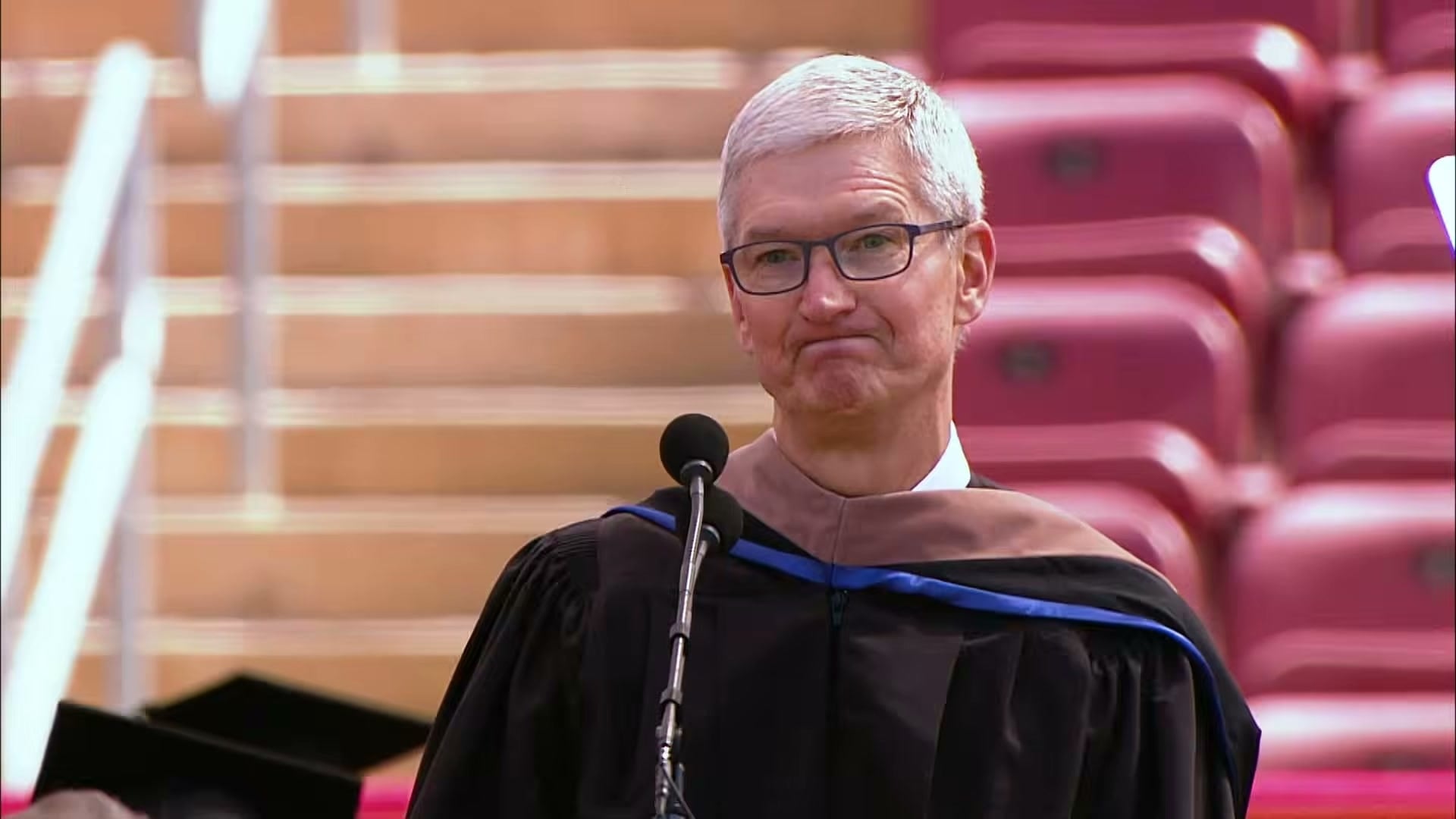
Apple is entering September from an unusual position. The business itself is still exceptionally strong, but the investment case is getting more complicated.
In its fiscal third quarter, Apple reported $109.4 billion of revenue, up 16% from a year earlier, while diluted earnings per share rose 29%. iPhone, Mac, and Services all set June-quarter revenue records. That is hardly the profile of a company in crisis. But investors are starting to pay closer attention to two pressures that could matter more over the next year: growing regulatory pressure on the App Store and sharply higher memory costs. Apple
For retirees and long-term shareholders, that distinction matters. Apple does not suddenly become a bad investment because one quarter introduces new risks. But when a stock has already delivered substantial gains, even modest pressure on high-margin businesses can change what investors are willing to pay for future earnings.
Editorial Use Only. BANGKOK, THAILAND – FEB 21: Apple Inc. Logo, is USA multinational technology company that designs, develops, and […]
Apple’s Services Business Is Still Strong, but the App Store Is Under More Pressure
Apple’s Services business remains one of the most profitable parts of the company. In the June quarter, Services gross margin was 75.6%, compared with 40.1% for Products. That gap helps explain why investors have valued Services growth so highly: recurring revenue from subscriptions, payments, cloud services, and the App Store can be substantially more profitable than selling hardware. SEC
The concern is not that Services has stopped growing. Apple itself said Services revenue set a June-quarter record. The issue is that the App Store’s economics are being challenged by court decisions and regulatory changes that give developers more flexibility around payments and distribution. Recent reporting also points to weaker U.S. App Store spending and lower estimated commission revenue. That does not threaten Apple’s overall business by itself, but it makes one of the company’s historically dependable profit engines less predictable. Financial Times
For income-oriented investors, that is worth watching because Apple’s dividend is modest relative to many traditional income stocks. Much of the appeal still depends on earnings growth, share repurchases, and long-term capital appreciation rather than current yield.
Rising Memory Costs Are Starting to Show Up in Apple’s Pricing
The second pressure is more immediate: memory chips have become considerably more expensive as AI data-center construction absorbs more supply. Tim Cook described the situation as a “100-year flood” in memory pricing and said Apple had reluctantly raised prices because absorbing the increases was no longer practical. Apple increased prices across a range of Macs, iPads, and other products this summer. MacRumors
Higher component costs matter because Apple has to decide how much of the increase to absorb and how much to pass on to customers. Raising prices can protect margins, but it can also make upgrades easier to postpone, especially when consumers are already paying more for housing, insurance, food, and other essentials. That trade-off becomes particularly important heading into a new iPhone cycle.
Apple is not alone. Nvidia also told investors that memory-price increases have been larger than expected and warned that gross margin could fall into the 71% to 72% range later in its fiscal year before recovering. The comparison is not perfect, but it reinforces that this is an industrywide supply issue rather than an Apple-specific problem. NVIDIA Investor Relations

The September Product Cycle Could Reset the Story
Apple has scheduled a special event for Sept. 9, and expectations are naturally high because September is traditionally when the company refreshes its iPhone lineup. Apple itself has not yet confirmed which products will be introduced, so reports of a foldable iPhone or specific price increases should still be treated as expectations rather than established facts. Apple
The backdrop is strong. Apple said iPhone revenue set a June-quarter record, while total company revenue reached $109.4 billion. A successful new product cycle could keep customers upgrading, support Services usage, and give the company more flexibility to manage higher component costs. Apple
There is also a leadership change arriving at almost the same time. John Ternus becomes Apple CEO on Sept. 1, succeeding Tim Cook, who will move to executive chairman. Ternus has spent decades overseeing Apple hardware engineering, so the next product cycle will immediately become an important early test of the new leadership era. Apple
Apple Looks More Like a Hold Than a Sell
The case for owning Apple has not disappeared. The company is still growing, its installed base reached another record, and its June quarter produced record revenue and earnings per share. Services remains highly profitable, while iPhone demand was strong enough to set another June-quarter record. Apple
What has changed is the amount of uncertainty around the next leg of growth. App Store economics are becoming less predictable, memory inflation could pressure margins or consumer pricing, and the market is waiting to see whether the next product cycle is strong enough to offset both.
For retirees or anyone holding Apple as a large long-term position, that argues more for patience than panic. Selling solely because new risks have appeared could mean walking away from one of the most profitable companies in the market. But adding aggressively before the September event also requires confidence that product demand will remain strong enough to absorb higher costs and regulatory pressure.
Apple still looks more like a hold than a sell, but the next few quarters should tell investors whether its current earnings power is enough to keep the valuation supported as these new pressures become more visible.