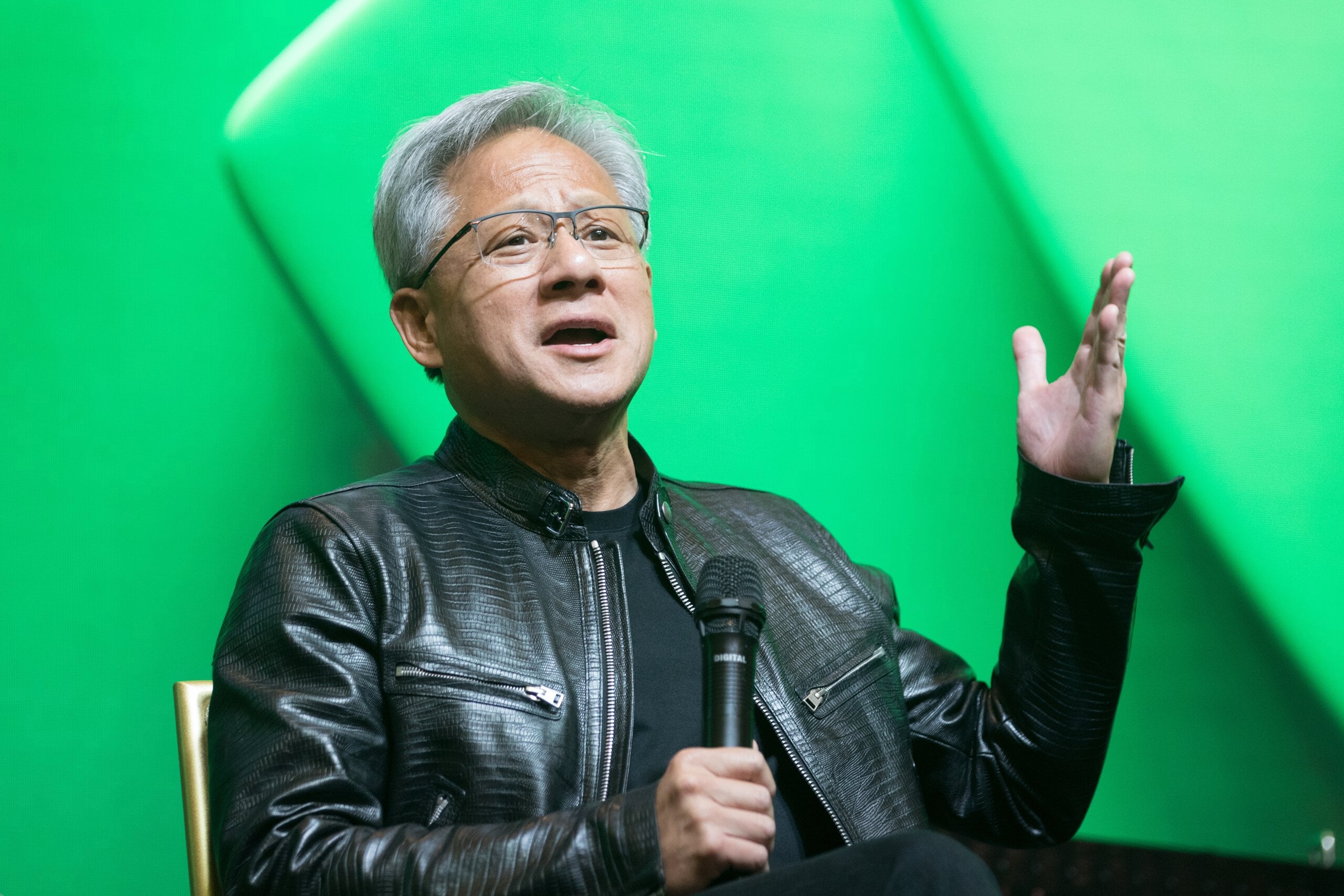
Jensen Huang’s fortune has moved by tens of billions of dollars this year as Nvidia (NASDAQ: NVDA) has moved with the AI boom. Bloomberg estimated his net worth at $185 billion on May 20, up $30.2 billion for the year at that point. Forbes put him at $174 billion on August 1. Those estimates can change quickly because so much of Huang’s wealth is tied to Nvidia stock. For investors, that is actually the more important story. Nvidia’s extraordinary growth has made Huang enormously wealthy, but it has also made the company a much bigger factor in many investment and retirement portfolios.
Most of Huang’s Wealth Still Rides on Nvidia
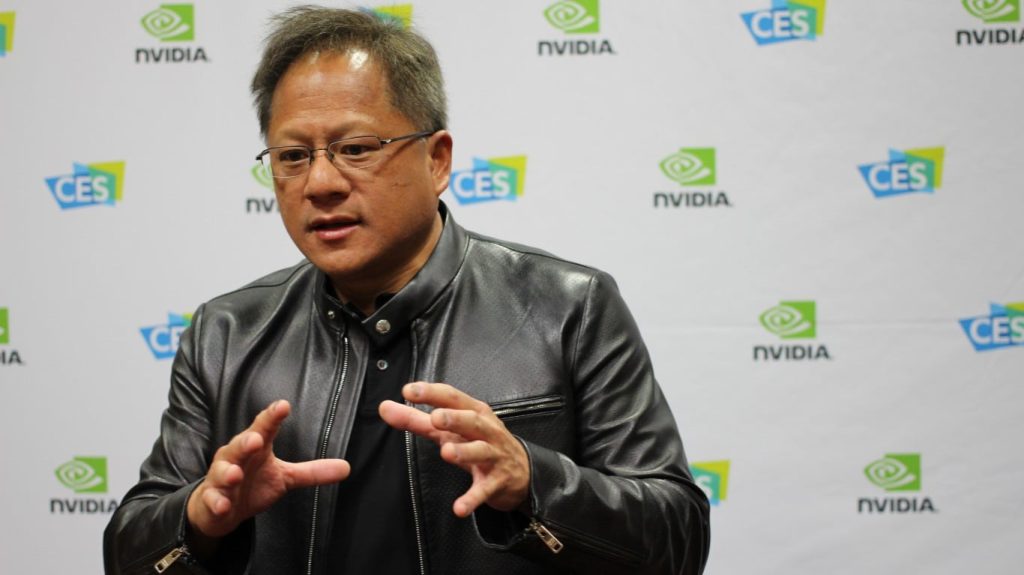
Most of Huang’s wealth is tied to Nvidia. The company’s 2026 proxy lists him as the beneficial owner of 870.6 million shares, or 3.58% of the company, although that total includes family trusts and shares held by the Jen-Hsun & Lori Huang Foundation, in which the Huangs have no personal economic interest. That is why outside wealth estimates can use a somewhat smaller personal stake. The practical point is simple: when Nvidia moves, Huang’s fortune can move by billions with it. That is also worth remembering if you are retired or close to retirement. You may own Nvidia indirectly through a market-cap-weighted index fund, and a company this large can have a meaningful effect on a portfolio even when you never bought the stock by itself.
AI Spending Is Still Doing the Heavy Lifting
Nvidia’s rise is not being powered by a good story alone. In January 2024, Mark Zuckerberg said Meta expected to have about 350,000 Nvidia H100 GPUs by the end of that year, plus other chips bringing its total compute to nearly 600,000 H100 equivalents. The spending boom has grown dramatically since then. Nvidia reported $81.6 billion in revenue for its first fiscal quarter of 2027, up 85% from a year earlier, while Data Center revenue reached $75.2 billion, up 92%. Yahoo Finance showed Nvidia up 21.46% for 2026 through August 14. For shareholders, especially anyone relying on investments for retirement income, the question is no longer whether AI demand is real. It is how long growth at this scale can continue and how much of that growth is already reflected in the stock price.
Nvidia Is Putting More of Its Own Money Into the AI Boom
Nvidia is also putting more of its balance sheet behind the AI ecosystem. Its April 2026 quarterly filing showed $30.2 billion of marketable equity securities and $43.4 billion of non-marketable securities, along with $27 billion of investment commitments. OpenAI separately said in February that Nvidia invested $30 billion in its latest funding round. Anthropic also said its February financing included a portion of Nvidia’s previously announced investment, which had been structured as a commitment of up to $10 billion. That is different from Nvidia’s much larger 2025 plan to invest as much as $100 billion in OpenAI progressively as new Nvidia-powered capacity is deployed. Nvidia itself warns that strategic investments can lose value or fail to produce the expected return. Investors should watch how much AI demand is coming independently from customers and how much is connected to Nvidia-backed financing and partnerships.
The $105 Billion Ohio Deal Needs Context
The new Ohio arrangement is a good example of why the details matter. Nvidia is partnering with SB Energy at the PORTS-Pike Technology Campus in Portsmouth, Ohio, where OpenAI will be the tenant. Nvidia says its support is limited to defined portions of lease and power payments plus a residual-value commitment, not the full cost of the site or every OpenAI obligation. Recent reporting on the related SEC filing places the initial exposure cap at $105 billion. That is still substantial, but it is not the same as Nvidia writing a $105 billion check to build the project. The guarantee phases in as data centers enter service from 2028 through 2030 and declines as OpenAI makes payments. Nvidia reports its next quarterly results on August 26, giving investors another chance to judge whether the growth still justifies the increasingly large commitments around it. Huang’s success can look sudden from a distance, but Nvidia dates to 1993. This has been a long build, not an overnight one.