
Where we heard itMortgage News Daily, daily rate index and Matthew Graham’s rate columns of Oct. 2 and Oct. 5, 2026, plus Freddie Mac’s weekly mortgage survey and the Treasury’s daily yield data.
The 10-year Treasury yield, which mortgage pricing follows, closed at 5.31% on October 5, 2026, a new one-year high above the 5.29% set September 30, 2026. It rose 0.53 percentage points over the prior month, from 4.78% on September 4. The low was 3.97% on February 27, 2026.
Mortgage rates rose along with it. Stocks moved higher. On October 5, 2026, the SPDR S&P 500 ETF TrustSPY closed at $774.83, up 0.67% on the session.
Three Mortgage Gauges Report Three Different Rates
Mortgage News Daily’s daily index put the 30-year fixed at 7.61% on October 5, 2026, a new yearly high just above the 7.60% set September 30. Freddie Mac’s weekly survey read 7.28% as of October 1, 2026, a yearly high. The Mortgage Bankers Association’s weekly reading was 7.30% as of September 30, 2026, also a yearly high, according to Mortgage News Daily.
These readings use different methods and borrower profiles. Points are upfront fees that lower rates. The MBA reports the points borrowers paid alongside its rate, while Freddie Mac stopped publishing points in late 2022, so identical rates can describe different loans.
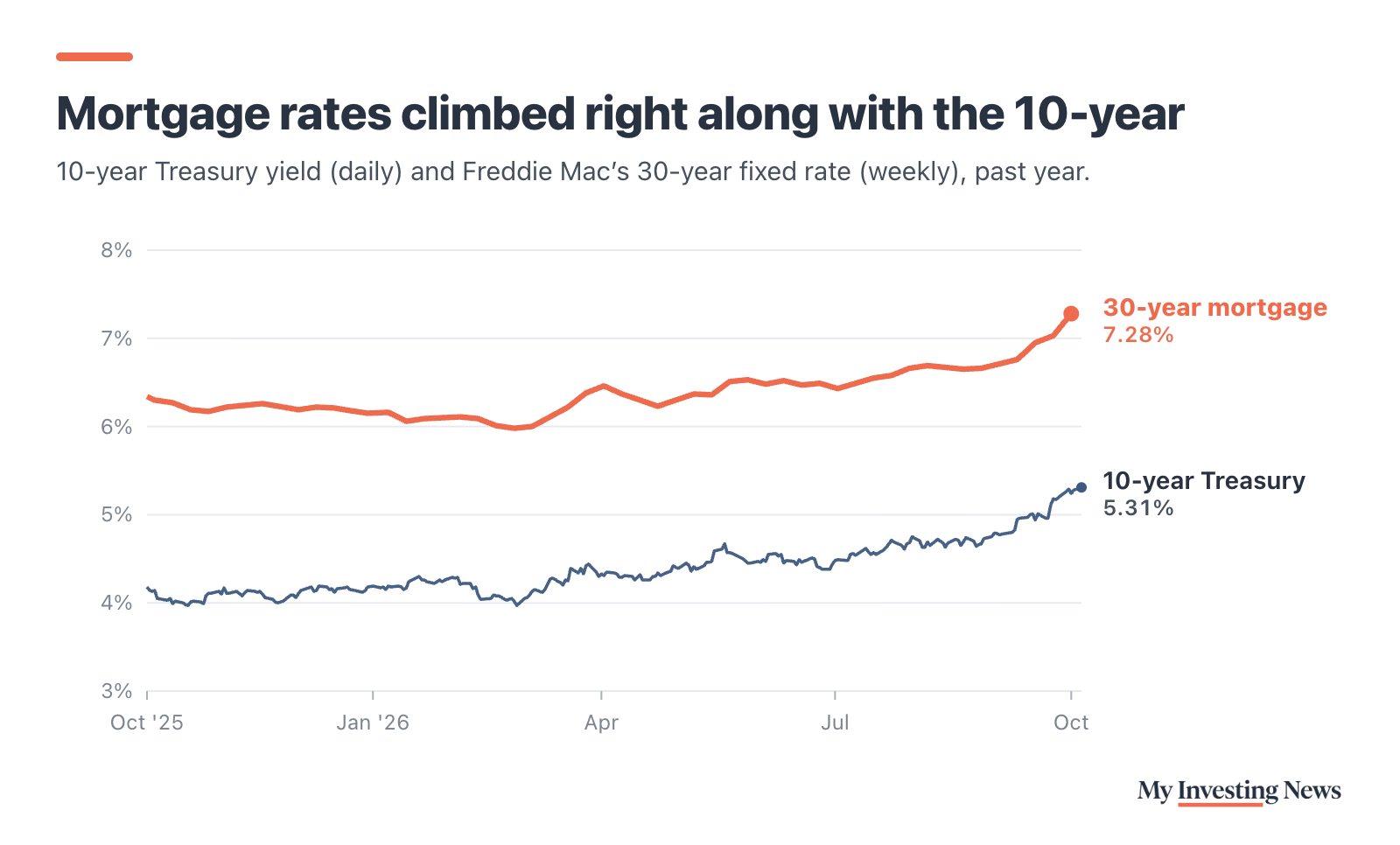
Both weekly surveys are at yearly highs. Mortgage News Daily’s 30-year jumbo rate of 7.70% is also a yearly high. Other October 5 readings from Mortgage News Daily were:
- 15-year fixed: 7.23%, according to Mortgage News Daily
- 30-year FHA: 7.24%, according to Mortgage News Daily
- 30-year VA: 7.25%, according to Mortgage News Daily
- 7/6 SOFR ARM: 6.87%, according to Mortgage News Daily. This adjustable loan is fixed for seven years, then resets every six months.
What It Means for S&P 500 ETF Holders
SPY tracks the S&P 500. On October 5, equities and bonds moved opposite: bonds lost ground, according to Mortgage News Daily, and its rate index rose to a new high. Stock prices rose even as borrowing costs climbed.
Where rates stood before this story ran
Why a Weak Jobs Report Failed to Pull Rates Down
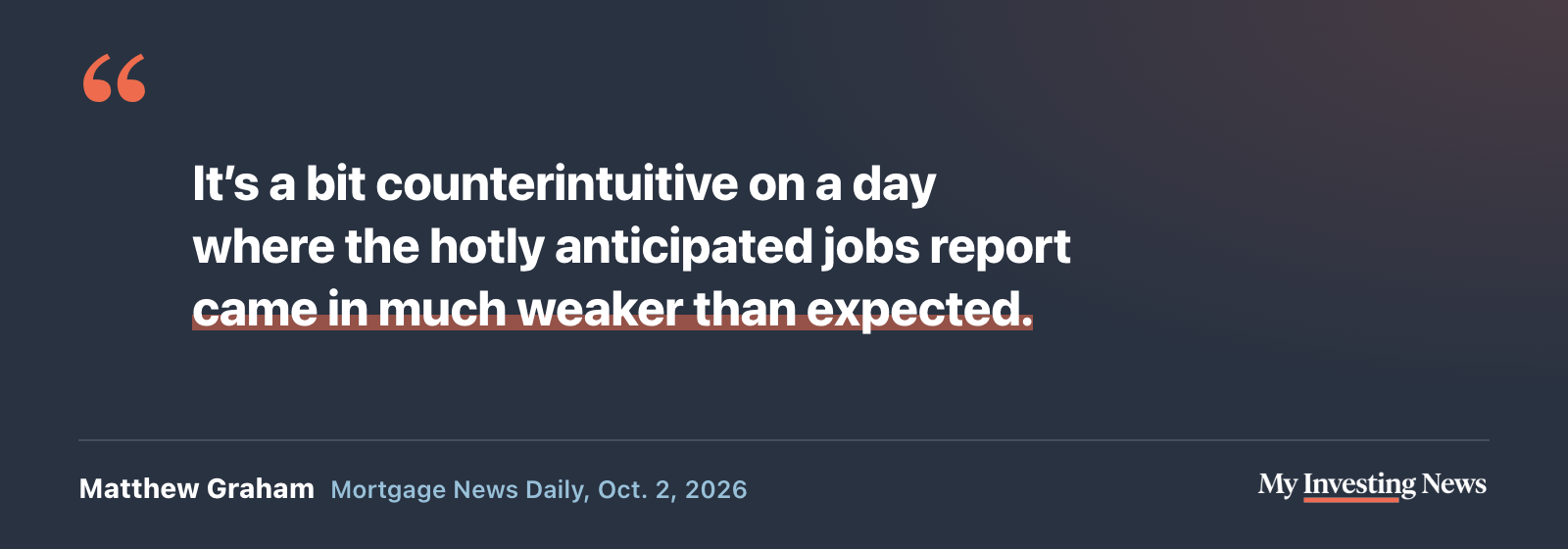
Weak labor data usually pushes rates lower, yet Mortgage News Daily’s index rose 0.04% on Friday, October 2, despite a weaker-than-expected jobs report. Unemployment rose to 4.2% from 4.1%, but unrounded figures were closer: 4.175% versus 4.141%, according to Mortgage News Daily. More people entered the labor force. Bonds gave back early gains as oil prices rallied. The headline looked weak, details looked solid, and bond traders went with the details.
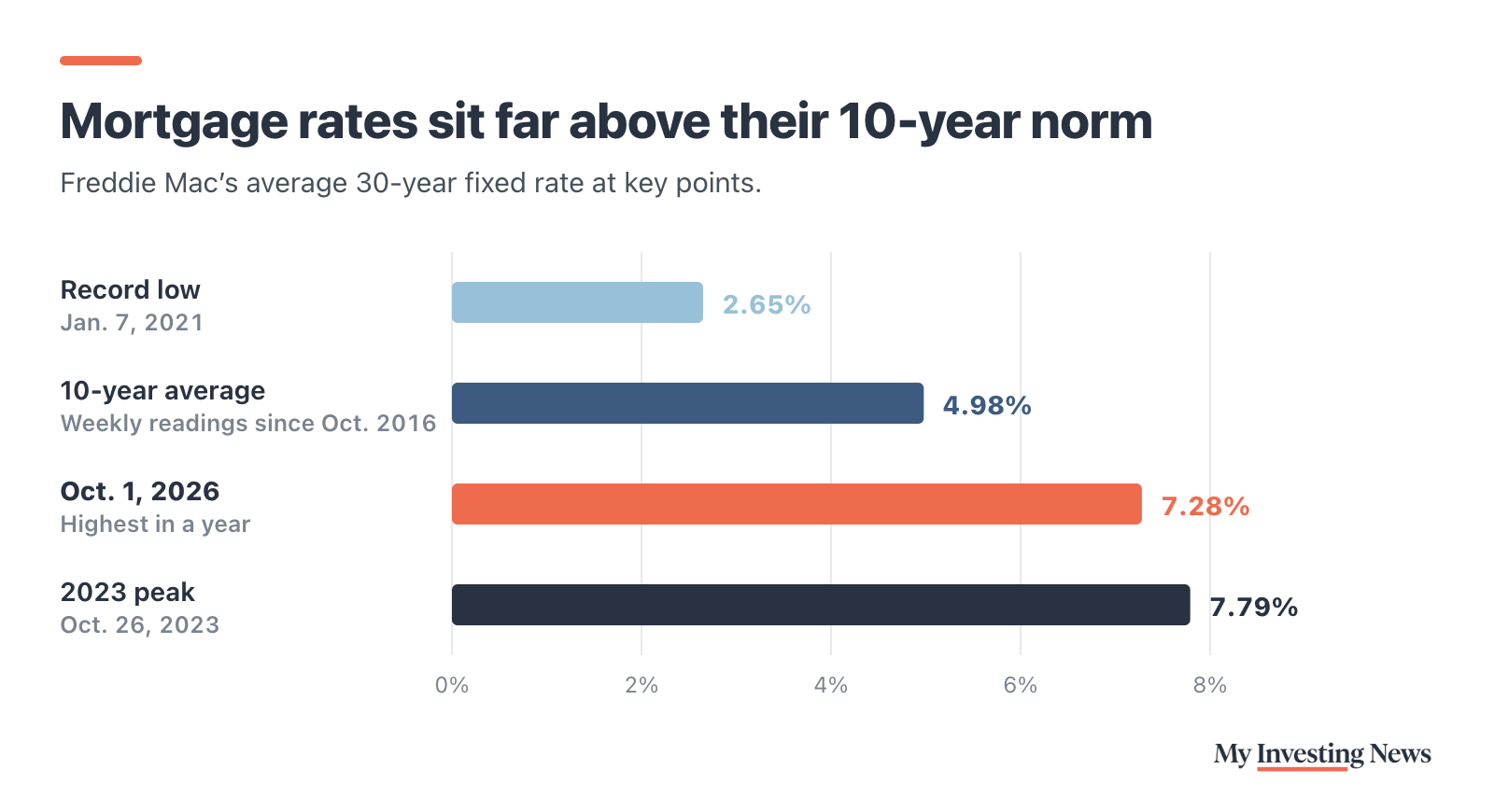
For context, Freddie Mac’s 30-year fixed peaked at 7.79% on October 26, 2023 and bottomed at 2.65% on January 7, 2021. The 10-year average is about 4.98%. The current reading is up 0.57 points from four weeks earlier and 0.94 points from a year earlier.
Does the Rising Stock Market Mean Rates Don’t Matter?
For borrowers, rates matter more than stock gains. Every mortgage measure is at or near its yearly peak, and weak labor data failed to pull them down. The 10-year already closed above its September 30 high of 5.29% on October 5. Watch whether it stays there and whether Freddie Mac’s next survey, due October 8, tops 7.28%.
The 10-year Treasury yield and the main mortgage rate gauges all reached one-year highs in early October 2026, and a weaker-than-expected jobs report did little to slow them. Rising stocks don’t make a mortgage cheaper, and the risk for borrowers is that mortgage rates keep following the 10-year higher.