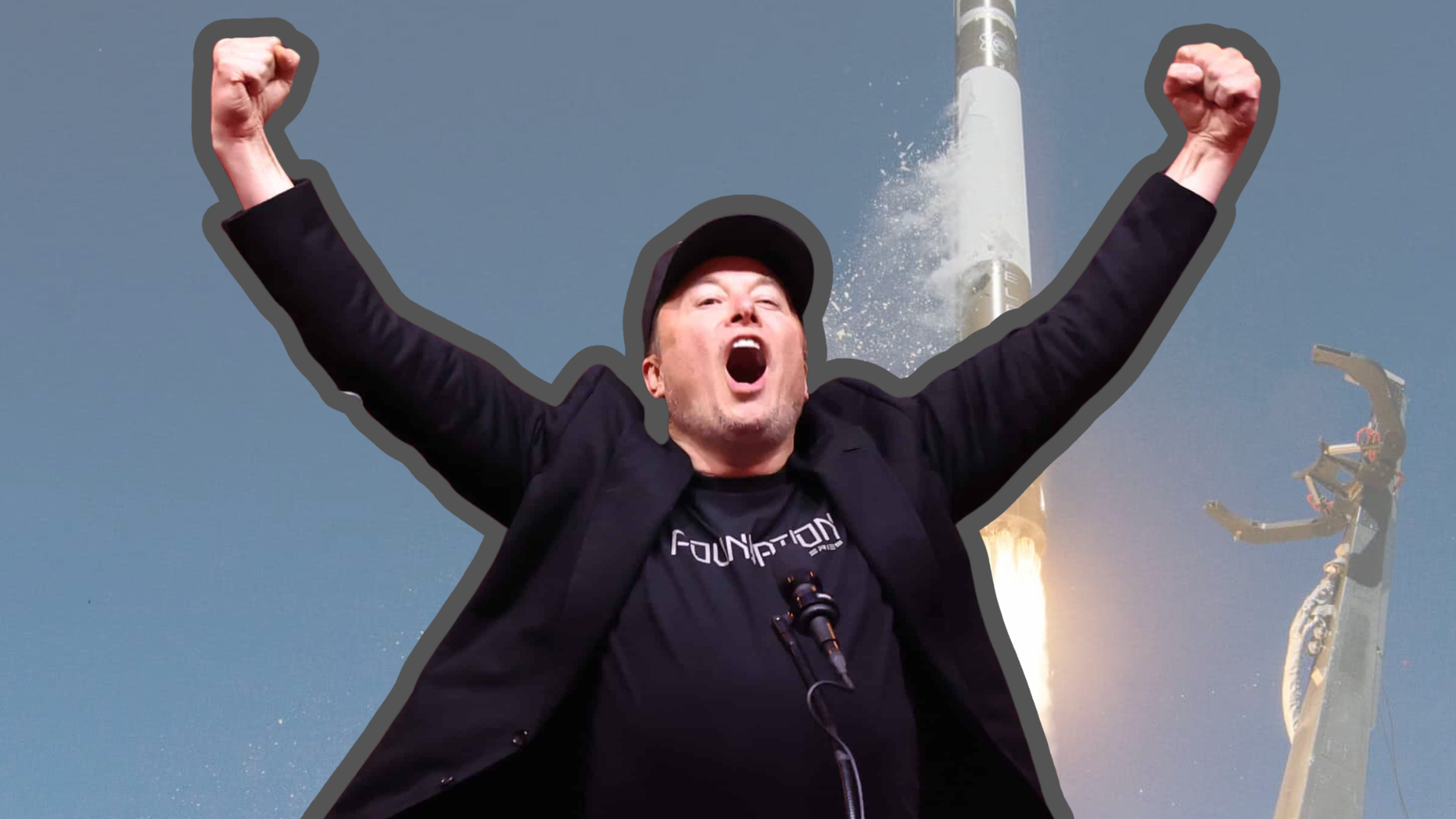
Daniel Sundheim’s D1 Capital Partners disclosed an enormous SpaceX (NASDAQ:SPCX | SPCX Price Prediction) position in its Aug. 14 filing with the SEC. As of June 30, D1 reported 126,042,232 SpaceX shares worth $21.54 billion. Its entire Form 13F table was valued at $34.78 billion, putting SpaceX at 61.91% of those reported holdings. The next-largest position, Maplebear (NASDAQ:CART), was worth about $1.07 billion, or 3.07%.
That gap is the story, but there is an important distinction for investors. A Form 13F is not a complete picture of everything a hedge fund owns or every risk it is taking. It covers specific reportable securities. For retirees and other investors tempted to copy high-profile managers, the useful lesson here is not that 62% is suddenly a sensible SpaceX allocation. It is understanding why a sophisticated investor might have that much conviction, then deciding whether any part of the underlying thesis belongs in your own portfolio.
What D1’s Filing Actually Tells Us

SpaceX shares began trading publicly on June 12, 2026, so the quarter ended June 30 was the first quarter in which the newly public shares could show up on a Form 13F. That makes D1’s disclosure important, but it does not tell us when all 126 million shares were acquired. A 13F is a quarter-end snapshot. It cannot tell investors from this filing alone how many shares D1 held privately before the IPO, how many it may have received in the offering, whether it bought more after trading began, or whether it trimmed a larger position during June.
The other caveat is the denominator. The SEC requires 13F filers to disclose certain securities, primarily U.S. exchange-traded stocks along with some ETFs, options, warrants, and convertible securities. Cash, many private investments, and other assets are outside that table. So SpaceX represents 61.91% of D1’s reported 13F value, not necessarily 61.91% of everything D1 manages. That is still extraordinary concentration. Maplebear, the second-largest holding in the same filing, represented just over 3%. But investors should read a hedge fund filing for what it is: evidence of conviction at a particular date, not a complete portfolio or an instruction sheet for what to buy today.
Why the SpaceX Thesis Is Bigger Than Rockets
The bull case becomes easier to understand once SpaceX is viewed as more than a launch company. Following its acquisition of xAI earlier in 2026, SpaceX reports three operating segments: Space, Connectivity, and AI. Second-quarter revenue reached $7.81 billion, up 92% from a year earlier. Connectivity, which includes Starlink, produced $4.29 billion of revenue, and Starlink finished the quarter with 12 million subscribers, double the year-earlier level. The newer AI segment generated $2.56 billion in revenue, up 247% year over year.
That growth does not make the risk disappear. SpaceX still reported a $541 million GAAP net loss in the second quarter. Its AI segment lost $1.26 billion from operations even though the company reported positive adjusted EBITDA for that segment. More important for investors watching how much money this expansion requires, SpaceX spent $18.37 billion on capital expenditures during the quarter. About $15.83 billion of that went to AI alone. Those are enormous investments being made today against returns management expects to generate over a much longer period.
SpaceX has also agreed to acquire Anysphere, the company behind Cursor, in a stock transaction based on an implied $60 billion equity value. SpaceX said in its August earnings release that it expected the deal to close during the third quarter of 2026. That makes the AI strategy much more concrete than simply calling SpaceX an aerospace company that happens to dabble in artificial intelligence. It is deliberately building across rockets, satellite connectivity, computing infrastructure, AI models, and software. The upside case is that those businesses reinforce one another. The risk is that building all of them at once requires staggering amounts of capital.
What This Means for a Retirement Investor

Do not confuse D1’s disclosure with an endorsement of SpaceX at today’s price. The portfolio snapshot is dated June 30 even though investors did not see it until Aug. 14. By design, 13F filings tell us where a manager stood at the end of a quarter, not what that manager is doing right now. The price-target and analyst-rating data above can also change as new information reaches the market. That makes copying a filing weeks later very different from understanding why the original investment was made.
For someone already retired or getting close, the bigger issue is position size. A hedge fund can have a different time horizon, liquidity needs, risk limits, private holdings, and hedging strategies than a household living partly from its investments. A retirement portfolio may also need to fund regular withdrawals. If one stock makes up an unusually large share of those savings and falls sharply at the wrong time, the investor may have to sell more shares to produce the same amount of spending money. That can make recovery harder even if the company eventually performs well.
D1’s filing is still worth studying because the conviction is impossible to miss. The better takeaway is to study what Sundheim appears to see in SpaceX rather than copy the size of the position. Watch Starlink subscriber and revenue growth, whether the AI business can narrow its operating losses, how quickly capital spending translates into sustainable cash generation, and what happens with the Cursor transaction. SpaceX may ultimately justify extraordinary confidence. A 61.91% weight in a hedge fund’s reported 13F book, however, is a data point about that manager’s risk tolerance, not a model retirement allocation.