
Where we heard itCNBC’s Squawk on the Street, Oct. 6, 2026. Speaker: Ed Yardeni, president of Yardeni Research. Watch the full interview
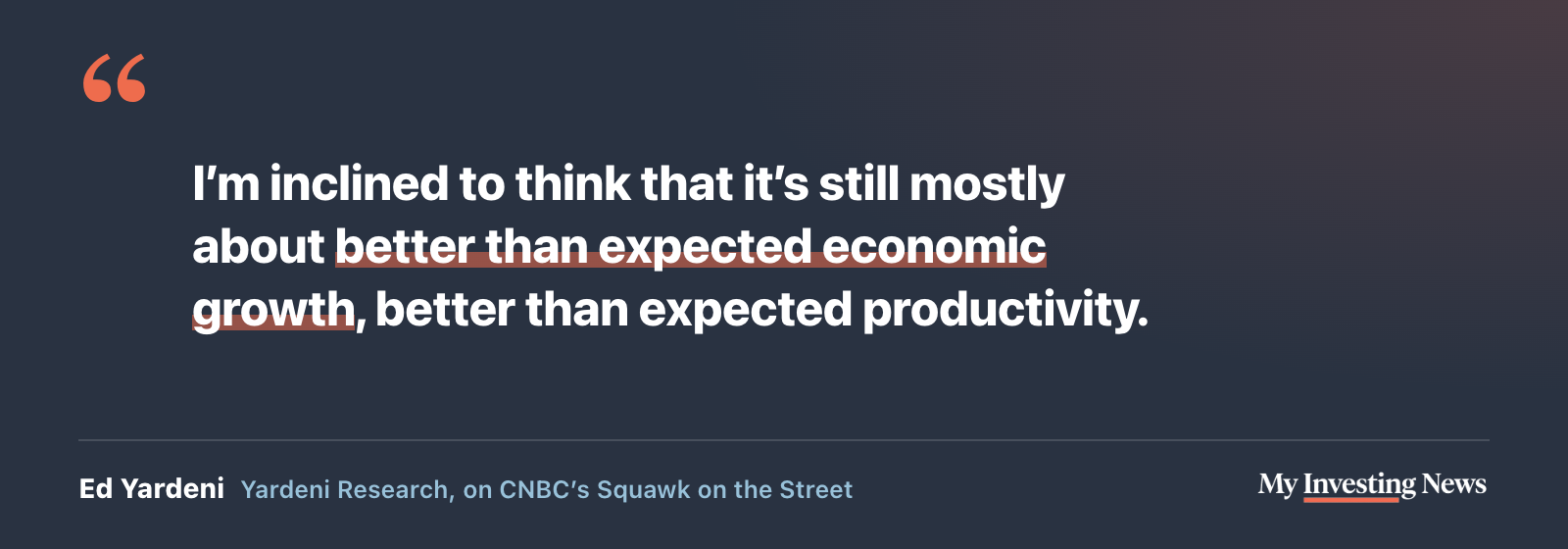
Ed Yardeni, president of Yardeni Research, said on CNBC Tuesday that the jump in Treasury yields is a sign of a strong economy. Many investors read a yield spike the opposite way, as a warning that bond buyers are nervous about government borrowing. His view is that the move reflects growth.
Yields Have Climbed Fast in Under a Year
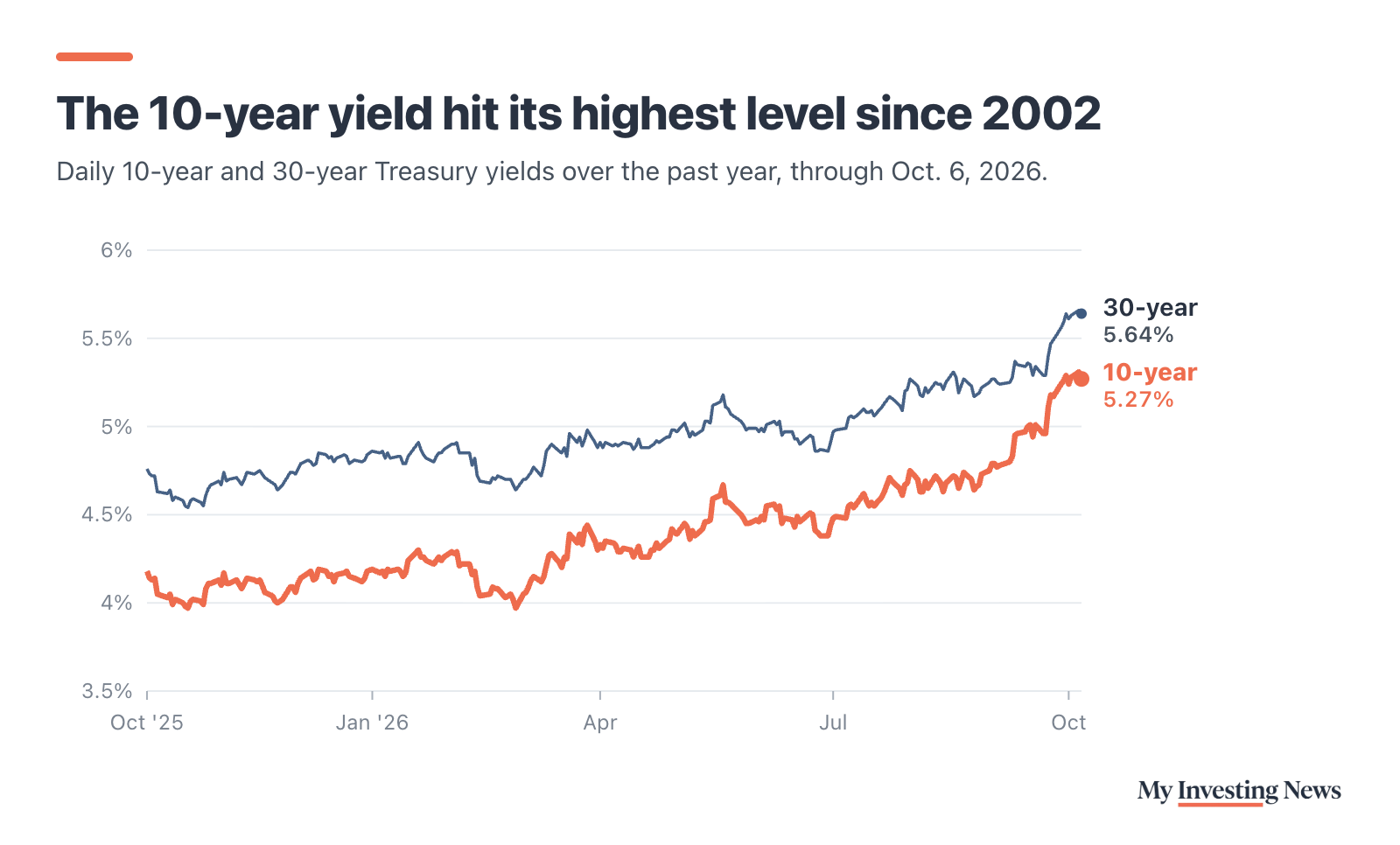
The 10-year Treasury yield closed at 5.31% on Monday, October 5. It was 5.28% on Friday, October 2 and 5.24% on Thursday, October 1. The 30-year yield stood at 5.66% on Monday. On Tuesday, the day of the interview, the 10-year eased to 5.27% and the 30-year to 5.64%. CNBC reported Monday that the 10-year yield had reached a fresh multi-decade high, its highest level since 2002.
Through the data available before Monday, the St. Louis Fed’s 10-year Treasury series showed a 12-month high of 5.29% on September 30, 2026 and a 12-month low of 3.97%, reached on October 22, 2025 and again on February 27, 2026.
Yardeni’s Case Rests on Boomers and a Higher Neutral Rate
Yardeni said consumer spending has stayed strong and that this is lifting the economy. He estimated that baby boomers are retiring with about $110 trillion in net worth. He said they are spending that money and helping their young adult children deal with the affordability crisis. The figure is his own estimate, and we did not verify it independently.
His main argument went further. Yardeni said the economy is running on basically “all cylinders” and is very strong. The Fed and the bond market have concluded that the neutral interest rate is higher, according to Yardeni. That is the rate at which the economy can grow while prices stay stable. At the start of the year, he noted, the common view was that it was lower.
By that reasoning, if the economy can run hot without overheating, then higher yields are adjusting to stronger growth. In that case, the bond market is responding to a sturdier economy, and fear plays a smaller part.
Borrowing costs going into the interview
Where Yardeni’s Forecast Meets the Fed’s Record
Yardeni mentioned that Fed Chair Kevin Warsh had said the central bank “removed a dose of accommodation,” a phrase Yardeni said implies more rate increases. He then said he thinks the Fed has “at least two more rate cuts ahead” over the next six months. In context he appears to have meant hikes. In his October 4 weekly note, Yardeni wrote that the Fed ought to hike enough to reverse last year’s three quarter-point cuts, and that September’s hike “leaves two more to go.”
AP News reported that the Federal Reserve raised its key rate in mid-September for the 1st time in 3 years, defying President Trump’s demands for a cut. Quartz reported Trump saying Fed Chair Kevin Warsh should have voted against the hike. Yahoo Finance reported that Warsh described the increase by saying the Fed “removed a dose of accommodation.” Money Talks News has since reported Warsh saying inflation is “too high.” The Motley Fool reported that Warsh was confirmed by a 54-45 Senate vote, which it described as the most divisive in Federal Reserve history.
Read that way, the forecaster and the sitting chair point in the same direction. Warsh has just raised rates and still calls inflation too high, according to Money Talks News, and Yardeni expects more increases to follow.
Higher Long Yields Reach Mortgage Borrowers
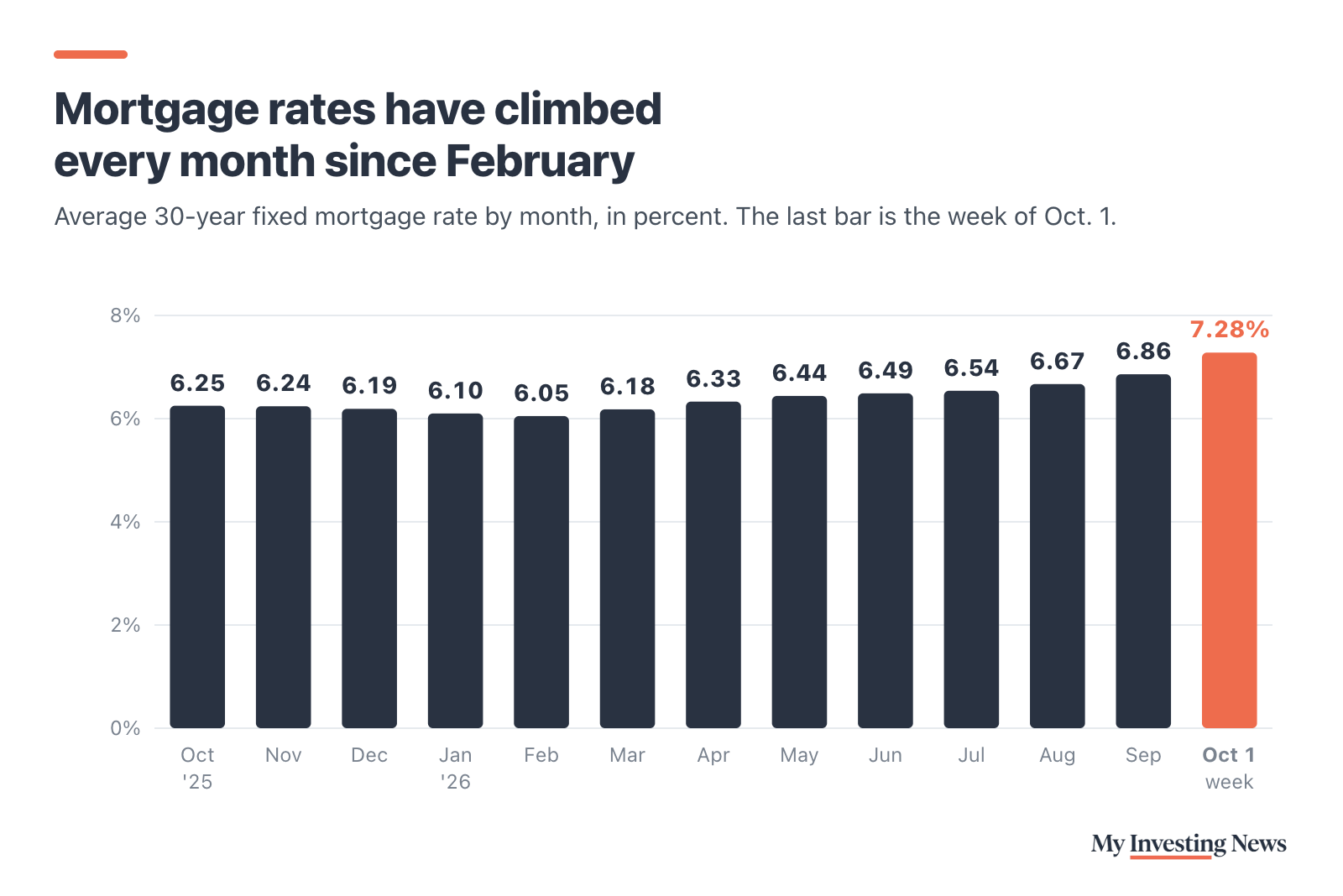
Whatever the cause, higher long-term yields feed into borrowing costs. Freddie Mac’s weekly survey put the 30-year fixed mortgage rate at 7.28% for the week of October 1, 2026. Mortgage News Daily, which tracks rates daily, put it at 7.57% on October 2. The two measure rates in different ways. The daily reading sits just below that series’ 52-week high of 7.60%. Fortune reported a top economist’s warning that higher rates could fuel a “doom loop” in housing.
Stocks Have Held Up So Far
The SPDR S&P 500 ETF TrustSPY closed at $779.09 on Tuesday, October 6, 2026. It was up 0.55% on the day and up 14.2% in price for the year so far.
Fed Minutes Are the Next Signal to Watch
MarketWatch noted on Tuesday that the Fed’s minutes, due Wednesday, could give markets important clues about future rate hikes. The Wednesday release will be the next look at whether the committee leans toward more increases, as Yardeni expects.
Yardeni reads the jump in Treasury yields as a sign of a strong economy, backed by spending from wealthy retirees and a neutral rate that is higher than the Fed thought at the start of the year. He expects the Fed to keep raising rates. The risk is that higher long-term yields keep lifting borrowing costs, with the 30-year mortgage rate already above 7%.