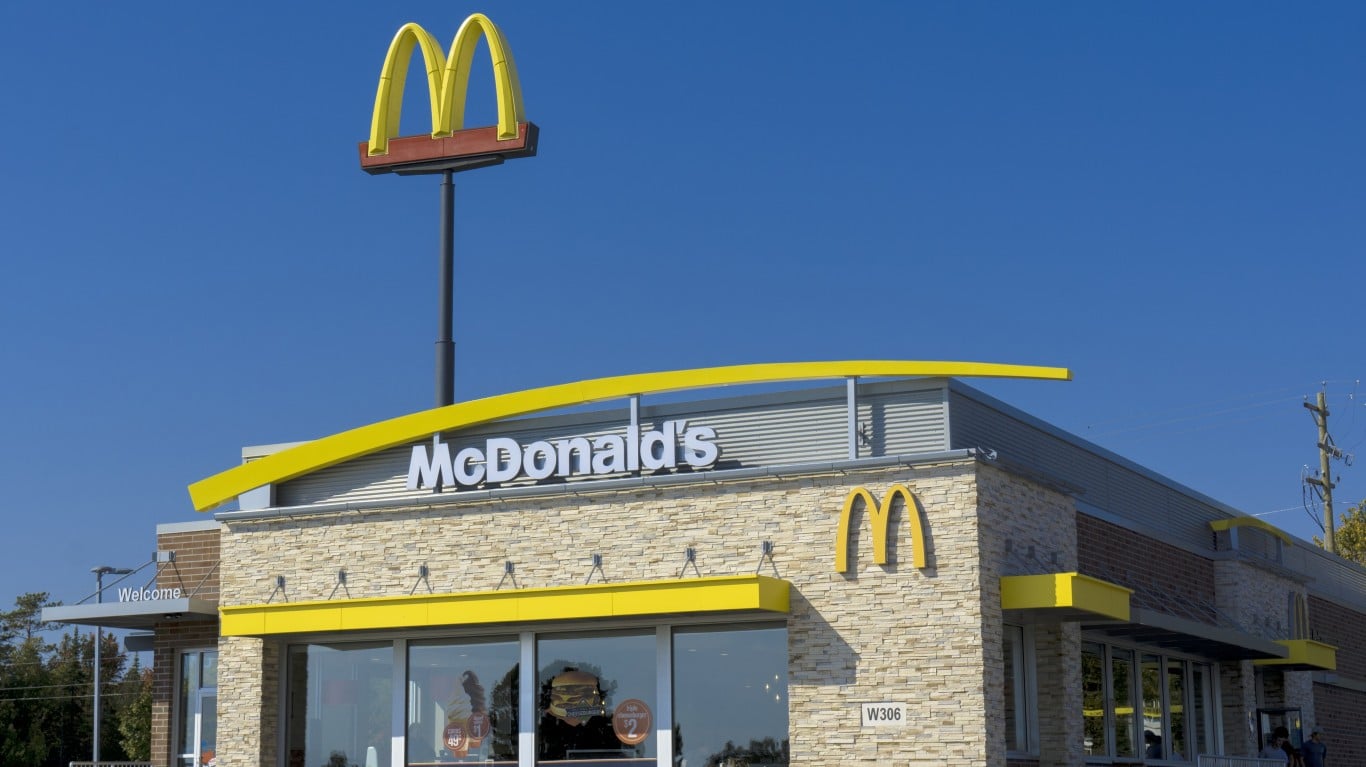
Before considering what two Wall Street analysts said about McDonald’s (NYSE:MCD), start with the number neither of them mentioned. As of this afternoon, October 5, 2026, McDonald’s has delivered a 7.53% total return over the past five years. Through today, the stock has declined 20.47% over the past year and 22.44% year to date. Shares traded at $232.48 at 2:00 PM ET today.
Any claim that a turnaround is priced in must account for a five-year stretch in which the stock barely moved.
Billions Committed After an Investor Day Sell-Off
At its late September investor day, McDonald’s committed $8.5 billion to a productivity makeover across more than 46,000 restaurants, Fortune reported. The rest depends on franchisees.
Citi analyst Jon Tower rates the stock a buy. Guggenheim Securities analyst Greg Francfort rates it neutral. They took opposite sides on CNBC.
Tower’s Case Rests on Real Estate Leverage
Tower argues that “a lot” of the transformation’s cost is already priced into the stock. His structural argument is about property. McDonald’s controls the real estate, which he says gives it “the stick and the carrot” with franchisees.
Tower projects that over 5 to 10 years, competitors will have a smaller asset base in the core U.S. market, McDonald’s will narrow the gap against specialist chains globally, and it will win share from more wealthy customers.
Tower points to negative consumer sentiment globally and sector pressures, including GLP-1 drugs. He expects investors to return to the name in 2027 and reconsider the price.
Francfort Asks Whether Operators Will Pay
Francfort sees a gap between what corporate wants franchisees to pay and what they will actually pay, calling it “a big challenge for the business.”
Francfort says each operator is being asked to put $1.2 million to $1.3 million back into their stores over the next several years. He says he wants to see whether they commit or push back.
His evidence comes from the ten items under $3 value menu rollout, where 40% to 45% of franchisees did not execute agreed price points. That figure records what operators actually did, making it the most concrete data point in the debate.
Context the CNBC Segment Skipped
Tower’s buy rating is more contrarian than a two-sided debate suggests. Investing.com reported that JPMorgan cuts its McDonald’s price target on the reinvestment plan, in a piece published September 24, 2026. A forbes.com piece from September 25, 2026 argued the comeback plan could make things worse.
Francfort’s concern has outside support. Restaurant Business Magazine reported on August 24, 2026 that McDonald’s franchisee profitability takes a hit just as the company eyes renovations.
Leverage Versus Capacity
Both analysts accept the plan is expensive and necessary. Tower’s answer rests on leverage, since McDonald’s owns the real estate. Francfort’s rests on capacity, since operators pressured by labor and food costs may lack the money.
The analysts discuss the stock as cheap at 17 times forward earnings. That is their figure.
Separately, McDonald’s trailing price-to-earnings ratio is 19 as of today. Company SEC filings and presentations are on McDonald’s investor relations site.
A Test That Takes Years to Grade
Francfort named the test: whether franchisees actually spend the money. Tower’s thesis runs 5 to 10 years out. The bull case has a much longer runway before anyone can grade it.