Where we heard itThe Pomp Podcast, “85% Of The AI Boom Is Still Ahead Of Us,” Oct. 22, 2026, with Dan Ives, partner at Yorkville Ives.
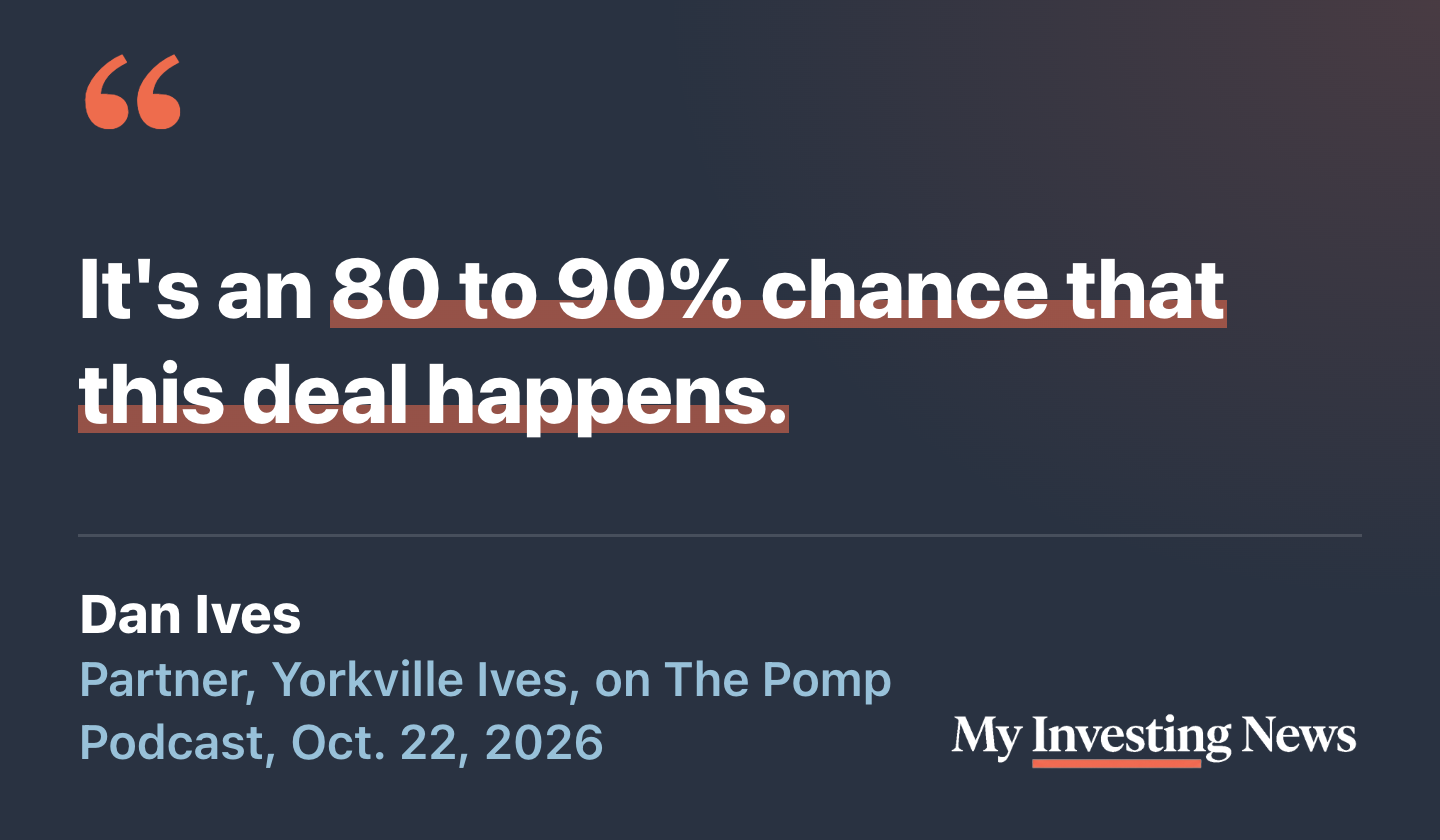
Dan Ives doesn’t think a merger of TeslaTSLA and SpaceXSPCX is a long shot. Two days after SpaceX said both companies’ boards had formed special committees to study a combination, he told The Pomp Podcast it was “a matter of when, not if.” Then he put odds on it:

He attached a price, too. “I couldn’t see a deal happening sub $500 price,” Ives said, putting the range for Tesla at $500 to $550 a share. Tesla closed at $407.46 on Oct. 27, so that range sits 22.7% to 35.0% higher. At that close, Tesla was worth about $1.61 trillion and SpaceX about $2.02 trillion, or $3.63 trillion together.
Elon Musk, who runs both companies, sounded less certain on SpaceX’s Oct. 20 earnings call. He said the special committees had not agreed on terms and that Tesla “will need a 50% vote of all shares, not just those who vote, but of all shareholders. And that’s quite a high hurdle to try to achieve.” SpaceX’s quarterly report says no determination has been made. There is one precedent for a deal like this, with Musk on both sides and public shareholders on both sides, and it is worth checking how it turned out.
The Last Time Tesla Bought a Musk Company
After the close on June 21, 2016, Tesla offered to buy SolarCity with stock. Musk was SolarCity’s chairman, and by that September he and an affiliated entity held about 21.7% of its shares. Tesla’s stock fell 10.5% the next day, from $219.61 to $196.66, which erased about $3.4 billion of market value. That was more than the deal’s eventual price.
The final terms, signed July 31, gave SolarCity holders 0.110 Tesla share for each of theirs, about $2.6 billion at Tesla’s last close before the signing. Tesla also took on about $3.4 billion of SolarCity debt and capital leases. Tesla holders approved the deal in November: excluding Musk and other SolarCity insiders, 85.1% of votes cast were in favor. Tesla’s lower share price had cut the value to about $2.1 billion by the Nov. 21 closing.
Shareholders sued. The other directors settled in 2020 for an amount paid by insurance, and Tesla received about $43 million. Musk went to trial and won: Delaware’s Court of Chancery ruled for him on all counts in April 2022, and the state’s Supreme Court affirmed in June 2023. The stock record is mixed. Including dividends, Tesla beat the S&P 500 over the two years after the offer, 58.2% to 37.1%. Over three years, it was up 1.0% while the index gained 50.1%.
What Happened to the Solar Business
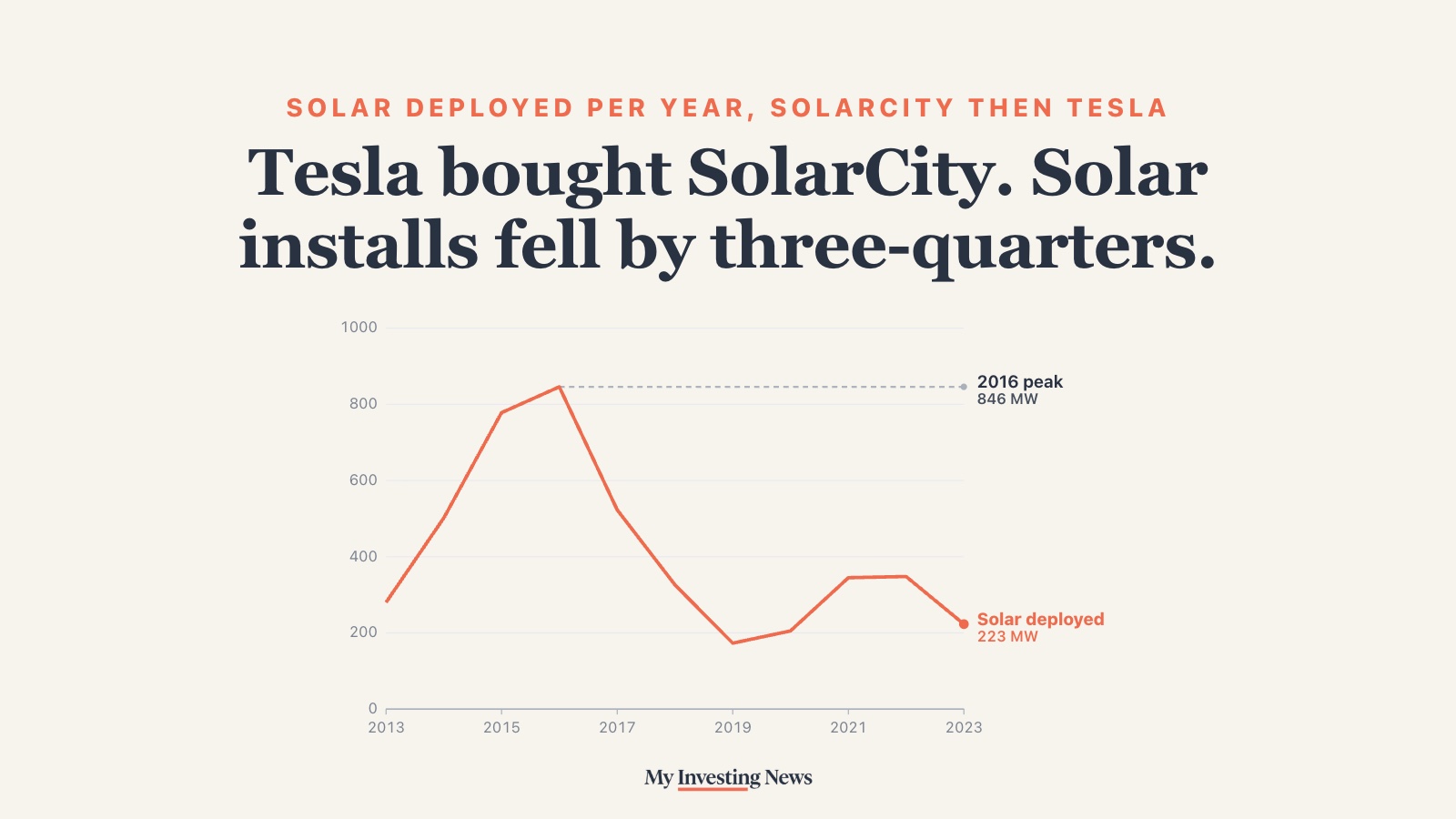
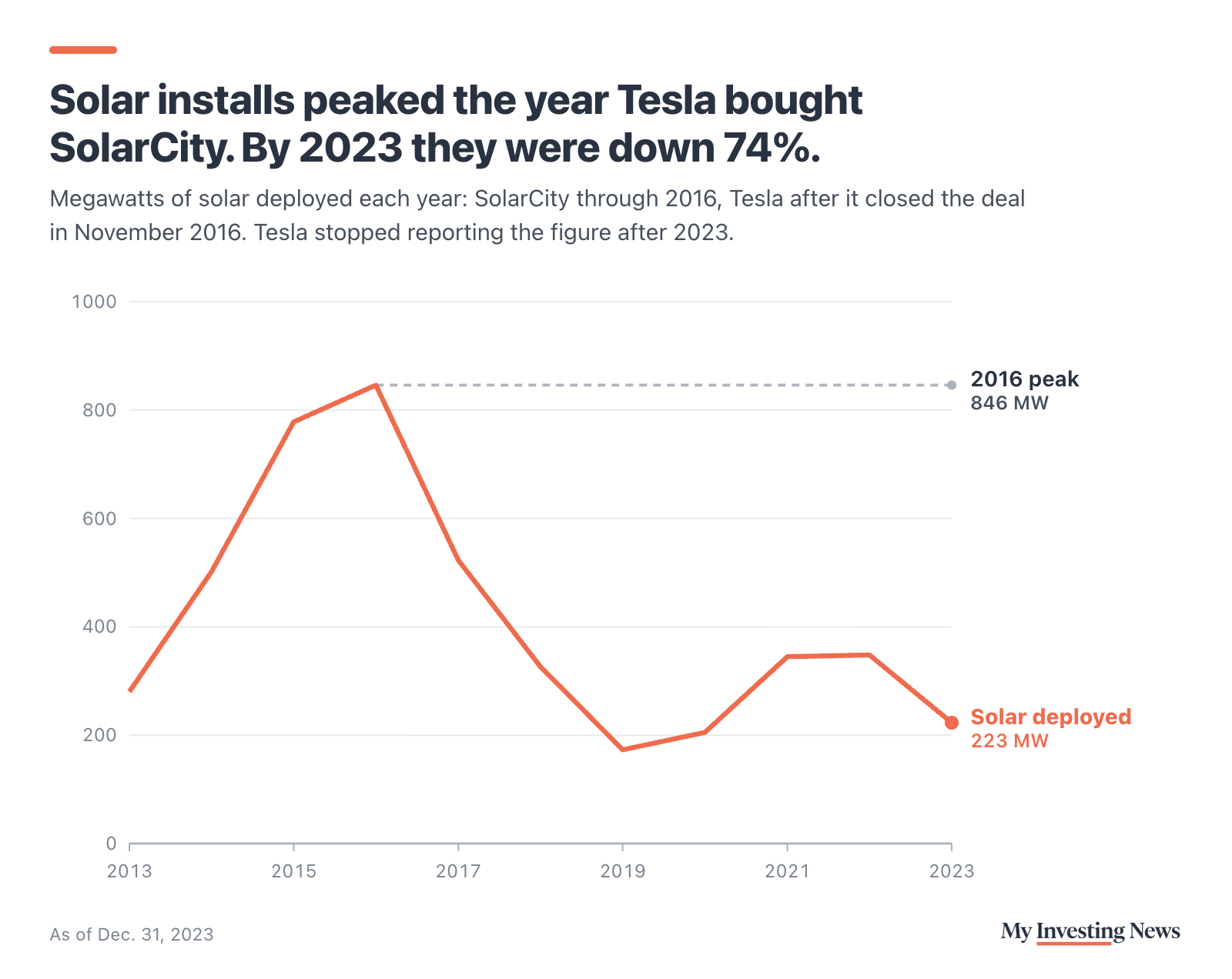
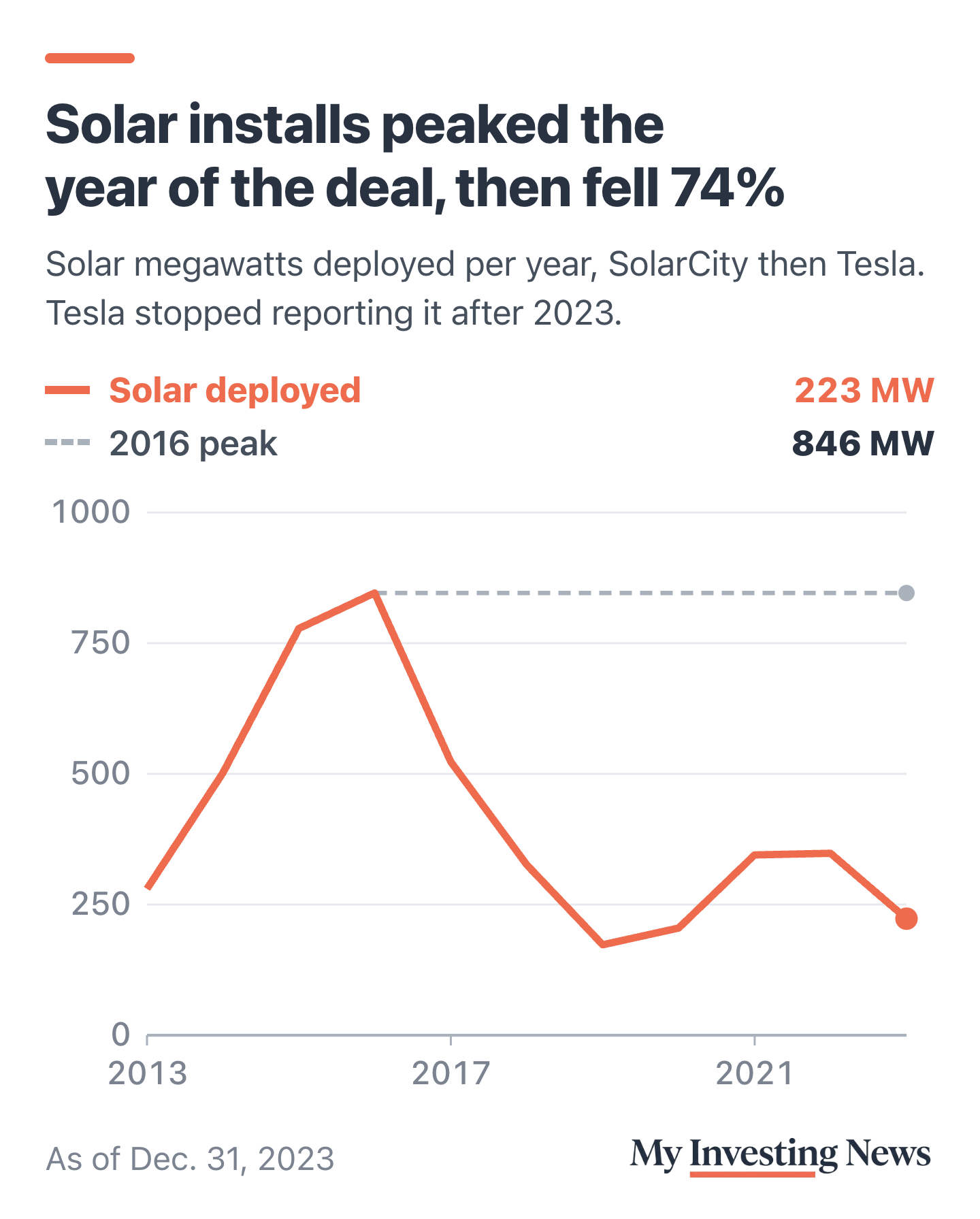
The business itself shrank. SolarCity deployed 778 megawatts of solar in 2015, and the combined count reached 846 in 2016. In its first update after the deal, Tesla said, “During this transition, we plan to prioritize cash preservation over growth of MW deployed.” Deployments fell to 173 megawatts in 2019. They were 223 in 2023, 74% below the 2016 peak, and Tesla stopped reporting the figure after that.
Tesla’s energy growth has come from batteries instead: it deployed 46.7 gigawatt-hours of storage in 2025. Steve Eisman, who hosts The Real Eisman Playbook, listed the solar business among his reasons to oppose a merger. “I think this is a very bad idea,” he said on his Oct. 23 show, describing Tesla as having “a solar business that is just not that great a business.”
Musk’s Other Combinations
Musk’s later deals stayed inside companies he controls, with no public shareholders voting. xAI bought X in an all-stock deal in March 2025 that Musk said valued xAI at $80 billion and X at $33 billion. SpaceX then acquired xAI, effective Feb. 2, 2026, before its June stock market debut at $135 a share. SpaceX’s prospectus describes both as transactions between entities “under common control.”
Tesla has a small piece of that. It agreed in January to invest $2 billion in xAI, and the stake became SpaceX stock that Tesla says was worth $2.87 billion on Sept. 30, up 43%. SpaceX brings its own commitments: Starlink is its profit engine, and its plan to borrow for AI chips came as its credit default swaps hit a record high in early October.
The deal by the numbers, as of Oct. 27 and 28
Scoring Ives on Tesla
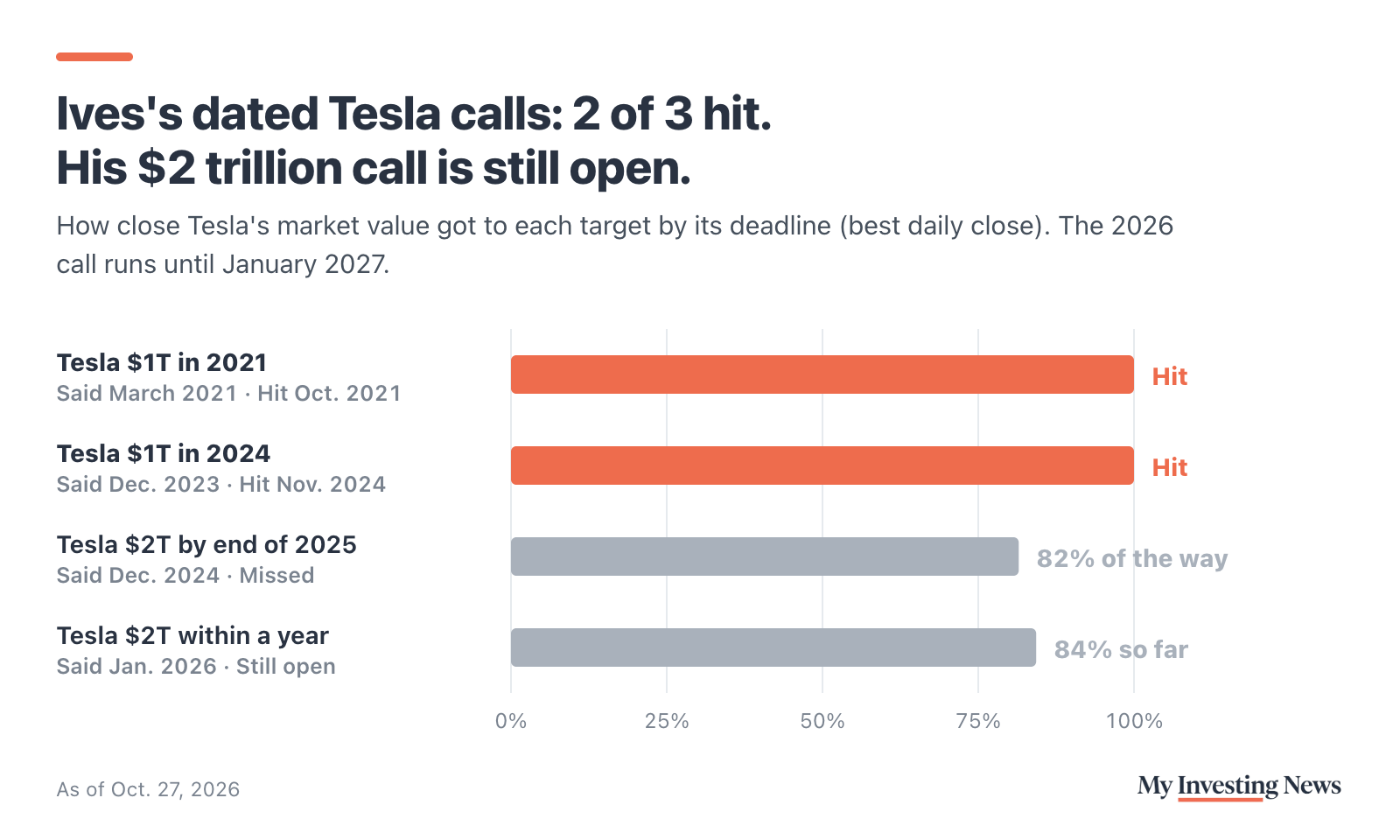
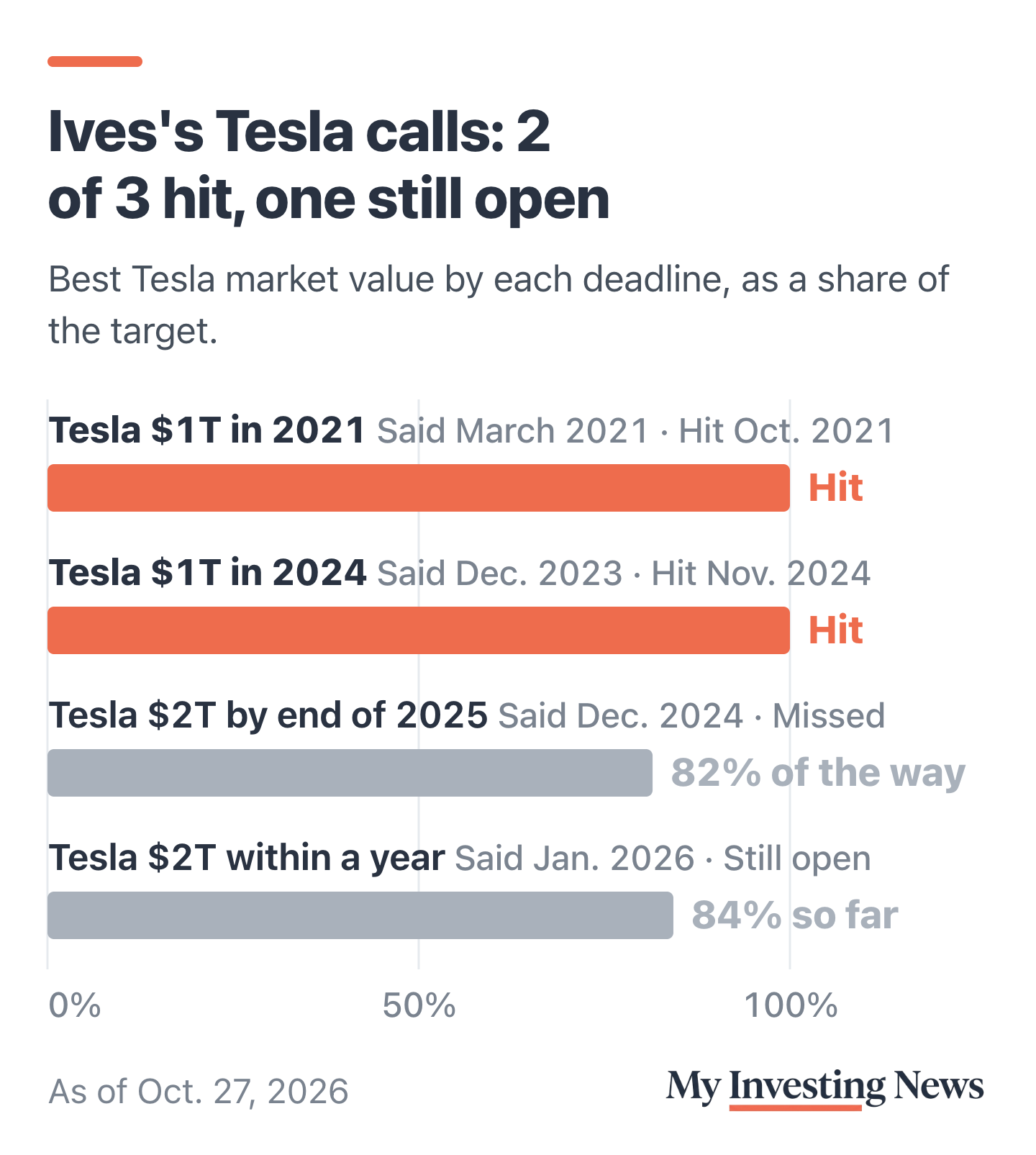
Ives has been right about Tesla’s size more often than not. We scored his dated calls on Tesla’s market value by the same rule we use for his other forecasts: a target counts as hit if any daily close reached it by the deadline. He called $1 trillion in 2021, and Tesla first closed above it on Oct. 25, 2021. He called $1 trillion again for 2024, and it got there on Nov. 8, 2024. His bull case of $2 trillion by the end of 2025 missed, with a best close near $1.63 trillion.
In January, he said Tesla could reach $2 trillion within a year. The best close since then was about $1.69 trillion, on Jan. 23, and at the Oct. 27 close Tesla needed to rise about 24% to get there. At his $500 deal price, Tesla would be worth about $1.98 trillion.
What to Watch
Bettors on Polymarket see a slower path. As of Oct. 28, they put the odds that a merger is officially announced by Dec. 31 at 13.5%, by June 30, 2027 at 52%, and by the end of 2027 at 63.5%. Ives gave no deadline.
The next steps belong to the special committees, which would have to recommend terms before any vote. Tesla’s annual meeting on Dec. 3 has three routine items on its agenda and no merger. If terms do arrive, watch the price against Ives’s $500 floor and the vote against Musk’s bar of half of all Tesla shares. The SolarCity vote cleared a lower one: a majority of the votes cast.
Ives puts a Tesla-SpaceX merger at 80% to 90% and says it would take a Tesla price of $500 to $550, at least 22.7% above the Oct. 27 close. The only time Tesla bought a Musk company, SolarCity in 2016, Tesla lost $3.4 billion of market value on the offer, Musk won the shareholder suit, and solar deployments fell 74% by 2023. Bettors give a deal announced by Dec. 31 about a one-in-seven chance.