Where we heard itJim Cramer, closing segment of CNBC’s Mad Money, Nov. 6, 2026, recapping the CNBC Investing Club’s annual meeting.
Three days after Democrats won control of both chambers of Congress, Jim Cramer told his Mad Money audience what worried him beyond the next few months. “In 2017, during President Trump’s first term, the corporate tax rate was lowered from 35% to 21%,” he said on Nov. 6. “But after that blue wave on Tuesday, I think it’s reasonable to believe that the old rate could be reinstituted. Not now, but if a Democrat wins in 2028.”
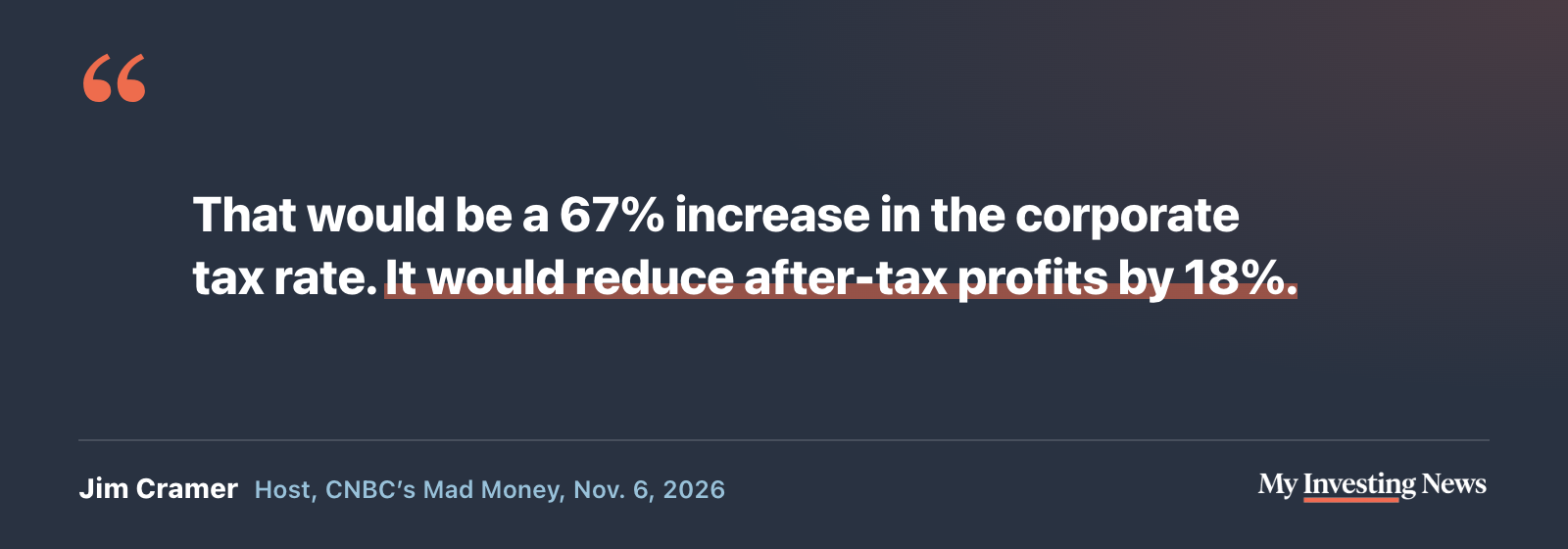
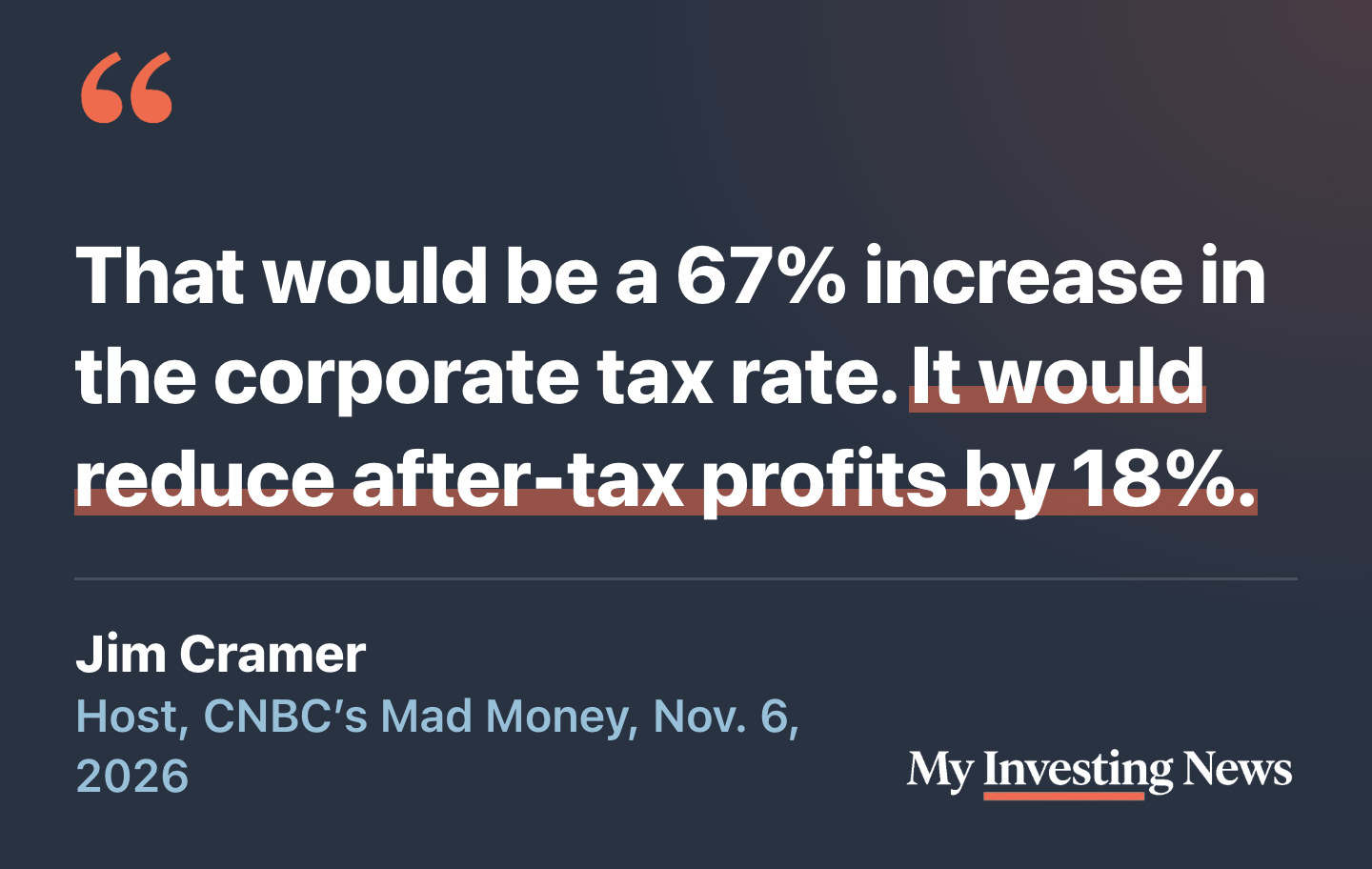
That, he added, “will cut into the future price-to-earnings multiple for the entire market.” We checked both halves of the claim: the math behind the 18%, and how often Washington has actually raised the rate.
The Math Works at the Rate on Paper
Cramer’s arithmetic is right as far as it goes. Going from 21% to 35% is a 66.7% increase in the rate. A company paying the full rate keeps 79 cents of each pretax dollar today and would keep 65 cents at 35%, which is 17.7% less. Round it and you get his 18%.
The catch is that almost no one pays the rate on paper. Deductions, credits, write-offs for new equipment, losses carried forward from bad years and profits earned and taxed abroad all pull the bill down.
Companies Paid About Half the 21% Rate
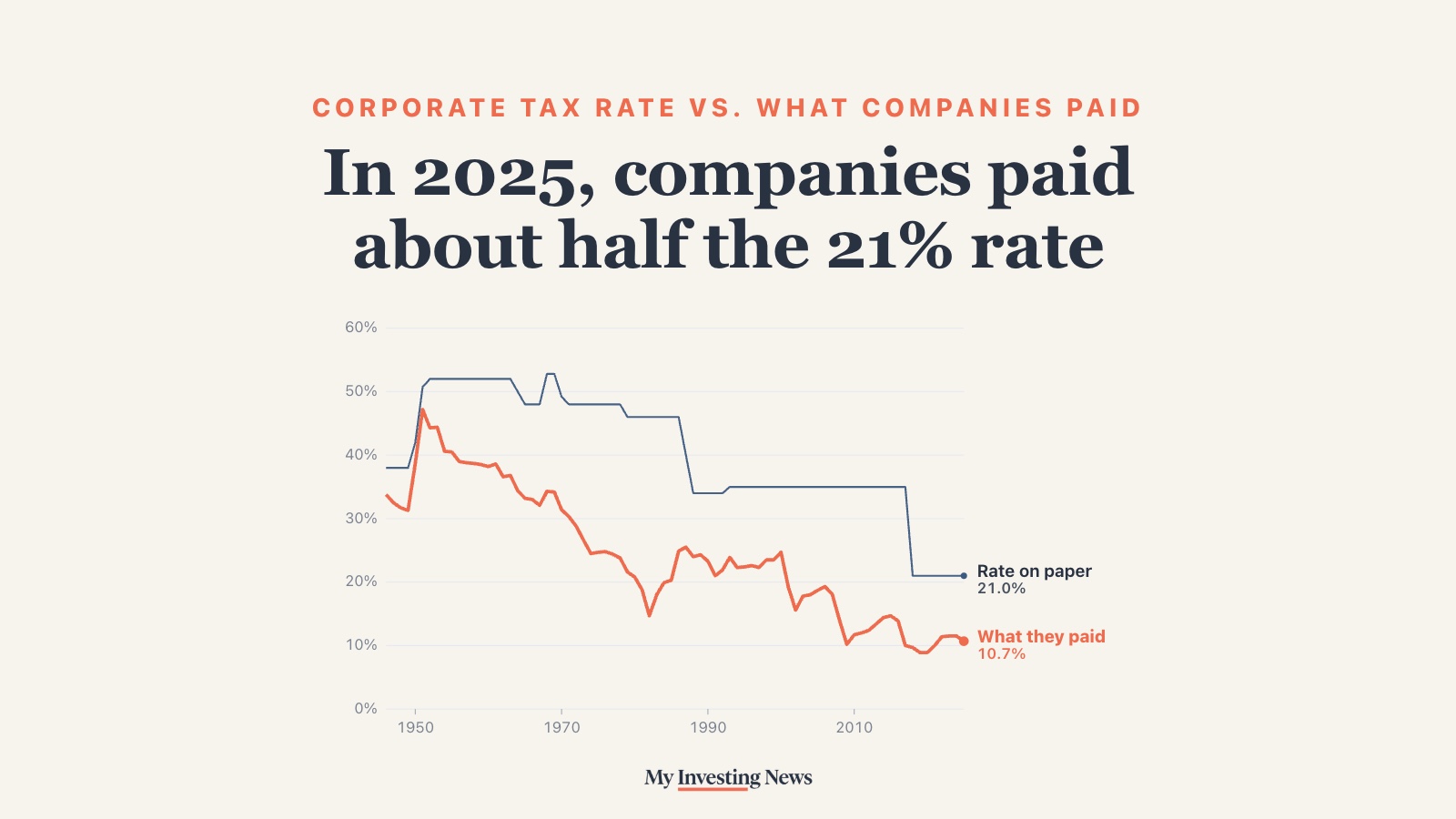
The government’s own national accounts show how far down. In 2025, the Bureau of Economic Analysis counts $446.3 billion in federal taxes on corporate income against $4.17 trillion in corporate profits before tax. That is 10.7%, about half the 21% rate and down from 11.5% in 2024. Adding state and foreign income taxes lifts it to 15.3%. In the first half of 2026 the federal share ran a little higher, at about 11.7%.
The gap is old. In the 1950s, when the top rate was 52%, companies paid an average of 41% of profits in federal tax. The share slid for decades as the rate came down and the write-offs piled up. Its low since World War II was 8.9% in 2019, the second year at 21%.
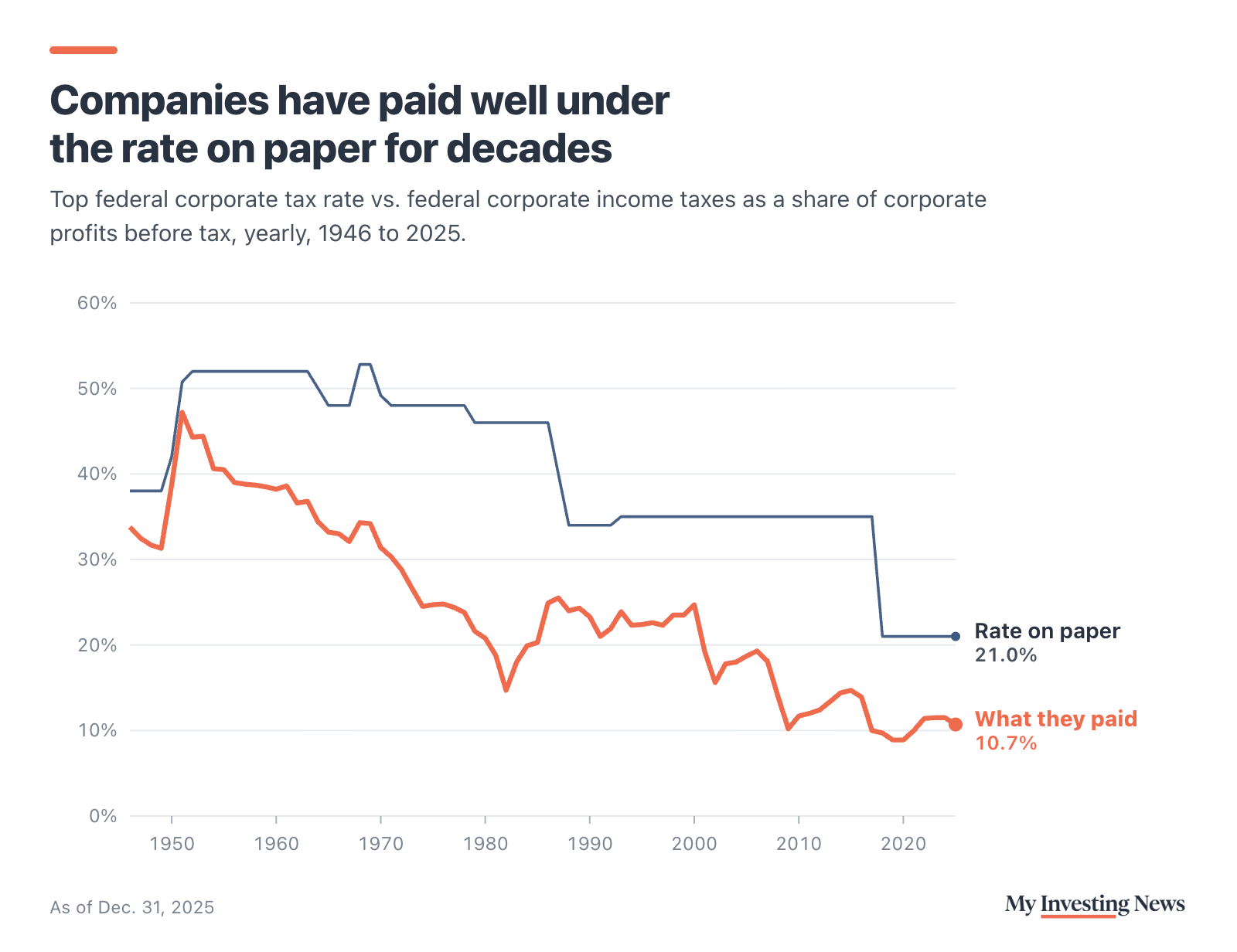
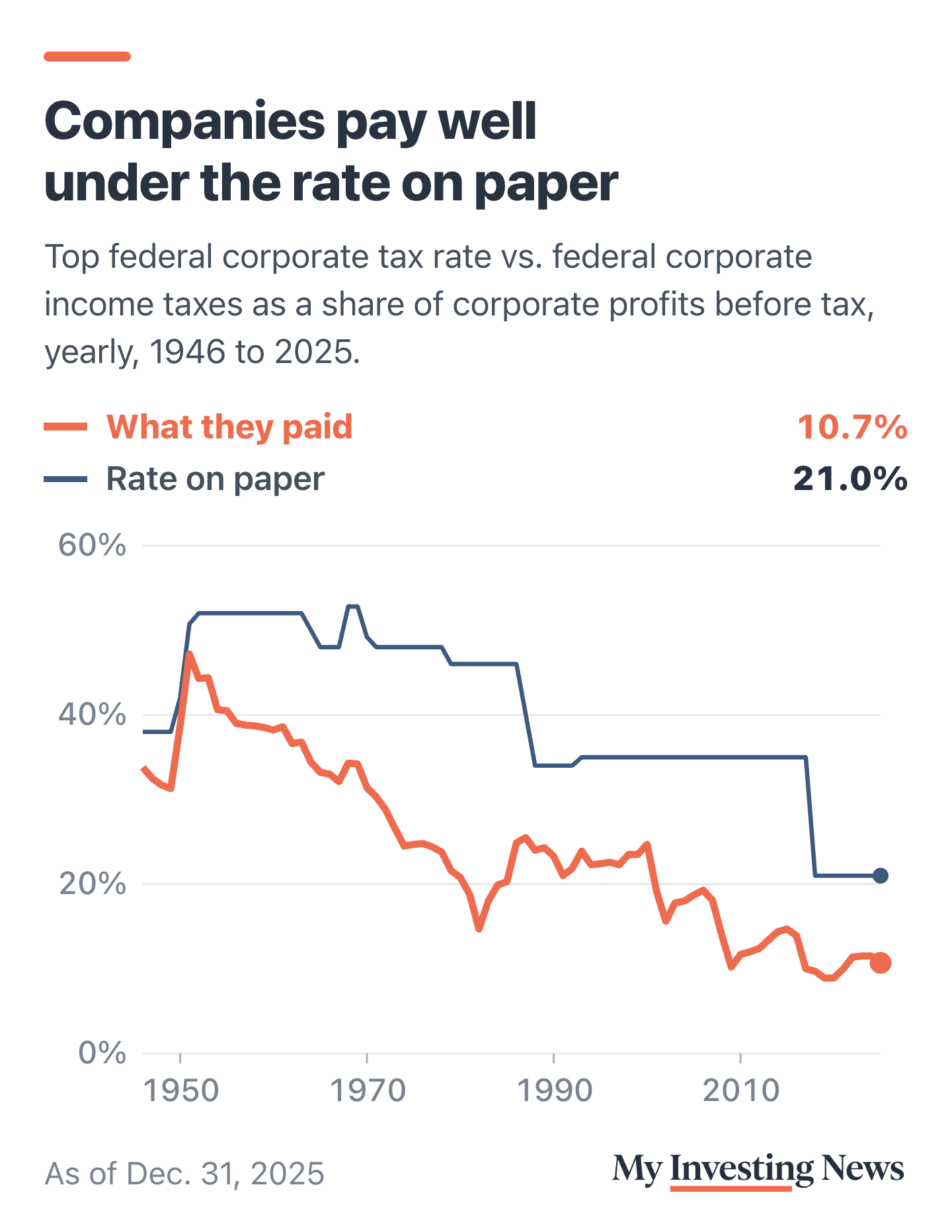
So scale Cramer’s scenario to what companies actually pay. If a move to 35% raised that bill by the same two-thirds, the federal share would go from 10.7% to about 17.9%, and after-tax profits would fall about 8%, less than half his 18%. That is rough: a real bill would change deductions too, in either direction.
The 2017 law offers a check in reverse. The rate on paper fell 14 points, which by Cramer’s method should have lifted after-tax profits 21.5%. The federal share of profits actually went from an average of 14.3% in 2015 and 2016 to 9.3% in 2018 and 2019, a gain of about 6% in what companies kept. The law also changed write-offs and the treatment of foreign profits, so the rate cut was not the only moving part.
The corporate tax, on paper and in practice
Washington Hasn’t Raised the Rate Since 1993
The politics are the bigger hurdle, and Cramer’s own timeline allows for them. A rate increase takes a law, President Trump’s term runs to January 2029, and overriding a veto takes two-thirds of both the House and the Senate. That is why his scenario starts with a Democratic win in 2028.
Even then, history is not on his side. The last increase in the top rate came in 1993, when President Clinton’s budget law lifted it from 34% to 35% for the largest companies. The last time Democrats held the White House and both chambers, in 2021 and 2022, the Treasury proposed raising the rate to 28%. The final law left the 21% rate alone and added a 15% minimum tax on the book income of companies earning more than $1 billion a year.
A move from 21% to 35% would also be big by historical standards: at 14 points, it would be the largest single increase in the standard top rate since the tax began in 1909. The wartime increases of the 1940s and early 1950s were smaller on paper, though they came with separate excess profits taxes. Taxes can stay put across a change in power, too: Wolfe’s Stephanie Roth expects tariffs to stay high even under a Democrat in 2028.
A Smaller Slice of the Budget
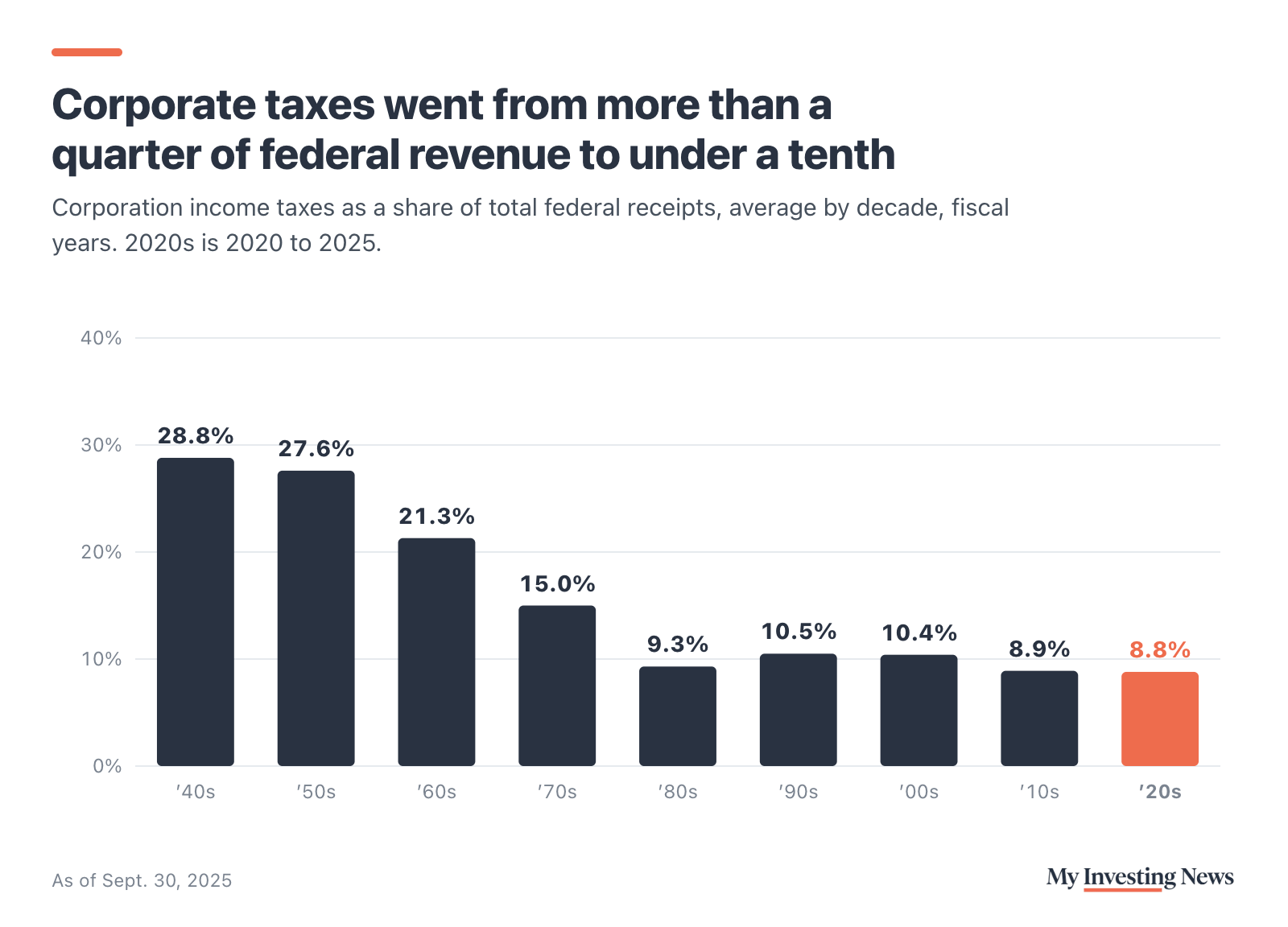
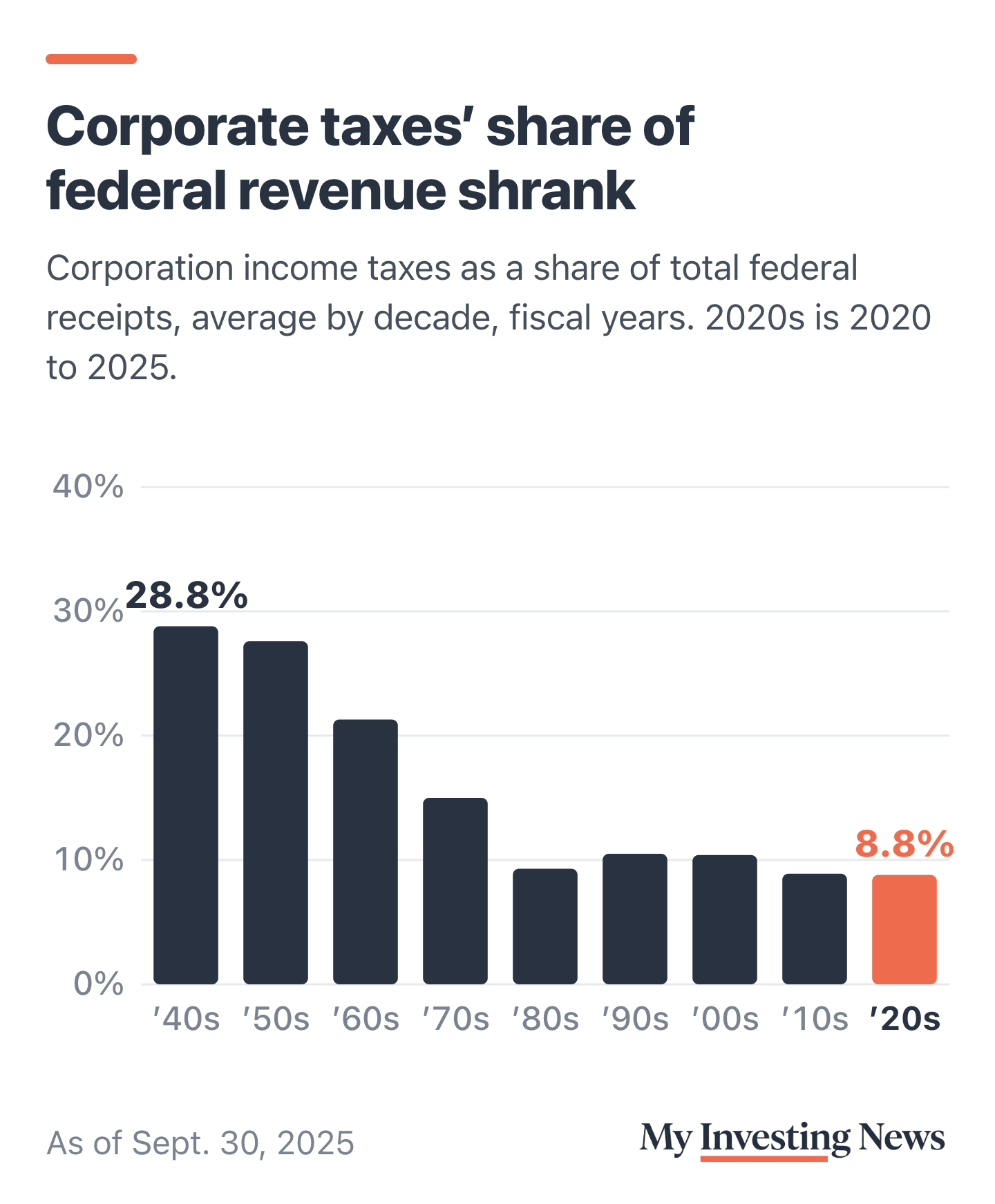
Corporate taxes also matter less to Washington than they used to. White House budget tables show corporate income taxes brought in 27.6% of federal revenue on average in the 1950s and 8.8% in the 2020s so far, including 8.6% in fiscal 2025. Individual income taxes and payroll taxes carry most of the load.
That cuts both ways for Cramer’s worry. A higher rate would raise real money, and a Congress looking at interest costs that took more than half the deficit in fiscal 2026 will be looking for revenue. But the corporate rate is one lever among many, and Cramer listed others in the same breath, from capital gains taxes to bank regulation. He has also called tariff inflation a regressive tax.
What to Watch
Watch the 2028 platforms more than the new Congress. Any corporate rate plan from the Democratic candidates will show whether 35% is on the table or whether the 28% Biden-era figure is the ceiling. Watch the Bureau of Economic Analysis’s quarterly profit figures too: if the federal share keeps climbing from the 10.7% of 2025, the gap between the rate on paper and the rate paid narrows, and a higher rate would bite harder.
Cramer’s 18% is correct math for a company that pays the full rate, and he is clear that any increase waits on a Democrat winning the White House in 2028. Companies paid 10.7% of profits in federal tax in 2025, so the same proportional rise would cut after-tax profits closer to 8%, and the rate has not gone up since 1993.