Where we heard itAll-In podcast, “Midterm Blood Bath, $4T AI Sell Off, Data Center Freeze, What’s Next for Trump,” Nov. 7, 2026, and a post on X, Nov. 8: David Sacks, All-In co-host, who has served as the White House’s AI and crypto adviser.
Asked on the All-In podcast what President Trump could do to recover after the midterms, David Sacks had one answer, repeated three times. “Just get out of the war. Okay, end the war. That’s my number one, my number two, and my number three,” he said. He predicted Brent crude would go “from 110 to 70” and said, “If this war ends, gas prices will drop, diesel will drop, the price of food will drop.” He had also called the midterms the biggest loss since Watergate.
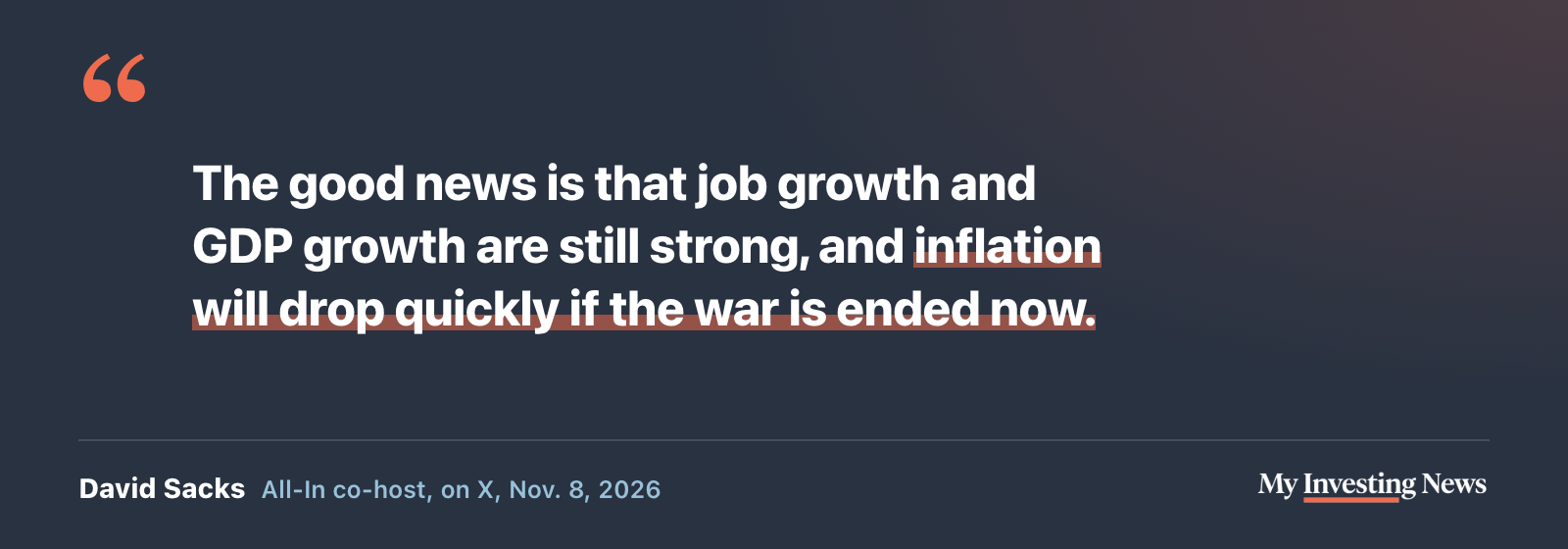
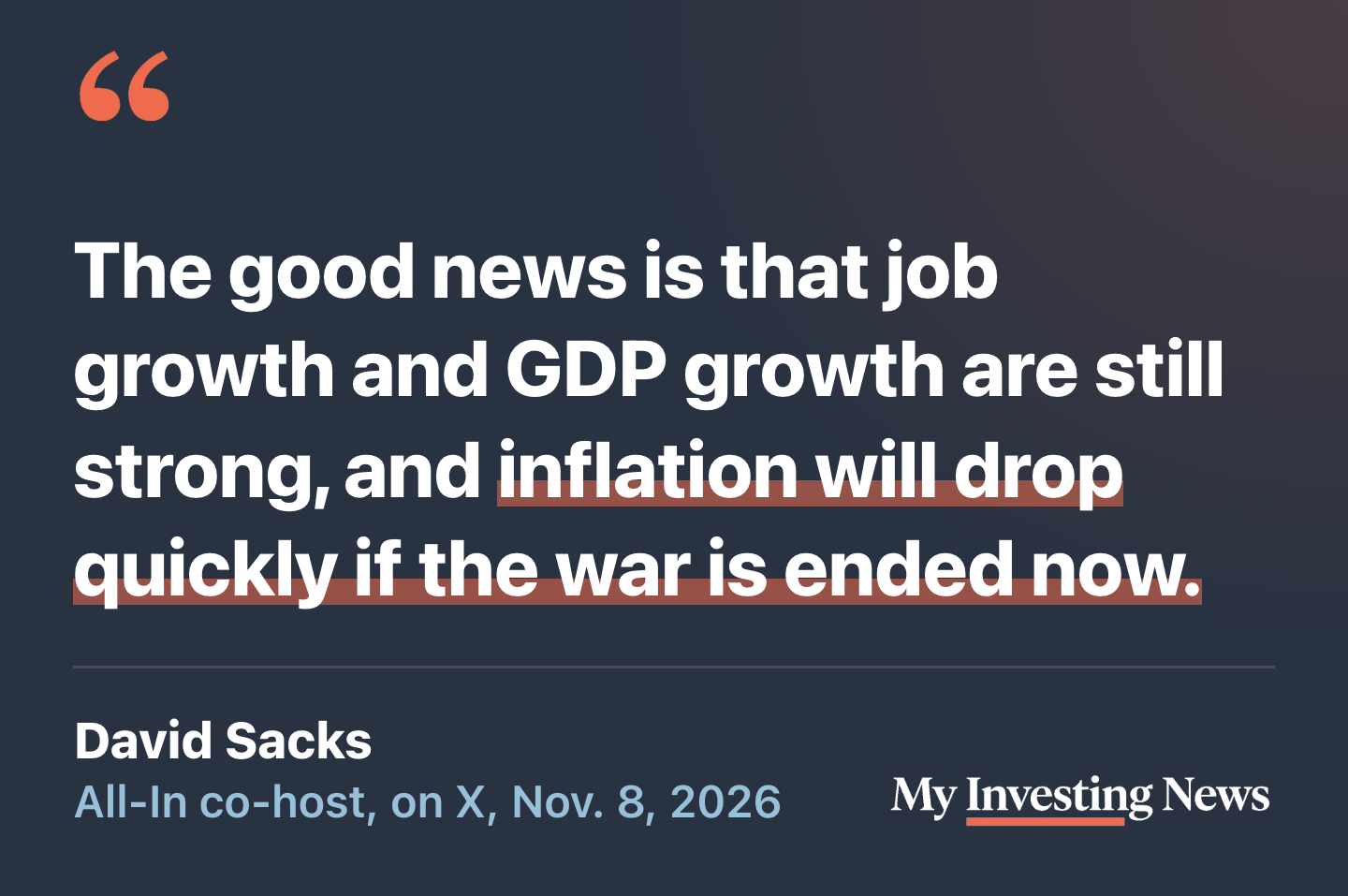
The next day he put the economics in one line on X. Consumer prices were up 2.4% from a year earlier in February, the month the war began, and 3.7% in September. The October report, out Nov. 10, had no year-over-year figure because October 2025 prices weren’t collected during the shutdown; by our math from the seasonally adjusted index, prices rose 0.35% in the month, and 0.30% leaving out food and energy.
This Year Already Ran the Test Once
Oil fell once already this year. U.S. crude averaged $102.13 a barrel in May, its 2026 high, and $80.46 in July, after a spring ceasefire and talks raised hopes of a deal. Headline inflation went from 4.2% in May to 3.5% in June and 3.4% in July. Then oil climbed back above $100 as the fighting flared again, and inflation rose to 3.7%.
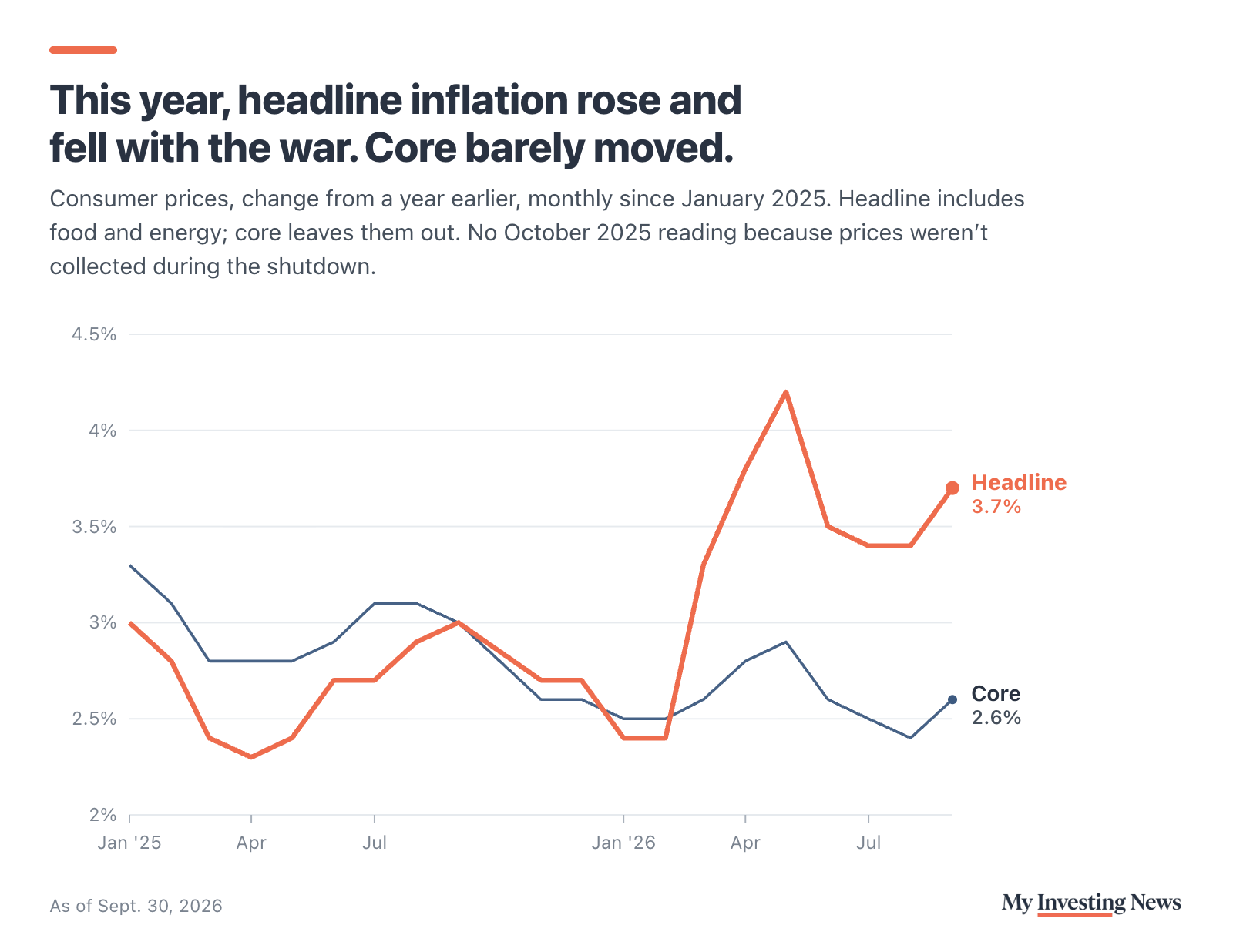
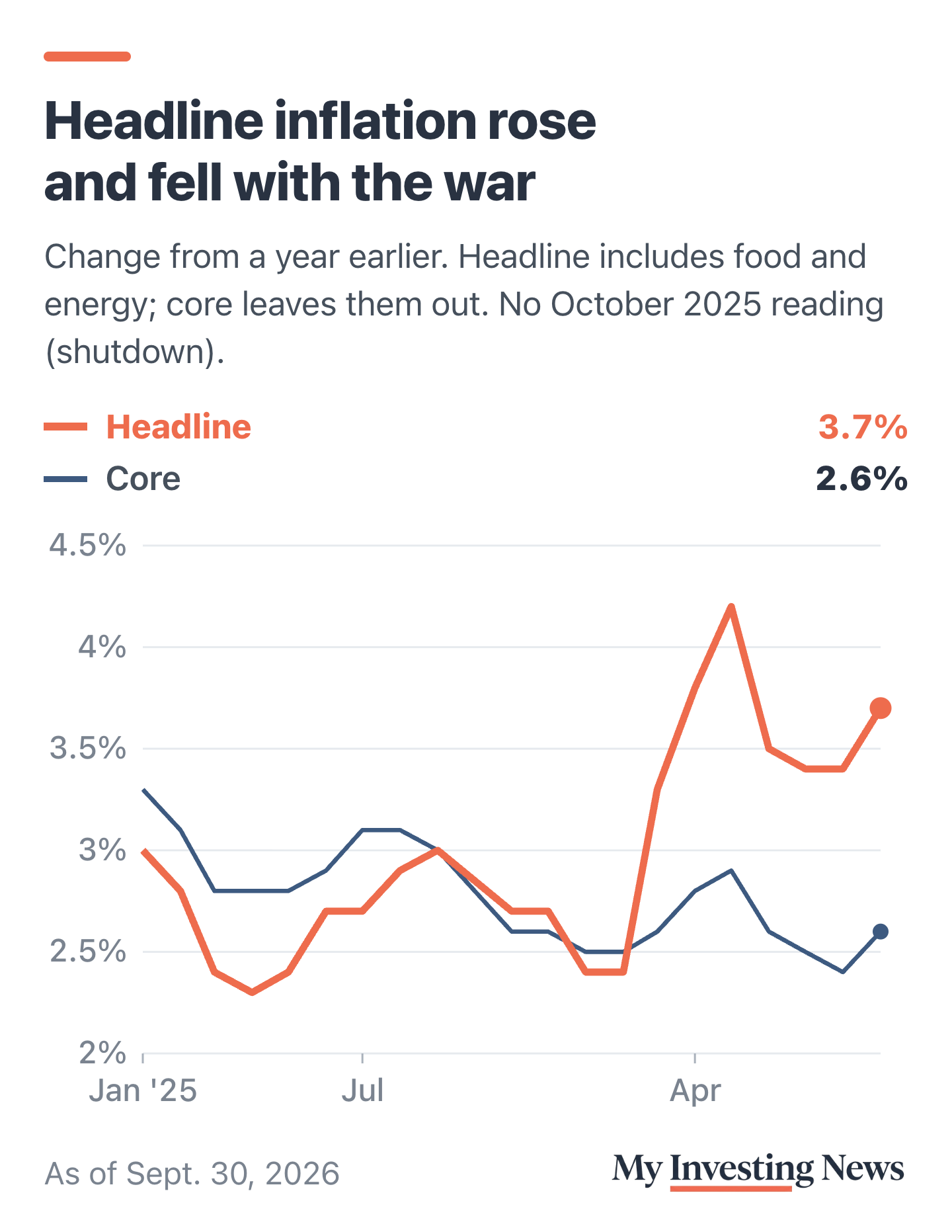
Core inflation, which leaves out food and energy, barely moved: 2.9% in May and 2.6% in September. Food inflation has slowed through the war, to 2.5% in September from 3.1% in February. So the war’s mark on inflation has been mostly fuel, which is the part that can turn fastest. Gas has been unusually high for the fall.
Inflation and the odds, as of Nov. 10, 2026
Every Oil Spike Since 1946
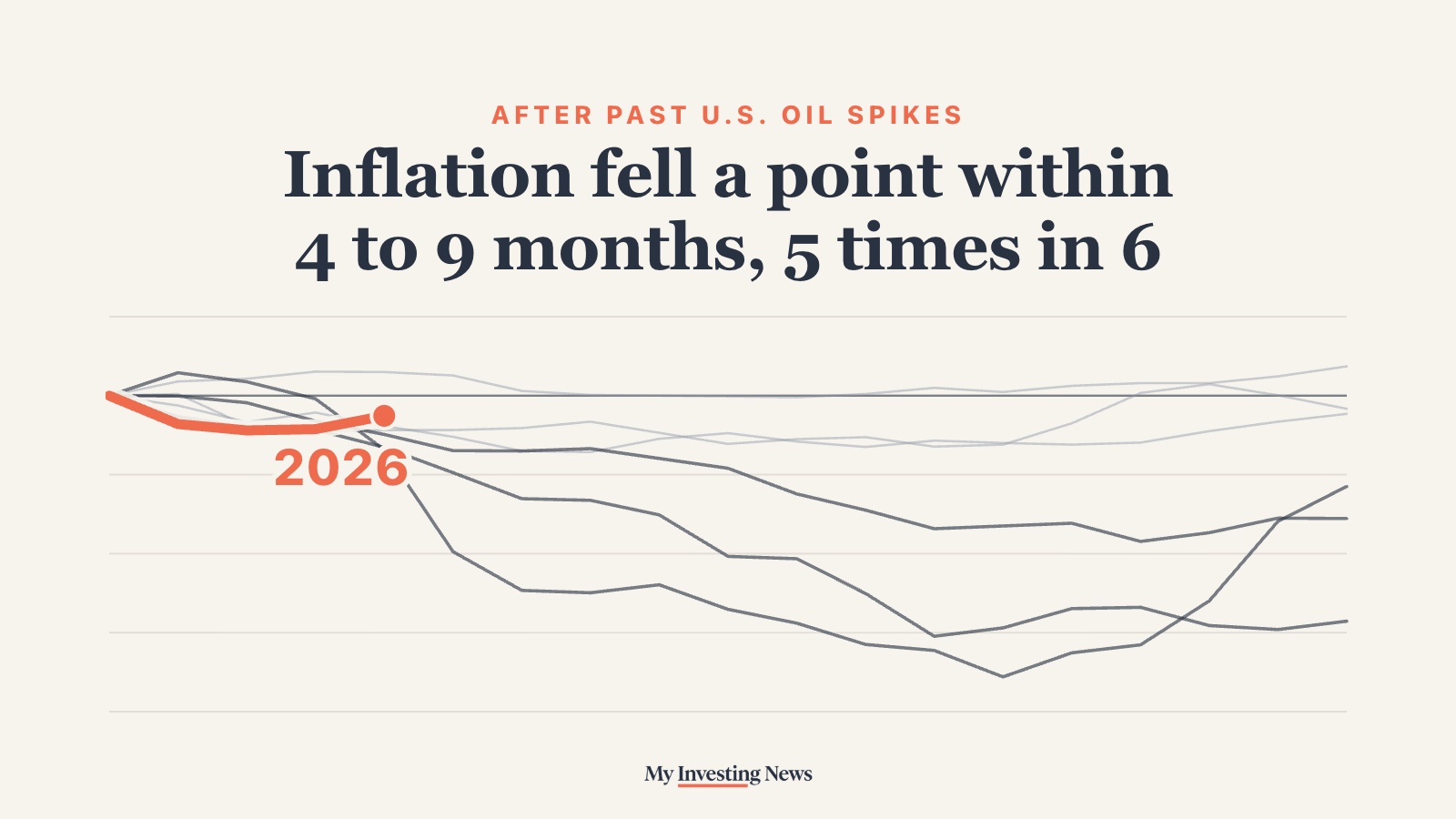
To see what usually happens when oil comes down, we looked at every time since 1946 that the U.S. oil price rose at least 50% in a year and then fell at least 20% within a year. That gives 6 past spikes: 1987, the 1990 Gulf War, the 2003 Iraq War, 2008, 2018 and the 2022 Ukraine invasion. In 5 of them, headline inflation fell a full percentage point from its level in the peak month within 4 to 9 months. After the last three, it took 4 to 5 months. The exception was 1987, when headline inflation held near 4%.
After 5 of the last 6 oil spikes, headline inflation fell a full point within 4 to 9 months
Change in headline CPI inflation (from a year earlier), in percentage points, from the month U.S. oil prices peaked. Oil spikes are every time since 1946 that WTI rose 50% in a year and then fell 20% within a year. The coral line is 2026, from the May peak through September.
The size of the drop tracked the size of the oil slide. Oil fell 71% after the 2008 peak, and headline inflation went from 5.0% to −1.4% a year later. After 2022 oil fell 39%, and inflation went from 9.1% to 3.0%. Sacks’s $70 Brent would be a fall of about 40% from the $117.64 close on Oct. 30, which would put this case near 2022. Brent had already fallen to $92.57 by the Nov. 9 close, before any deal.
Where the Record Is Weaker
Core inflation is slower. A year after the oil peak, the median spike had cut headline inflation by 2.4 points and core by 0.6; core fell less in 5 of the 6. After 2022, core was still 4.8% a year after oil peaked.
Food rarely gets cheaper. In the year after each peak, food inflation slowed in 1990, 2008 and 2022 and stayed above zero in all six, so food prices kept rising, just more slowly. And Federal Reserve economists warned on Nov. 9 that oil may now pass through to core prices more than it used to. Looking at five major economies, they found the effect of oil on core inflation, statistically indistinguishable from zero before the pandemic, rose to a significant level afterward, and wrote that they “view our results as suggestive of an upside risk to inflation.”
What to Watch
November’s consumer price report, due Dec. 10, will be the first with a year-over-year figure since September. Then watch oil and diesel, and whether a pause in fighting holds. Twice this year, bettors put the calm above 95% the night before it broke.
Sacks has the direction right: after 5 of the last 6 oil spikes, headline inflation fell a full point within 4 to 9 months, and this year’s ceasefire dip showed the same thing on a small scale. The risk is the rest of the basket: core inflation and food prices have come down far more slowly, and Fed researchers see oil feeding into core more than it used to.