Where we heard itCNBC, Oct. 20, 2026. Speaker: Sarat Sethi, managing partner and portfolio manager at Douglas C. Lane & Associates (DCLA).
Sarat Sethi, managing partner and portfolio manager at DCLA, told CNBC on Oct. 20 that expensive crude will take its toll on stocks gradually. “I think it’s going to be a slow bleed, Joe. I think it’s going to come into valuation. You’re already going to see valuation compression start.”
The CNBC segment described West Texas Intermediate (WTI) crude trading above $108 per barrel. The official WTI spot price was $107.89 per barrel on Oct. 20, 2026, according to FRED data. According to the segment, oil has not broken below $100.
Delta Was the First Warning Shot
“I think you’re going to see that coming through. I mean we saw earnings already come through from Delta. And I think they’re going to come down. And companies are going to have to be cautious, especially those that are using inputs like energy commodities that are all priced in dollars.”
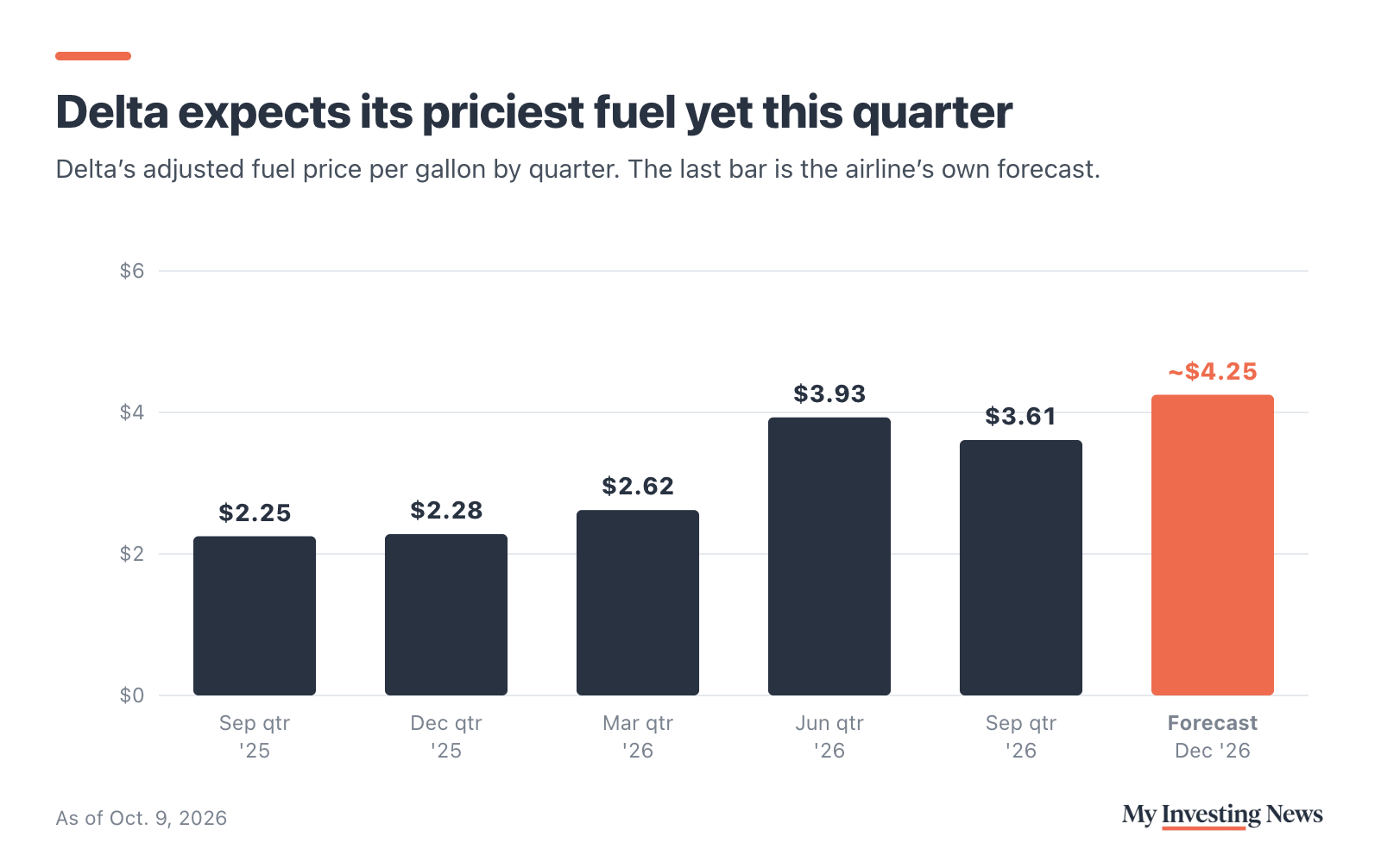
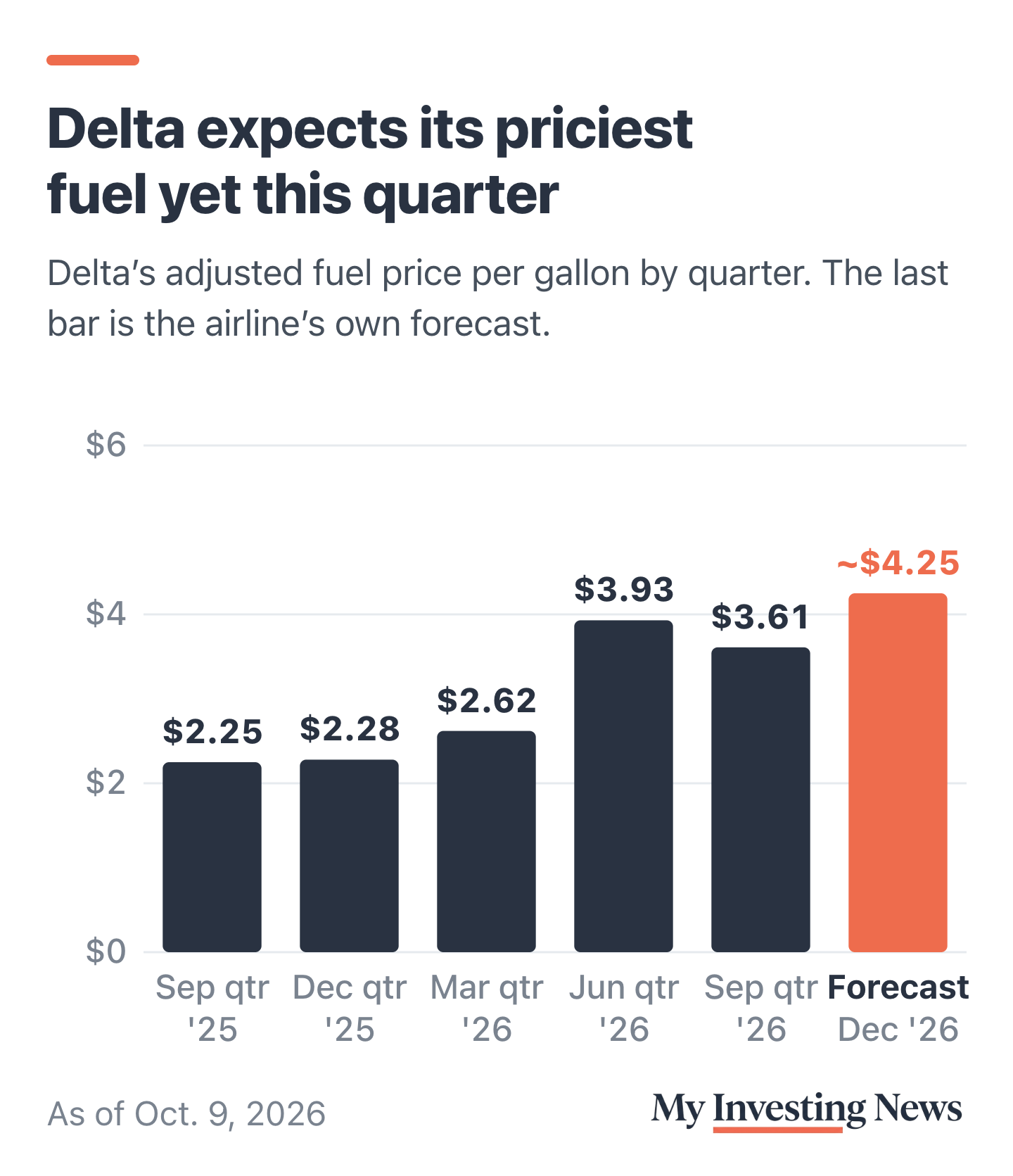
Delta Air LinesDAL is the example he pointed to. The airline’s September-quarter adjusted EPS of $1.72 missed Wall Street estimates for the first time in two years, according to CNBC. Adjusted fuel expense rose 62% to $4.14 billion at $3.61 per gallon versus $2.25 a year earlier, according to the company’s earnings release filed with the SEC. CNBC reported on Oct. 9 that Delta cut its 2026 forecast because of the fuel surge, though its CEO said demand is still strong. Reuters reported that Delta warned of more airline capacity restraint as the fuel shock hit profits, and the Observer described a $6 billion fuel shock facing the carrier. Former United CEO Oscar Munoz has said fuel costs leave airlines no choice but to raise fares. Delta’s December-quarter guidance assumes fuel at about $4.25 per gallon. The stock closed at $74.63 on Oct. 19, down 6.8% over the past week.
Manufacturers and Global Shippers Could Talk Earnings Down Next
“This is something that’s already been discounted in a lot of stock prices, but you might see some companies, you know, especially those in manufacturing, industrial, global transport, kind of talk down earnings probably a little bit more just because we haven’t had any safety in kind of the oil price yet.”
Guidance is the sales and profit forecast a company gives investors. When management lowers it, analysts usually cut their estimates and share prices adjust.
FedExFDX has offset fuel costs so far with a surcharge that “actually resets every week,” interim CFO Claude Russ said on the June call. Its calendar 2026 adjusted EPS outlook of $16.90 to $18.10 assumes current fuel price expectations, so that range could be revised if crude stays high. Higher diesel prices also work their way into grocery bills, automotive expert Lauren Fix has said.
CaterpillarCAT benefits from high oil in some ways and loses in others. CEO Joe Creed said the oil and gas backlog was “nearly two times bigger” than a year earlier, and he also warned, “We might see a little pressure on freight in the back half.” Bloomberg reported that the shares face a possible slump as oil bites and the AI rally stalls. The stock dropped 9.2% in the week through Oct. 19.
Oil in the outlooks
A Slow Squeeze on Valuations
“And at that point I think investors especially in the K-shaped economy on the lower K, if that happens, then you’re going to see more of a pullback.”
Valuation compression means investors pay less for each dollar of earnings, so a stock can fall even while profits hold up. The K-shaped economy describes higher earners doing well as lower earners struggle. The segment noted that the multiple on McDonald’sMCD, meaning its share price divided by its earnings, fell from 23x to 17x on concerns about consumer discretionary spending. Its shares were hovering near a 52-week low in early October.
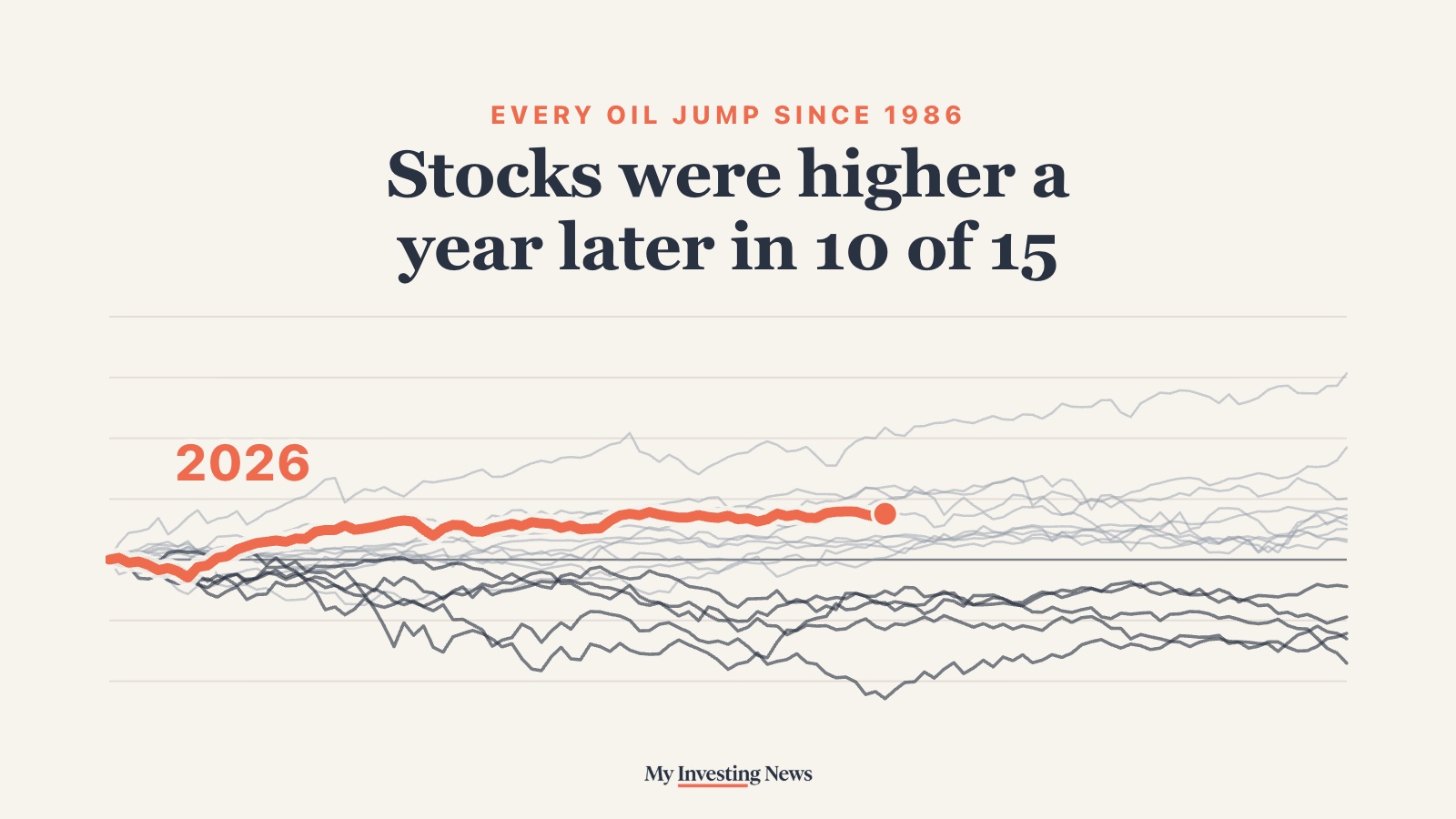
Oil has jumped like this 15 times since 1986. Stocks were higher a year later in 10.
The S&P 500 after each day WTI crude first closed 50% above its low of the prior six months (one a year), lined up at 0%. Dark lines: the 5 that were lower a year later. 2026 is coral.
Build a Barbell Beyond the Magnificent Seven
“It’s a double market, right? You can have a barbell approach to look at other companies that are coming out, whether it’s in health care, defensive areas like staples or commodities that have secular growth, that are growing organically and are really not just dependent on the AI trade.”
A barbell portfolio puts weight at two opposite ends. In Sethi’s version, AI growth stocks sit on one side, with healthcare, consumer staples and organically growing companies on the other. The segment presented this as a way to depend less on the concentrated Magnificent Seven trade.
AI Trade Plays by Its Own Rules
“The AI trade has its own secular issues. It has nothing to do with oil. It has to do with demand, it has to do with pricing.”
In his view, AI stocks rise or fall on demand for computing capacity and on what suppliers can charge for it. That gives them a separate driver from the energy-heavy parts of the market.
Where the Oil Hit Shows Up Next
Sethi expects the damage from oil to build slowly. It shows up first as cautious guidance from airlines, shippers and manufacturers, then as investors gradually pay less for each dollar of earnings. With WTI still above $100, the next round of outlooks from transport and industrial companies will show whether management teams start lowering their forecasts.
Sethi expects oil above $100 to wear stocks down slowly: first through weaker guidance from airlines, shippers and manufacturers, then through lower valuations. Delta has already cut its 2026 outlook over a $6 billion jump in fuel costs. The bigger risk he flags is a broader market pullback if spending weakens at the lower end of the K-shaped economy.