
Where we heard itCNBC, “NBA and sportsbooks agree to ban multiple types of bets,” Oct. 16, 2026. Reporter: Contessa Brewer, with comments NBA Commissioner Adam Silver gave her the week before. Memo details first reported by ESPN. Watch at CNBC
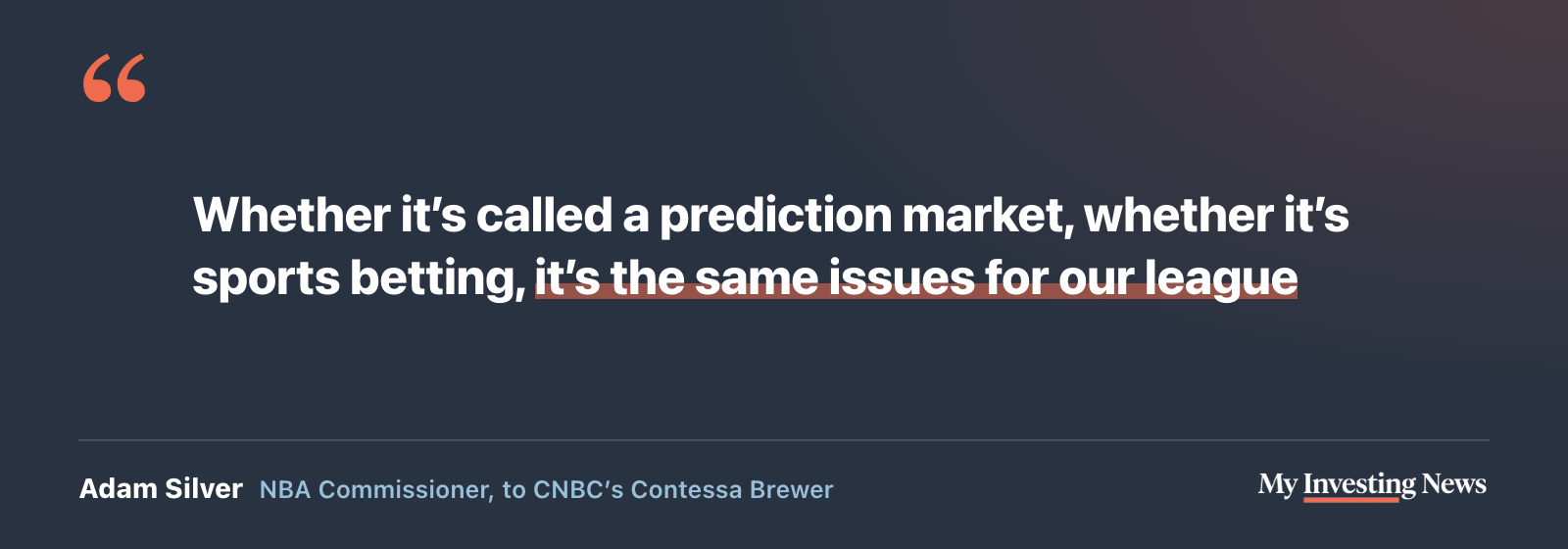
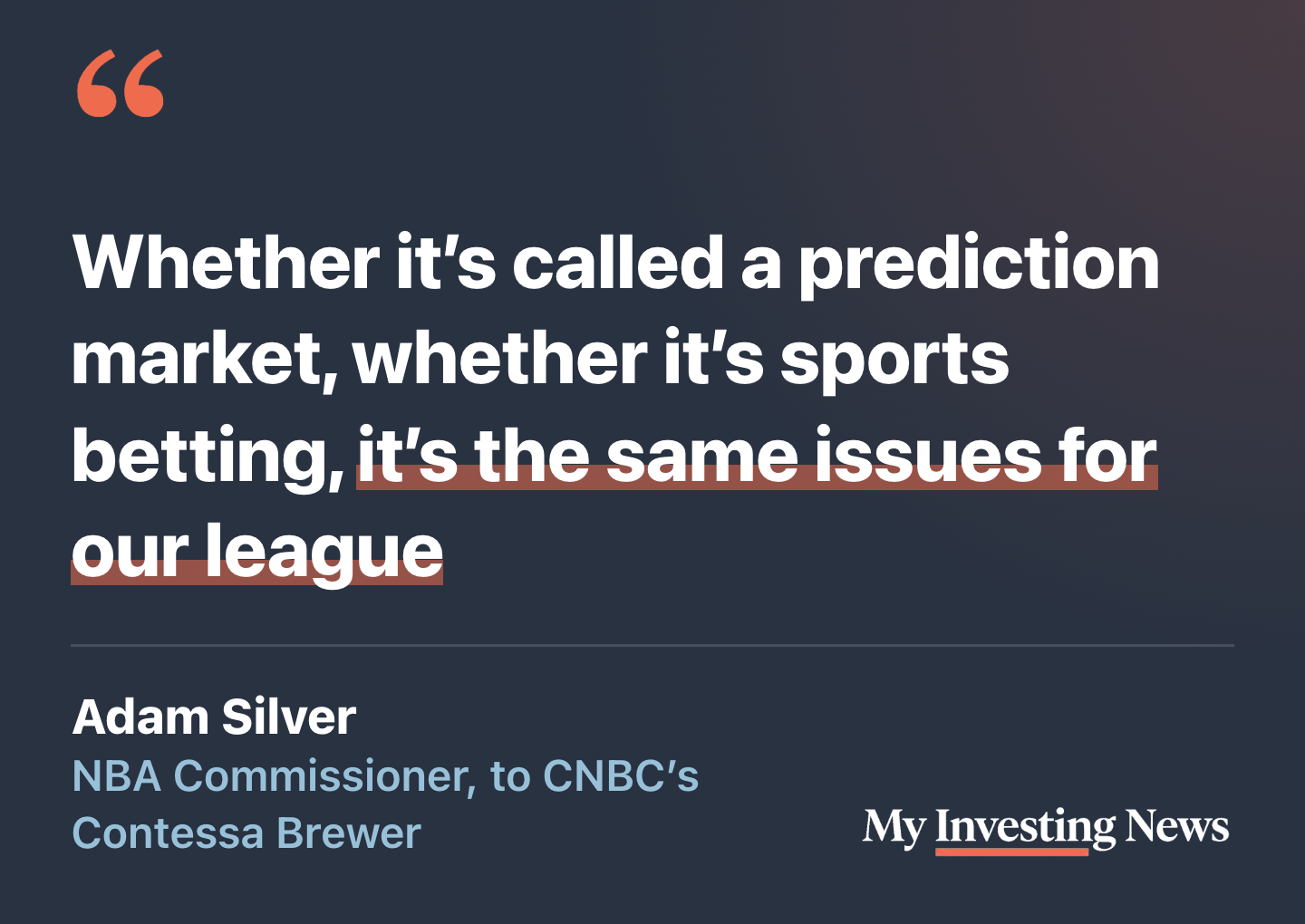
The NBA has told its partner sportsbooks to stop offering bet types it views as open to manipulation, including the single-player parlay at the center of its recent betting scandals. The details come from a memo distributed on October 16, 2026 and obtained by ESPN. Reporting on the memo that day, CNBC’s Contessa Brewer recalled what NBA Commissioner Adam Silver told her the week before, and he extended the concern beyond sportsbooks: “Whether it’s called a prediction market, whether it’s sports betting, it’s the same issues for our league as the NFL and that we think that there are integrity issues around all of this.”
Five Bet Types the NBA Wants Gone
According to ESPN’s account of the memo, partner sportsbooks must stop offering:
- Parlays that combine the under on the same player’s statistics
- Bets on the winner of the opening tip
- Bets on players missing specific shots
- Under bets on players expected to play fewer than 12 minutes
- Alternate lines on unders that carry larger payouts
The memo called the parlays “low likelihood, high payout bets.”
Single-Player Under Parlays Sit at the Center of Federal Cases
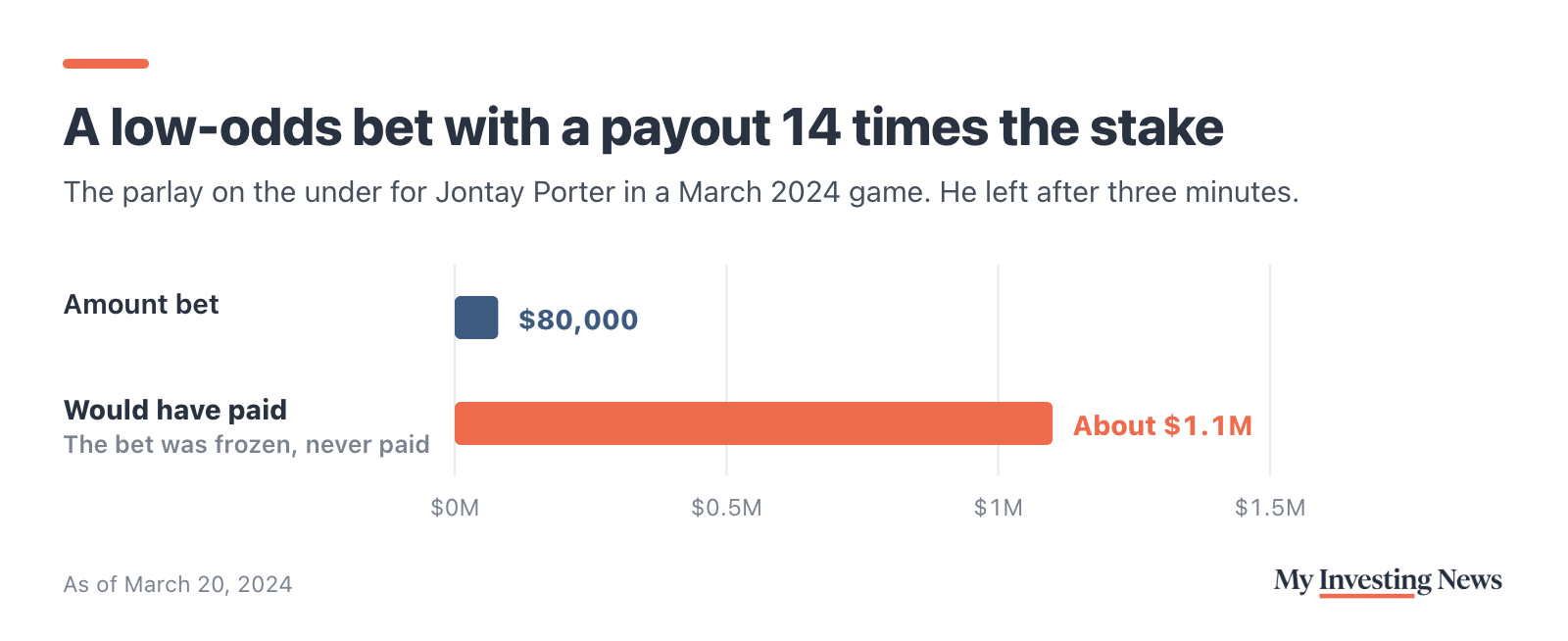
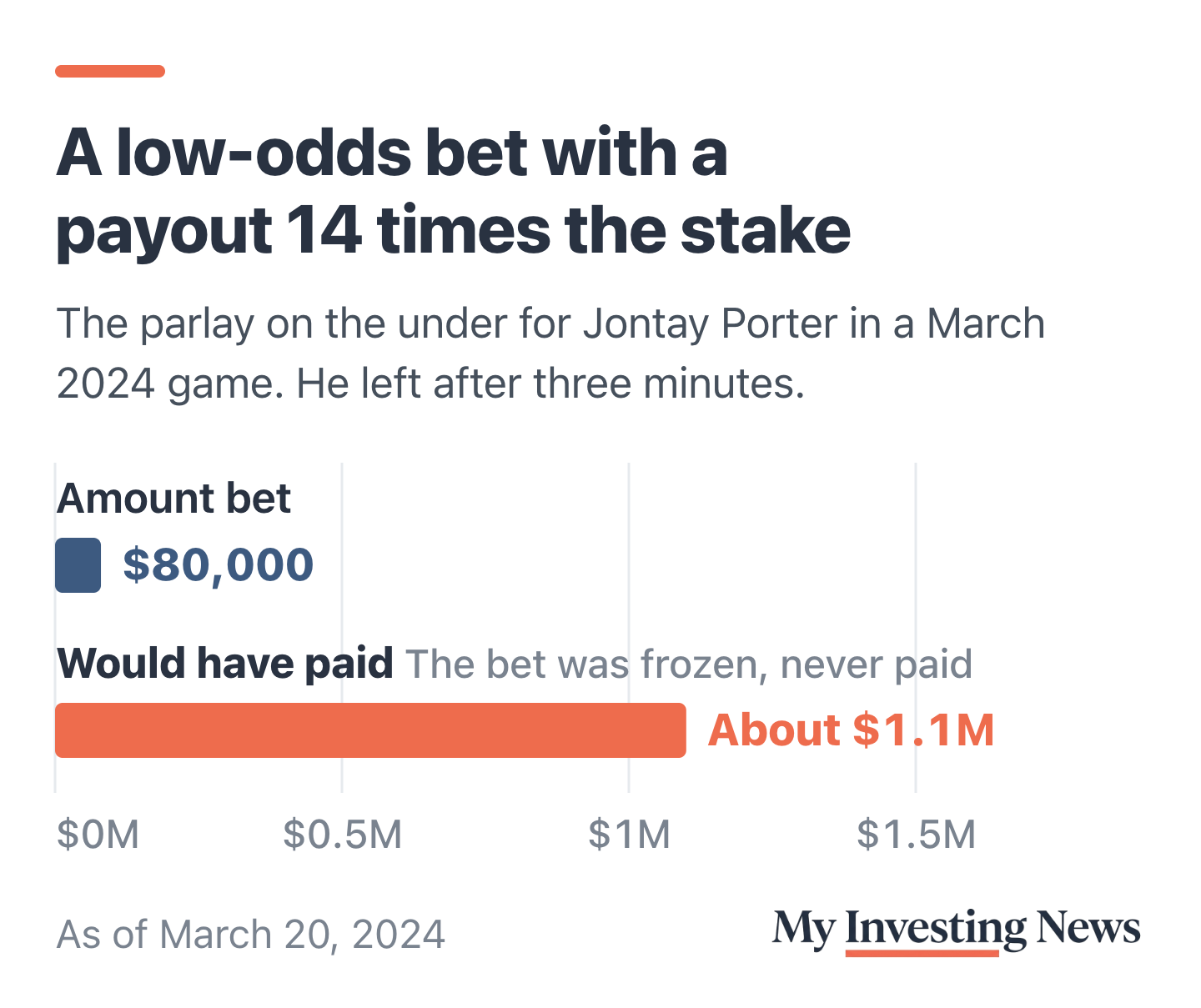
ESPN reported that under parlays on a single player appeared in the federal cases involving Jontay Porter and Terry Rozier. Porter admitted in court that he on purpose removed himself from games early to benefit bettors while on a two-way contract with the Toronto Raptors during the 2023-24 season. Prosecutors said in the criminal complaint that one bettor placed an $80,000 parlay on the under on Porter’s stats for a March 2024 game that would have paid approximately $1.1 million. Porter left that game after three minutes.
Prosecutors allege a similar approach involving Rozier in a March 2023 game. Rozier has pleaded not guilty and denied wrongdoing. NBA executive vice president Scott Kaufman-Ross told ESPN the cases were factors in the decision.
League Draws a Line Between Integrity and the Illegal Market
Kaufman-Ross described the tradeoff to ESPN: “There’s a balance between ensuring that we are removing problematic bet types but also ensuring that we don’t just move activity into the illegal market. And where we landed right now, we think, is the right balance of those two objectives.”
ESPN also reported that the league is adding in-person training on betting rules led by Charles Tillman, a former NFL player and retired FBI agent, and enhancing its AI-based monitoring of unusual betting activity. Brewer noted that the NFL bars locker room staff from betting on football and runs strict monitoring.
DraftKings and FanDuel Accept the Limits
The NBA estimates its partner sportsbooks account for upward of 99% of the US betting market, per ESPN. DraftKingsDKNG said some restrictions already reflect its practices and that it “supports the NBA’s efforts and is committed to continued collaboration with the league to maintain game integrity, including through appropriate limits on betting markets.” FanDuel, owned by Flutter EntertainmentFLUT, said it remains committed to a legal and regulated market. CNBC also named Bally’sBALY and BetMGM among the league’s authorized operators.
Prediction Markets Sit Outside the Memo’s Reach
Per ESPN, Kaufman-Ross said the league considered the entire betting landscape, including prediction markets. The league has no formal partnerships with them, and he acknowledged applying its restrictions there could be challenging. Silver’s comment reflects this gap. Prediction markets also take positions on politics: on Oct. 6, Polymarket put the odds of Republicans controlling the Senate after the midterms at about 36%.
For shareholders, the gap cuts two ways. DraftKings and FanDuel now honor limits that federally regulated prediction platforms may not follow. Both also run their own prediction products. DraftKings said with its second-quarter results that over 600,000 customers had used its Predictions offering year to date, and estimated that 80% to 90% of prediction-market consumer volume in sportsbook states comes from professional syndicates and institutional traders. Flutter said in its second-quarter report that it continues to see a limited cannibalization impact from prediction markets on its existing customers in regulated sportsbook states. Whether the NBA’s rules push restricted activity toward those platforms remains an open question. Fanatics CEO Michael Rubin said on Oct. 14 that betting companies and prediction companies will be competing for the same customer.
Prediction markets by the numbers
Both Stocks Entered the Week Deep in the Red
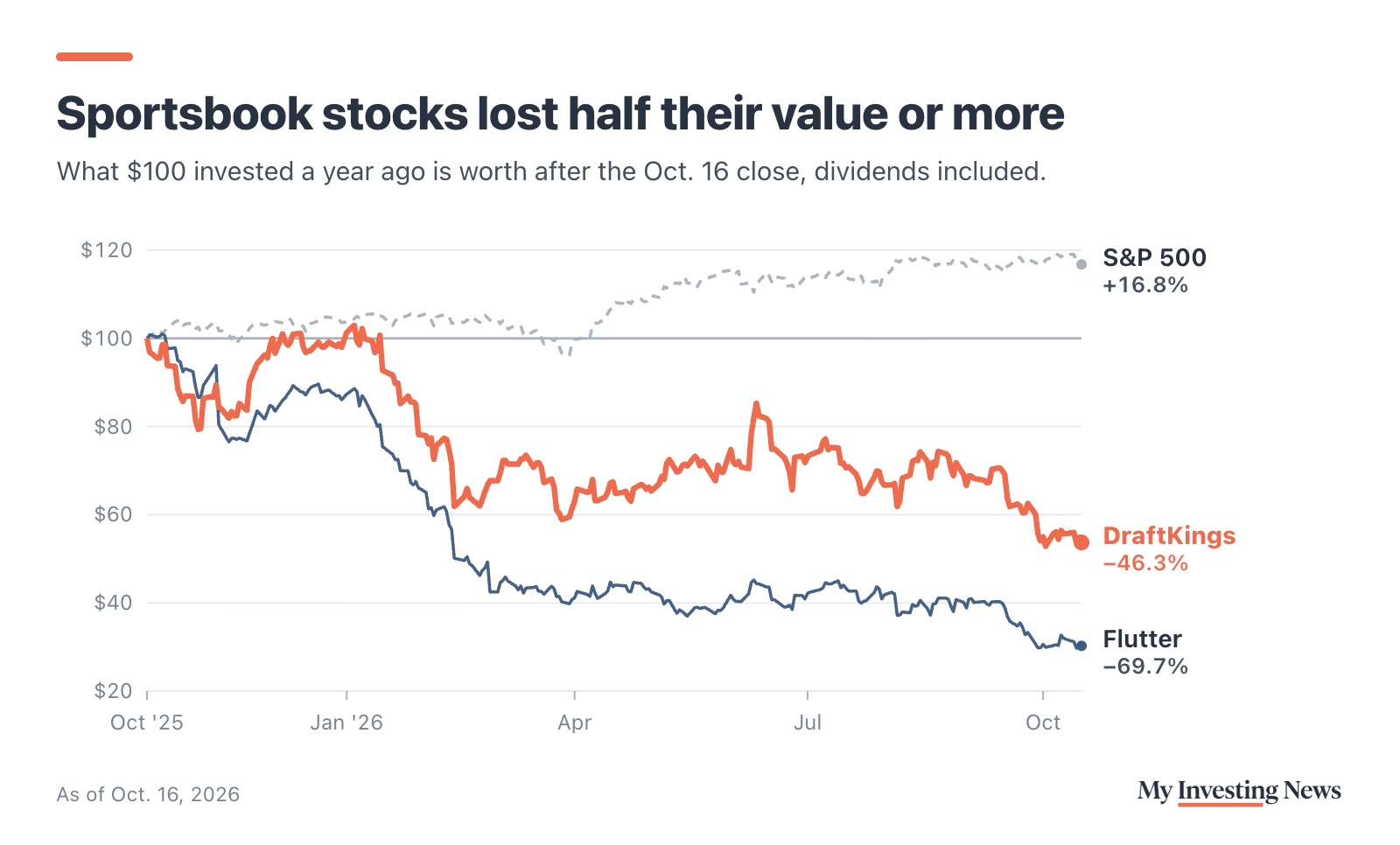
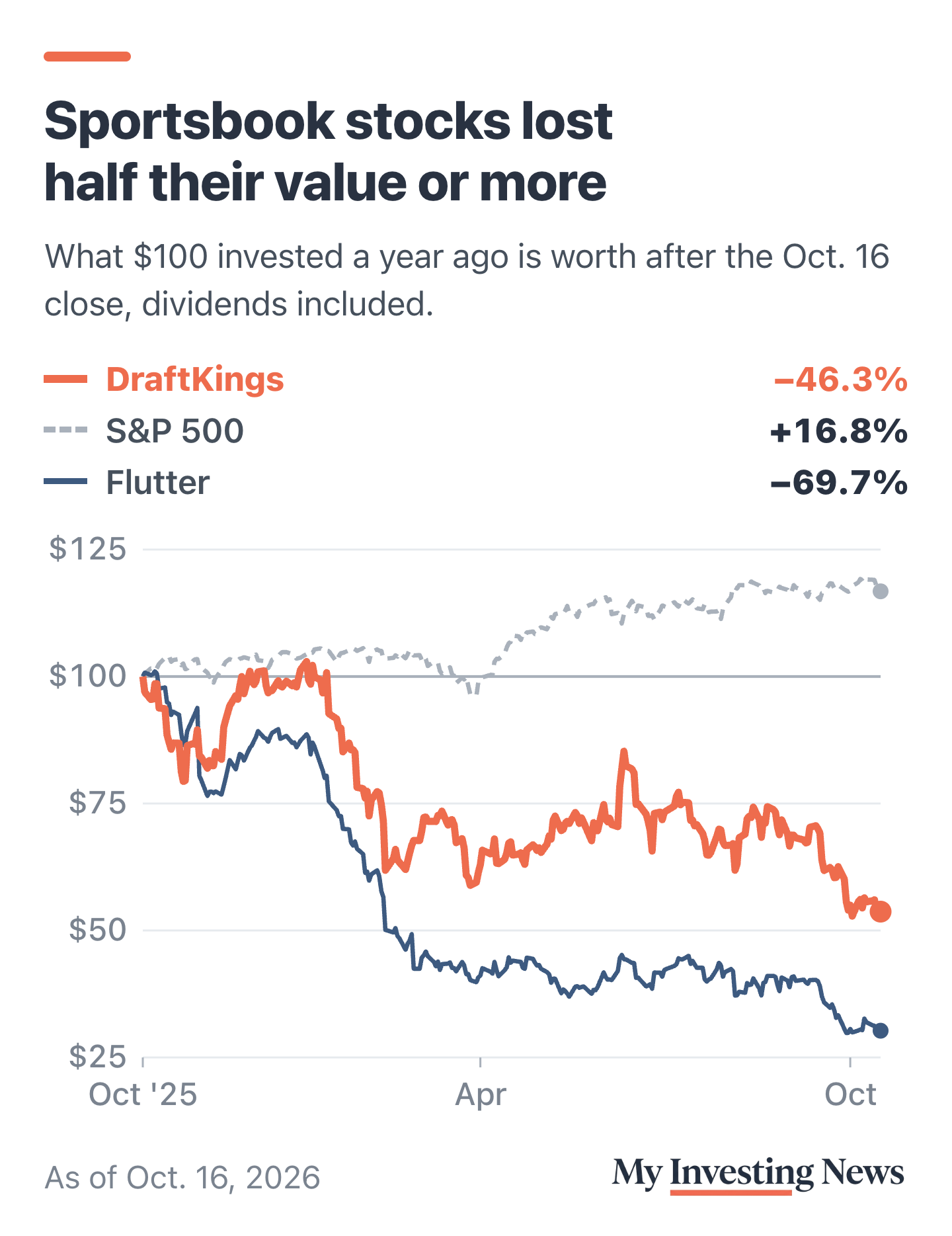
At Friday’s close, DraftKings stood at $18.90, down 2.1% on the session and 45.1% year to date. Flutter closed at $75.60, down 0.8%, and is down 64.8% year to date. Nothing reported links Friday’s moves to the NBA memo. Both stocks were already down sharply this year as heavy spending to win customers, including on prediction products, pressured margins. DraftKings swung to a GAAP net loss of $67.6M in the second quarter, and Flutter cut its full-year 2026 guidance.
What Investors Should Track Next
The memo strengthens the case that licensed sportsbooks are the league’s preferred integrity partners, and that standing has value when scandals hit. The cost is a product menu competitors may not match. The signal to watch is whether prediction markets adopt similar limits on single-player unders or the NBA makes formal agreements with them. Either outcome would narrow the gap DraftKings and FanDuel now operate inside.
The NBA is leaning on its licensed sportsbook partners, which it says handle almost all legal US betting, to drop the bets it sees as easiest to manipulate, and Adam Silver says prediction markets raise the same integrity issues. The risk for DraftKings and Flutter is that they now follow limits prediction markets may not, with both stocks already down sharply this year.