Where we heard itCNBC, segment aired Oct. 20, 2026. Speaker: Andrew Brandt, executive director of the Moorad Center for the Study of Sports Law at Villanova University. Watch at CNBC
Andrew Brandt sees a business lesson in this year’s Fall Classic. On a CNBC segment aired Oct. 20, 2026, the executive director of Villanova University’s Moorad Center for the Study of Sports Law said the Milwaukee Brewers-Tampa Bay Rays matchup challenges the main argument club owners are making: “This is a small market World Series at a time where Major League Baseball owners are saying only the big markets can win. We need a salary cap. The labor agreement is up. There’s going to be labor pains coming up in baseball. So enjoy this World Series.”
Front Office Sports reported that the Rays clinched the pennant to set up a small-market World Series against the Brewers. NPR noted the series will produce a first-time champion.
A $338 Million Payroll Fell to a $143.5 Million One
Brandt’s case comes down to spending. In the CNBC segment, the Brewers’ payroll was put at $140 million, the Rays’ at under $100 million and the Los Angeles Dodgers’ at $400 million. MLB’s own count of 2026 payrolls, reported by USA Today, puts Milwaukee at $143.5 million (19th of 30 teams), Tampa Bay at $98.3 million (25th) and the Dodgers at $338.0 million (second).
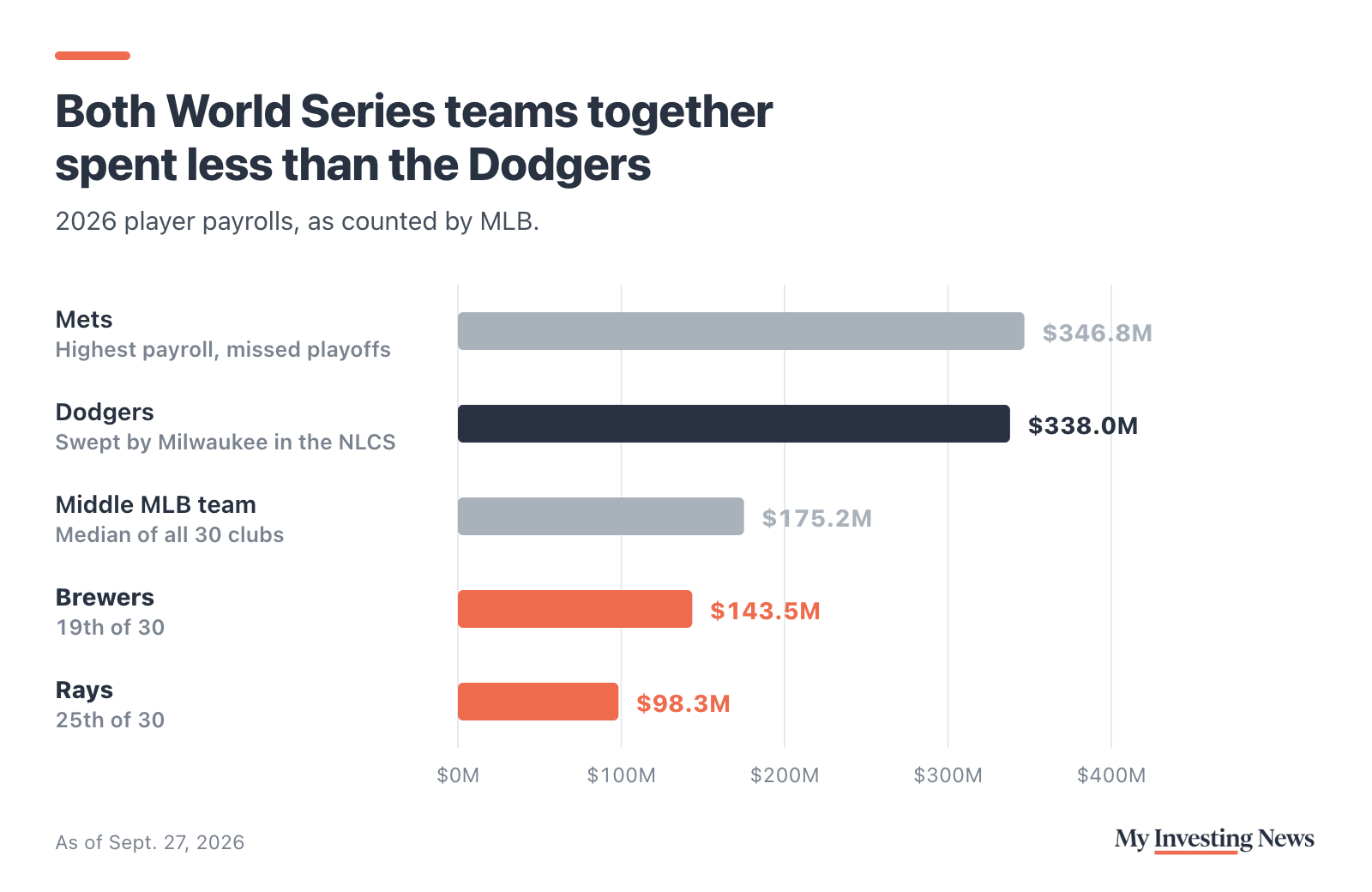
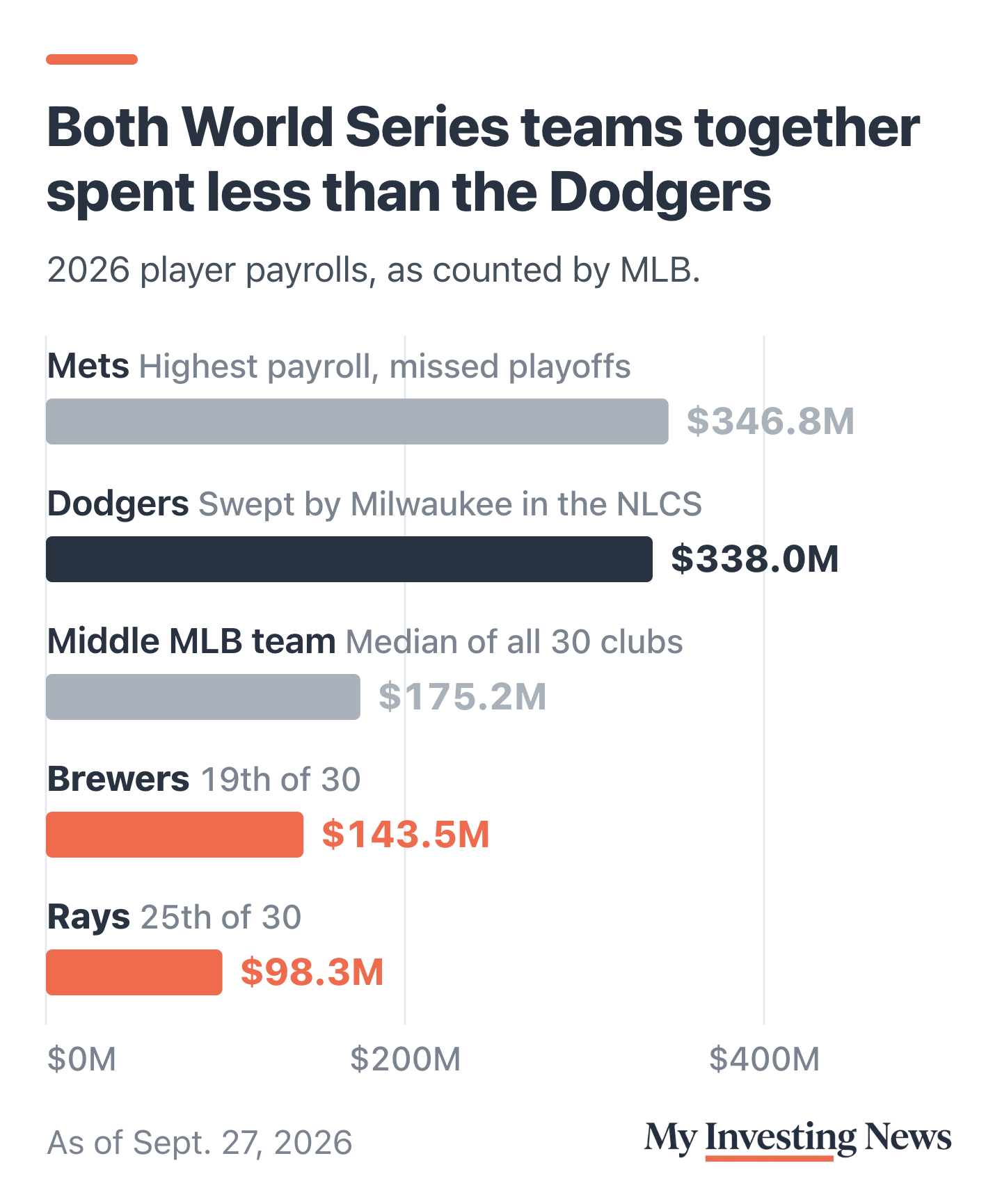
That money still left the Dodgers short of the title. Newsday reported that their dream of a World Series 3-peat unraveled when the Brewers swept the NLCS. The Chicago Tribune said the sweep means two of MLB’s lower spenders will meet in the World Series, which last happened in 1991.
Why Milwaukee Is Central to the Salary Cap Debate
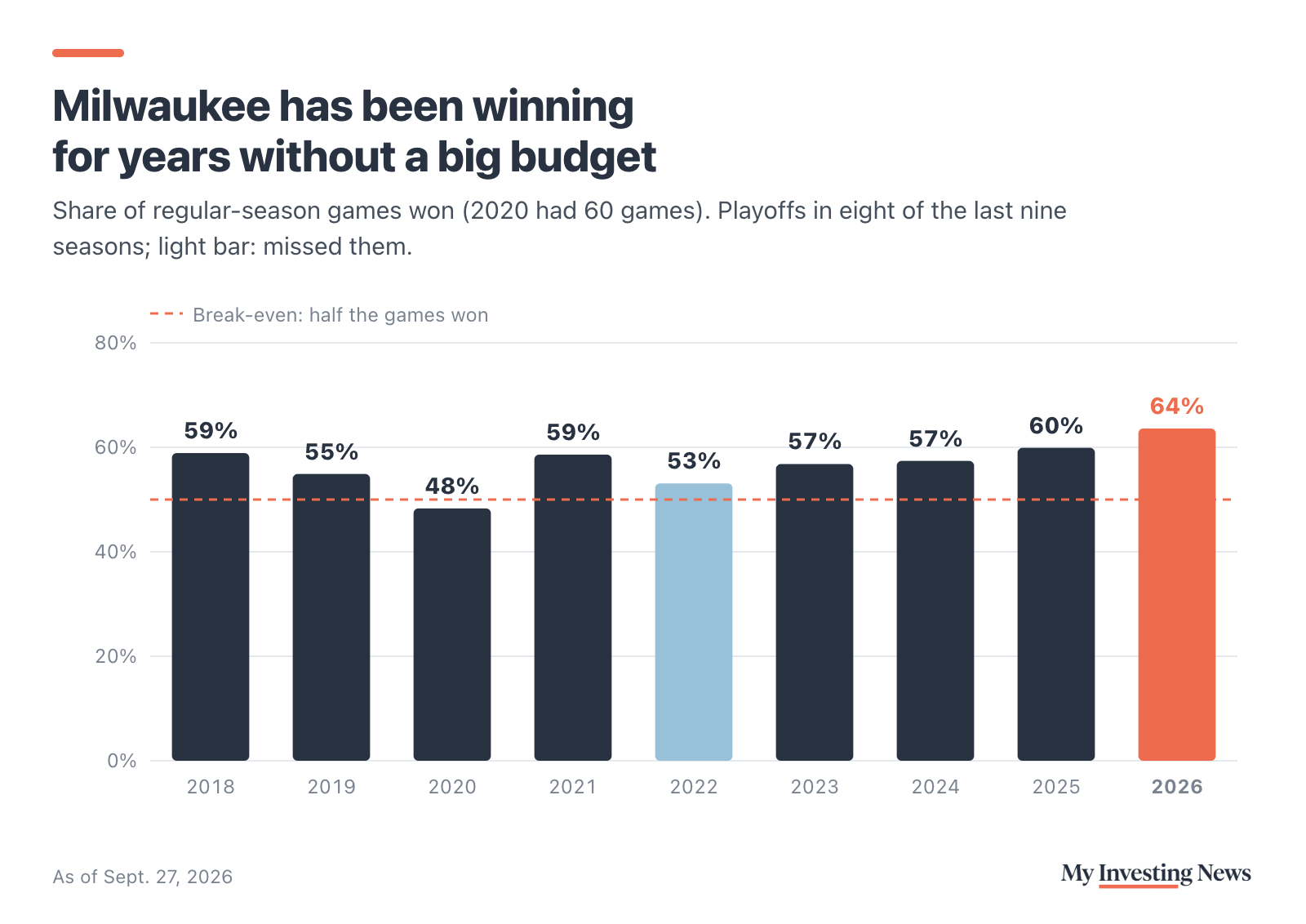
Brandt pointed to the Brewers as the strongest evidence: “The Brewers have a small payroll. They have been dominating for years. They haven’t [won] the World Series, but they’ve been a great team for years.”
This is Milwaukee’s first World Series trip since 1982, according to ESPN. That history matters to owners who value franchises as financial assets. A team that has stayed competitive without a top payroll contradicts the claim that only big-market spending wins titles.
A Salary Cap Baseball Has Never Had
Brandt expects a tough negotiation: “So again, we’re going to see there’s going to be a hard labor negotiation. The owners want a cap. Football, basketball, hockey. They all have a cap. Baseball’s never had a cap. It’s much harder to negotiate something you haven’t had than something you’ve had.”
A salary cap is a limit on how much each team can spend on player pay. Leagues that use one say it keeps rich clubs from outspending everyone else. Players’ unions tend to oppose caps because they limit salaries. Yahoo Sports reported on Oct. 1 that the owners’ $245.3M salary cap plan sets up a labor fight before the collective bargaining agreement expires on Dec. 1. SNY has already published a guide to what to expect when an MLB lockout strikes this winter.
The owners’ cap plan at a glance
Experts Split on What the Sweep Proves
Brandt’s reading has criticism. Reuters reported that experts are divided on whether the Dodgers’ sweep shifts the MLB salary cap fight, and one of the experts it quoted said he expects a lockout. The Athletic made a similar point before the playoffs ended: even if a small-market team wins the World Series, the league will still continue its push for a salary cap.
Other business outlets side with Brandt. Forbes wrote that the Rays-Brewers matchup undermines MLB’s push for a salary cap system. Sportico called the series a massive financial outlier, which owners can use to argue that one October shows little about the long-term competitive balance of all 30 teams.
Labor Fights Ripple Well Beyond the Ballpark
A work stoppage can also cost groups beyond owners and players, potentially including teams, broadcasters with game rights, businesses near ballparks and fans.
The deal will also affect franchise values over the long run. How a league splits revenue and controls costs determines how profitable its teams can be. A cap coupled with revenue sharing would change the economics of clubs in Milwaukee and Tampa Bay, and it would change them for big spenders like Los Angeles too. The outcome of these talks therefore matters to anyone who tracks sports team valuations or media rights deals.
Other sports businesses face their own tests. Fanatics CEO Michael Rubin expects a very difficult couple of years for betting companies, and the NBA has told its partner sportsbooks to stop offering bets it views as open to manipulation.
Enjoy the Series Before the Bargaining Starts
Brandt’s advice was simple: “So enjoy this World Series.” The labor fight starts once the last out is recorded. The next markers are the Dec. 1 expiration, the players’ response to the owners’ cap plan and whether Brewers-Rays becomes evidence that changes anyone’s position at the bargaining table.
Brandt sees a World Series between the 19th and 25th biggest payrolls as hard evidence against the owners’ claim that only big spenders can win. The risk is the labor fight that follows: the contract expires Dec. 1, owners want a cap the players reject, and a lockout is widely expected.