Where we heard itOdd Lots, Bloomberg’s podcast, “The Macro Implications of the Blue Tsunami,” published Nov. 6, 2026 and recorded the day before: Skanda Amarnath, executive director of Employ America, with hosts Joe Weisenthal and Tracy Alloway.
The midterm results gave Democrats the Senate, and with it the say over who sits on the Federal Reserve’s board. Democrats won at least 54 of the 100 seats, according to the Associated Press count as of Nov. 10, with two races still uncalled. The new Senate takes over on Jan. 3, 2027. Asked on Odd Lots what that means for the Fed, Skanda Amarnath of Employ America pointed to one seat in particular: Jay Powell’s.
Powell handed the chair to Kevin Warsh in May but stayed on as a governor, and his term on the board runs until Jan. 31, 2028. Amarnath said he suspects Powell would like to leave if he felt sure it wouldn’t hurt the institution. If Powell stays to the end of his term instead, Amarnath said, “it’s going to be really hard” to fill the seat.
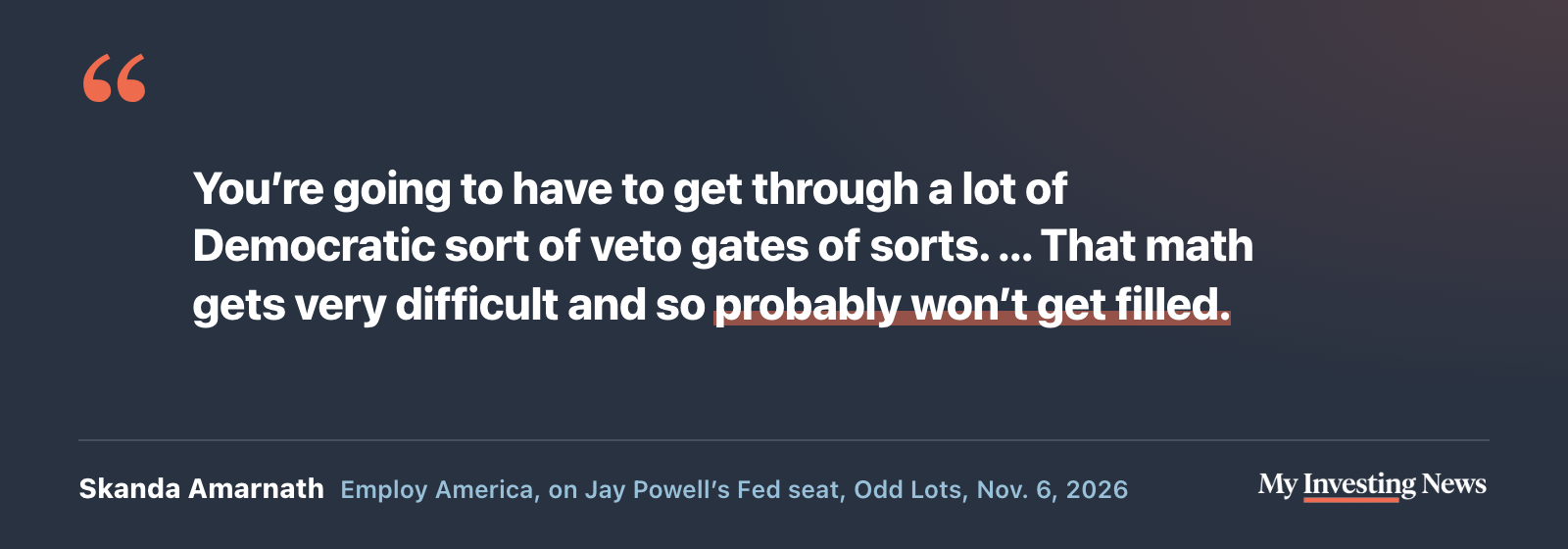
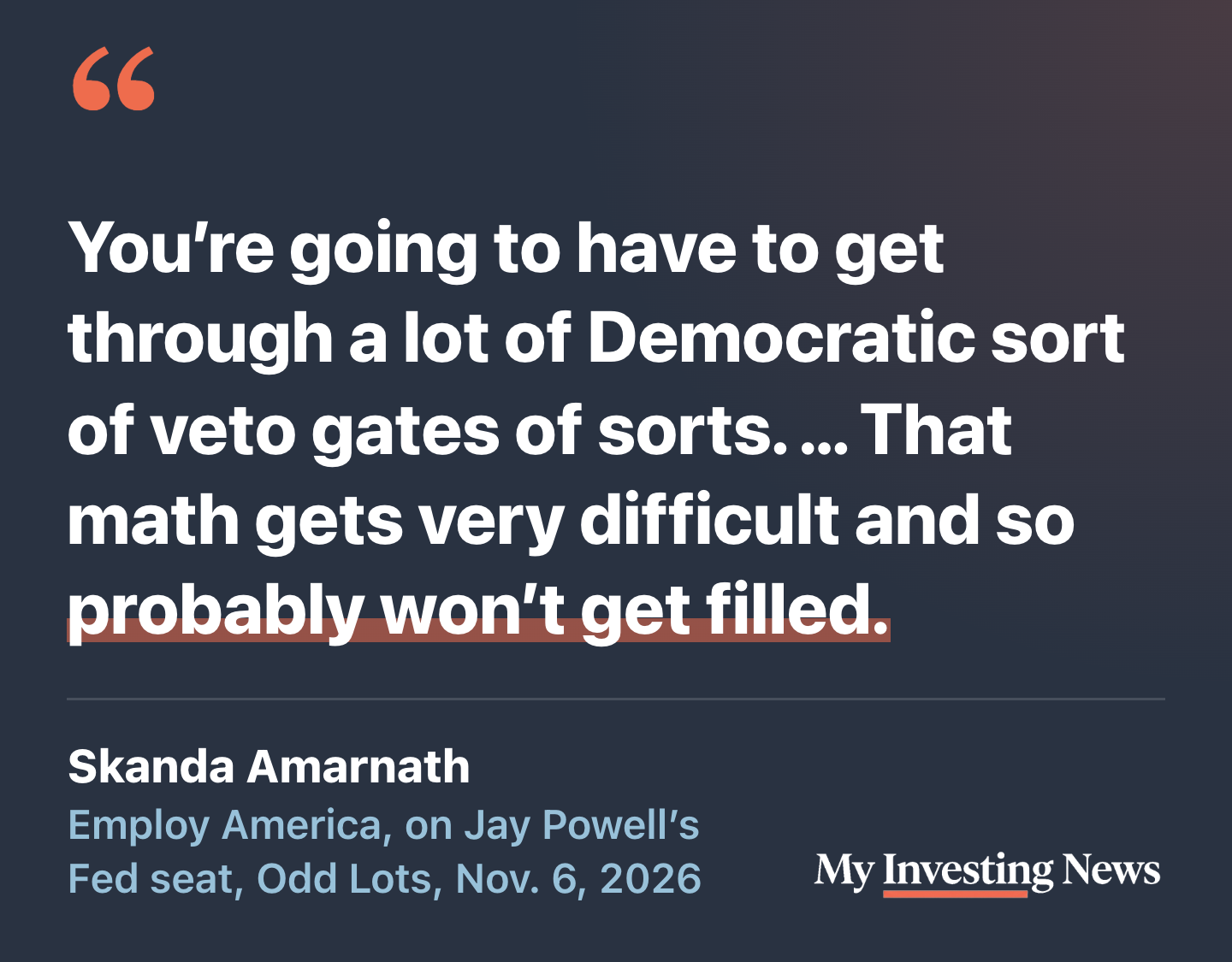
He added that the White House might get there with a nominee who could win Democrats’ trust quickly. He also noted that a Senate of the president’s own party is no guarantee, naming Judy Shelton, Stephen Moore and Marvin Goodfriend among the Trump picks who didn’t make it.
Every Fed Nominee Since 1981
To test the claim, we went through every nomination for a seat on the Fed board that the Senate Banking Committee received since 1981, the first year congress.gov’s records cover. Counting each person a president put up for a seat once, even when the nomination had to be resent, there were 62. 11 were never confirmed.
Party matters, but less than you might expect on speed. When the president’s party ran the Senate, 34 of 39 nominees were confirmed, or 87%. When the other party ran it, 17 of 23 were, or 74%. The ones who did get through waited about as long either way: a median of 102 days from nomination to confirmation under a friendly Senate and 97 days under an opposing one.
Fed board nominations since 1981, as of Nov. 10, 2026
The Failures Came Late in a Presidency
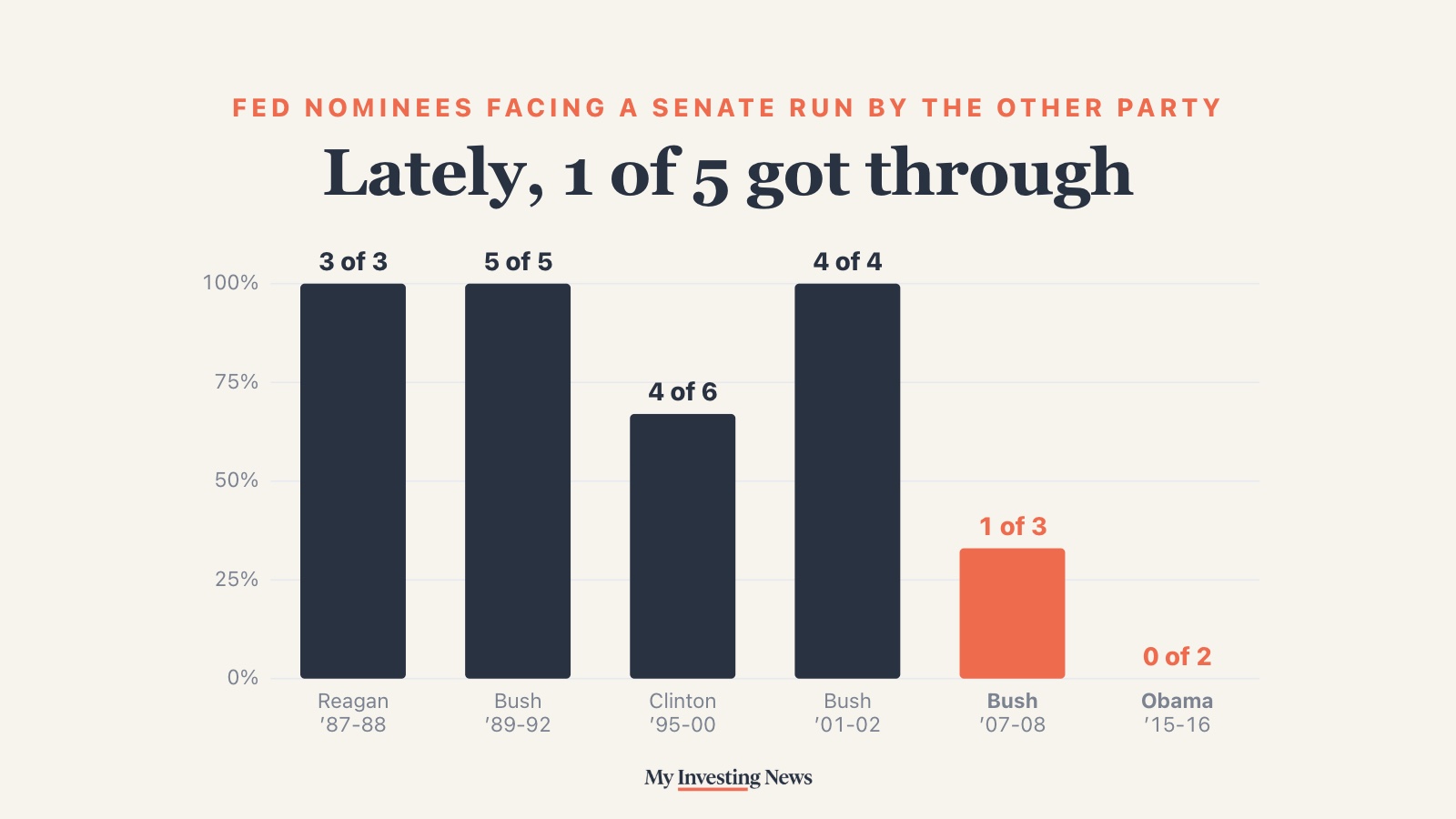
The split-Senate record changes when you line it up by time. Ronald Reagan got all three of his nominees through a Democratic Senate in 1987 and 1988, including Alan Greenspan in 19 days. George H.W. Bush went five for five, and George W. Bush got all four through a Democratic Senate in 2001 and 2002.
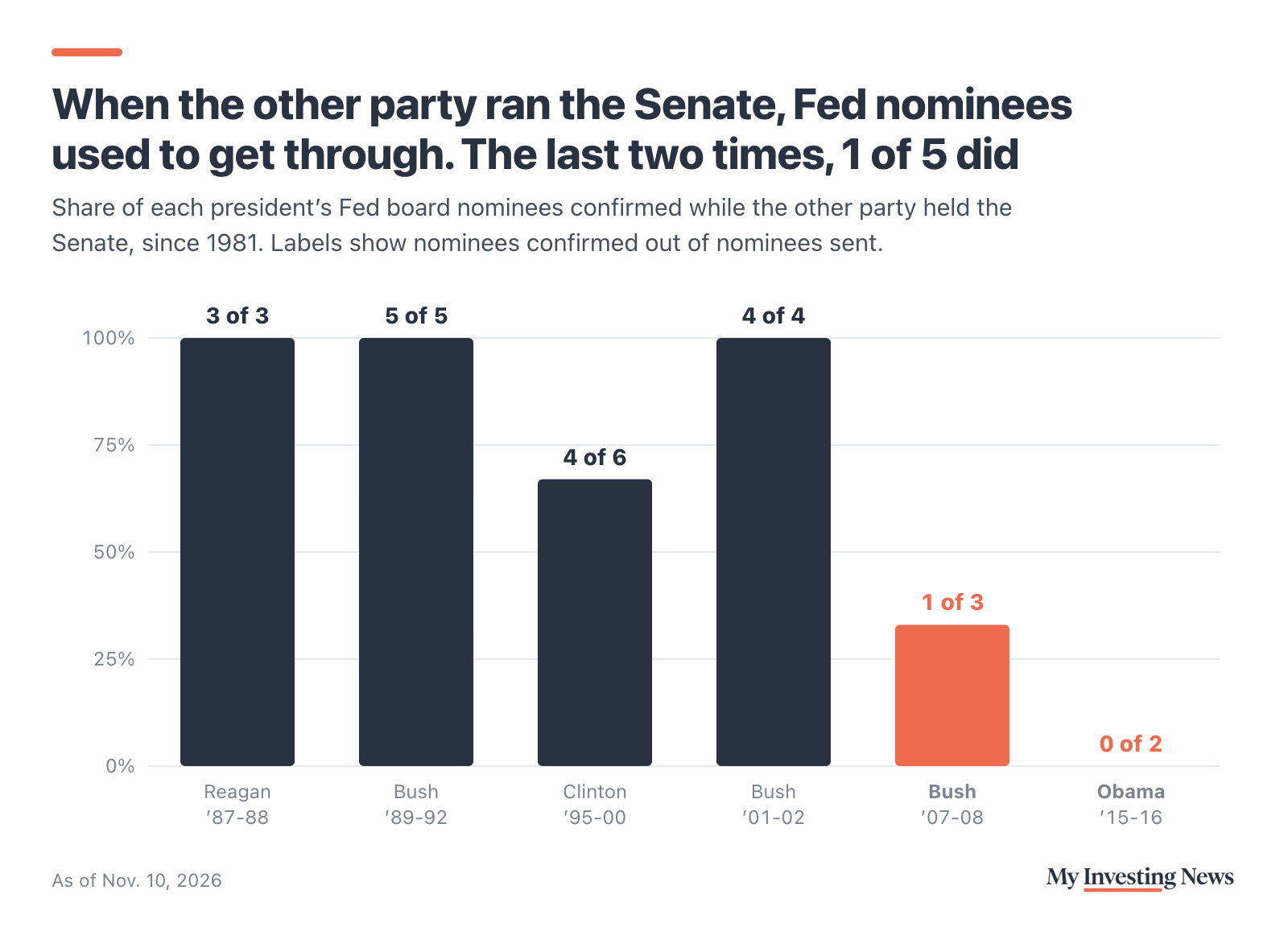
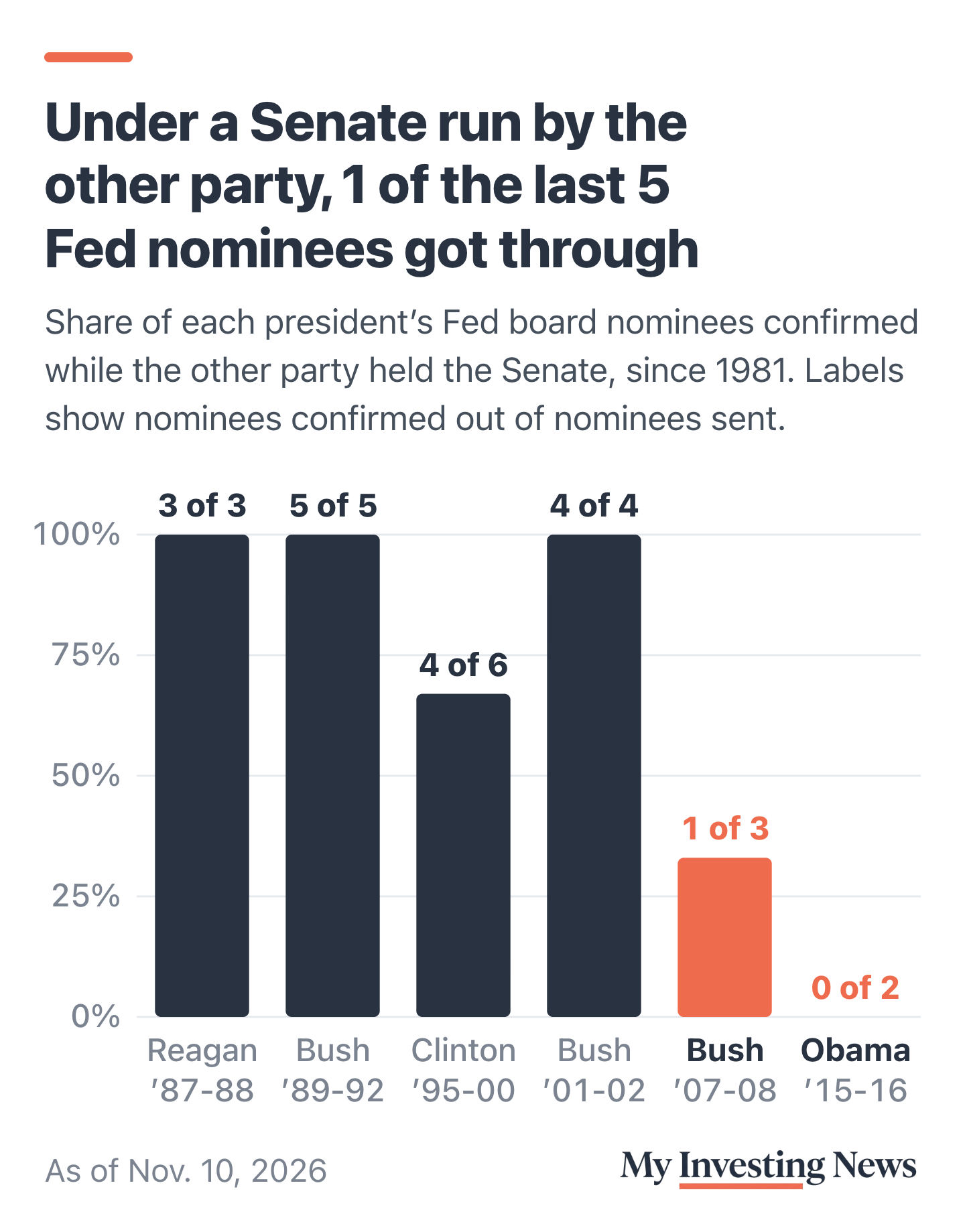
All six nominees who failed under an opposing Senate were nominated in a president’s last two years, and none of them got a floor vote. The Senate sent their nominations back unconfirmed at the end of a session: Carol Parry and Roger Ferguson’s reappointment under Bill Clinton in 1999 and 2000, Larry Klane and Randall Kroszner’s reappointment under George W. Bush in 2007 and 2008, and Allan Landon and Kathryn Dominguez under Barack Obama in 2015 and 2016. The one exception in the last two stretches, Elizabeth Duke, waited 408 days. Ferguson was confirmed to a new term only after the next president renominated him in 2001.
That is where Powell’s seat falls. It opens on Jan. 31, 2028, in the last year of President Trump’s term, with a Senate run by the other party. Since 1999, nominees sent to an opposing Senate in a president’s last two years have gone one for seven.
Even Friendly Senates Have Gotten Harder
Amarnath’s point about his own-party failures holds up too. Every one of the five nominees who failed under a friendly Senate was nominated in 2010 or later: Peter Diamond under Obama, Marvin Goodfriend, Nellie Liang and Judy Shelton under Trump, and Sarah Bloom Raskin under Joe Biden. (Stephen Moore withdrew before he was formally nominated, so he isn’t in the count.) And the votes have gotten closer. Christopher Waller was confirmed 48 to 47 in 2020, Lisa Cook 51 to 50 in 2022, and Stephen Miran 48 to 47 in 2025. Waller is now one of the board’s voices on inflation, and Miran got through in 13 days.
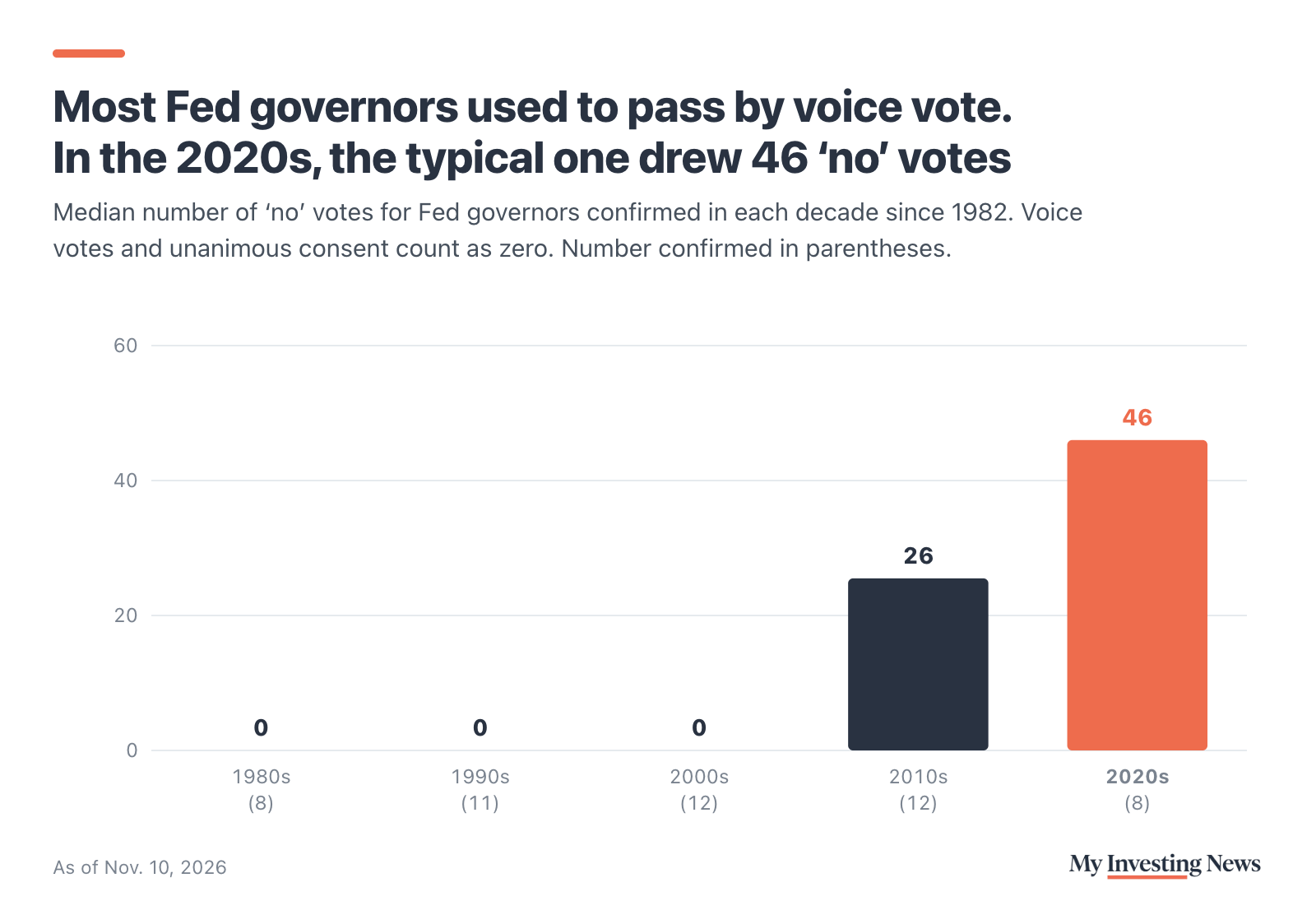
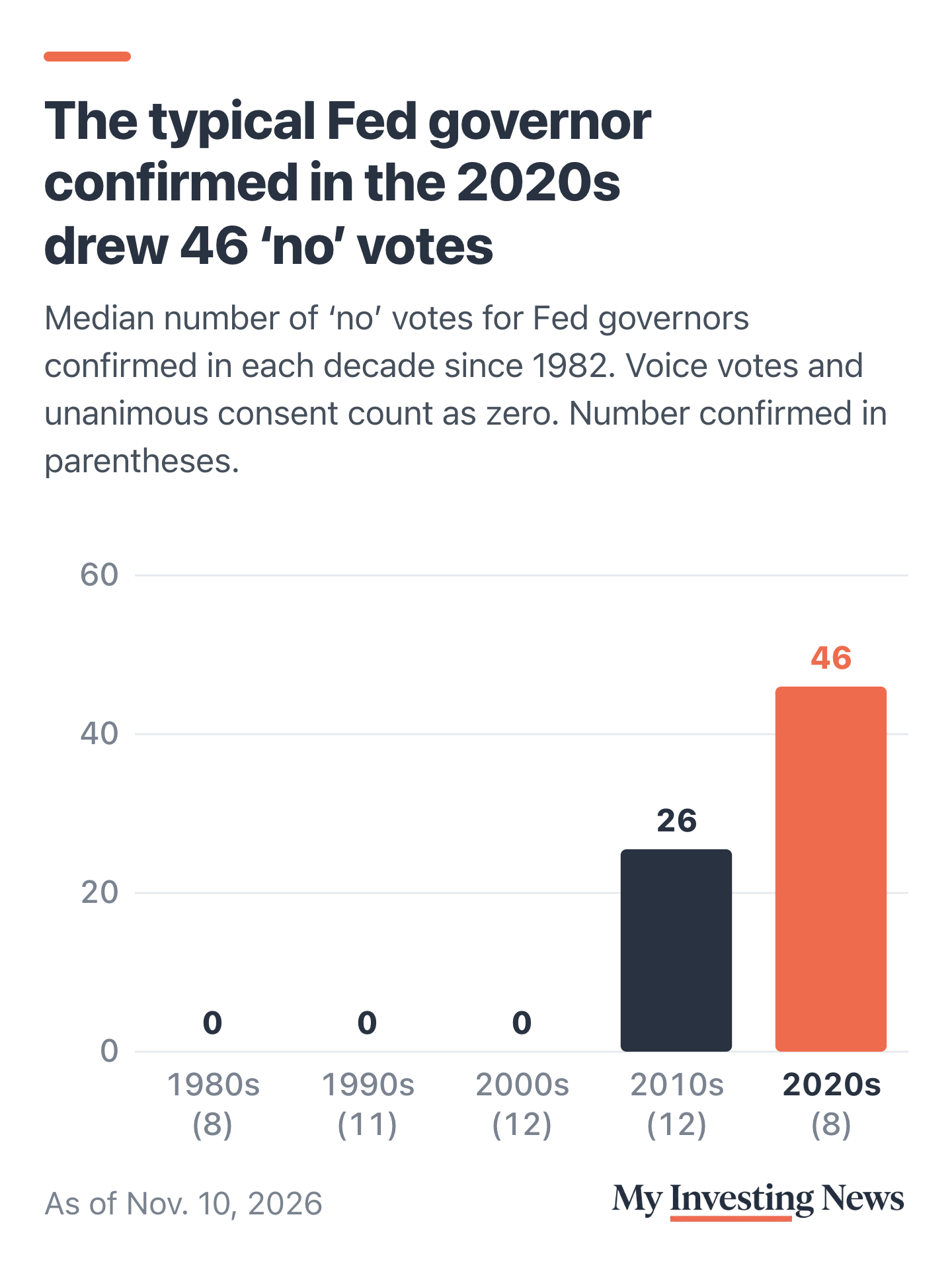
Since 2013 the Senate has confirmed nominees by a simple majority, so the majority party can move a nominee or sit on one by itself. From January, that party will be the Democrats, who will also chair the Banking Committee that holds the hearings.
What to Watch
The timing is the whole story. If Powell left before Jan. 3, 2027, Trump could send a nominee to a Senate his party still controls; Miran went from nomination to confirmation in 13 days. If Powell stays, the seat opens in 2028 under a Democratic Senate, the setting where recent nominees have waited out the clock. Watch for any word from Powell on his plans, any White House move to name a successor early, and how the remaining Senate races settle. Before the vote, bettors underestimated the size of the blue wave.
Amarnath says a Democratic Senate will make Powell’s seat very hard to fill if he serves out his term, and the record backs him on timing more than on party. Nominees facing an opposing Senate have usually been confirmed, but the last two times, 1 of 5 got through, and every failure came late in a presidency. The risk to that read is a nominee both parties can accept, or Powell leaving early while Republicans still run the Senate.