Where we heard itPresident Donald Trump, in a brief phone call with CNBC’s Eamon Javers on Wednesday, Nov. 4, 2026, the day after the midterm elections, as quoted in CNBC’s election coverage.
A day after Democrats won both chambers of Congress, President Donald Trump said he could work with them on “a lot of financial ideas.” Tariffs were not one of them. “If I took tariffs off,” he told CNBC’s Eamon Javers in a short phone call on Nov. 4, “we have 3,000 plants under construction right now. Every single plant would stop building.”
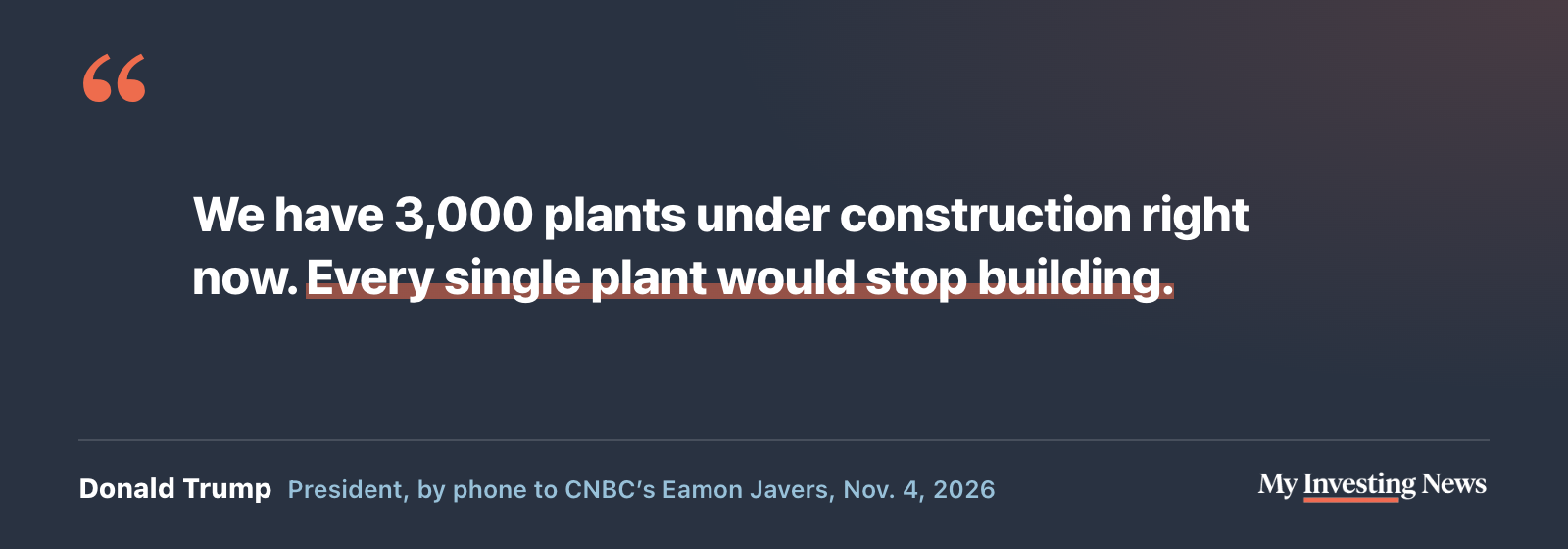
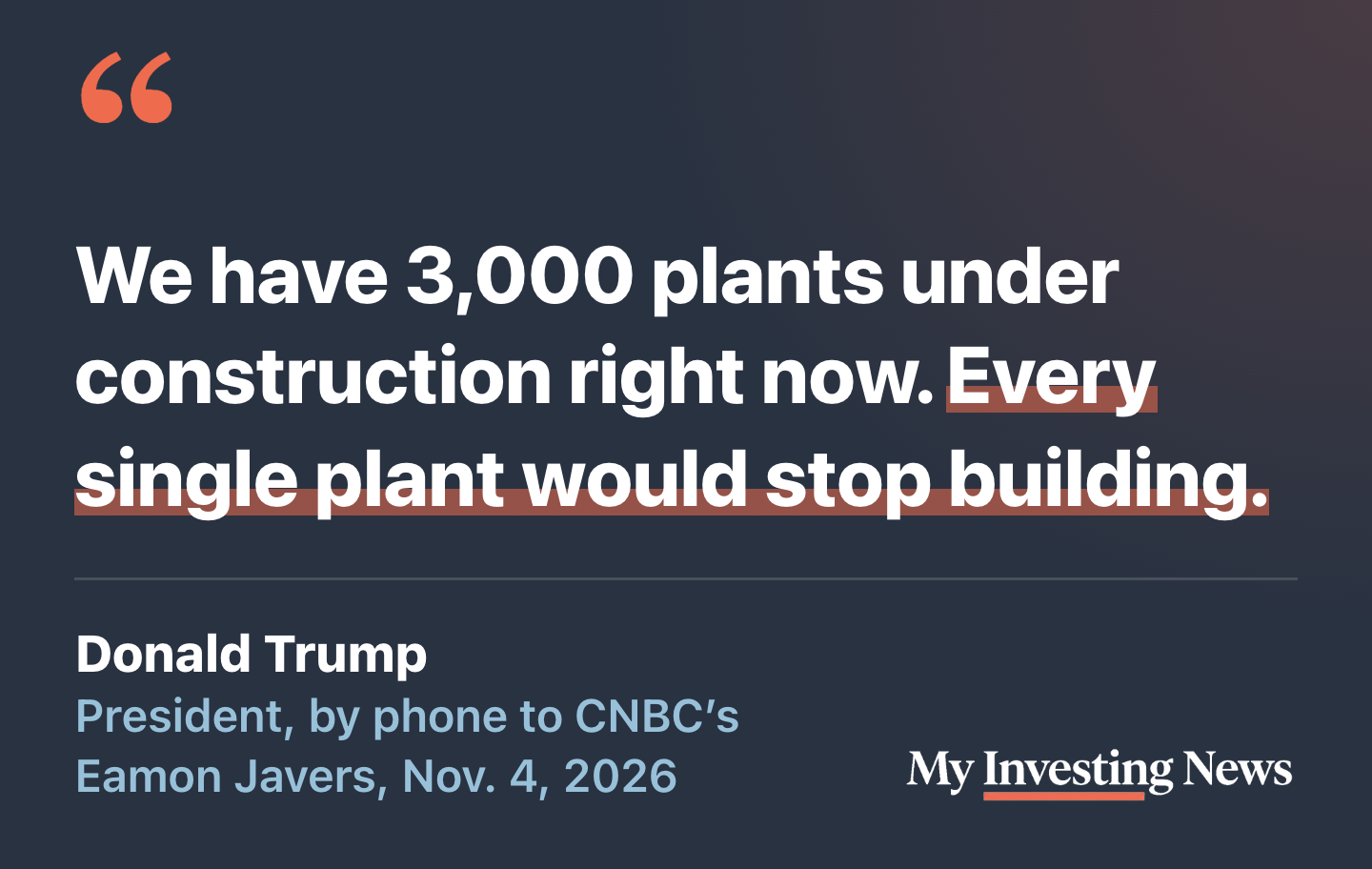
The wording above is CNBC’s written version of the call. Recapping it on Fast Money that evening, Javers put it slightly differently, quoting Trump as saying “trillions of dollars” were being built and that “every plant would immediately stop construction.” We found no public tally behind the 3,000 figure, and the government does not count plants under construction. What the Census Bureau does track, every month since 1993, is how much money goes into building factories. That record is a fair test of the idea that tariffs are what keep the cranes up.
Factory Building Peaked Before the Tariffs
Spending on manufacturing construction peaked at an annual rate of $250.2 billion in September 2024, four months before Trump took office. By September 2026, the latest month reported, it was $170.2 billion, down 32%. It fell in 19 of the 24 months in between. Building costs rose over the same stretch, so the real decline is larger: adjusted with the producer price index for new industrial buildings, spending is down 37% from its peak.
The level is still high by any older standard. Private factory construction is 2.2 times its 2015 to 2019 average, and before 2022 it never topped $94.2 billion. The boom and the bust both came from one corner of manufacturing.
Chip Plants Explain Most of the Drop
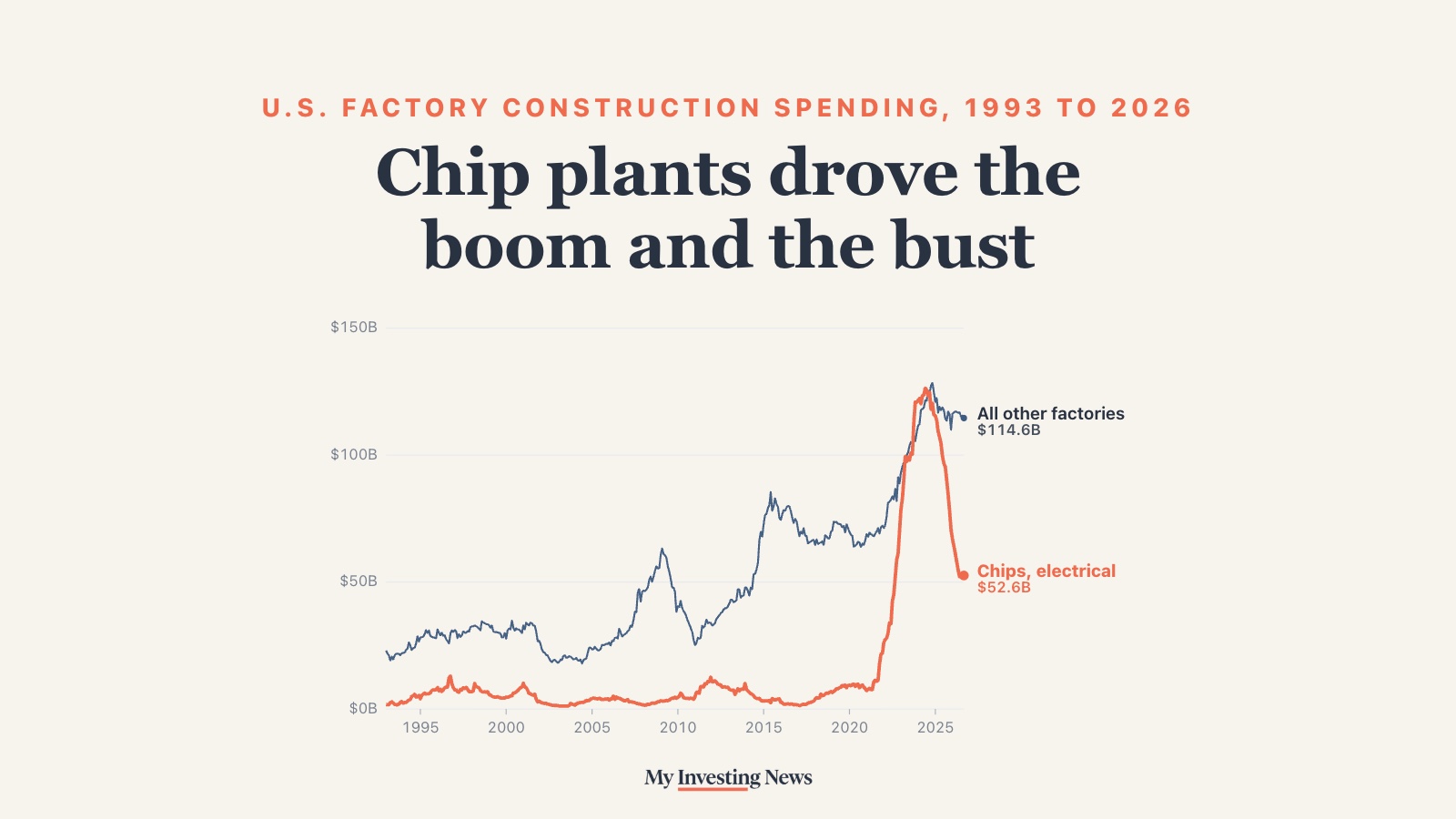
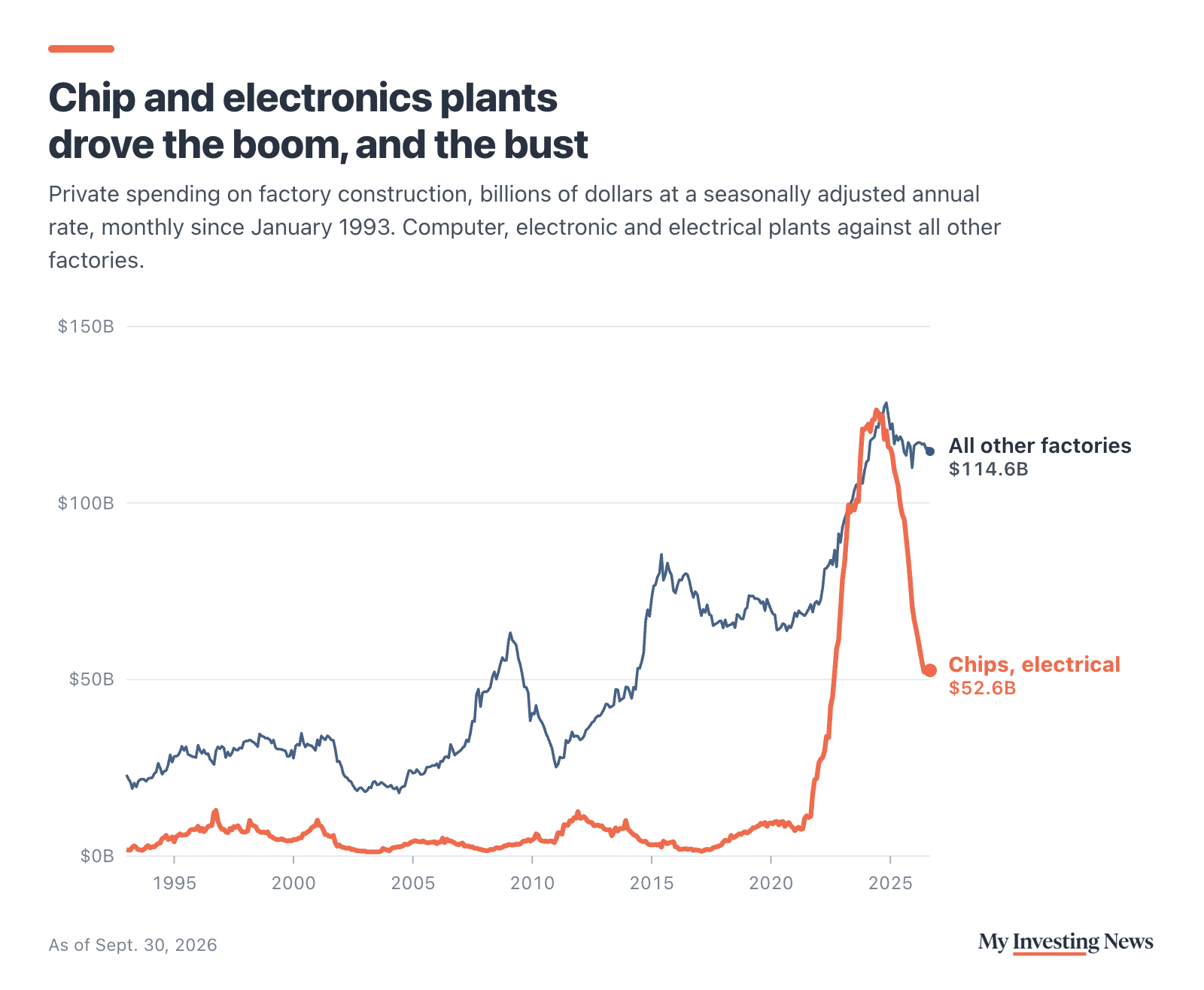
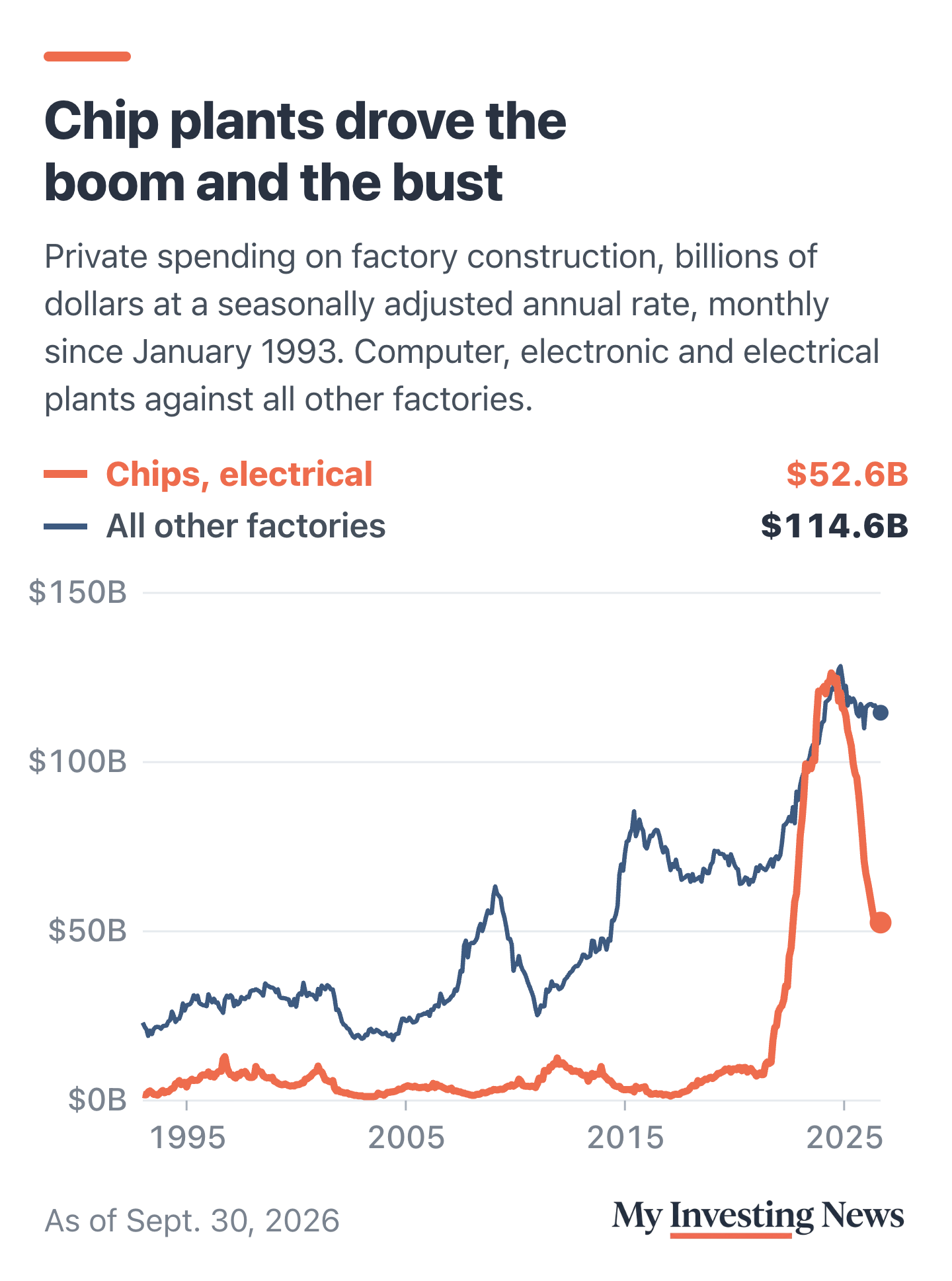
Census groups chip factories with other computer, electronic and electrical equipment plants. Spending in that category averaged $4.3 billion a year from 2015 to 2019. It hit $126.4 billion in June 2024 as companies raced to build chip fabs, then fell 58% to $52.6 billion by September 2026. That one category accounts for 88% of the drop in private factory construction since September 2024.
Every other kind of factory together went from $124.4 billion to $114.6 billion, a decline of 7.8%. Census records spending as the work gets done, so the 2023 and 2024 peak reflects big projects that broke ground in earlier years. Javers has also tracked how quickly the tariff list itself changes; in October he described one round of tariff cuts and new duties as roughly an even swap.
Factory construction, as of September 2026
The Test: Factory Building Since the Tariffs Began
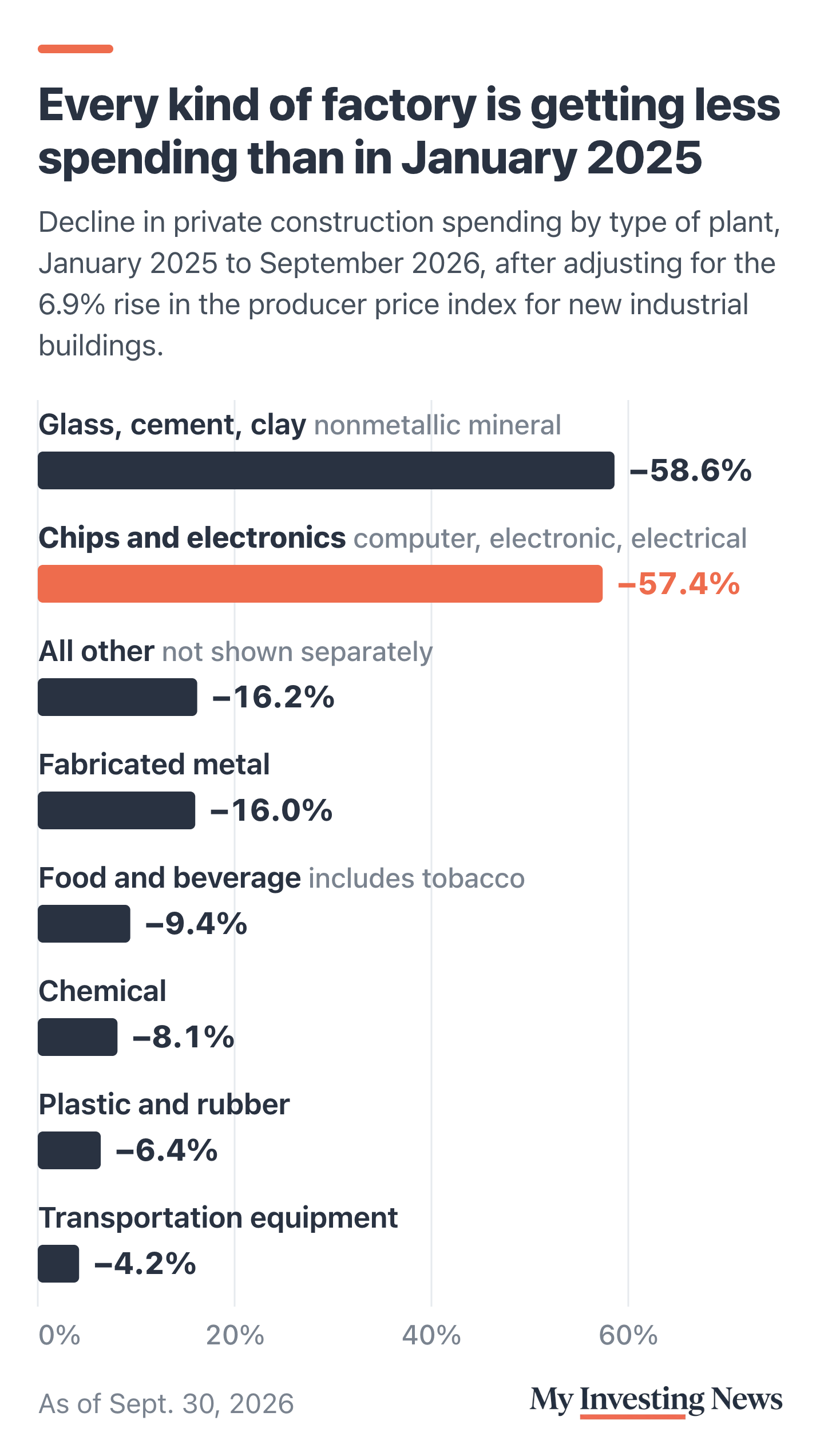
If tariffs were driving plant construction, factories outside the chip category should show it. Since January 2025, spending on them is down 5.2% in dollars and about 11% after building costs, which rose 6.9%. Of the eight groups Census reports, only transportation equipment plants got more spending in dollars, up 2.3%. After costs, all eight are down.
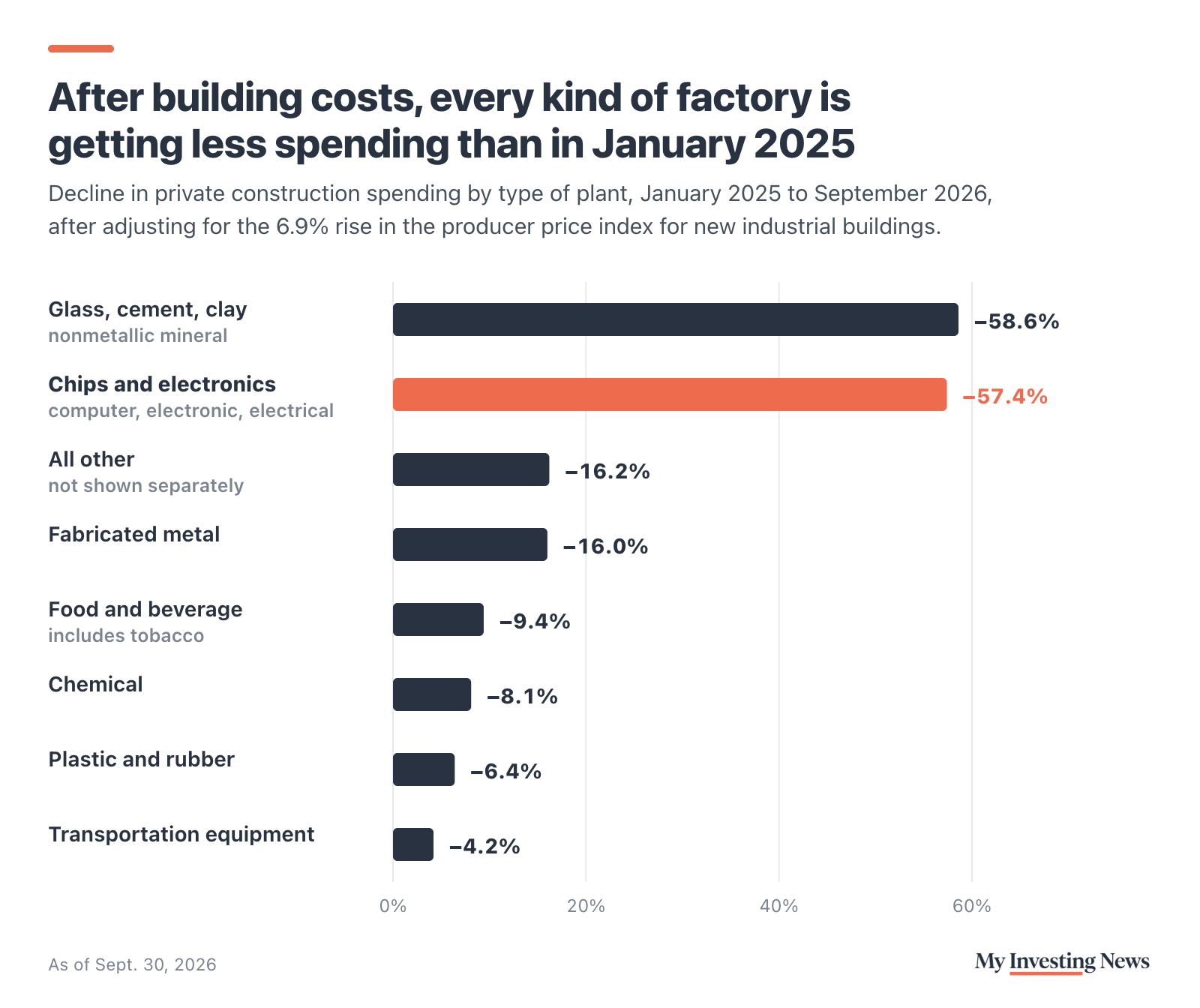
Other forces weigh on factory building too: interest rates, the end of the chip rush and project cancellations, and tariffs on steel, aluminum and equipment raise what a plant costs. What the numbers rule out is a tariff-driven wave of new factory spending so far. There is also a partial test of the reverse. In late February, the Supreme Court struck down the broadest of Trump’s tariffs, CNBC has reported, though many other duties stayed in place, and customs collections remain far above their pre-2025 level, as Wolfe Research’s Stephanie Roth has pointed out. Spending on factories outside the chip category was $116.8 billion that month and $114.6 billion in September. It did not stop.
The construction money has moved somewhere else. Spending on data centers, which Census counts under offices, rose to $96.5 billion in September 2026 from $37.6 billion two years earlier. That is now well above what goes into chip and electronics plants, and it is part of the AI build-out that Jim Lebenthal argues is backed by real demand.
What to Watch
The Census Bureau releases construction spending for October on Dec. 1. A turn higher in factories outside the chip category would be the first sign of a tariff-driven build-out; another slide would put the September 2024 peak further behind. In Congress, Sen. Ron Wyden, in line to lead the Finance Committee, has called repealing the Canada tariffs one of the most obvious priorities, CNBC reported. Democrats will not have the two-thirds majorities needed to override a veto.
Trump says tariffs are what keep 3,000 plants under construction. Census data shows factory construction peaked in September 2024 and has fallen 32% since, mostly because the chip plant boom ended, while spending on every other kind of factory has slipped about 11% after costs since January 2025. Nothing in the record shows tariffs driving new plants, and the bigger question for factory building is what replaces the chip projects.