Where we heard itMarketplace Morning Report, “The Trump administration, H-1B visas, and U.S. innovation,” Oct. 27, 2026. Zeke Hernandez, professor at the University of Pennsylvania’s Wharton School. Checked against USCIS lottery data, the cap’s legal history and the studies behind his claims.
Zeke Hernandez says the research on skilled-worker visas points the opposite way from Washington’s crackdown. Asked on Marketplace Morning Report on Oct. 27 how often companies use H-1B visas to favor foreign workers over Americans, the Wharton professor said “the evidence does not support that, and in fact, it shows the opposite.”
He was reacting to an Oct. 8 announcement: the Labor Department suspended Microsoft MSFT, Adobe ADBE and six IT consulting and outsourcing firms, including Cognizant, Infosys and Wipro, from its permanent labor certification program, the first step toward an employer-sponsored green card. Vice President JD Vance said Microsoft had replaced laid-off Americans with H-1B workers. Microsoft, which has also offered buyouts to 60,000 workers, said 80% of its roughly 6,000 H-1B applications in its last fiscal year were for people it already employed.
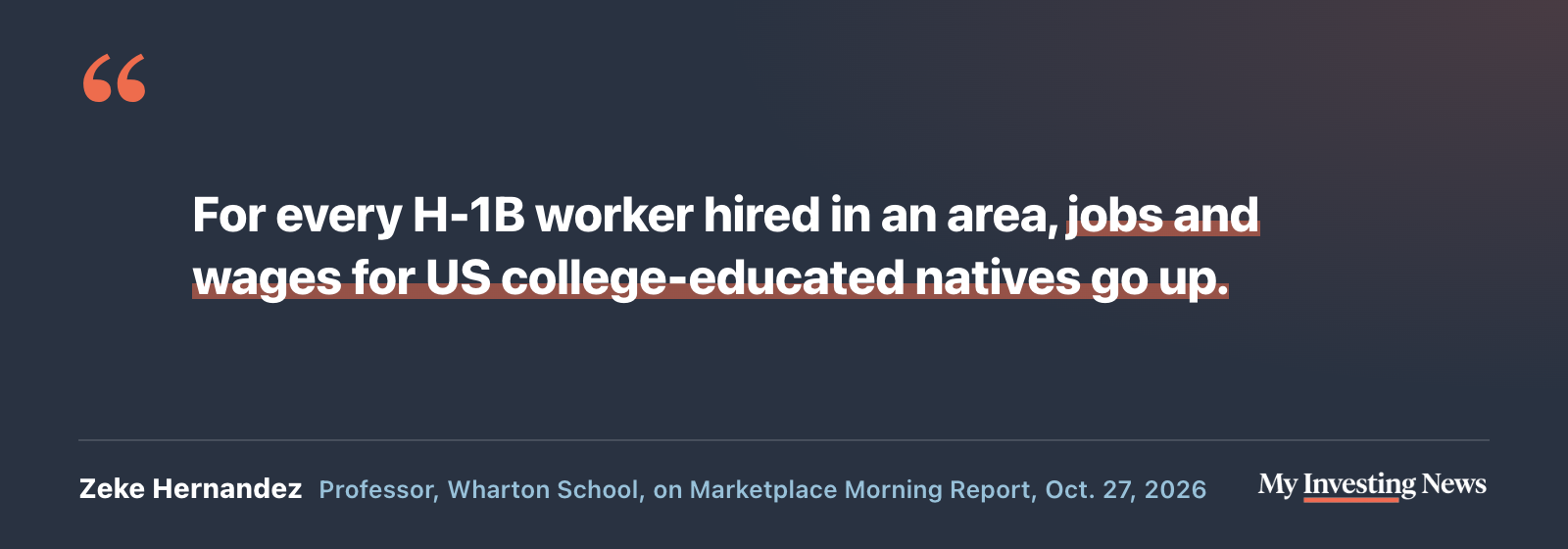
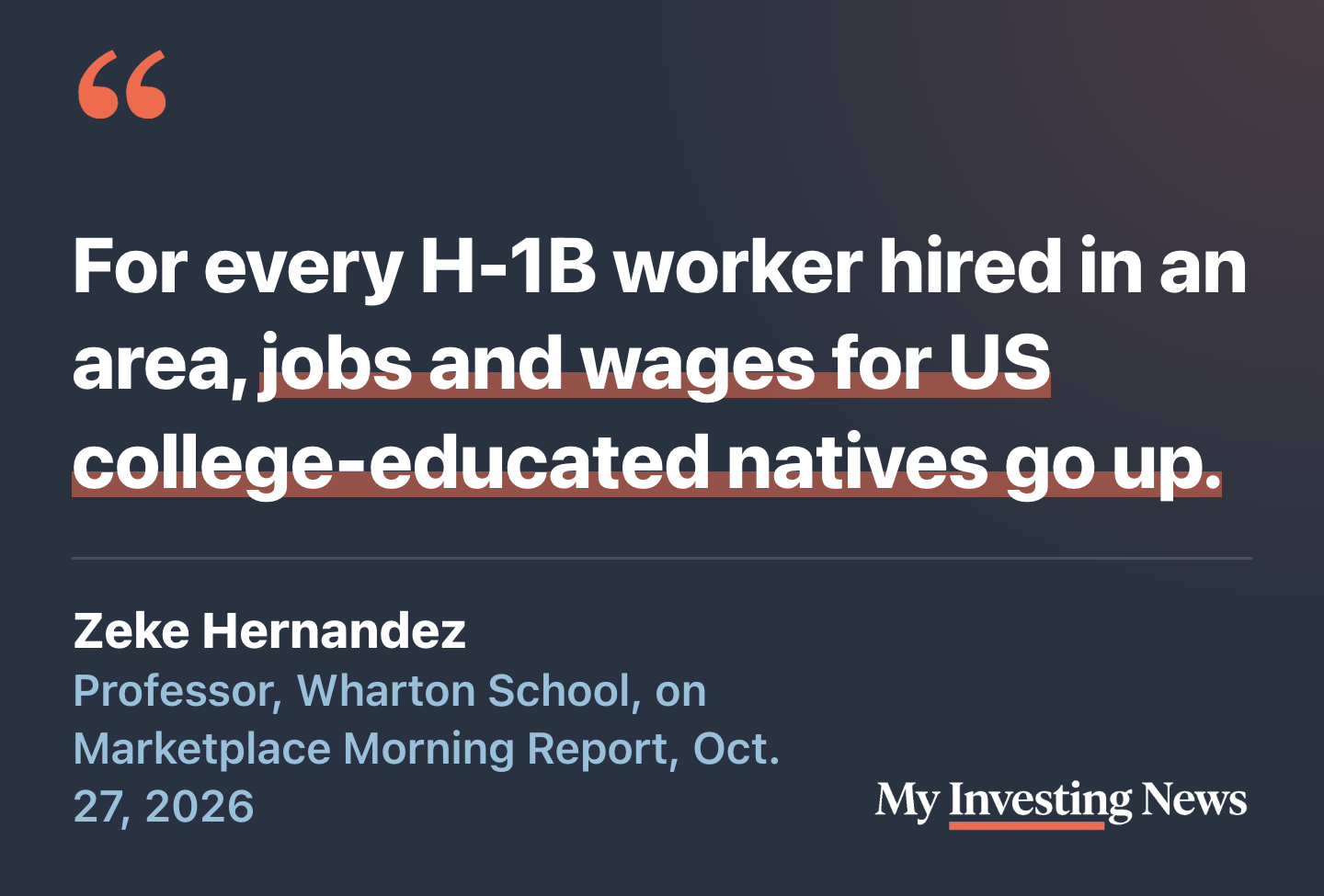
Hernandez made two claims that can be checked against government data: that only 85,000 H-1B visas have been available each year “for the last 20 years,” and that demand is “much, much higher.” Then he made two about the research: that hiring H-1B workers raises jobs and wages for college-educated Americans, and that firms denied those workers move the jobs abroad.
Demand Has Outrun the Cap in Every Lottery
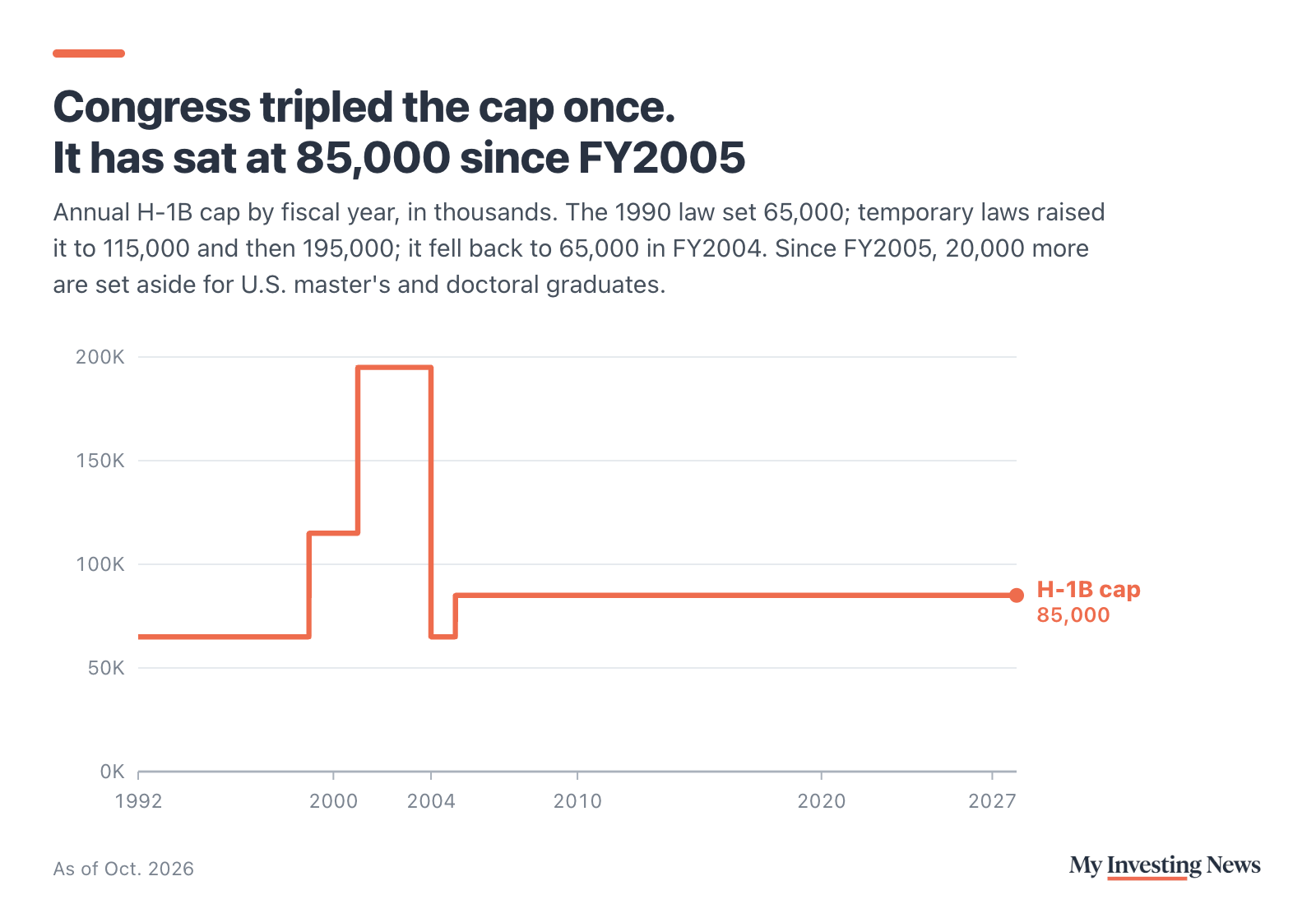
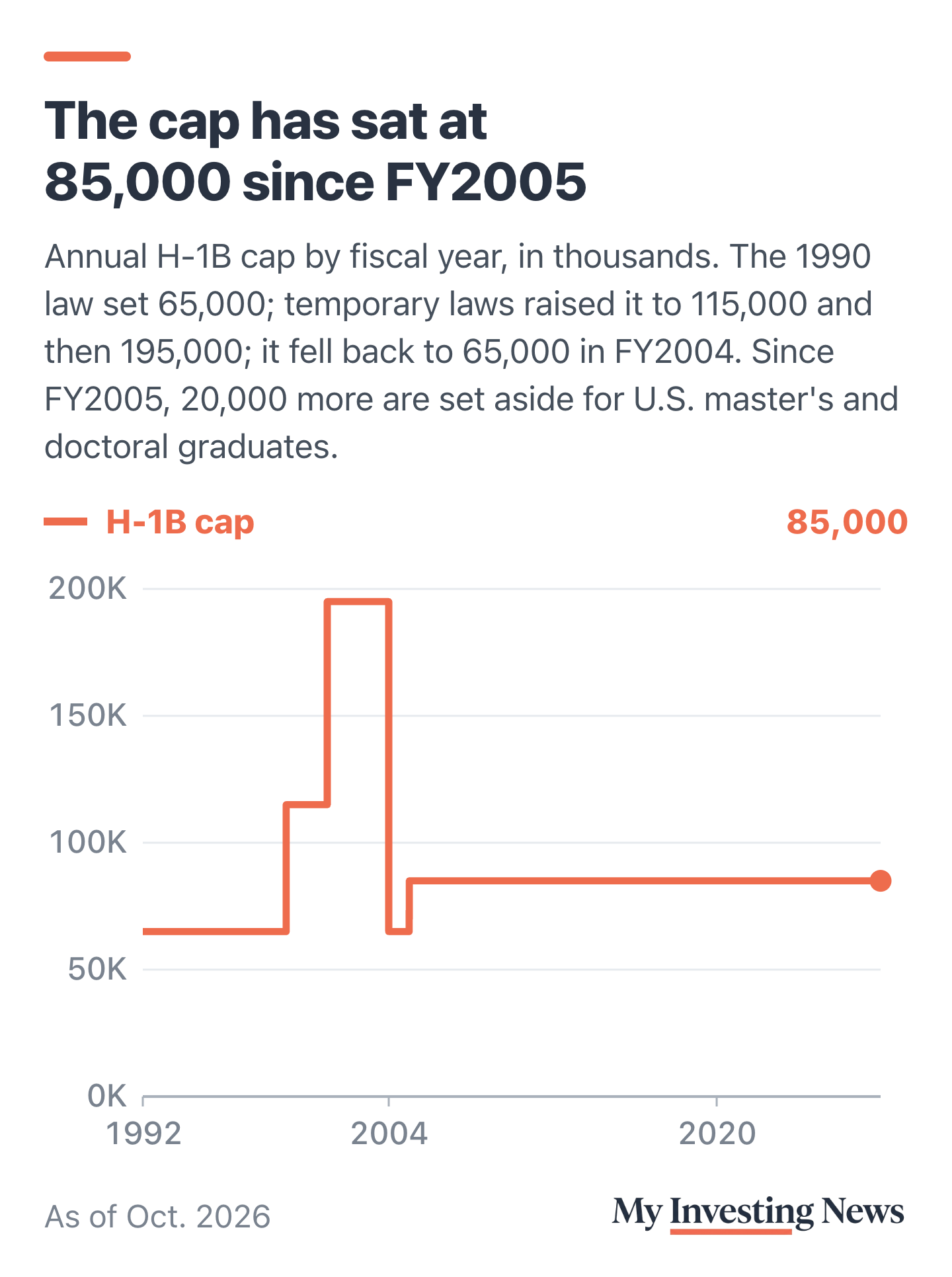
The cap claim holds up. The 1990 law that created the visa set a limit of 65,000 a year. Congress raised it to 115,000 and then 195,000 for a few years around 2000, let it fall back to 65,000 in fiscal 2004, and added 20,000 visas for graduates of U.S. master’s and doctoral programs starting in fiscal 2005. That 85,000 total has held for 23 straight cap years through fiscal 2027. Renewals and hires by universities and nonprofit research groups don’t count against it.
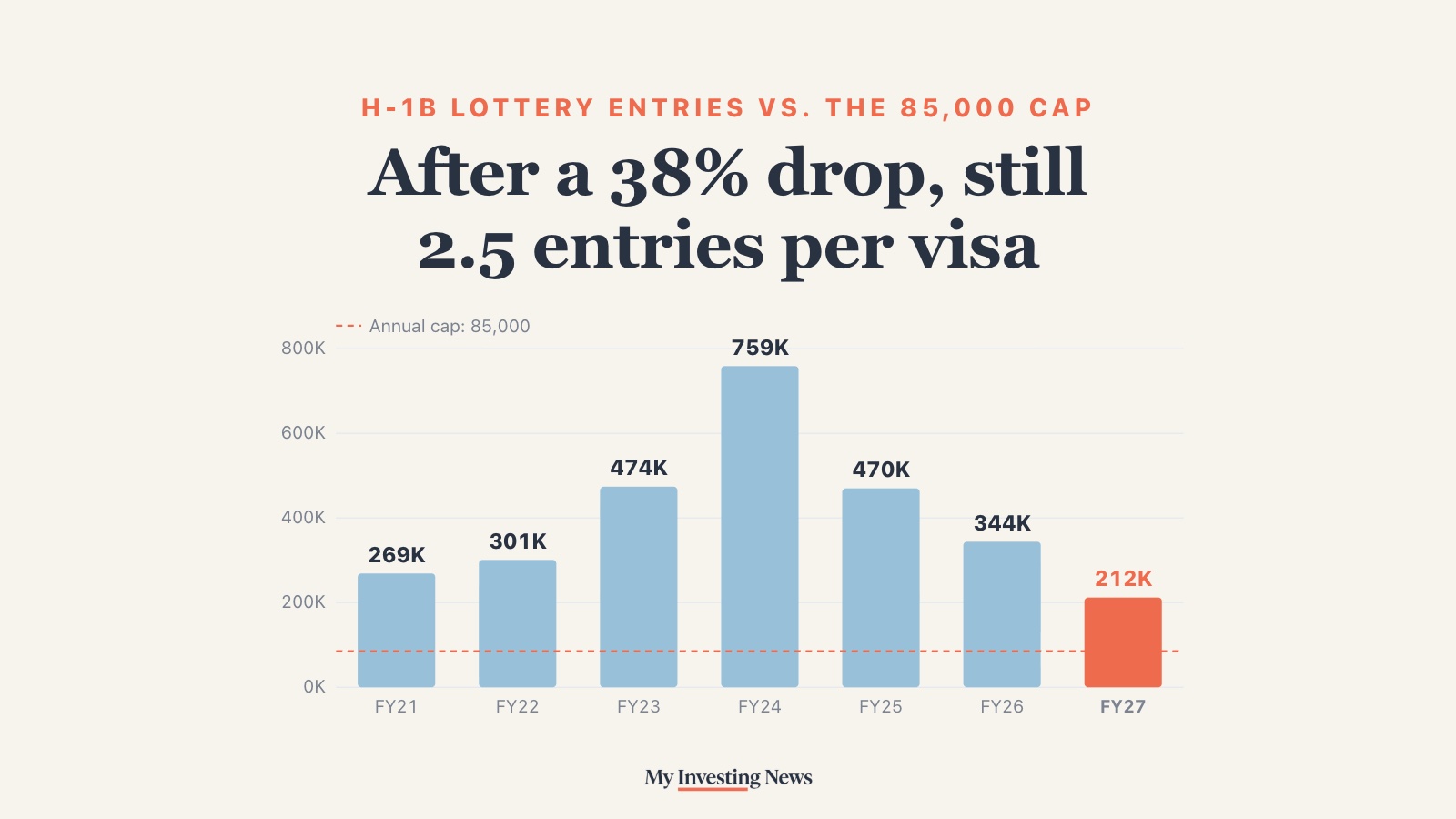
Demand has run far ahead of it. Since USCIS moved the lottery online for fiscal 2021, eligible entries have ranged from 211,600 to 758,994 a year, or 2.5 to 8.9 for every visa. The fiscal 2024 peak was swollen by employers entering the same person more than once, a practice USCIS later stopped by selecting people instead of entries.
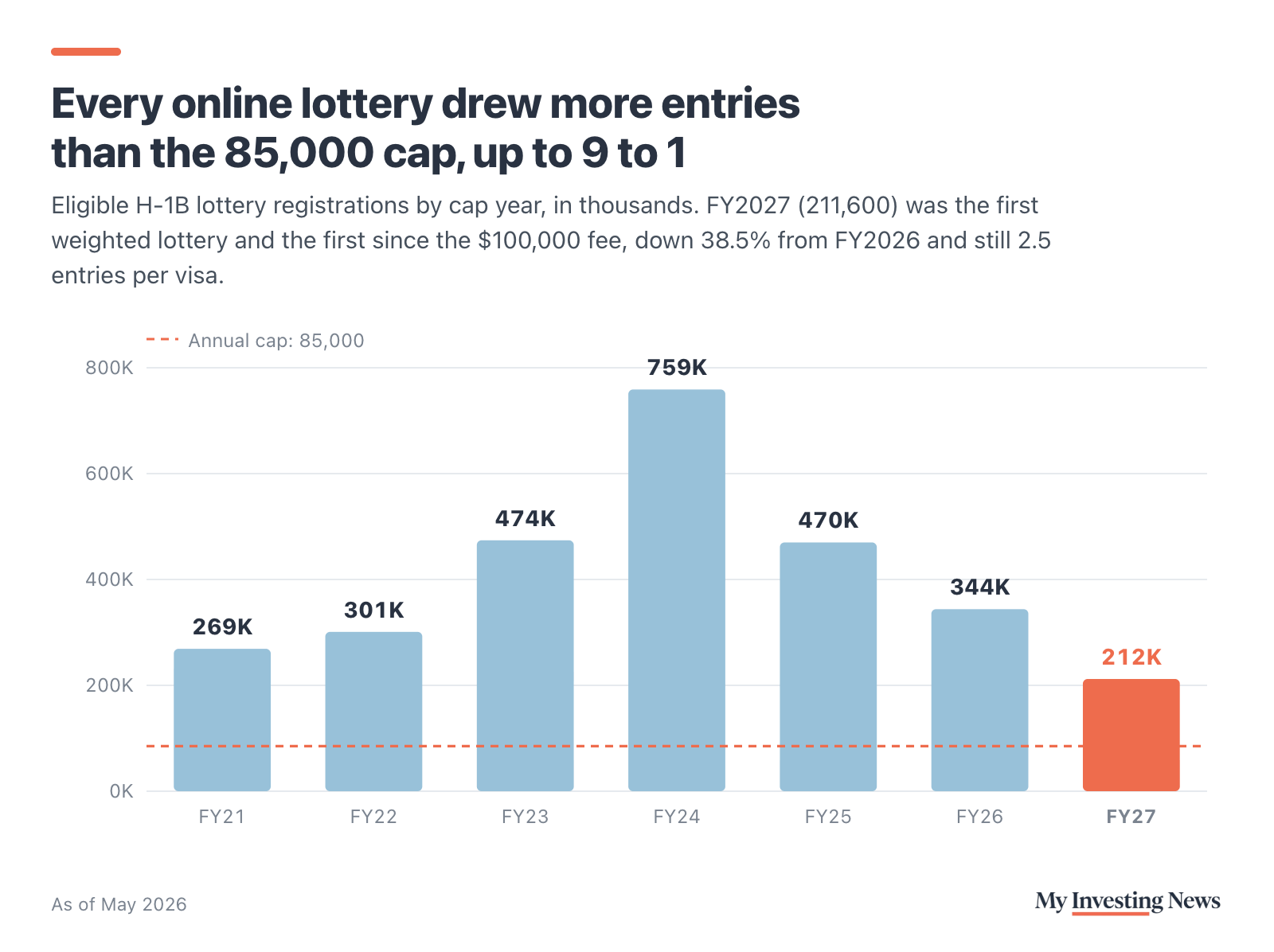
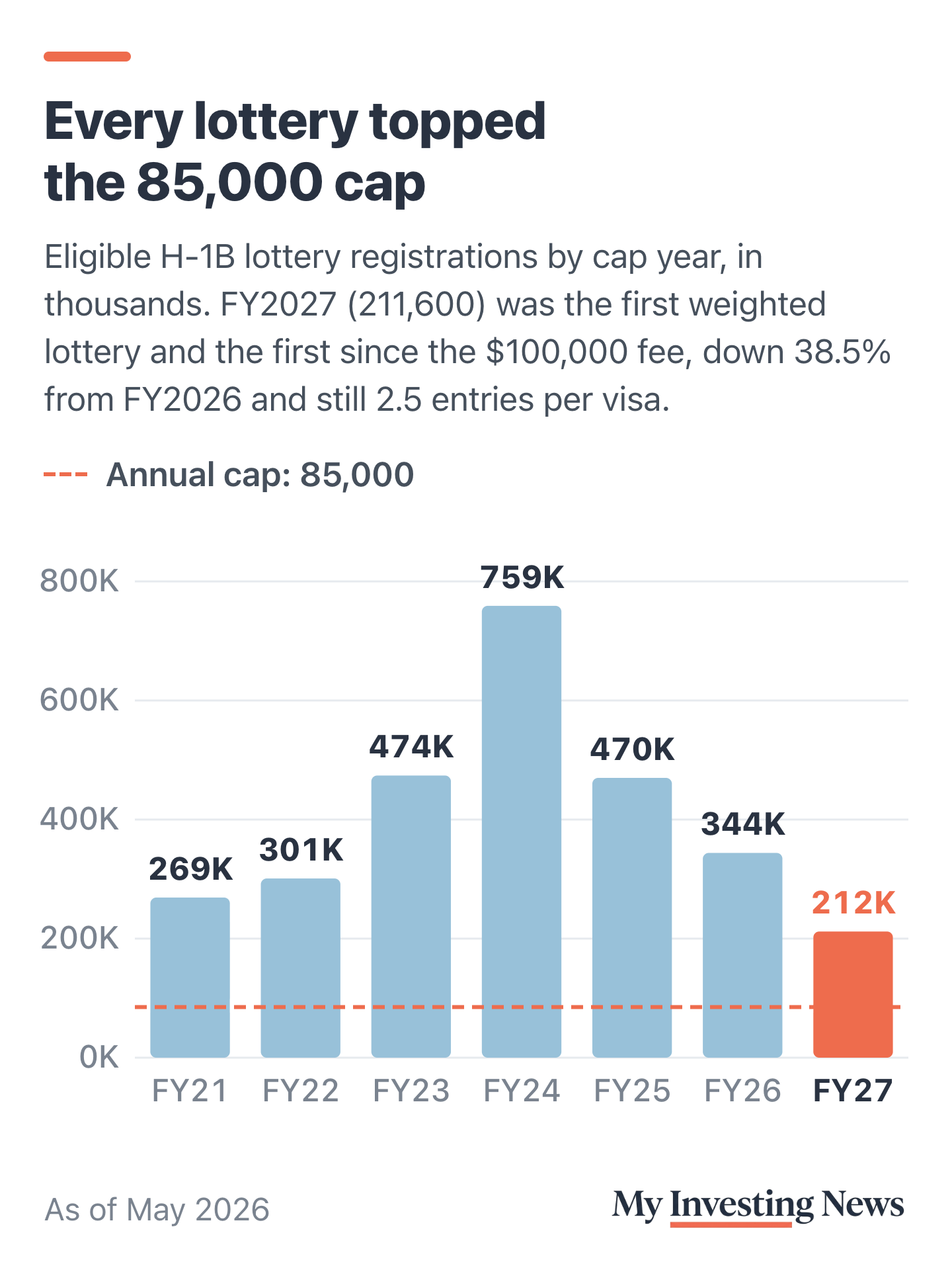
The latest lottery, for jobs starting in fiscal 2027, drew 211,600 eligible entries, down 38.5% from 343,981, USCIS said in May 2026. It was the first run under a weighted system that gives higher-paid job offers better odds, and the first since a $100,000 payment on new hires from abroad took effect in September 2025. In a Sept. 18 proclamation, the White House said entries from the largest IT staffing and outsourcing firms fell 92%, from 24,946 to 2,055, and that the share of entrants with at least a U.S. master’s degree rose to 66.1% from 45.1%.
What the Research Says About Wages and Jobs
Hernandez didn’t name a study on air. The best-known test of his wage claim is a 2014 National Bureau of Economic Research working paper by economists Giovanni Peri, Kevin Shih and Chad Sparber. They used the spread of H-1B workers across 219 U.S. cities from 1990 to 2010 and found that when foreign science and tech workers added one percentage point to a city’s employment, wage growth for college-educated natives rose by 7 to 8 percentage points.
The jobs half of his sentence gets less support from the same paper. The authors found no statistically significant effect on native employment, and higher housing costs ate about half of the gain in college graduates’ buying power.
His offshoring claim has backing too. A 2020 working paper by Britta Glennon matched visa records to data on U.S. multinationals and found that when H-1B petitions were rejected, companies added workers at their foreign affiliates, mostly in China, India and Canada. The average firm hired 0.4 people abroad for every rejection, and the most global firms hired 0.9.
Hernandez’s claims, checked
The Evidence on the Other Side
Other research points the other way. Kirk Doran, Alexander Gelber and Adam Isen compared firms that won and lost the fiscal 2006 and 2007 H-1B lotteries using tax records. In their working paper, winning one more H-1B worker crowded out about 1.5 other workers at the firm, and the extra visas did little for patenting. That measures one firm’s payroll, while the Peri study measures whole cities, so both findings can hold at once.
A fourth paper tests the cap itself. When the limit fell from 195,000 to 65,000 in fiscal 2004, Anna Maria Mayda and four co-authors found that for-profit firms hired fewer new H-1B workers, while their employment of similar U.S.-born workers didn’t change. In that case, fewer visas did not mean more jobs for Americans.
Hernandez said the stakes are highest in artificial intelligence, where he argued American companies need foreign-trained talent to stay ahead. His Wharton colleague Ethan Mollick has argued that AI makes workers better, and Hernandez’s point is about who gets hired to build it.
What to Watch
The $100,000 payment is tied up in court. A federal judge in Massachusetts vacated it in June, and an appeals court declined to put it back in effect; a federal judge in Northern California blocked it again in late September, and the administration appealed that ruling on Oct. 9. The White House extended the payment rule on Sept. 18 through Sept. 21, 2027, and said more than 700 petitions had paid it. Separately, the Department of Homeland Security proposed a $103,265 fee on every cap-subject petition in August, and the Labor Department proposed higher H-1B wage floors in March. Those rules and rulings stand as of Oct. 28 and could change.
The next lottery, for fiscal 2028, is expected to open in March 2027. USCIS hasn’t yet published how many fiscal 2027 entries it selected. The number to watch is whether entries keep falling toward the 85,000 cap, and which employers drop out.
Hernandez is right that the cap has been 85,000 a year for two decades and that every online lottery drew 2.5 to 8.9 entries per visa. His wage claim matches the best-known city-level study, and his offshoring claim has support, at about 0.4 jobs abroad per rejected visa. The jobs claim is the weakest part: that same study found no clear effect on native employment, and a lottery study found firms that won extra visas hired fewer other workers.