
Where we heard itCNBC’s Squawk Box, Oct. 27, 2026, the morning after Microsoft’s buyout offer was reported. Speaker: co-host Joe Kernen.
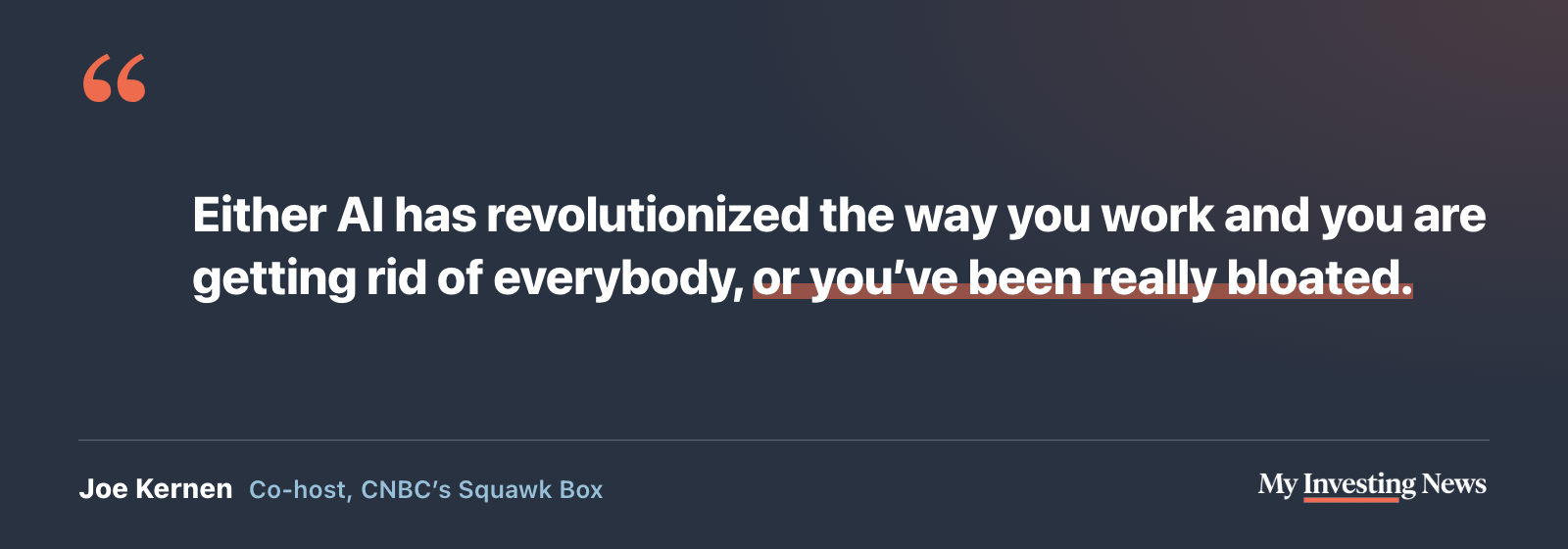
CNBC reported that MicrosoftMSFT is offering voluntary buyouts to around 60,000 employees. On Squawk Box, co-host Joe Kernen said the size of the offer leaves investors with two possible explanations: “If you’re able to get rid of 27% of your workforce, that means one of two things. Either AI has revolutionized the way you work and you are getting rid of everybody, or you’ve been really bloated.”
His question goes to the core of the investment case. Microsoft is spending at a historic pace on AI infrastructure, with full-year fiscal 2026 capex of $115.95 billion, up 79.6%. If AI is changing how Microsoft itself works, its own payroll is where investors would expect to see it first.
What Microsoft Is Offering, and Who May Take It
Reuters also reported the buyouts and said the goal is to contain costs. AP and Ars Technica described the offer as covering about a quarter of Microsoft’s workforce. Kernen put the share at 27% on CNBC, and the CNBC segment put Microsoft’s workforce at 222,000. According to the report, the offers cover several countries, including the United States, and Microsoft’s chief people officer said they give the company greater flexibility. AP linked the move to Microsoft’s accelerating AI spending.
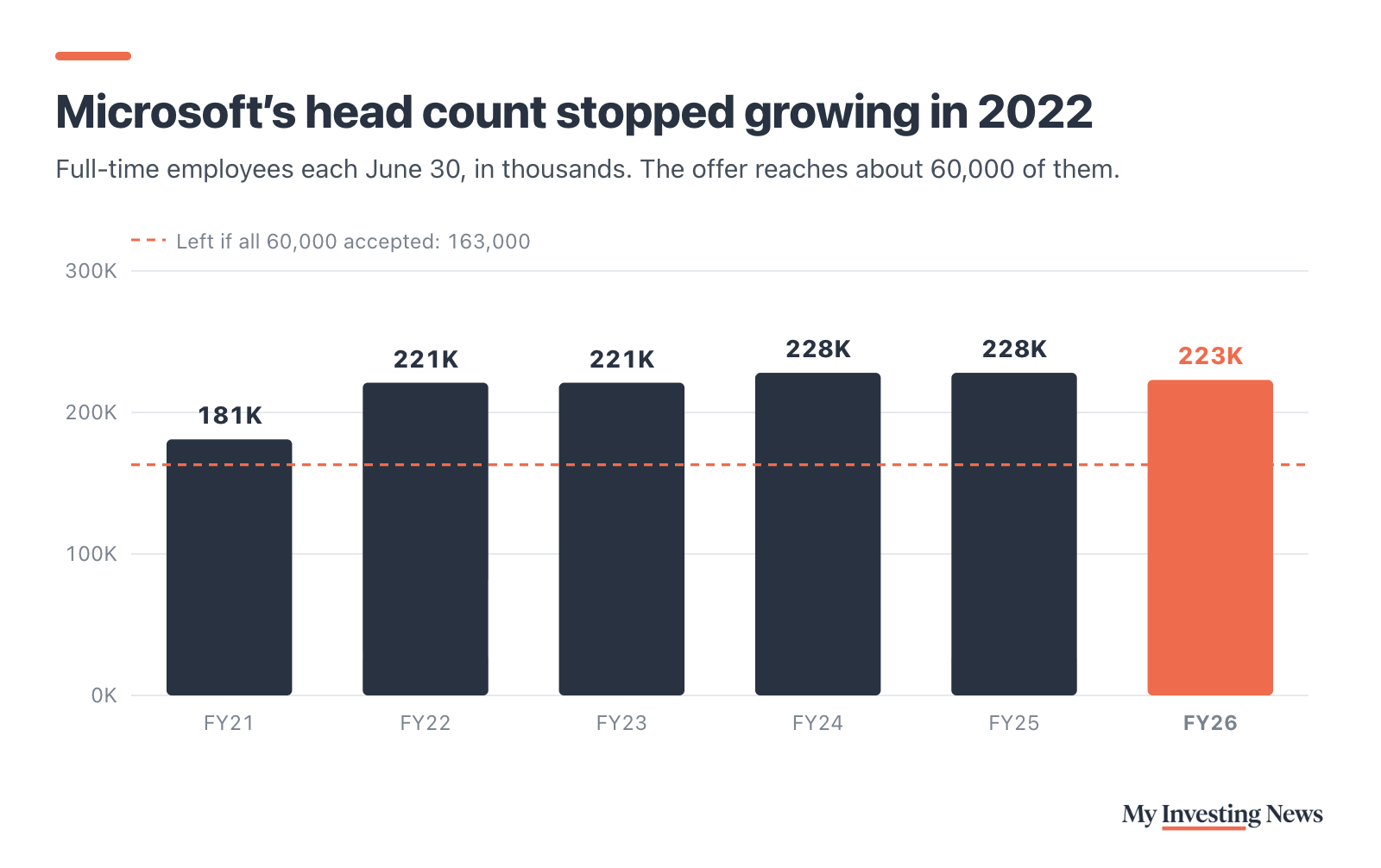
The offers are voluntary, so nobody knows yet how many employees will accept. The Seattle Times reported that Microsoft expects low uptake, and The Wall Street Journal described it as an effort to shed workers that the company doesn’t call a layoff. There is a recent example: in April, Microsoft offered early retirement to 8,600 long-tenured U.S. employees, and about 30% accepted, according to The New York Times.
That earlier program already shows up in the financials. On the July earnings call, CFO Amy Hood said “Total company head count declined 2% year-over-year,” and the company reported lower-than-expected expenses related to its Voluntary Retirement Program. Those smaller costs, along with a $3.2 billion gain on Microsoft’s investment in Anthropic, helped non-GAAP EPS reach $4.74 against a $4.24 estimate.
Why Coding Sits at the Center of Kernen’s Question
Kernen pointed to software development as the most likely pressure point: “It’s obviously coding. That’s like one of the first places. So how do you get rid of 27% and not think that it was a poorly run company? And I think Satya Nadella is a really great manager. So it’s hard for me to kind of put those two things together. You know, either this is happening at such a faster pace or what in the world was going on.”
Code is structured text, and it can be tested automatically. That makes it easy for an AI agent to draft, review and check, and it means a smaller team can ship the same amount of software. Microsoft’s own data points that way: GitHub Copilot has 50 million users, and one in three pull requests on GitHub now involves an agent. For a company spending this heavily on AI, getting more output per engineer is one of the clearest ways to show a return.
Microsoft’s AI build-out in four numbers
The data supports both readings. Fast adoption of these tools fits Kernen’s first explanation. The decline in Microsoft’s More Personal Computing segment (down 4% in Q4) and its Xbox impairment charges fit the second. The reporting also allows a third possibility: if acceptance remains low, the final cut could be far smaller than the 60,000 headline CNBC reported.
Kernen’s broader view of the job market was frank: “We know it’s going to happen. Yeah, it’s going to hit the fan in terms of employment, right? I don’t see any way around it.”
Microsoft Stock Ahead of Its Next Report
Shares traded at $532.75 as of 9:31 AM ET, up 0.03% on the day. Including dividends, the stock is up 10.86% year to date and 2.59% over the past year, and it trades at about 30 times earnings. Prices move throughout the day.
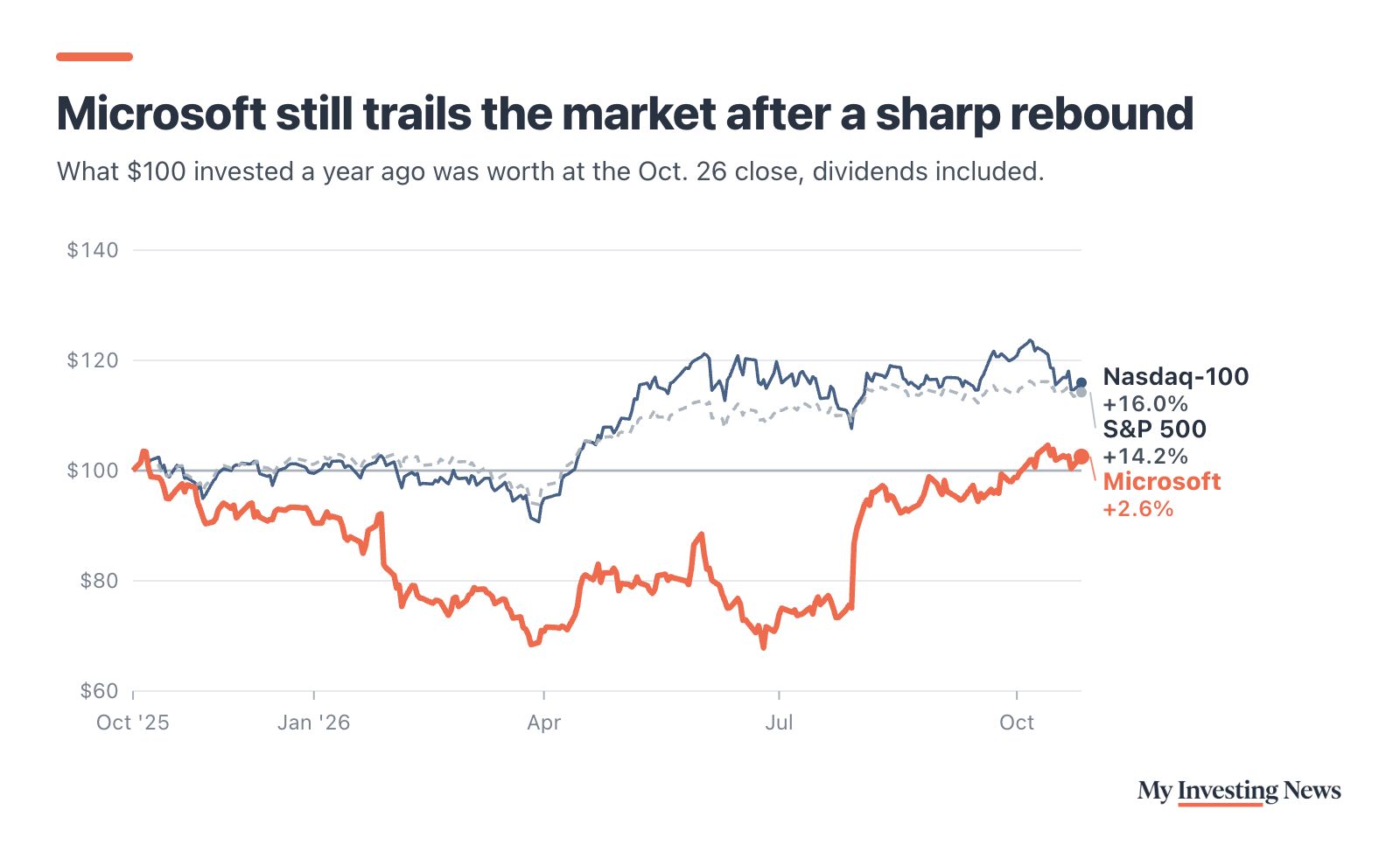
The underlying business is still growing. In the latest quarter, revenue rose 17.8% to $90.01 billion, Azure grew 43%, and commercial remaining performance obligations jumped 84% to $678 billion, according to Microsoft’s earnings release filed with the SEC. Heavy spending is weighing on cash flow, though: quarterly free cash flow fell 23.19% year over year.
What to Watch When Microsoft Reports
- Acceptance numbers: How many employees take the offer will show whether this is a deep restructuring or a modest trim.
- Charges and savings: Watch for any program costs and expected run-rate savings Microsoft reveals.
- Productivity commentary: Listen for whether management links headcount directly to AI efficiency. Hood has said Microsoft expects FY 2027 CapEx to grow year-over-year.
Updates will appear on Microsoft’s investor relations site. Investors who share Kernen’s puzzle will get the most useful answer from the next report’s disclosures on headcount and costs.
Kernen sees two ways to read an offer this large: AI has changed how Microsoft works, or the company had more staff than it needed. Microsoft expects few takers, so the real test is how many of the roughly 60,000 accept and what the next report shows about head count, costs and the payoff from its AI spending.