Where we heard itCNBC’s “Halftime Report,” “Post-Midterm Playbook,” Nov. 4, 2026, with Joe Terranova; and CNBC’s “Fast Money,” Nov. 4, 2026, with Tim Seymour.
The day after Democrats swept the midterm elections, Joe Terranova told CNBC’s “Halftime Report” that the oil trade had turned. “I think inflation lost and we’re seeing it reflected today in the price of energy,” he said on Nov. 4. “I think the fever has broken in the energy trade.” He added that it was “time to pare back positioning in energy,” the group that was up more than 50% for the year in mid-October.
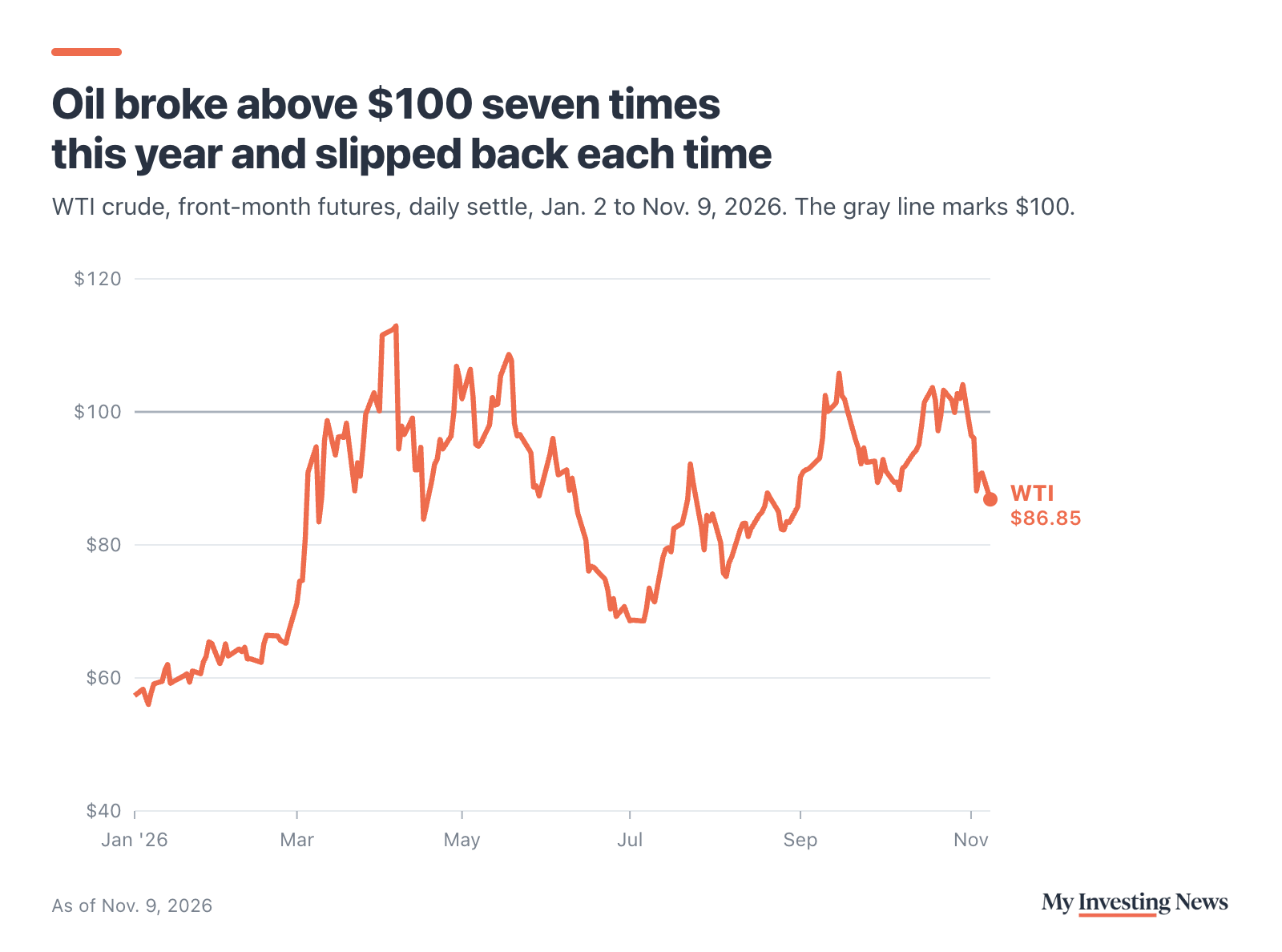
Oil has kept falling since. West Texas Intermediate crude futures settled at $86.85 a barrel on Nov. 9, down 16.6% from $104.12 on Oct. 30, their last close above $100. Brent, the international benchmark, fell faster. “We’ve gone from 118 to 94 on Brent in three sessions,” Tim Seymour said on CNBC’s “Fast Money” that evening. Brent futures settled at $117.64 on Oct. 30 and $94.62 on Nov. 4.
A Year of Round Trips to $100
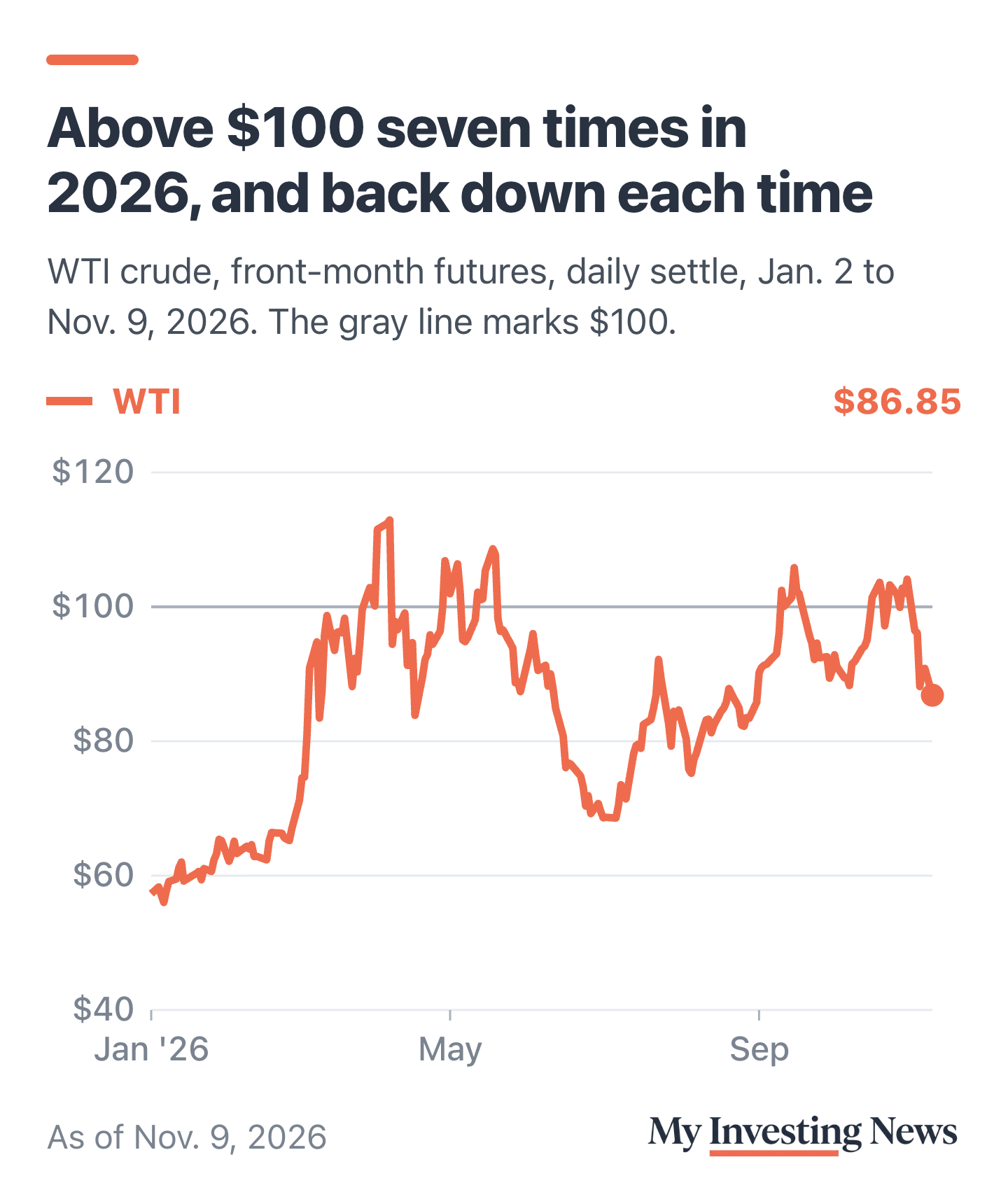
Terranova’s call runs against the way 2026 has gone. WTI ended 2025 at $57.42. It broke above $100 in seven separate runs between March 30 and Oct. 30, peaked at $112.95 on April 7, and every run ended back under $100. Much of that swing tracked the fighting with Iran, and bettors twice priced the calm above 95% the evening before it broke.
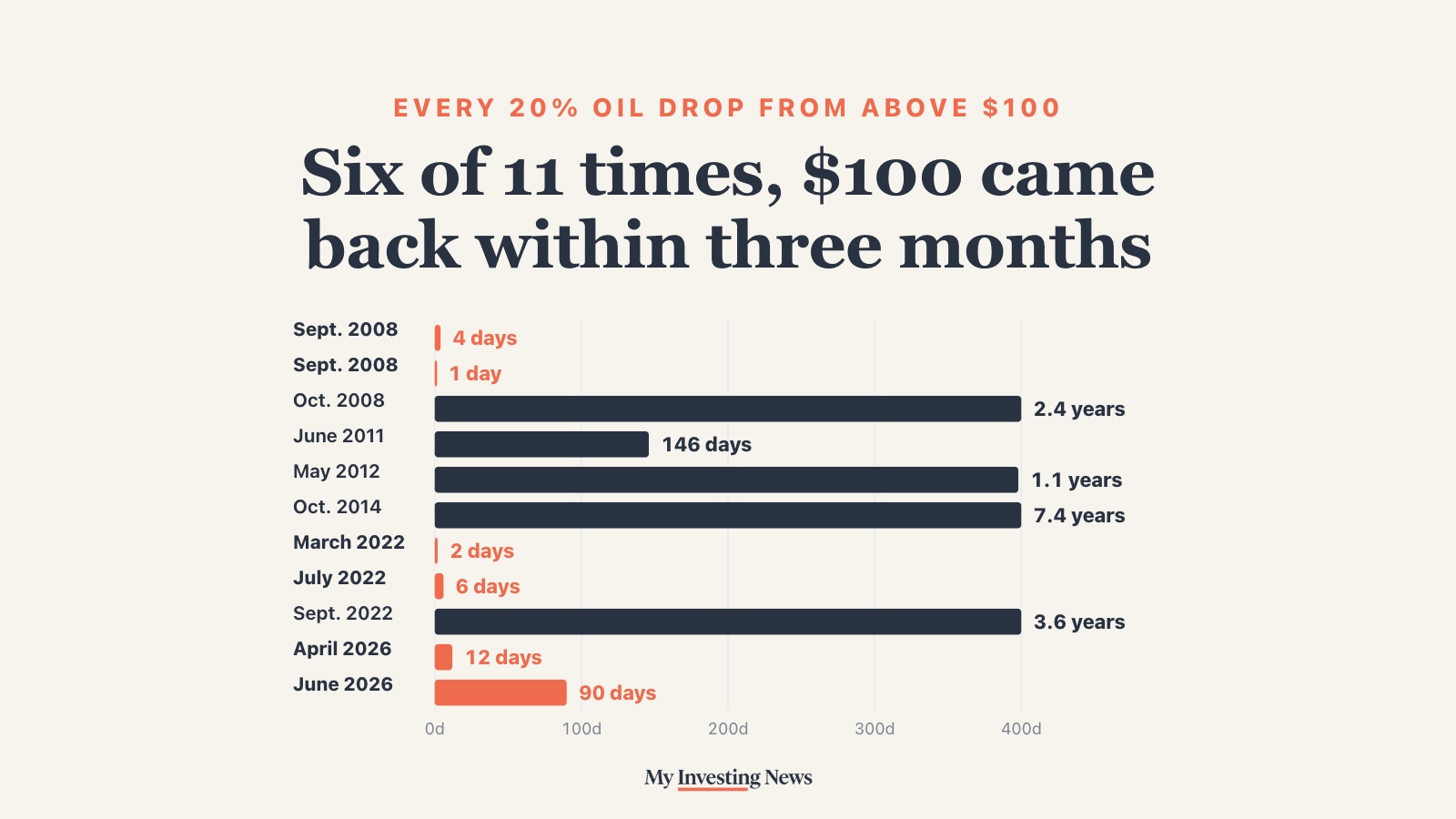
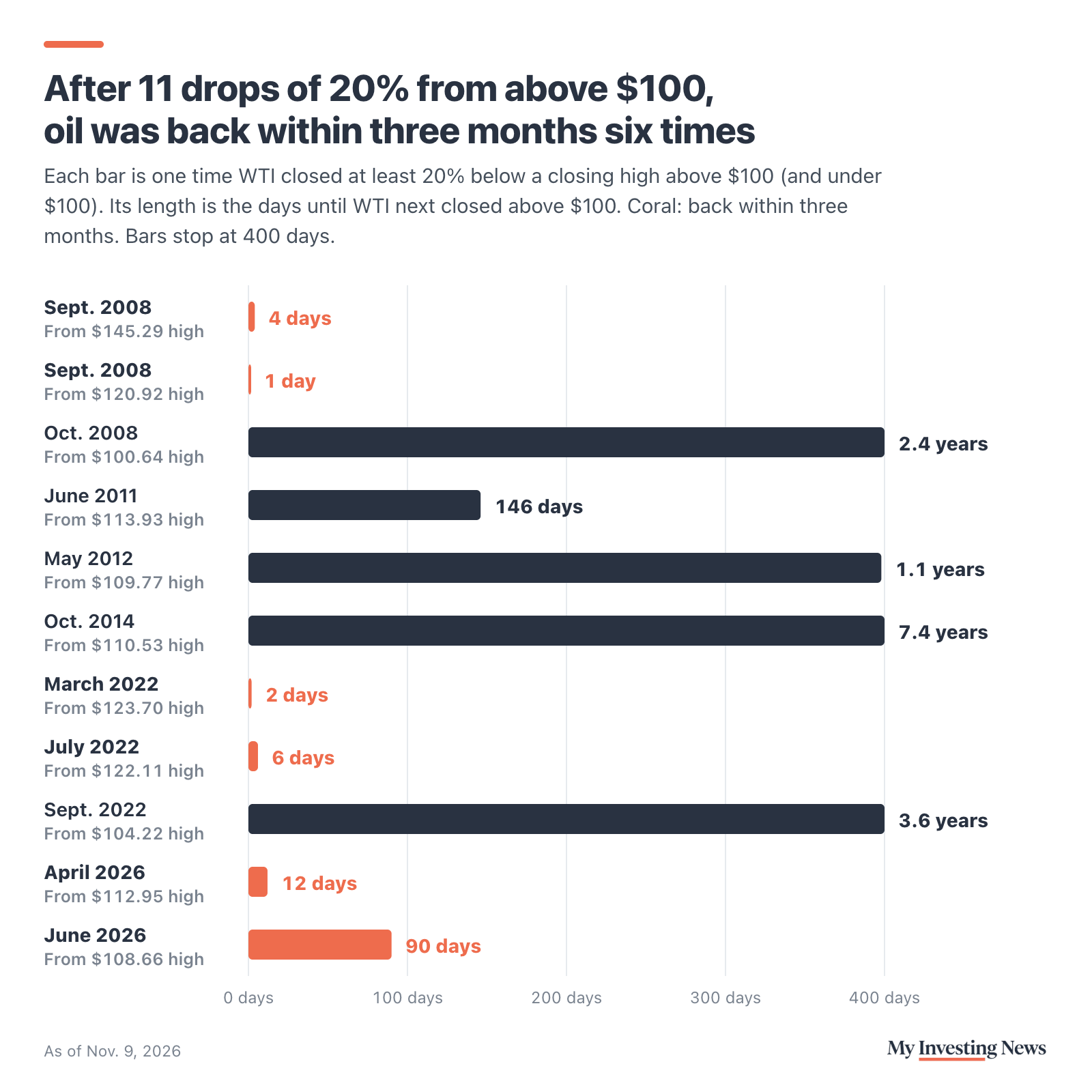
Twice this year, in April and June, oil fell at least 20% from a high above $100. Both times it was back above $100 within three months: 12 days after the April drop and 90 days after the June one.
Every 20% Drop From Above $100 Since 2008
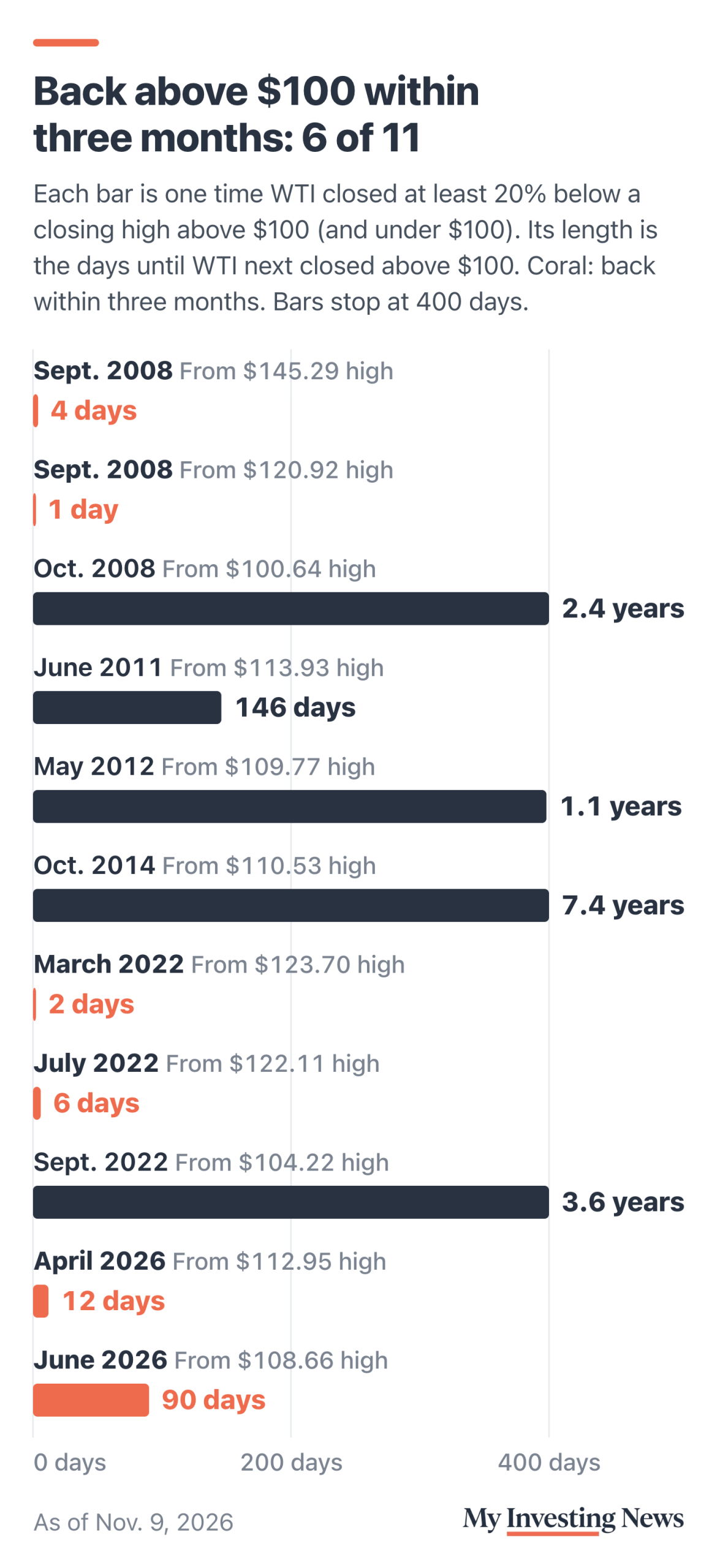
To test the call, we went through every daily settle of the front-month WTI futures contract since oil first closed above $100, on Feb. 19, 2008. We counted a drop each time WTI closed at least 20% below a closing high above $100, and below $100, then counted the days until it next closed above $100. That has happened 11 times. Six times, WTI was back above $100 within three months.
The other five took longer. Oil needed 146 days to get back in 2011 and 1.1 years after the drop of May 2012. After the October 2008 crash, it took 2.4 years. After September 2022, it took 3.6 years. The October 2014 drop, which deepened after OPEC decided that November not to cut output, lasted 7.4 years and included the April 2020 settle below zero.
Oil after its latest run above $100, as of Nov. 9, 2026
Fast Returns Rarely Lasted
The record also shows how little a quick return to $100 has meant. Two of the six fast returns came in September 2008, as the financial crisis hit. Oil closed back above $100 for six trading days, then for one, and then sank to $33.87 by Dec. 19. In July 2022, WTI was back above $100 for three trading days and did not close there again until March 30, 2026.
Across all 11 returns, the first stretch above $100 lasted 11 trading days or fewer 10 times. The exception was July 2013, when oil stayed above $100 for 76 trading days. This year’s returns fit the pattern: five trading days after the April drop and seven after the June drop.
Where This Drop Stands
By our rule, the current slide has not qualified yet. This run’s high was the Sept. 15 settle of $105.83, so a settle at or below $84.66 would make it the 12th drop on the list. Futures traded at $84.40 early on Nov. 10, just under that line.
Bettors on Polymarket leaned Terranova’s way. As of 9:08 a.m. ET on Nov. 10, they put the odds that WTI trades at $100 again in November, at any point after the contract opened on Nov. 2, at 19%. They gave 8.5% to $110 and 68.5% to a drop to $80 during the month.
What to Watch
The line to watch is a WTI settle at or below $84.66, which would add this run to the list and start a new clock. The other is the calm with Iran: both of this year’s 20% drops ended with oil back above $100 within three months. The level matters beyond energy stocks. In October, DCLA’s Sarat Sethi argued that high oil prices would weigh on valuations over time.
Terranova expects $100 oil to stay gone. In the 11 times since 2008 that WTI fell 20% from above $100, it was back above $100 within three months six times, including twice this year, though most of those returns lasted only days. The risk to his call is the one that drove 2026: a new supply scare.