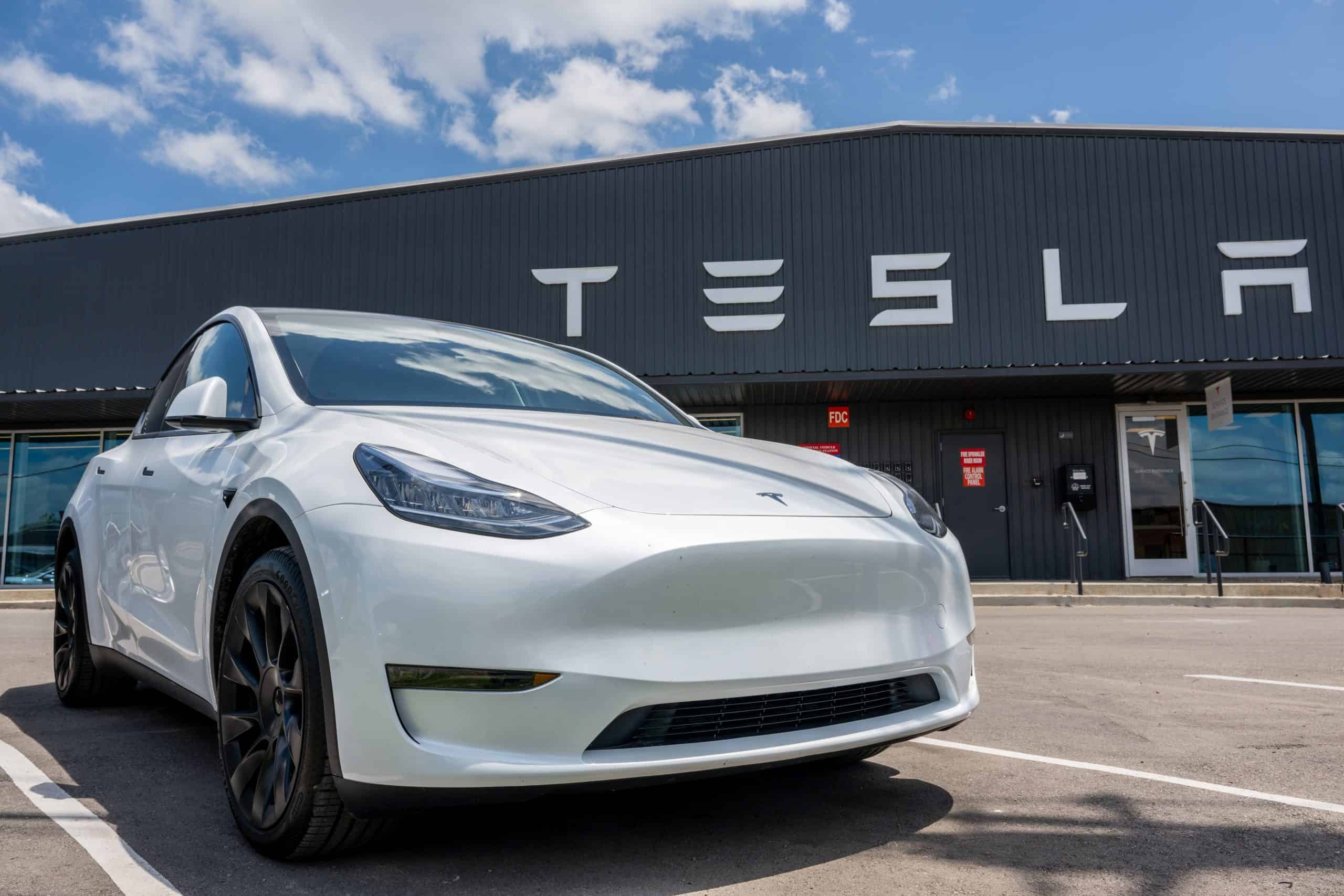
Tesla (NASDAQ: TSLA | TSLA Price Prediction) traded near $327 at 2:47 p.m. ET on August 12. From there, Wall Street’s average $396.62 price target represents about 21% upside. Wedbush analyst Dan Ives is far more optimistic. His Street-high $600 target points to nearly 84% in potential gains.
That gap tells you almost everything about Tesla. The company still makes most of its money selling electric vehicles, but the biggest valuation arguments now revolve around Robotaxi, Full Self-Driving, Cybercab, and the Optimus humanoid robot. Investors are being asked to look past weaker current profits and place a value on businesses that may take years to reach scale. For retirees and longtime shareholders with a large Tesla position, this is as much a portfolio-risk question as a stock-picking debate.
Tesla’s Quarter Was Strong on Sales and Weak on Profit
Tesla’s second-quarter revenue increased roughly 26% from a year earlier to $28.24 billion, helped by $20.52 billion in automotive revenue and the delivery of 480,126 vehicles. That was the company’s strongest second quarter for deliveries, but the bottom of the income statement told a less flattering story.
Operating expenses climbed 47% to $4.35 billion, while operating income fell to $398 million. That left Tesla with an operating margin of just 1.4%, down from approximately 4.1% one year earlier. Adjusted earnings of $0.33 per share also fell short of the roughly $0.55 analysts expected.
The bigger surprise was cash flow. Tesla reported negative free cash flow of $1.09 billion as quarterly capital spending more than doubled to $5.79 billion. Management now expects 2026 capital expenditures to exceed $25 billion, with money flowing into AI infrastructure, data centers, manufacturing lines, and company-operated autonomous vehicles. Tesla finished June with $43.52 billion in cash and short-term investments, so this is not an immediate liquidity crisis. It is a question of when that spending begins producing an acceptable return.
Why Dan Ives Still Believes Tesla Can Reach $600
Ives’ argument is not that Tesla will suddenly sell enough Model 3s and Model Ys to justify an 84% rally. His thesis depends on Tesla becoming a physical-AI company with recurring software revenue, autonomous ride-hailing, and a potentially large robotics business. In that version of the future, the automobile operation supplies the manufacturing scale and vehicle fleet, while FSD, Robotaxi, and Optimus deliver higher-margin profits.
Tesla is openly building toward that outcome. In its latest filing, management said it is focused on bringing AI into the physical world through FSD, Robotaxi, and Optimus. The company is also developing Cybercab as a purpose-built autonomous vehicle and investing heavily in the computing infrastructure required to train and operate its systems.
The challenge is timing. Spending more than $25 billion does not prove that Robotaxi will become widely available, that regulators will approve expansion, or that Optimus can be manufactured profitably. Ives’ $600 target is a forecast built around successful commercialization, not a valuation supported by Tesla’s current earnings. Investors should treat it as an optimistic scenario rather than a likely return they can plug into a retirement plan.
The Current Valuation Leaves Little Room for Delays
At a share price near $327, Tesla trades for roughly 183 times the consensus estimate of $1.79 in 2026 adjusted earnings. That is a technology-style valuation attached to a company whose current operating margin is below 2%. The price can work if autonomy and robotics become meaningful profit centers, but another delay or spending increase could put more pressure on the multiple.
Wall Street’s disagreement is unusually wide. S&P Global data compiled by StockAnalysis shows price targets ranging from $125 to $600. Among 47 analysts, 23 rate Tesla Buy or Strong Buy, 18 rate it Hold and six rate it Sell or Strong Sell. The $396.62 average target is far less aggressive than Ives’ forecast and still assumes a substantial recovery.
Regulatory risk also remains part of the equation. In March, NHTSA opened an engineering analysis into how Tesla’s FSD system detects and warns drivers about reduced roadway visibility. An August recall separately covered 20,349 Model 3 and Model Y vehicles with low-beam headlights that can exceed federal intensity limits. Neither development decides the investment case, but both illustrate the oversight that accompanies Tesla’s push toward autonomy.
Where I Land on Tesla After the Selloff
Tesla is cheaper than it was before the earnings disappointment, but a falling share price does not automatically make an expensive stock inexpensive. The company still carries a valuation that assumes substantial earnings from products beyond its present vehicle business. Investors buying here are paying for the possibility that Robotaxi, FSD, and Optimus eventually produce software-like margins.
My lean remains cautiously constructive, but I would want to see operating margins stabilize and free cash flow return to positive territory before treating the decline as a clean buying opportunity. Progress should also be measured through commercial results, not demonstrations, production announcements or ambitious timelines.
For retirees and near-retirees, position size matters more than whether Tesla reaches $396 or $600. A concentrated holding can create trouble if another sharp decline arrives while the investor is making regular withdrawals. Tesla may still belong in a growth allocation, but it should not be counted on for dependable income or near-term spending needs. Ives may ultimately be right about the destination. The latest quarter showed just how expensive and uncertain the trip could be.