Where we heard itCNBC, on-air report on the Canada tariff changes, Friday, Oct. 23, 2026. Speaker: CNBC correspondent Eamon Javers.
On Friday, Maine got news that first read as straightforward tariff relief. Within hours, new details from the White House showed something closer to a trade-off. CNBC correspondent Eamon Javers explained the change on air: “Earlier we brought you this story from Senator Susan Collins, who had a press release out about some exemptions to tariffs that she’d won from the administration that might help Maine voters.”

A CNBC segment reported that Collins had announced exemptions covering what appeared to be nine product categories. Spectrum News reported that the exempted Canadian imports had been subject to Trump’s 50% tariffs. Supply Chain Dive reported the changes take effect Oct. 30.
Tariff Swap Leaves the Overall Burden Close to Flat
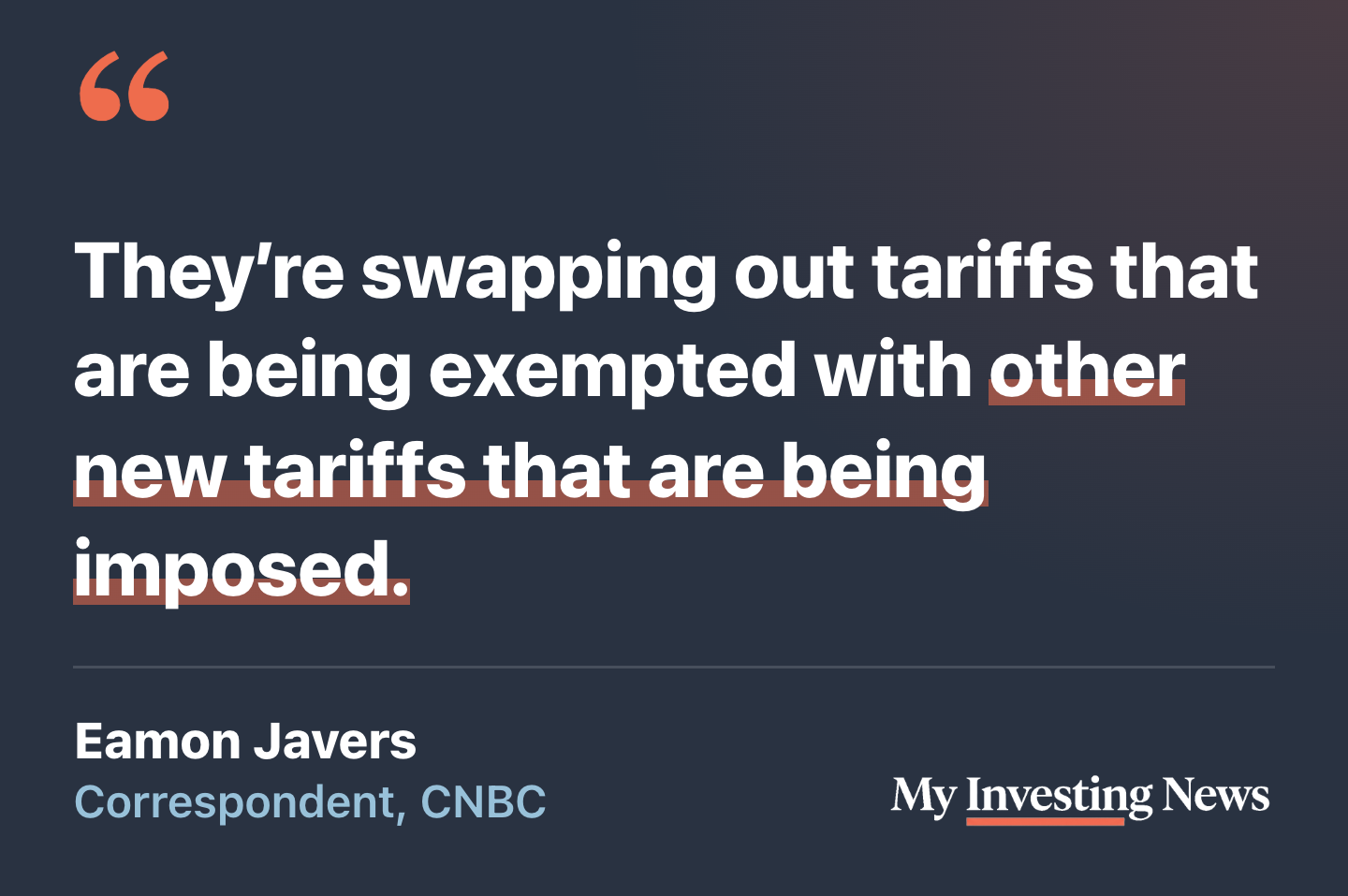
The detail that matters most for consumers came from the White House. Javers reported: “They’re swapping out tariffs that are being exempted with other new tariffs that are being imposed. And so it looks like maybe a roughly even swap, although it’s difficult to say from the information we have here.”
Repeating Spectrum News on the rate, Reuters reported that Trump added a number of Canadian products to the 50% tariff list to offset the tariff relief in the order. The Guardian quoted the White House release, which said the president was “further refining the scope of the July 20 and September 8 actions to better serve the public interest”. CNBC’s headline said Trump was dropping some Canada tariffs while “replacing” them with other products.
Which Goods Lose Tariffs and Which Gain Them
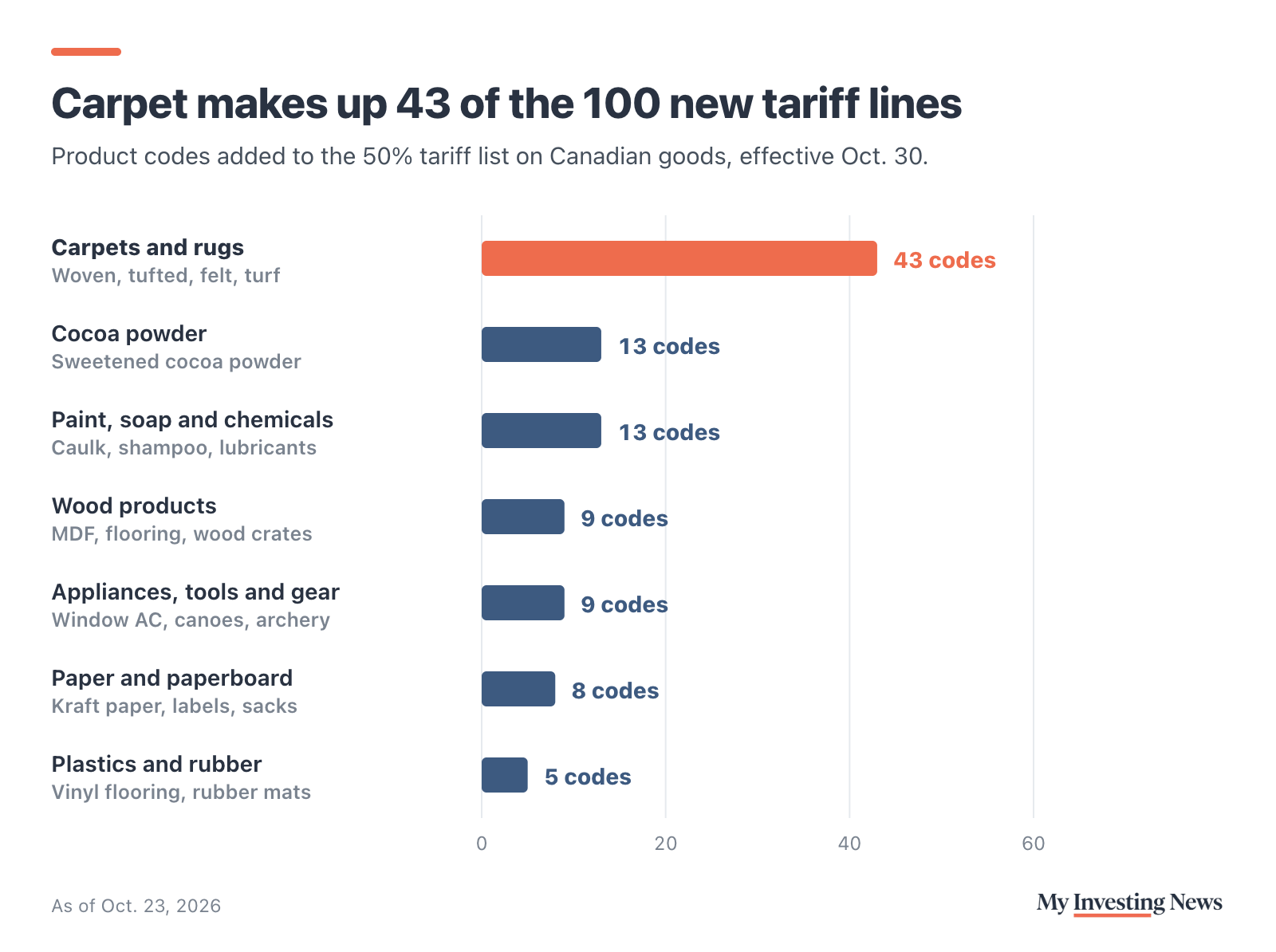
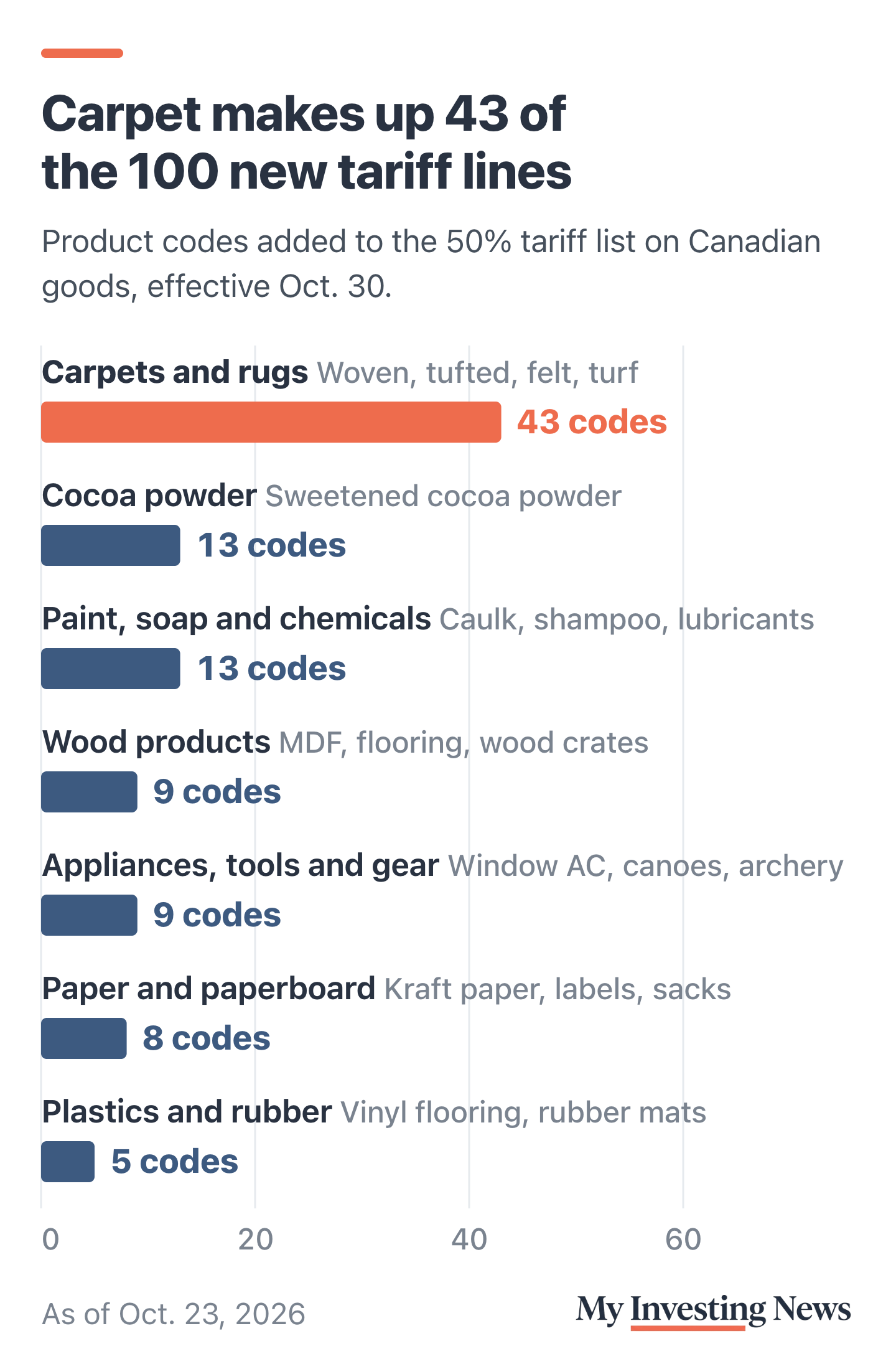
Javers listed both sides: “No longer tariffs under this plan: plywood sheets, paper pulp products, agricultural machinery, but now being tariffed: cocoa powders, paints and varnishes, carpeting, window air conditioners, archery equipment.”
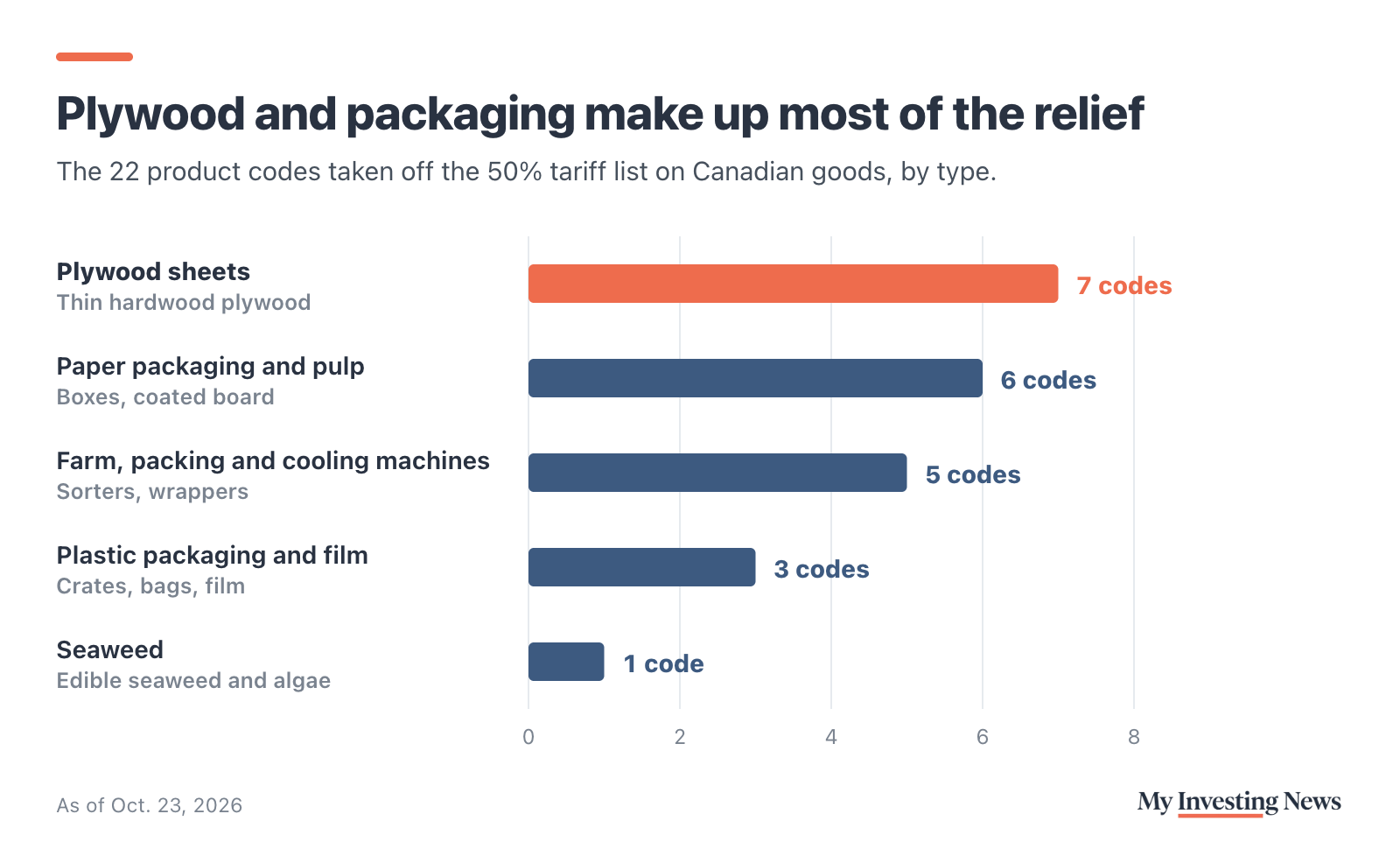
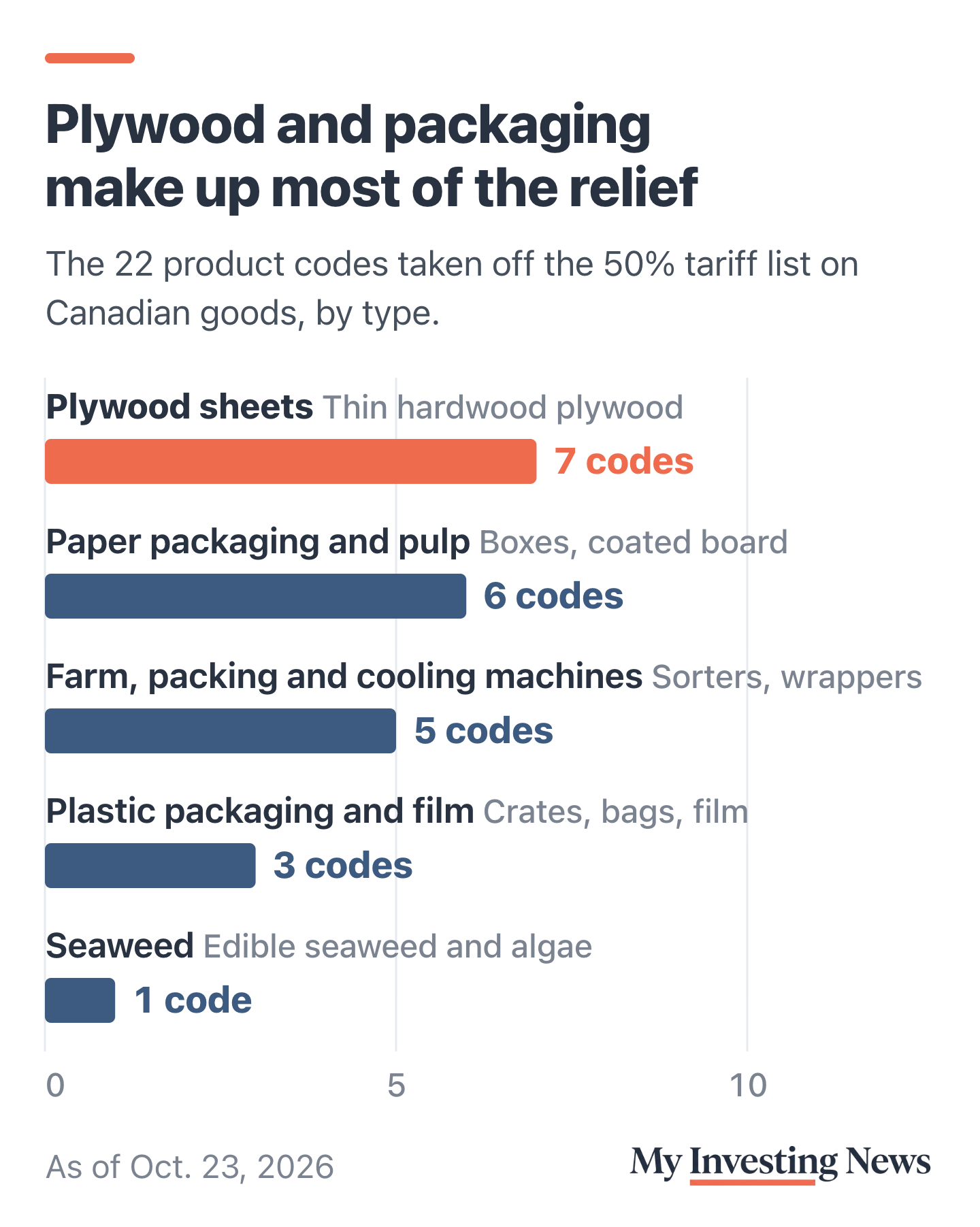
For Maine, the exempted goods carry real weight. Maine Public reported that the administration will exempt Canadian products used by Maine farmers. Collins’s office said the exemptions cover nine categories of products used by Maine’s blueberry, potato, apple and seaweed producers, and the Guardian reported her saying that many farmers depend on specialized Canadian equipment and materials “unavailable from American suppliers or cannot be replaced without incurring significant expense.” Plywood, packing boxes and paper products feed into the state’s forestry and packaging supply chains, and the Guardian noted that logging, lobstering and fishing were among the industries expected to take a hit from Trump’s tariff actions this year.
Political Timing Behind the Reshuffle
Javers described the political angle: “This might be a win for Senator Collins, and it might suggest to Maine voters that she has won these exemptions.”
Other outlets framed it the same way. The Wall Street Journal reported Trump would remove some tariffs on Canada in a bid to help Susan Collins. Bloomberg reported the changes were a bid to aid the Maine senator. NBC News placed the move amid close midterm races, and the Guardian called Collins embattled, reporting that her race against Democrat Troy Jackson is considered a toss-up. Politico reported Collins said Trump will lower Canada tariffs for certain agricultural goods. In early October, prediction markets put Republicans’ chances of keeping the Senate at roughly one in three.
The Oct. 23 proclamation by the numbers
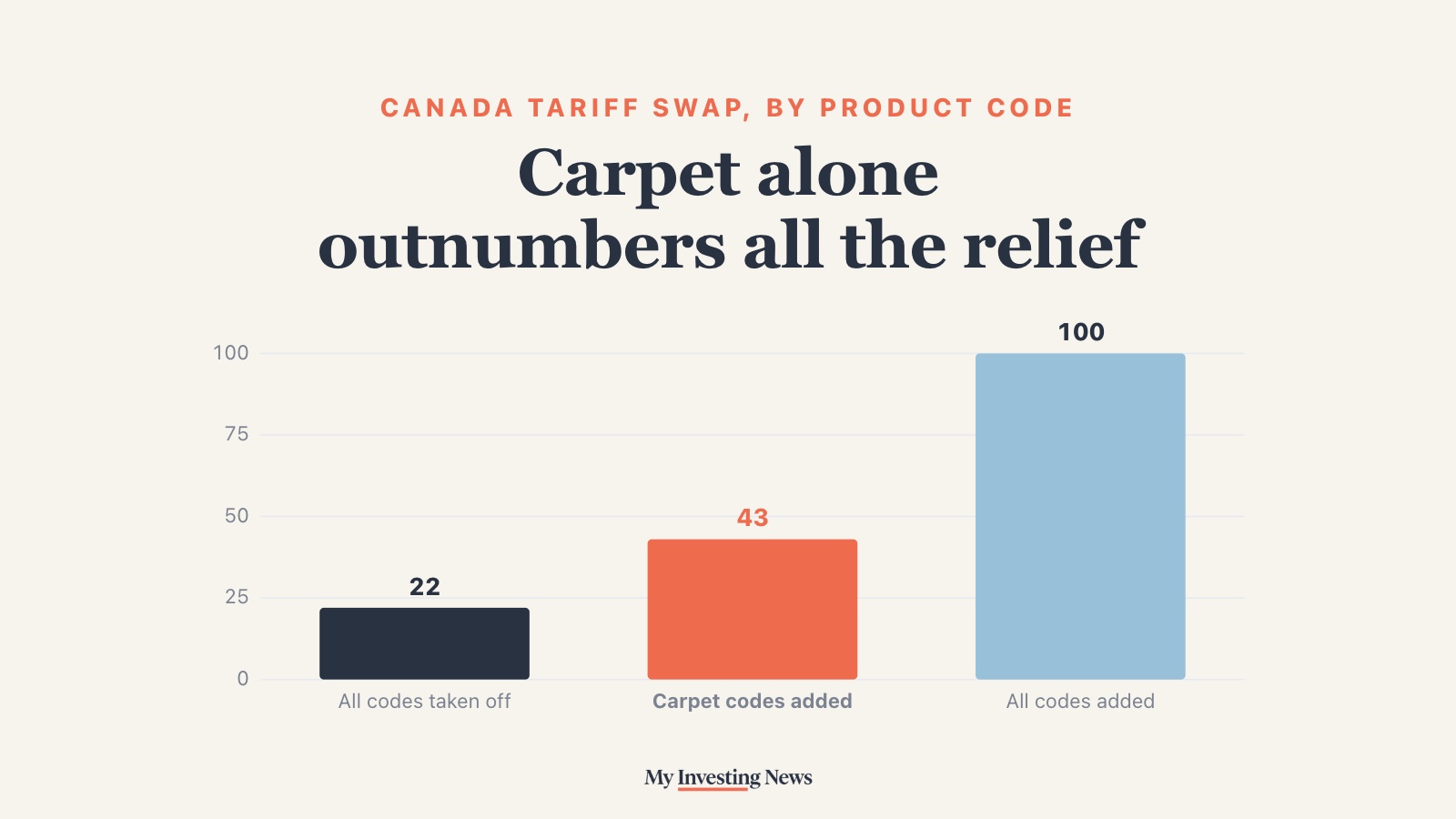
By count, the list got longer. Annex I adds 100 product codes and removes 22, and carpets and rugs alone account for 43 of the additions, nearly twice as many codes as all the relief combined. Codes count products, not dollars, so the tally can’t show on its own whether the swap is even in trade value.
What Shoppers and Investors Should Track
A tariff is a tax on imported goods, and importers often pass some of that cost along to buyers. Jim Cramer has argued that tariff-driven price increases hit lower-income families hardest. The new list covers ordinary household and consumer goods. Cocoa powder goes into chocolate and baked goods. Paint, carpet and window air conditioners are standard purchases for homeowners and tenants. If Canadian supply in these categories now costs more, retailers and manufacturers that buy it may need to absorb the cost, raise prices or find other suppliers.
Investors should also notice how narrow the change is. Rearranging products at the line-item level, less than two weeks before an election, makes it harder for companies to plan sourcing and pricing around trade policy. Cross-border businesses now have one more example showing that any given product can move onto or off a tariff list with little notice.
Key items to follow include the Oct. 30 effective date, any response from Ottawa, and whether more exemptions come through. Collins said she will “continue working directly with administration officials to seek additional relief and encourage a broader trade agreement with Canada.”
Real Relief for Maine Industries, Little Change in the Totals
Maine farmers, mills and packagers that rely on Canadian plywood, pulp and machinery are getting relief. Based on what the White House released, the overall tariff burden on Canadian goods may not have shrunk much. Javers’ description of a “roughly even swap” is the cleanest summary available until fuller data on trade volumes is published.
Javers sees a roughly even swap. Maine growers and packagers get relief on plywood, packaging and farm machinery, while Canadian carpet, cocoa powder, paint and window air conditioners now face the 50% tariff. The risk for shoppers and businesses is that the new duties show up in prices, and that any product can move on or off the list with little notice.