Where we heard itCNBC’s Squawk Box, Oct. 26, 2026 (clip). Speaker: Sen. Kevin Cramer, Republican of North Dakota.
Squawk Box co-host Joe Kernen asked Sen. Kevin Cramer for his “under over” on the Senate a week before Election Day. The North Dakota Republican started with a disclaimer. “When you become a senator, you don’t get smarter,” he said. Then he called the race for control close, saying the final split “could be as much as 53-47 or 47-53.”
Republicans hold 53 seats now, so a 50-50 Senate would mean a net loss of three. Vice President JD Vance would break ties, and Republicans would keep control. That is the result Cramer said he would take:
Bettors are less hopeful for his side. On Polymarket, they put the odds of Democratic control at 66.5% as of the evening of Oct. 27. On Kalshi, the Democratic contract last traded at 64 cents, or 64%. So how much weight should those prices carry? We checked the record.
How Often the Betting Favorite Won
We collected the final price of every Senate race market we could find on PredictIt for 2018, 2020 and 2022 and on Polymarket for 2024, taken the night before Election Day. That came to 111 races. Then we matched each one to the official result in the MIT Election Data and Science Lab’s Senate returns.
The favorite won 100 of 111. Most of those wins came in safe seats, though, where the favorite traded at 90 cents or more and won all 68 times. Favorites priced from 70 cents up won 92 of 93. Below 70 cents, the record falls apart. Favorites priced from 50 to 69 cents won only 8 of 18 races, fewer than half.
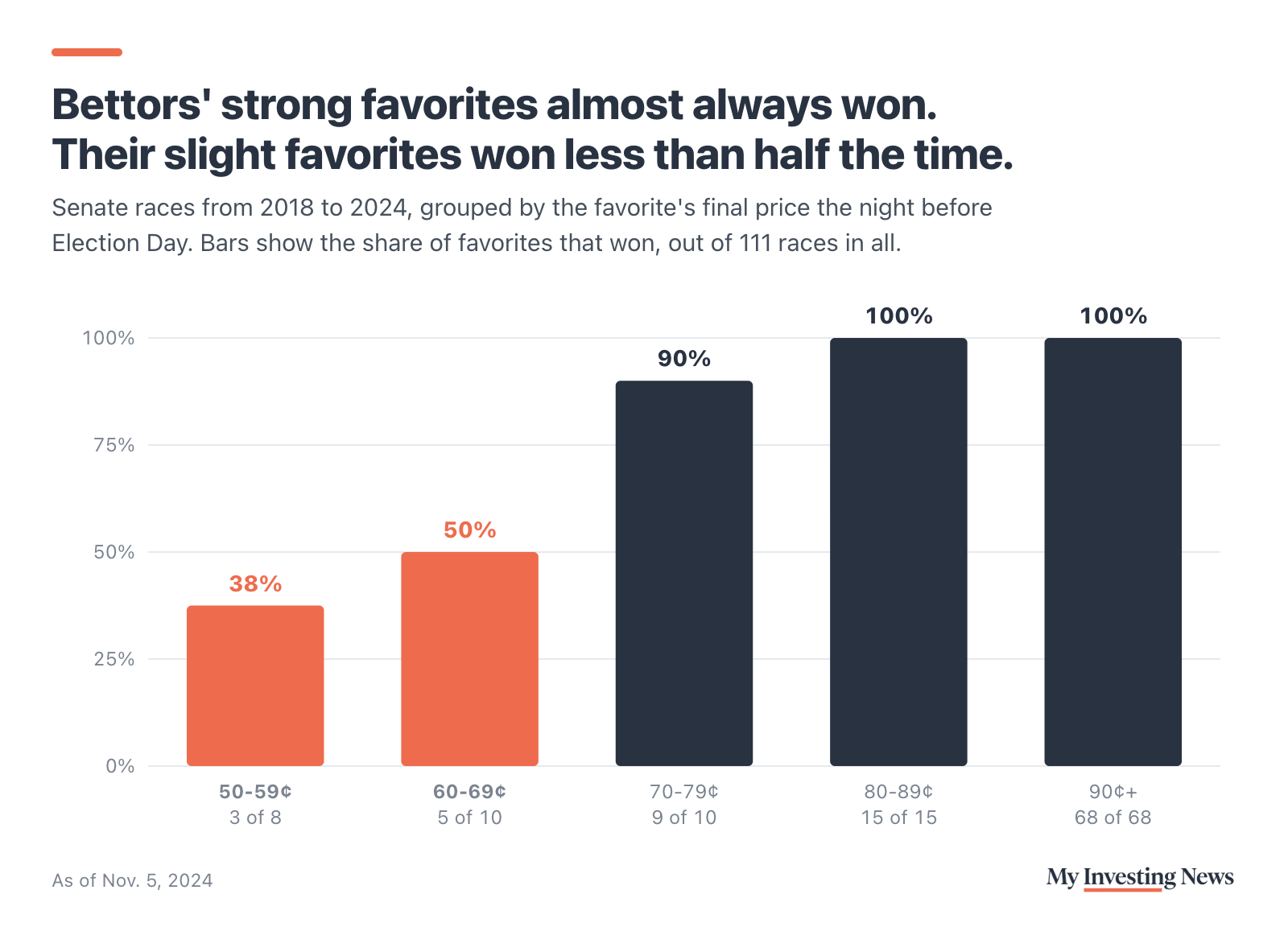
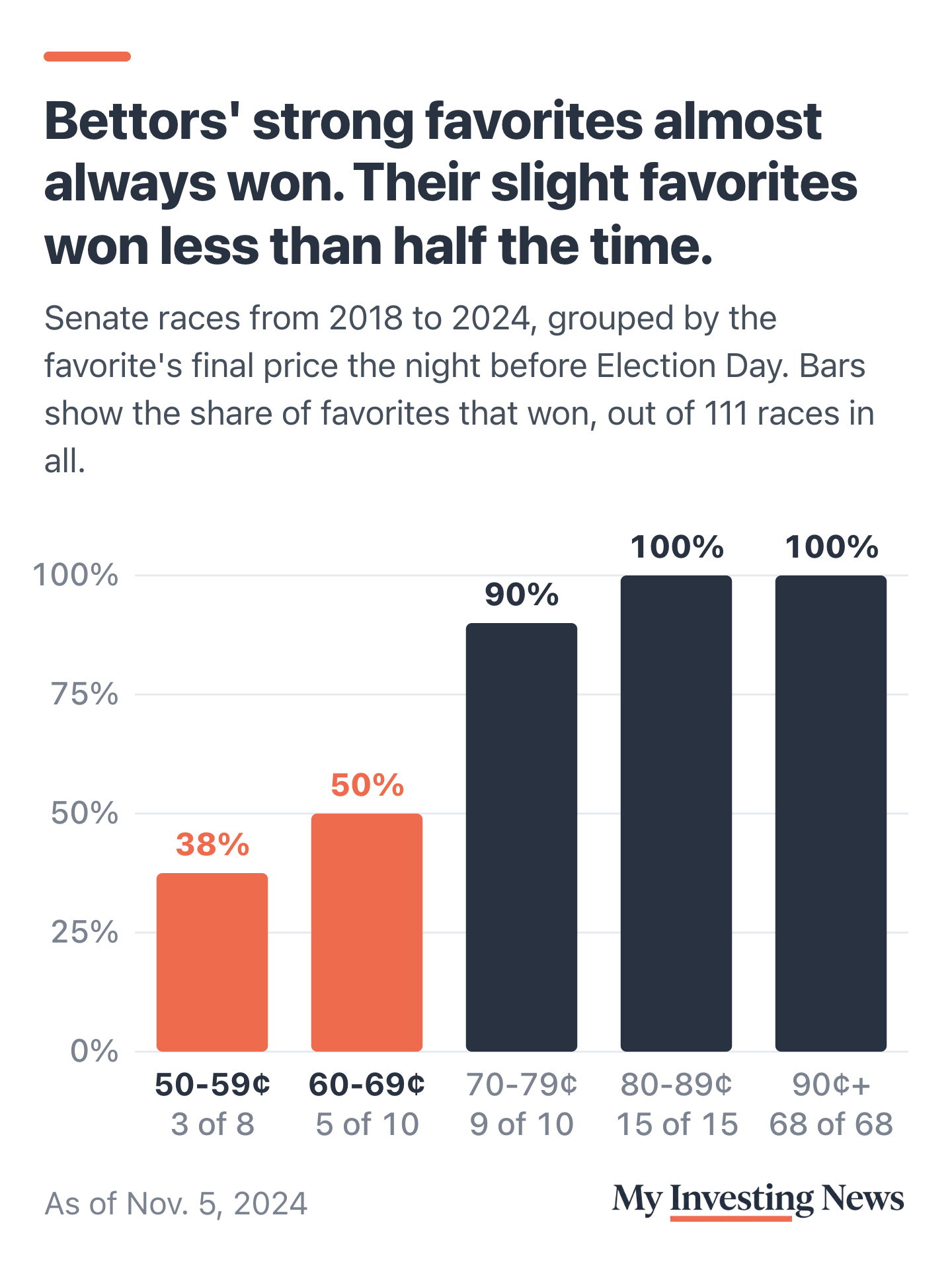
Eighteen races is a small sample, and close races are close for a reason. Still, a price in the 50s or 60s has meant much less than it looks. The biggest upset in the data was Pennsylvania in 2024, when Polymarket had Democrat Bob Casey at 76.5 cents the night before he lost to Republican Dave McCormick.
2022: Four Misses, All the Same Way
The year that matters most for Cramer’s side is the last midterm. In 2022, PredictIt’s Senate favorites won 14 of 18 races. All four misses were Republicans favored the night before: Pennsylvania at 63 cents, where John Fetterman won; Georgia at 65 cents, where Raphael Warnock won the December runoff; Nevada at 67 cents, where Catherine Cortez Masto held on; and Arizona at 54 cents, where Mark Kelly won.
The control market missed too. PredictIt priced a Republican Senate at 74 cents on Nov. 7, 2022, and Democrats kept the chamber. In 2018 and 2020, by contrast, the favorites for control won. In 2018, Republicans were priced at 87 cents and held the Senate. In 2020, Democrats were at 57 cents and won control after two Georgia runoffs.
The Senate odds, then and now
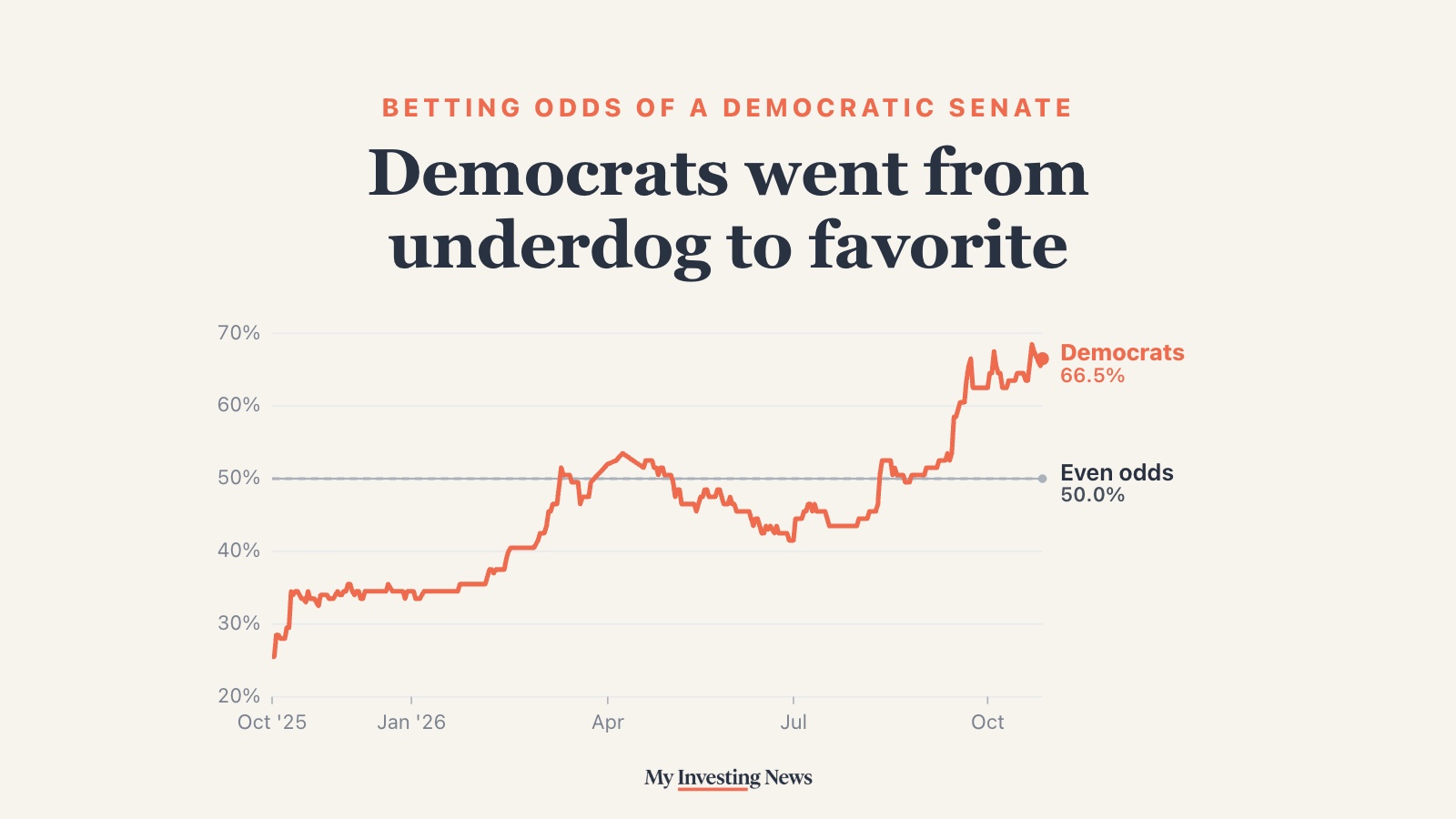
Bettors have swung hard toward Democrats over the past year. On Oct. 27, 2025, Polymarket gave them a 25.5% chance of winning the Senate. They first became the favorite in March, slipped back below even odds over the summer, and have stayed above 50% since late August.
The overall price has barely moved this month. When we reported Republicans’ odds at about 36% on Oct. 8, Polymarket had Democrats at 64.5%. The race markets Cramer named have moved more. He called Texas “sort of an interesting one” and said it “seems unlikely” to him that it flips. Polymarket bettors gave Democrat James Talarico a 67.5% chance against Republican Ken Paxton as of Oct. 27.
On Ohio, which Cramer called “a very interesting one,” bettors gave former Sen. Sherrod Brown a 70.5% chance against Sen. Jon Husted. Maine is another seat Republicans hold that bettors now lean the other way on: Democrat Troy Jackson was at 62.5% against Sen. Susan Collins, even after the White House dropped some Canada tariffs to help Collins.
What Midterm History Says About a Three-Seat Loss
Cramer’s target, a net loss of no more than three seats, has been a coin flip in midterms. The American Presidency Project’s count shows the president’s party lost Senate seats in 12 of the 19 midterms since 1950 and lost four or more in 9. The average change was -3.1 seats.
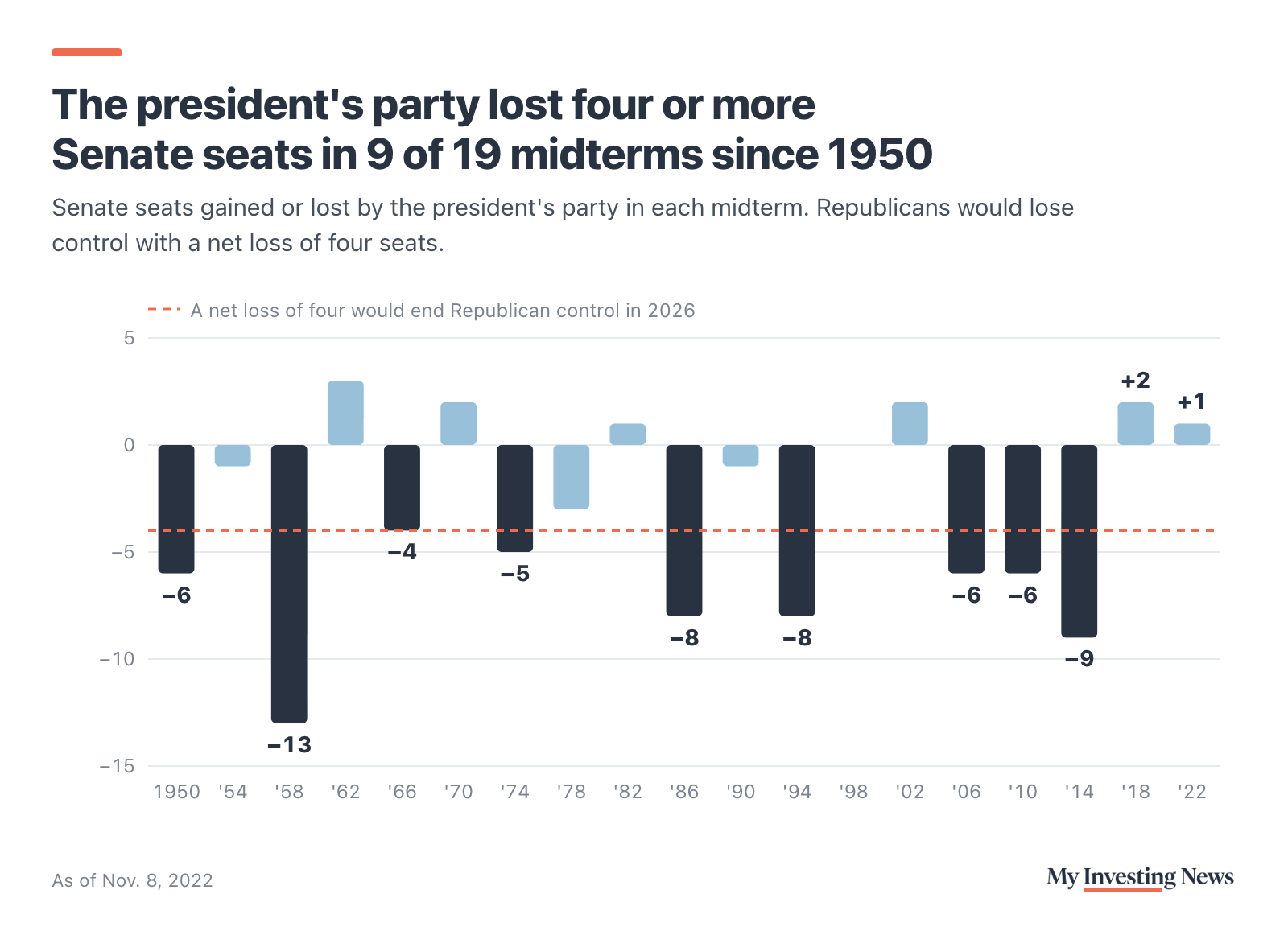
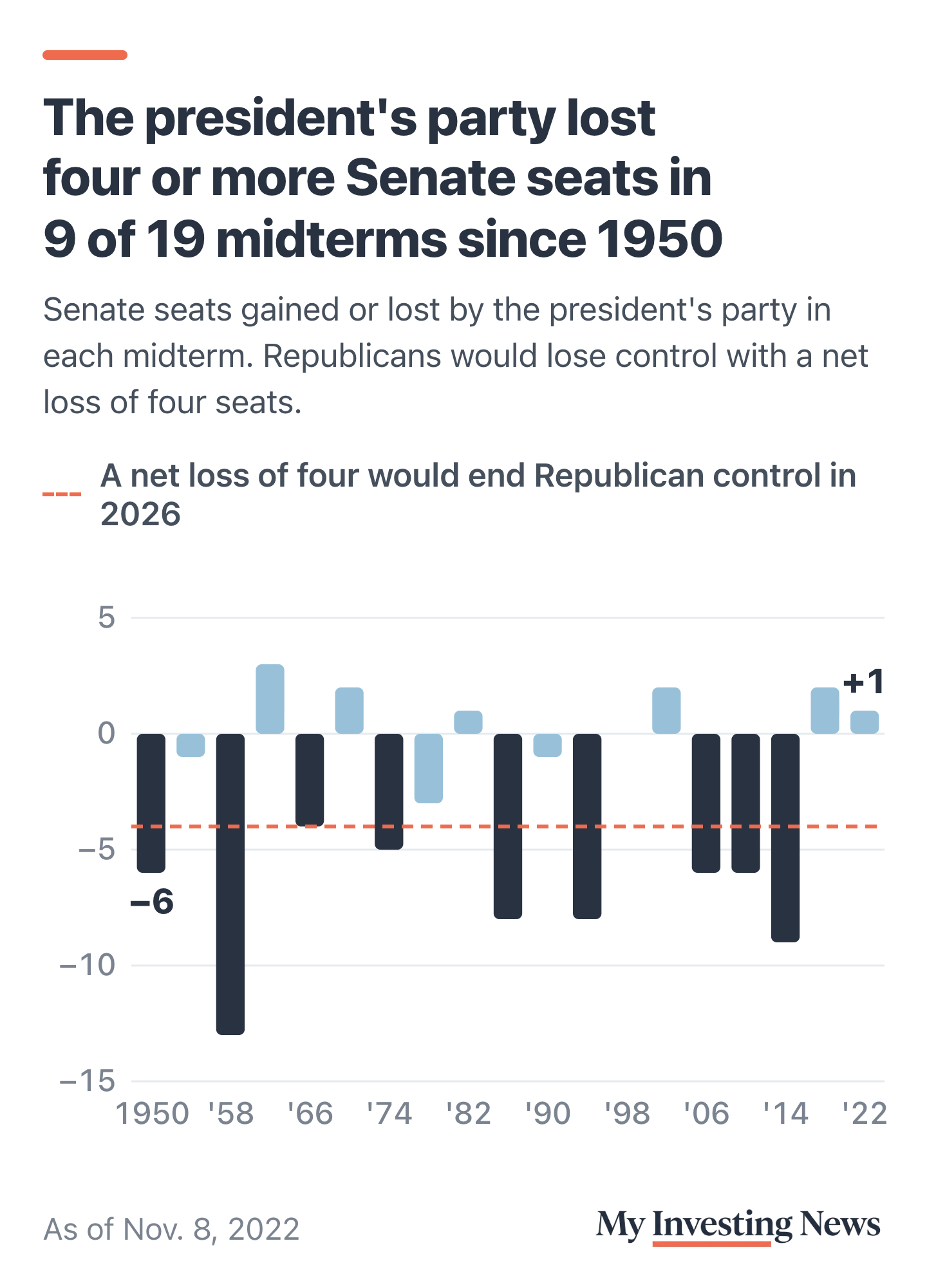
The two most recent midterms broke the pattern. Republicans gained two Senate seats in 2018 under President Trump, and Democrats gained one in 2022 under President Biden. The map matters as much as the mood: Republicans are defending 20 of this year’s Senate seats.
Cramer said turnout will decide it. “It’s the president’s base that oftentimes stays home,” he said, which is why he wants President Trump on the road before Nov. 3.
What to Watch
Election night will add a fifth cycle to the test. If Democrats win control as the odds suggest, the bettors will have shaken off their 2022 miss. If Republicans hang on at 50-50, as Cramer hopes, it will be the second midterm in a row in which the Senate favorite came up short. Either way, the races priced in the 50s and 60s, including Texas, Ohio and Maine, are where the record says to expect surprises. Investors who want the market side of the story can look at what stocks have done after past midterms.
Cramer thinks Republicans would do well to hold a 50-50 Senate, and bettors give Democrats about a two-in-three chance of taking control. Since 2018, betting favorites priced at 70 cents or more won 92 of 93 Senate races, but favorites in the 50s and 60s won fewer than half. The risk for anyone leaning on the odds is that close races are exactly where the markets have missed, and in 2022 they missed in Republicans’ favor.