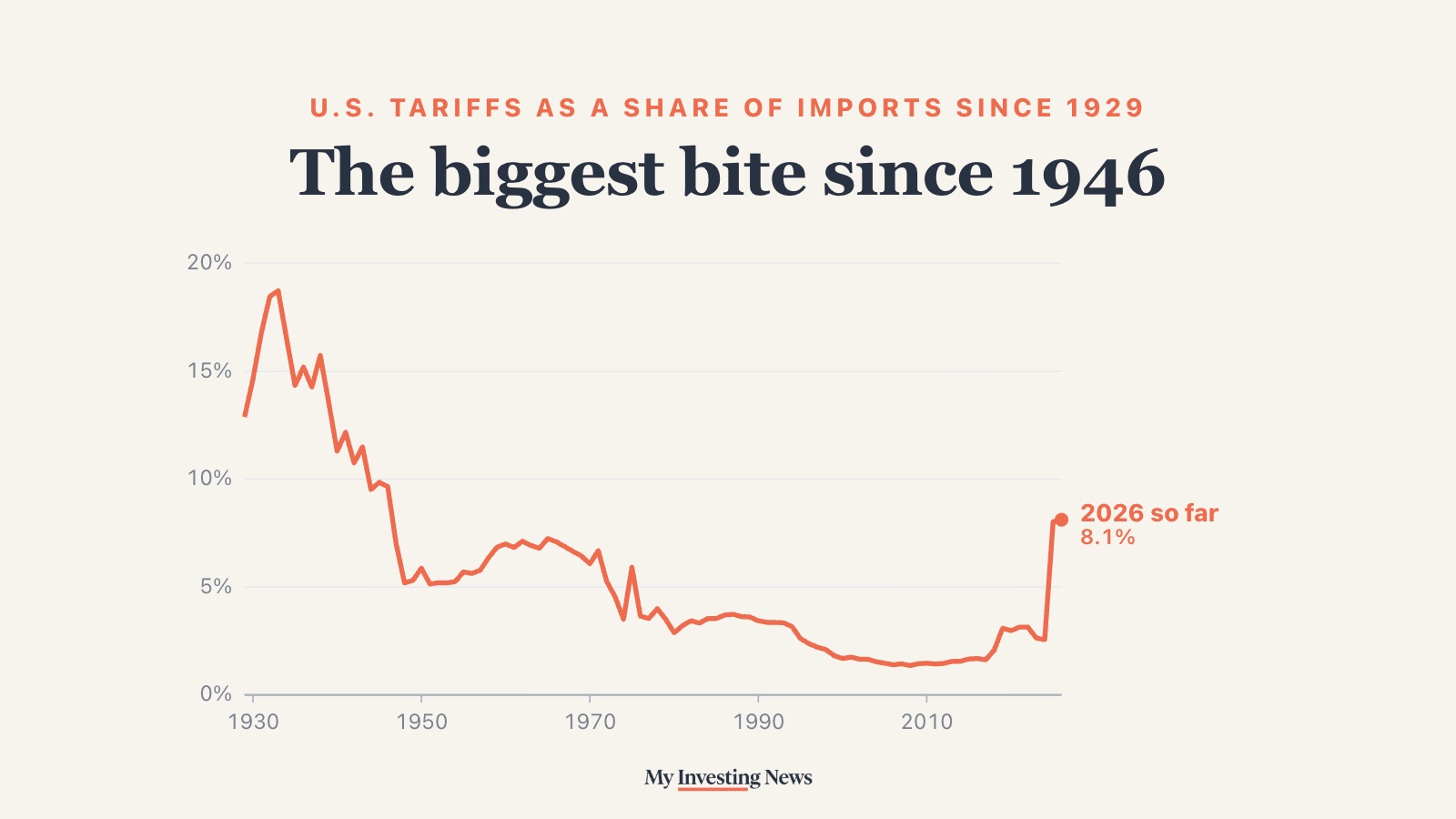
Where we heard itBloomberg, instant reaction to the October jobs report, Nov. 6, 2026, on the Bloomberg Businessweek podcast feed. Stephanie Roth, chief economist at Wolfe Research. Checked against the Treasury’s monthly statements through September 2026, BEA trade and tax data back to 1929, and the Federal Register.
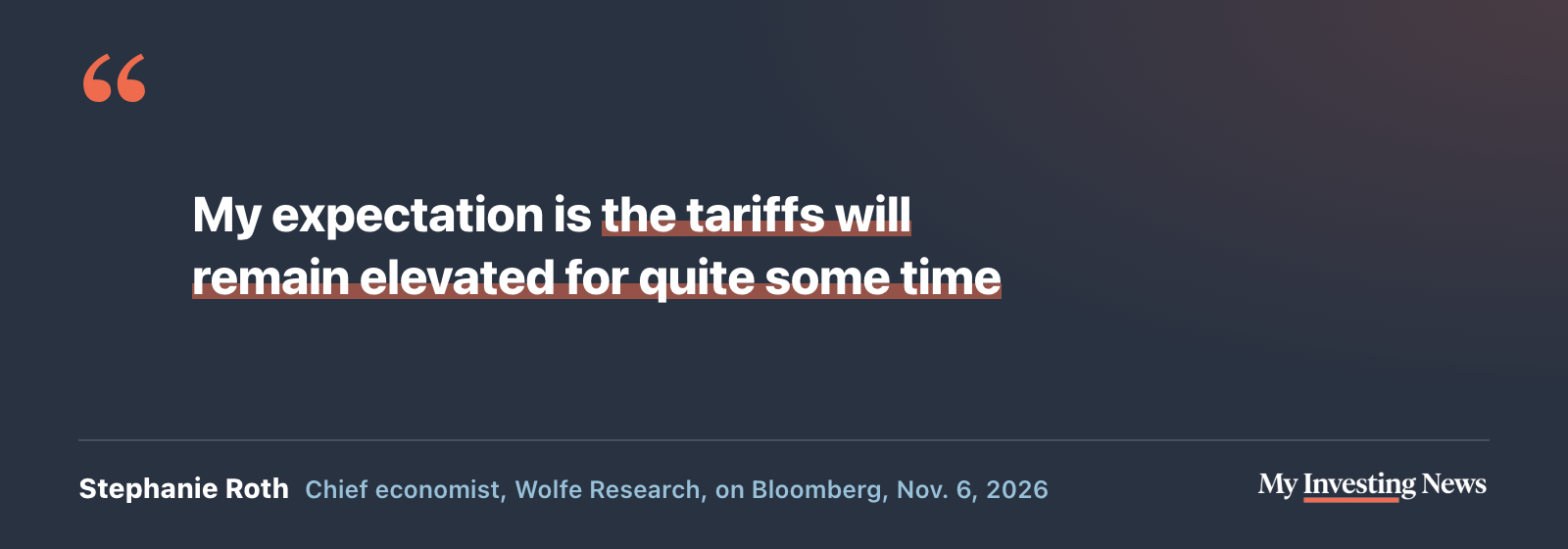
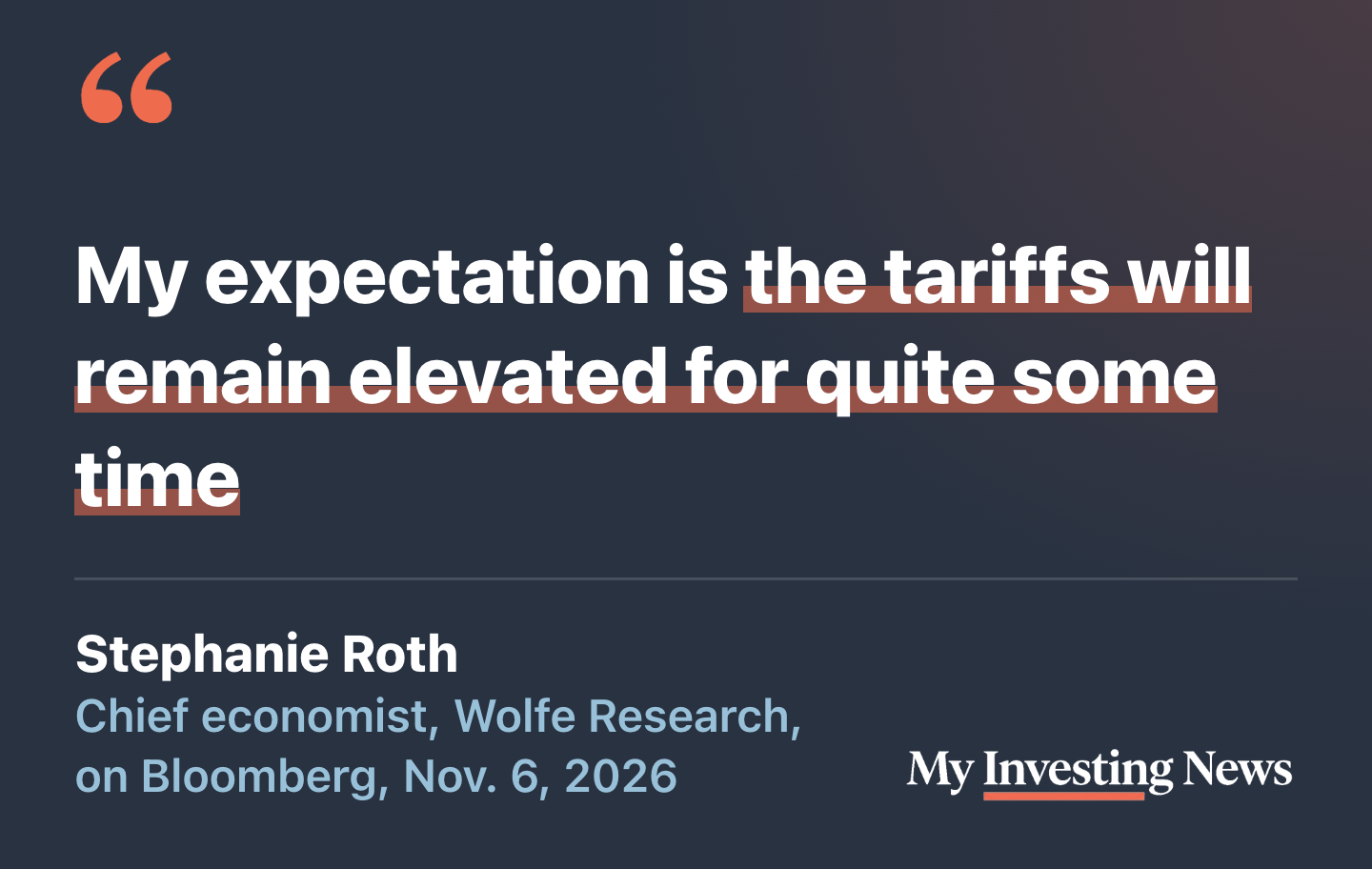
Stephanie Roth doesn’t expect the midterms to change much for tariffs. Asked on Bloomberg’s instant reaction to the October jobs report on Nov. 6 whether the election result would change tariff policy, the Wolfe Research chief economist said the money is the reason it won’t: “The revenues are kind of too high to really make any adjustments from that perspective.”
When the host asked whether Washington is now addicted to tariffs “at a fiscal basis,” Roth answered, “Kind of at this point.” She went further: even if a Democrat wins the White House in 2028, she said she isn’t sure tariffs would come down “all that much,” except “maybe on a targeted basis,” because “from a deficit perspective, it’s not really attractive to trim them so much.”
That is a strong claim three days after an election in which Democrats won control of both the House and the Senate. We tested it two ways: how much money tariffs now raise, and how long past tariff regimes lasted after the people who built them lost power.
The Revenue Roth Is Pointing To
The Treasury’s September statement closed the books on fiscal 2026, the 12 months through Sept. 30. Customs duties brought in $173.2 billion after refunds, 2.2 times the $77.0 billion of fiscal 2024. That was less than fiscal 2025’s $194.9 billion, but only because of a one-time hit: the Supreme Court struck down the emergency tariffs imposed under the International Emergency Economic Powers Act on Feb. 20, and the Treasury paid out $144.6 billion in customs refunds during the fiscal year, most of it from May to September.
Before refunds, the government collected $317.8 billion in duties, 3.8 times fiscal 2024. The court ruling slowed the monthly flow without stopping it. The administration replaced the emergency tariffs within days with a 10% surcharge under Section 122 of the Trade Act, limited by law to 150 days, and then, from July 24, with Section 301 duties of 10% or 12.5% on goods from 60 economies. From March to September, collections averaged $23.9 billion a month, a pace of about $286 billion a year. In 2024 the average month brought in $7.2 billion.
Every month of 2026 brought in more than twice the tariff money of any month before 2025
Customs duties collected each month, before refunds. Each row is a year, January to December. Darker means more. No month before 2025 topped $9.6B. 2026, the coral row, runs through September; the Supreme Court struck down the emergency tariffs on Feb. 20.
Roth’s deficit argument rests on that flow. The government ran a deficit of about $1.99 trillion in fiscal 2026, and the duties collected before refunds equaled about 16% of it. Even net of refunds, customs made up 3.2% of all federal revenue, more than in any year from 1942 to 2024. Only fiscal 2025, at 3.7%, and 1940 and 1941, the first years in the White House budget office’s customs records, were higher.
Tariff money in fiscal 2026
How Long Tariffs Outlast the People Who Set Them
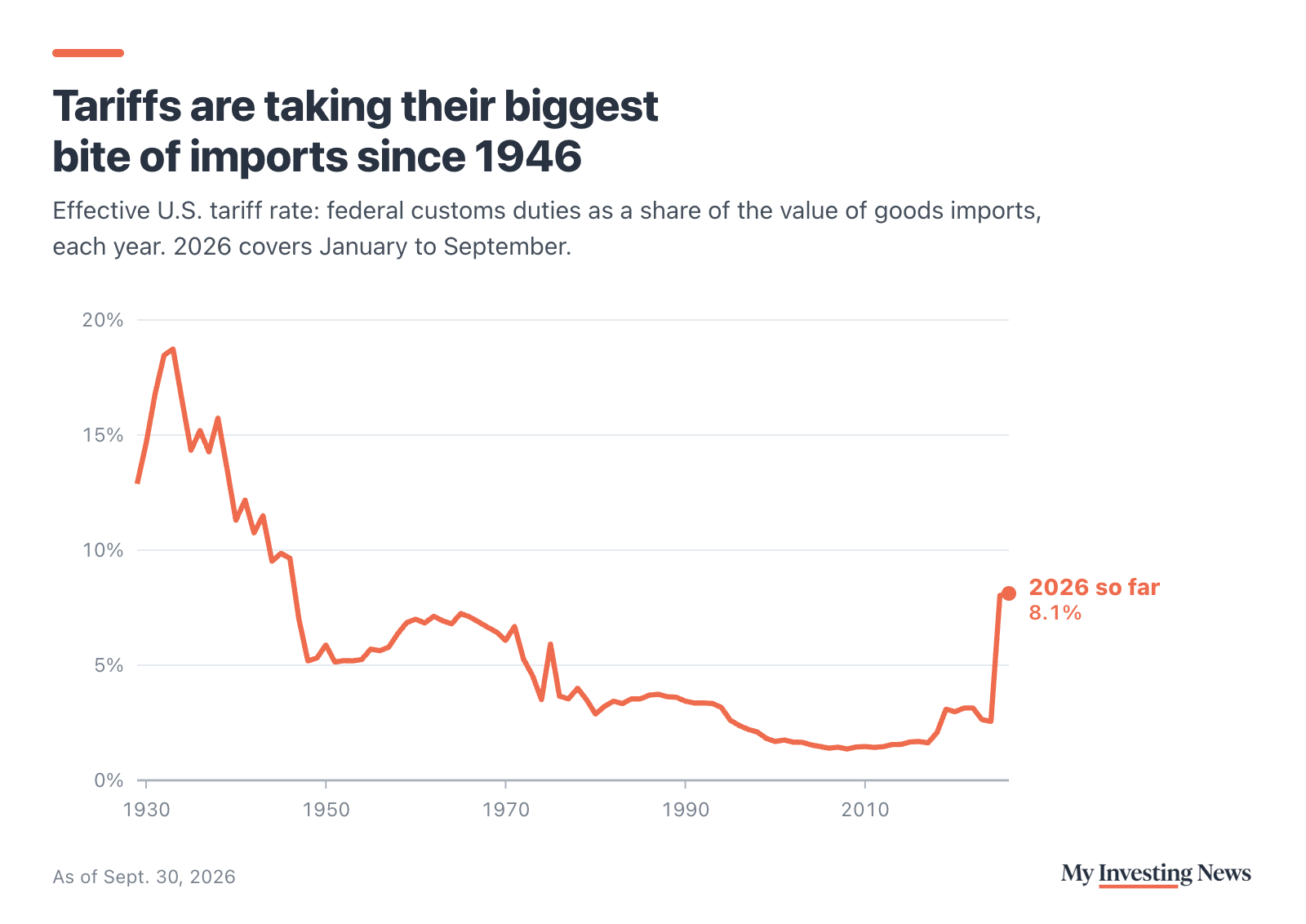
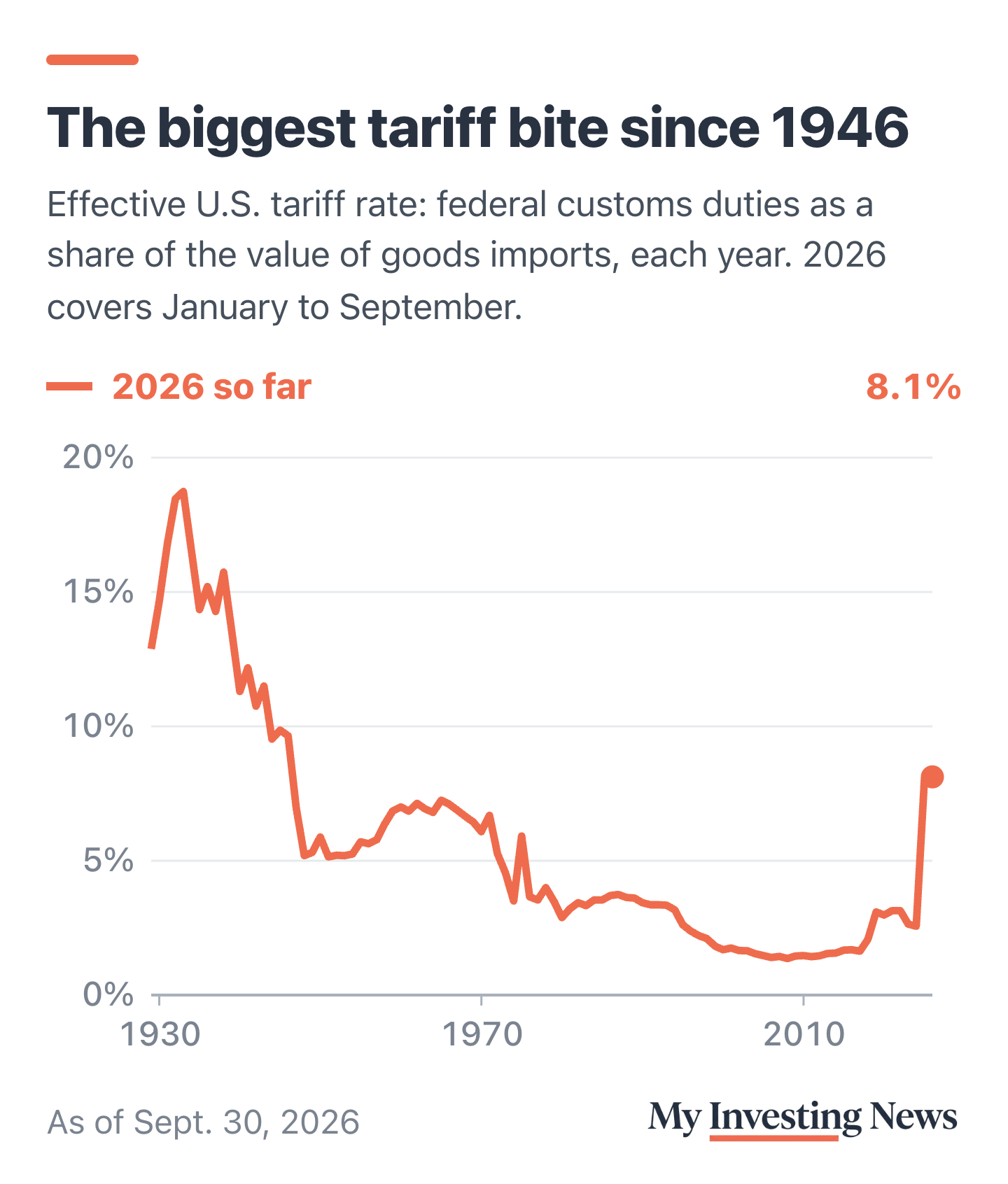
The second test is history. Measured as customs duties divided by the value of goods imports, the effective U.S. tariff rate averaged 8.1% from January to September 2026, by Bureau of Economic Analysis figures, up from 2.6% in 2024. That is the highest since 1946. The rate has eased as the replacement tariffs took over: it was 6.8% in the third quarter, still well over double 2024’s level.
The closest parallel is Smoot-Hawley. Herbert Hoover signed it in June 1930; his party lost its House majority in that fall’s midterms and the White House in 1932. Franklin Roosevelt’s answer, the Reciprocal Trade Agreements Act of 1934, didn’t repeal the tariff. It let the president cut rates country by country in trade deals. The effective rate, 12.9% in 1929, peaked at 18.7% in 1933 and stayed above its 1929 level every year until 1940, partly because falling prices made fixed per-unit duties heavier. It took most of a decade under the party that ran against it.
Modern tariffs have stuck around too. The China tariffs Donald Trump imposed starting in July 2018 survived Joe Biden’s full term; his administration kept them and raised some in 2024. Their second four-year review began this May, and on Oct. 7 the U.S. Trade Representative announced they would stay in effect because industries that benefit from them asked for that. The 25% tariff on imported light trucks, the “chicken tax,” has been in place since 1964. The fastest exit in recent memory, the 2002 steel tariffs, lasted about 21 months and ended under the president who imposed them, weeks after a World Trade Organization ruling against them.
Even cuts tend to come with new duties attached, as when Trump eased some Canada tariffs while adding duties on cocoa, carpet and air conditioners in October.
What a Democratic Congress Can and Can’t Do
The new Congress takes office in January. It can hold hearings, demand data and pass bills to limit the president’s tariff powers, but any bill that ends tariffs Trump wants would need his signature or a two-thirds vote in both chambers to override a veto. Most of today’s duties rest on laws that let the executive act alone, such as Section 232 for steel, aluminum, copper and autos, and Section 301 for the July 24 duties.
Where Congress mattered this year was by doing nothing. The Section 122 surcharge could only run past 150 days if lawmakers extended it, and they didn’t. The administration moved the duties to Section 301 the day it expired. That law has a built-in check of its own: an action ends after four years unless the industries it helps ask to keep it, which is how the 2018 China tariffs got their second extension. The July 2026 duties reach that point in 2030, after the next presidential election. Who ends up paying is a separate fight; Jim Cramer has called tariff inflation a regressive tax.
What to Watch
The Treasury’s October statement, due in mid-November, will show whether monthly collections are holding in the $22 billion to $25 billion range seen since the ruling and whether refunds are winding down. The courts are the other path to lower tariffs, and the one that worked this year. And when the new Congress arrives, watch whether Democratic budget plans count on the tariff money or cut it. Roth’s bet is that, with the deficit near $2 trillion, neither party will want to give that money up.
Roth’s case holds up on the numbers. Customs duties raised $173.2 billion in fiscal 2026 even after $144.6 billion in refunds, the effective tariff rate is the highest since 1946, and past tariff regimes have often outlasted the leaders who imposed them by years. The risk to her view is the courts, which ended the emergency tariffs this year, more than Congress.