
Where we heard itCNBC, Oct. 19, 2026. Speaker: Oliver Renick, CNBC options reporter. Also CNBC’s written report the same day.
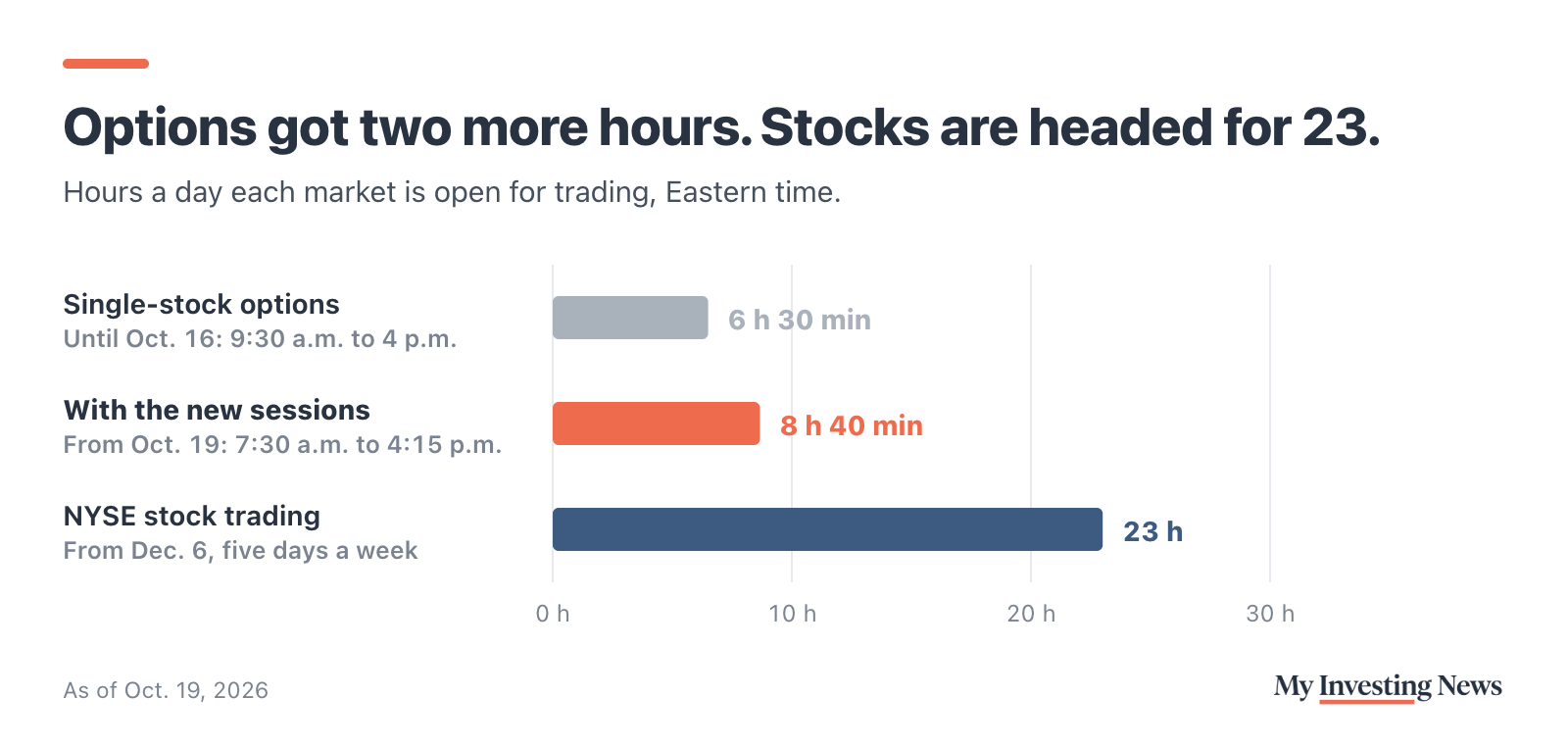
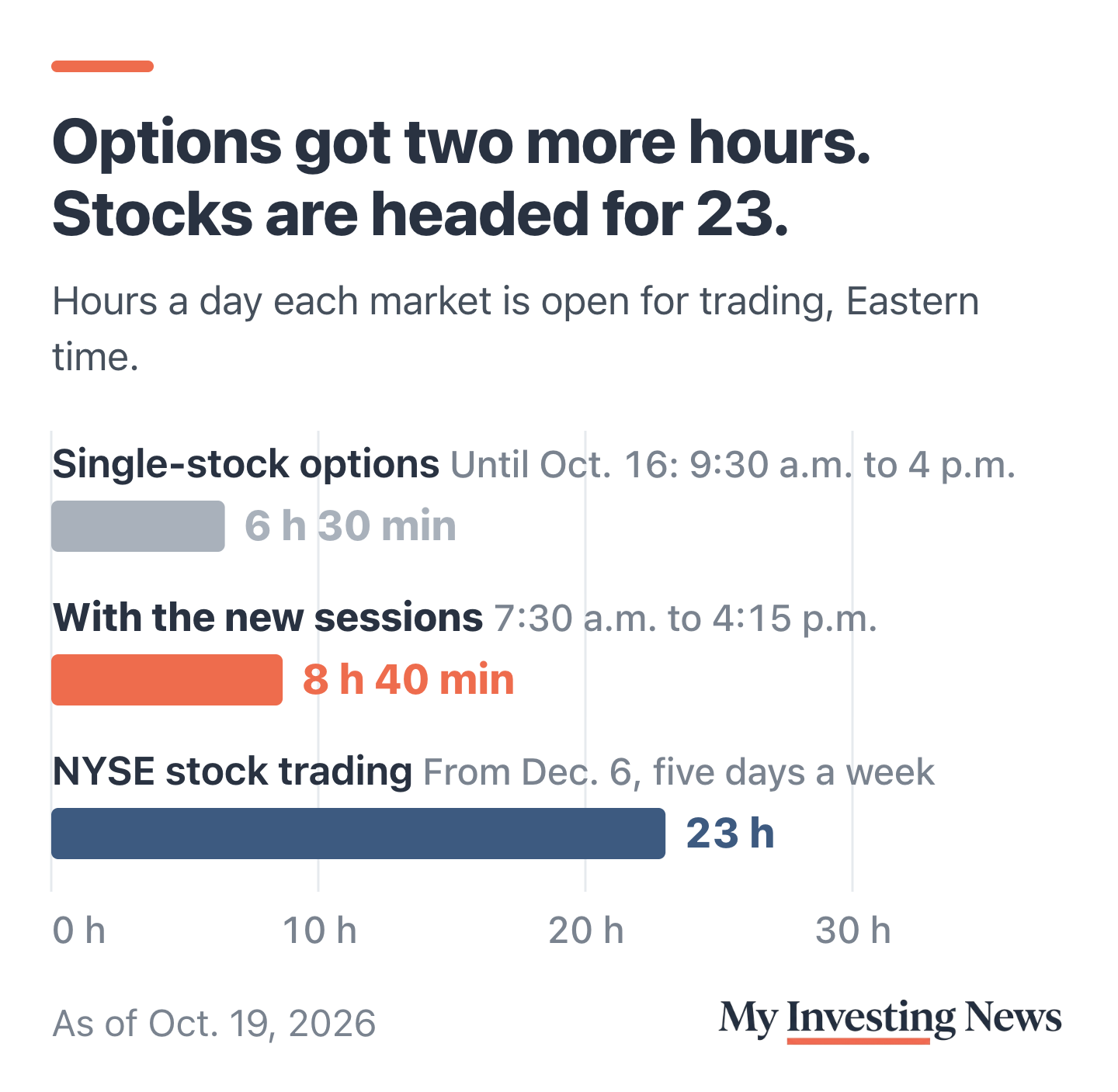
Options trading on Wall Street’s busiest names now starts before the opening bell. “The options market for two dozen single stocks and five of the most actively traded ETFs gets even bigger today as Cboe and New York Stock Exchange both extend trading hours to between 7:30 and 9:25 a.m. and 4 p.m. to 4:15 Eastern Time,” CNBC’s Oliver Renick said on Monday. CNBC covered the launch in its written report the same day. Cboe’s launch list has 24 single stocks and five ETFs, according to the exchange.
Options are contracts that give the holder the right to buy or sell a stock at a set price before a set date. Investors use them to hedge or to position for a move. Stock trading before and after the regular session has been around for years, and options traders lacked that access. Until now, longer sessions were limited to options on the S&P 500, VIX and Russell 2000 indexes.
Which Stocks Made the Cut
Renick said the change makes “about a 30% longer” session. Eligibility depends on volume and liquidity requirements plus a minimum market cap of $50 billion, per Renick. Market cap is a company’s share price times its shares outstanding, or what the stock market says the whole company is worth. “The list is going to be updated twice a year and kicks off with the Magnificent Seven other big tech giants like Oracle and Micron,” he said, and it also includes popular retail trading names.
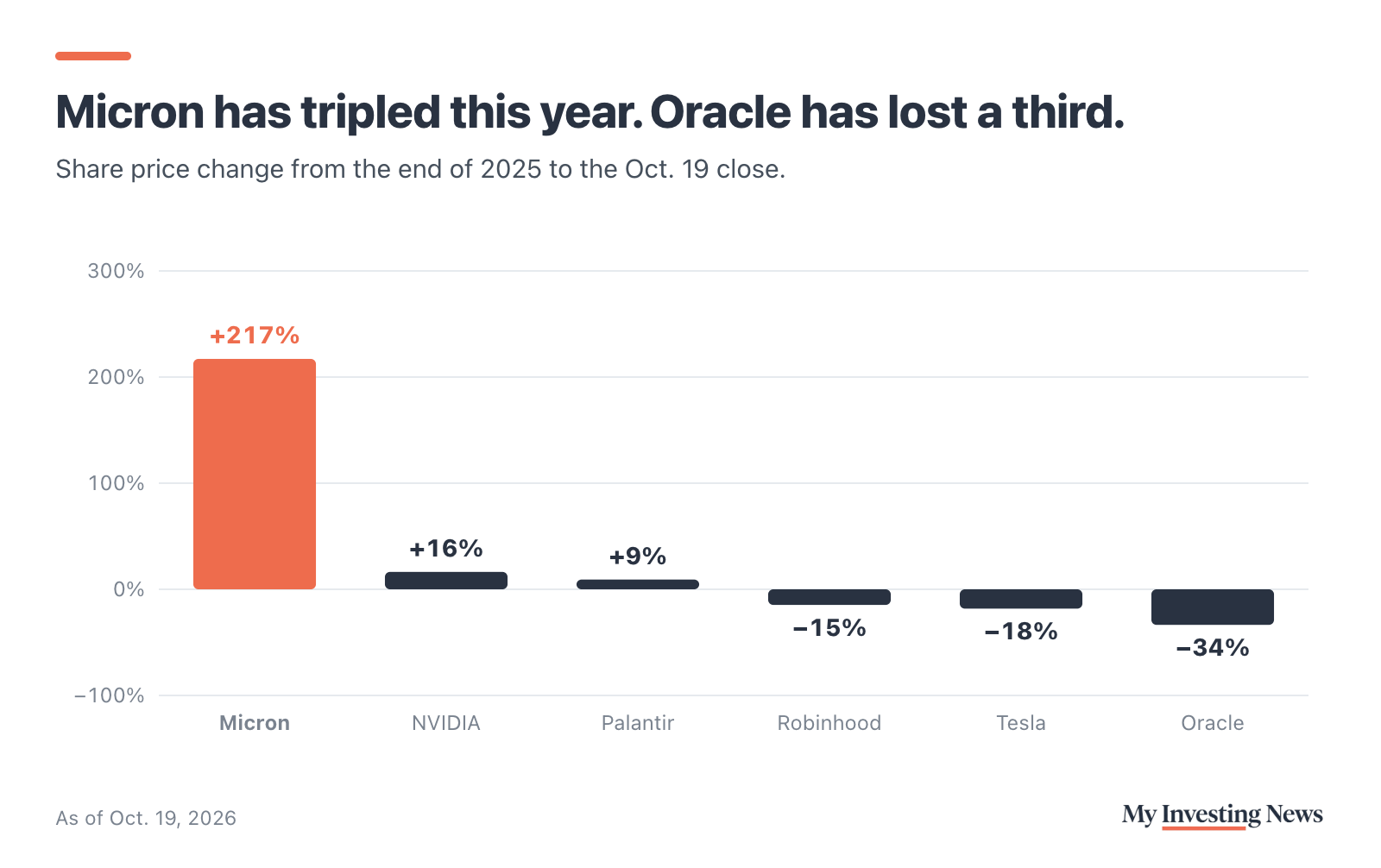
Those names include TeslaTSLA, NVIDIANVDA, OracleORCL, Micron TechnologyMU, Robinhood MarketsHOOD and Palantir TechnologiesPLTR. CNBC reported that twenty-nine stocks and funds qualify on NYSE, including NVIDIA, Bank of America, the SPDR S&P 500 ETF Trust and the iShares Russell 2000 ETF.
Traders Were Already Asking for More Hours
“Expect the new hours to be a hit, guys. Cboe just hit a record 230,000 options in their existing extended trading hours, and there’s more on the way,” Renick said. Cboe data cited by CNBC show extended-hours trading averaging more than 199,000 contracts per day, its highest level on record.
The new sessions at a glance
Robinhood is closest to that demand. Options revenue rose 29% YoY to $342M in the second quarter on a record 774M contracts.
A Quiet First Morning for Single Stocks
Monday’s first single-stock session was muted. Tesla stood out: a little over 3,000 contracts traded, almost all calls and likely traders rolling positions, worth less than $100,000 in total, according to SpotGamma data. For scale, Tesla contracts expiring Oct. 16 drew call volume of 1,447,602 during that day’s regular session.
Next Stop: Nearly Around the Clock
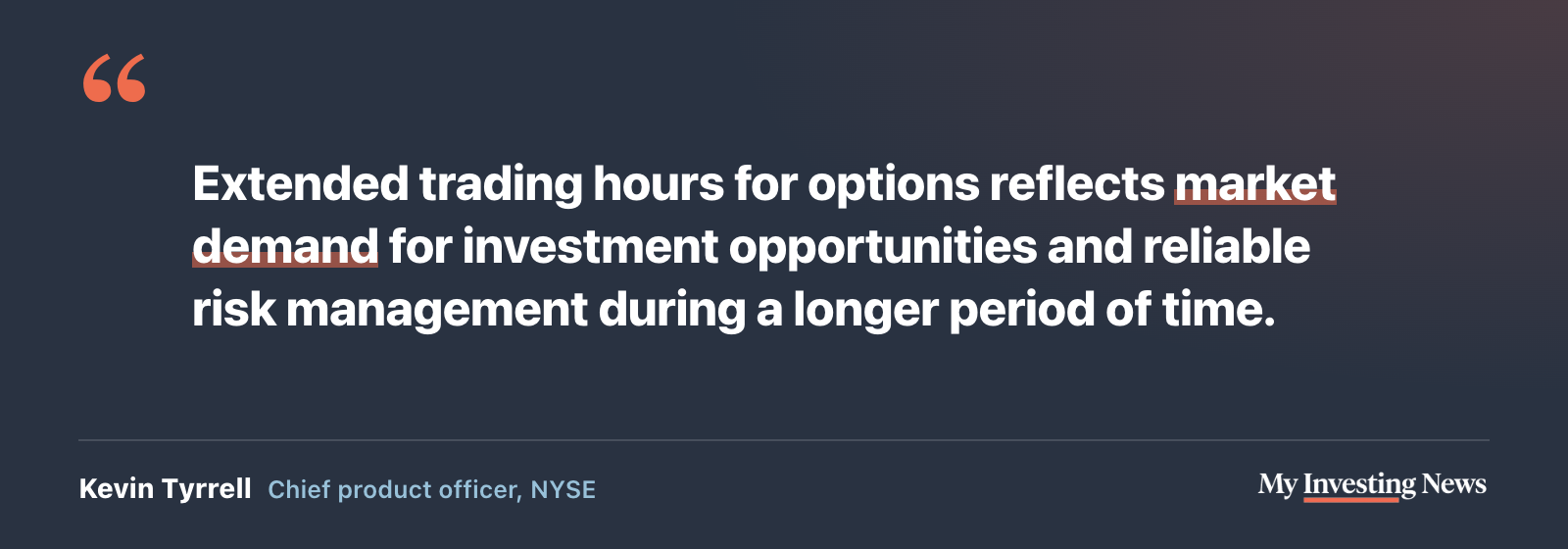
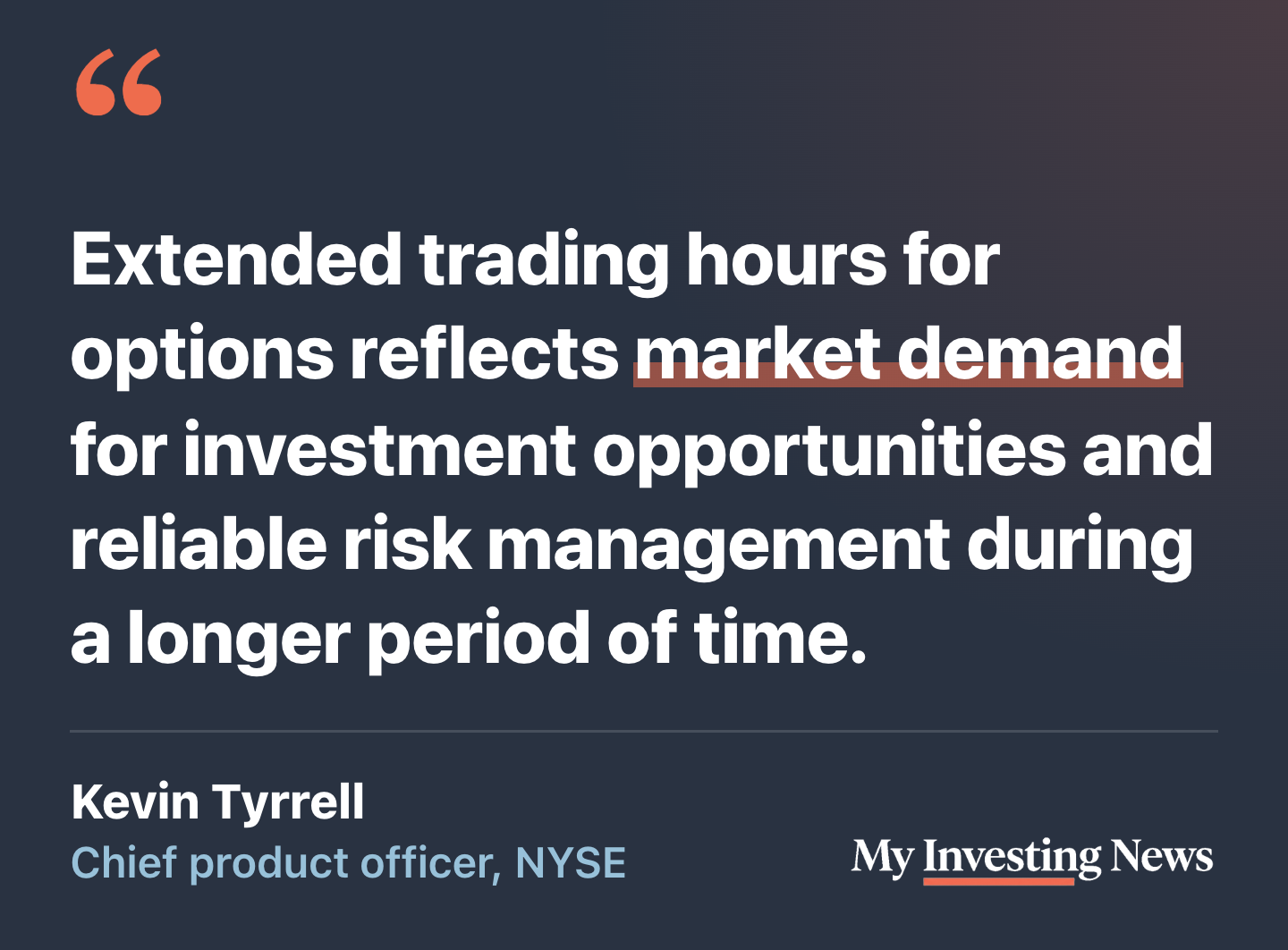
CNBC reported that beginning Dec. 6, 2026, NYSE will extend stock trading to 23 hours a day, five days a week. “Extended trading hours for options reflects market demand for investment opportunities and reliable risk management during a longer period of time,” NYSE chief product officer Kevin Tyrrell said in a statement. “Markets have changed tremendously over the years, and that kind of progress only happens when you keep investing in your technology.”
CNBC linked the move to the growing appetite for 24/7 trading in crypto, prediction markets and perpetual futures. Robinhood’s event contracts revenue rose more than 10x to $156M, and CEO Vlad Tenev said the company’s stock tokens for overseas customers “are tradable 24-7, including Saturdays and holidays.”
What Longer Sessions Mean for Everyday Investors
The longer sessions give investors more time to react to news that breaks early in the morning or right after the close. Monday’s headlines show how much happens outside the regular session: Micron rallied after a Chinese memory rival forecast a revenue boom, and CNBC flagged Oracle as the test case for credit stress in the AI trade. Volatility rose as well. The VIX closed Monday at 18.44, up from 15.21 a week earlier.
Extended sessions also tend to see thinner trading. Fewer buyers and sellers can widen the gap between bid and ask prices, so the cost of trading in those hours can run higher than during the regular day.
The trading day on Wall Street keeps getting longer, and December’s 23-hour session will show whether investors use the extra time.
Cboe and NYSE now let investors trade options on 29 of the busiest stocks and ETFs from 7:30 a.m. to 4:15 p.m., and NYSE plans 23-hour stock trading from Dec. 6. CNBC’s Oliver Renick expects the new hours to be a hit, pointing to record volume in Cboe’s existing extended sessions. The risk is thin trading: the first morning was quiet, and fewer buyers and sellers can mean wider spreads and higher costs outside the regular day.