
Where we heard itCNBC’s The Call Sheet, Oct. 19, 2026. Speaker: Peter Boockvar, chief investment officer at One Point BFG Wealth Partners and a CNBC contributor.
Third-quarter earnings season is picking up while affordability pressure and hot inflation data weigh on the market, and Peter Boockvar, a CNBC contributor with One Point BFG Wealth Partners, sees concentration as the bigger issue. On CNBC’s The Call Sheet on Oct. 19, he said:
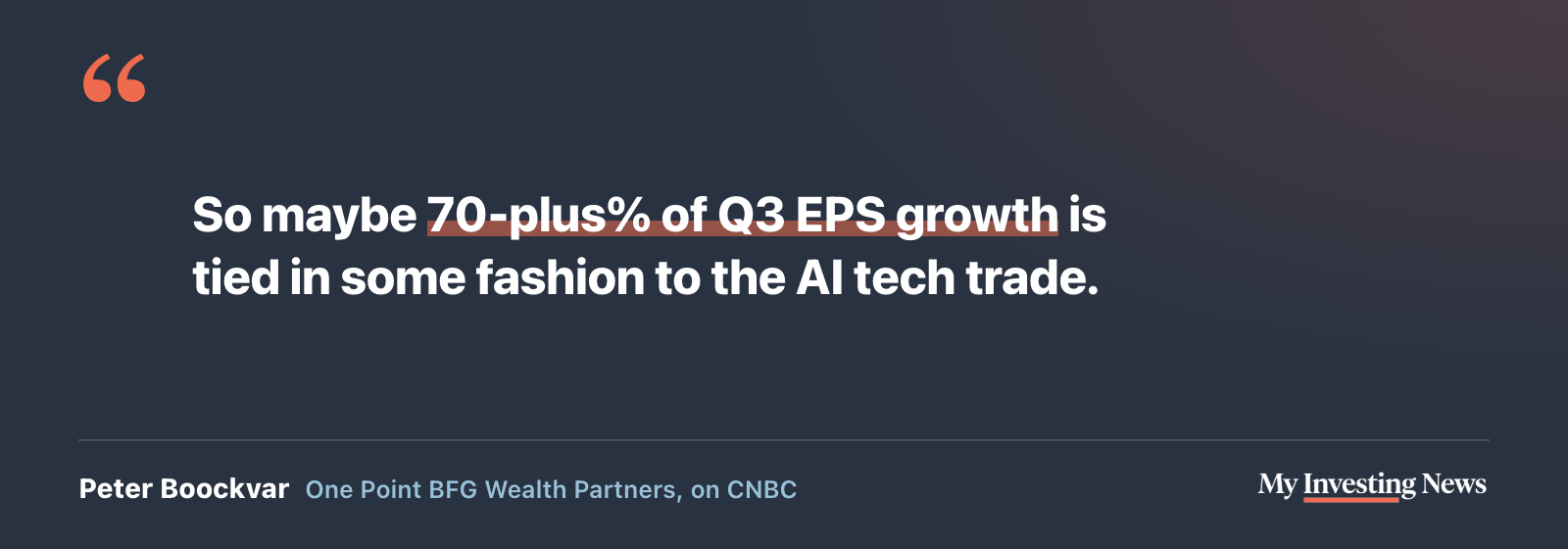
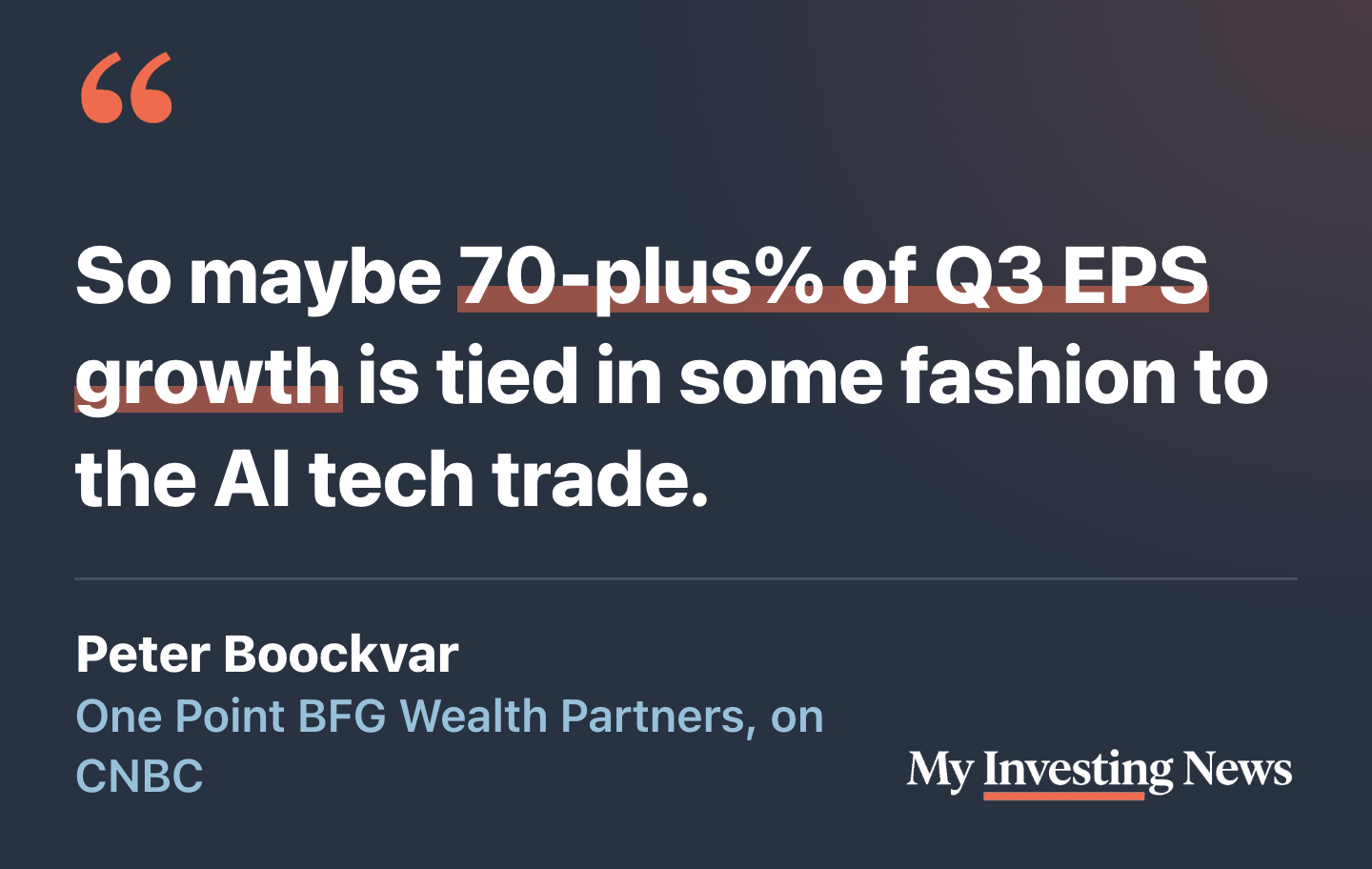
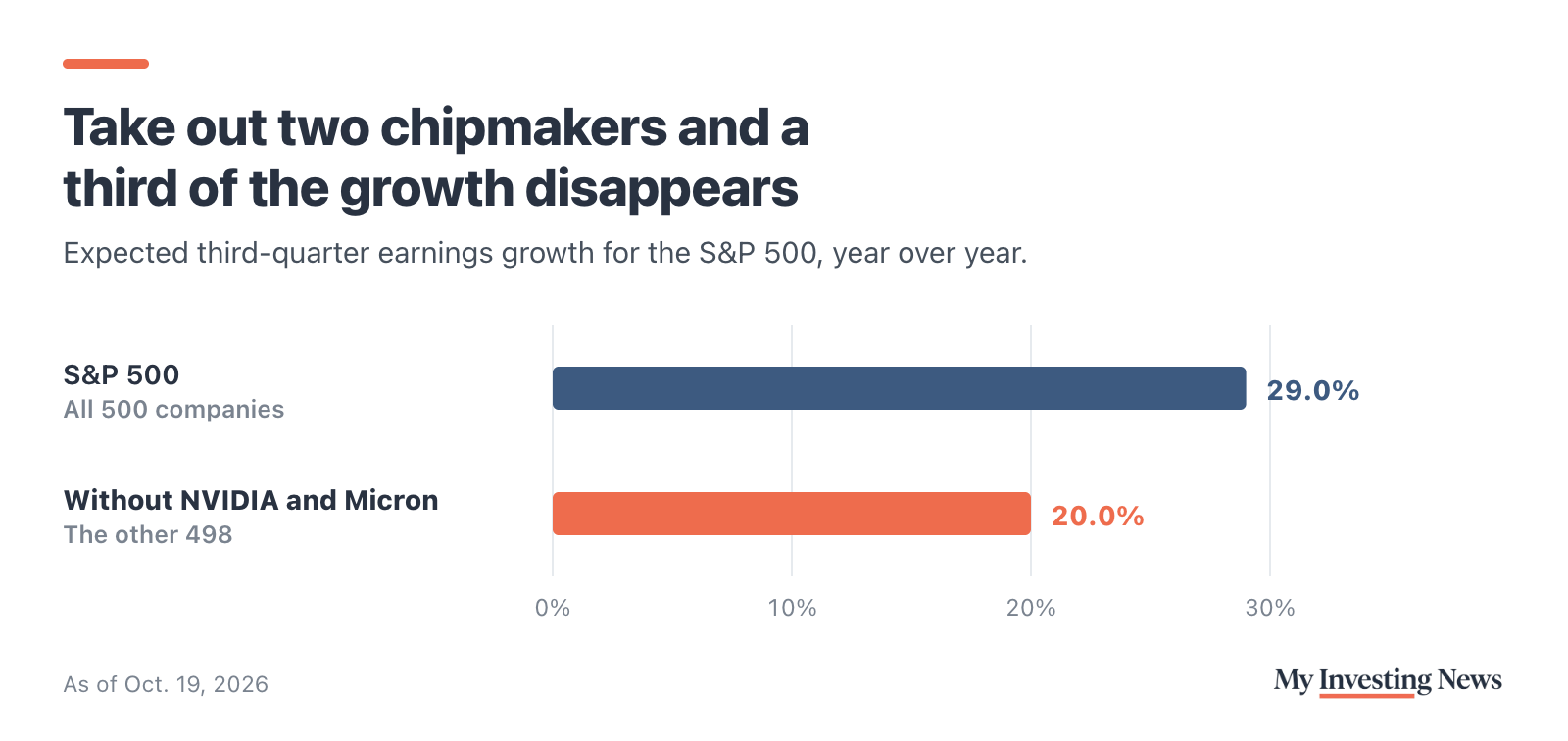
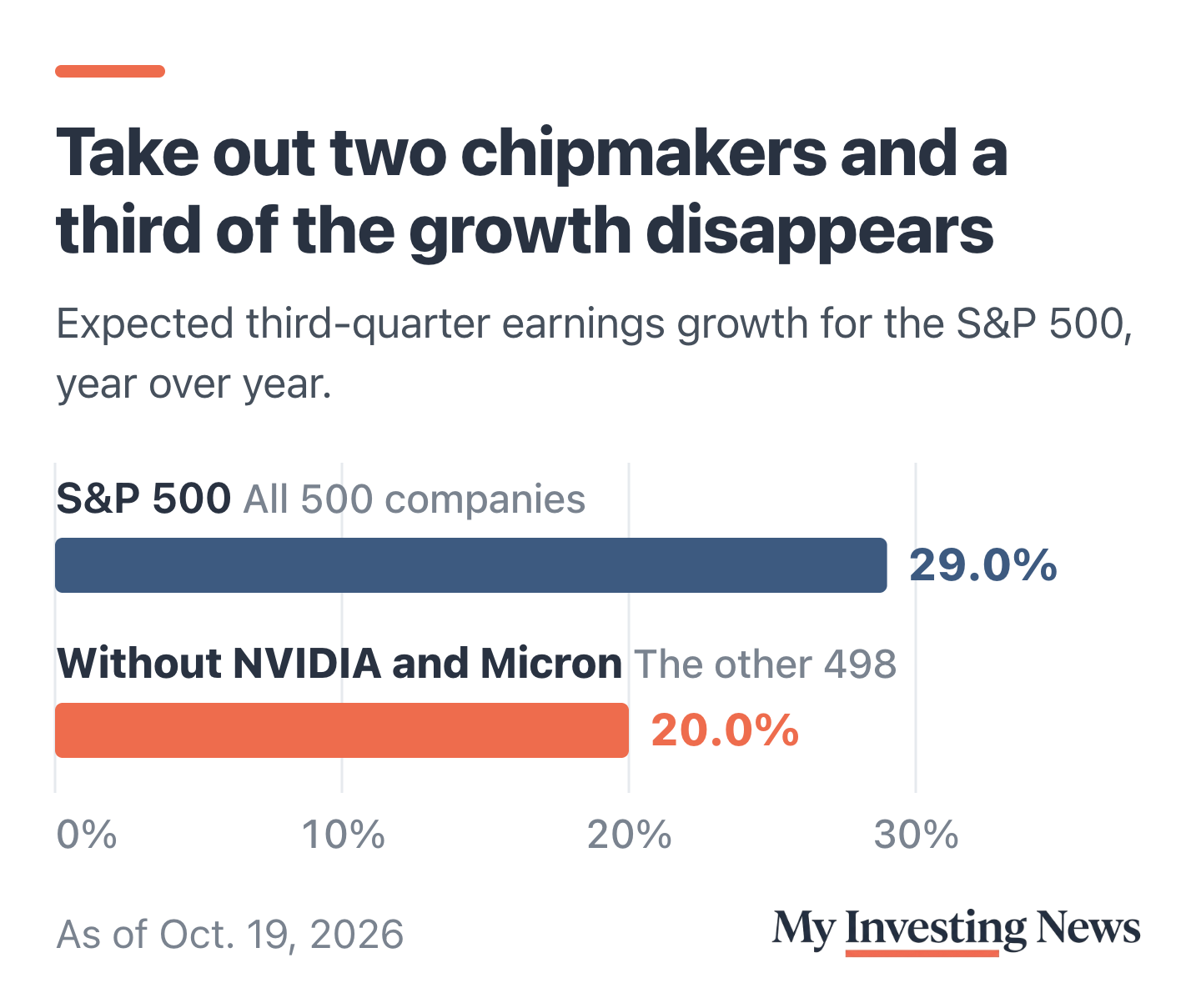
“There’s about a 30 to 35% estimate for Q3. A third of that is two companies, Nvidia and Micron, and about two thirds of that is the rest of the AI tech trade. So maybe 70-plus% of Q3 EPS growth is tied in some fashion to the AI tech trade.”
EPS, or earnings per share, is a company’s profit divided by its shares outstanding. Both companies he named are growing fast. NVIDIANVDA grew fiscal second-quarter revenue 105.8% to $96.22 billion. Micron TechnologyMU grew fiscal fourth-quarter revenue 379.3% to $54.23 billion.
CoreWeave’s Credit Stress Tests AI Financing
Credit default swaps work like insurance contracts that pay out if a borrower defaults, and when they get more expensive, it means investors are more worried about a default. On Oct. 15, CNBC reported that swaps on CoreWeaveCRWV had hit distress levels as investors soured on AI debt. Bloomberg reported that CoreWeave’s credit risk hit a record, with the swaps pricing in 60% odds of default. Reuters published an explainer on why these contracts are unnerving AI investors, and the CNBC segment linked the stress to wider questions about how fast data centers are being built.
CoreWeave’s second-quarter results show where the pressure comes from. Capex of $6.42 billion left free cash flow at negative $5.74 billion. Interest expense rose to $640 million from $267 million a year earlier, and management forecast third-quarter interest expense to $860 million to $940 million. Debt-to-equity, counting lease obligations, was about 10.3 at the end of June, up from 8.94 at the end of 2025, and the shares fell 25.2% in the week ended Oct. 16.
CoreWeave’s second quarter at a glance
Skepticism Could Keep AI From Becoming a Bubble
Thomas Martin appeared in the segment. The market commentator sees value in the doubt: “This correction, if you will, is healthy because this skepticism is keeping AI from actually truly reaching a bubble status. What you’ve got is questioning about how long and what the implications are, and therefore you get adjustments in valuation.”
Producer Costs Are Squeezing Margins
Boockvar also pointed to cost pressure that consumers don’t see: “PPI is running about 250 basis points now above CPI. So just because certain prices are not passing through to the consumer doesn’t mean that there aren’t heavy cost pressures that a lot of businesses are feeling.”
PPI, the producer price index, measures what businesses pay for goods and services. CPI, the consumer price index, measures what households pay. A basis point is one hundredth of a percentage point. September CPI rose 3.7% year over year. When a company’s input costs rise faster than the prices it can charge, its profit margins shrink.
Producer prices are outrunning consumer prices by more than in 96% of months since 2010
12-month change in producer prices minus 12-month change in consumer prices, in percentage points, every month since November 2010. The shaded bands hold the middle half and the middle 80% of all 190 readings.
Higher Rates Are Hurting Affordability
Veronica Clark, another market commentator in the segment, said: “Higher rates are not costless. You know, for certain parts of the economy that will slow things like housing sector and whatnot.” The 10-year Treasury yield stood at 5.10% on Oct. 15, down from a recent high of 5.31% on Oct. 5. Boockvar said he expects some short-term relief in long-term rates. The segment described affordability and the cost of living as the main theme in both Europe and the U.S.
An Economy Exposed to the AI Story
Clark added: “This does feel like an economy that’s just very exposed to that story, whether that’s the direct investment in building data centers and whatnot, or also consumption that has been resilient but resilient when income growth has been pretty soft. Where is that spending coming from? It’s probably coming from a wealth effect.” The wealth effect means people spend more when their investments go up.
What to Watch This Earnings Season
The key question is whether companies outside AI can grow earnings despite higher borrowing costs and stressed consumers. Cleveland-CliffsCLF reported adjusted EPS of $0.28, ahead of analysts’ estimates. Fifth ThirdFITB posted adjusted EPS of $1.13 against $1.09 expected. Packaging maker Crown Holdings narrowed its 2026 adjusted EPS guidance to $8.35 to $8.45 on Oct. 19, from the $8.30 to $8.50 range it set in July. Investors can also check how hard their portfolios and index funds lean on the AI trade.
This quarter’s growth story runs through AI, and that is exactly why the cracks at CoreWeave matter.
Peter Boockvar thinks 70% or more of third-quarter earnings growth is tied to the AI trade, with NVIDIA and Micron alone carrying about a third of it. That leaves the market leaning on one theme. The risks he and the segment point to are stress in AI financing, which shows up in CoreWeave’s credit swaps and rising interest bill, and producer costs running well ahead of consumer prices, which squeezes margins for everyone else.