Where we heard itCNBC, Squawk Box, Oct. 23, 2026. Speaker: Intelligent Alpha founder and CEO Doug Clinton.
AI stocks have slipped for a month, and Intelligent Alpha founder and CEO Doug Clinton sees a familiar pattern. Using the Invesco QQQ TrustQQQ as his gauge, he told CNBC’s Squawk Box on Oct. 23:
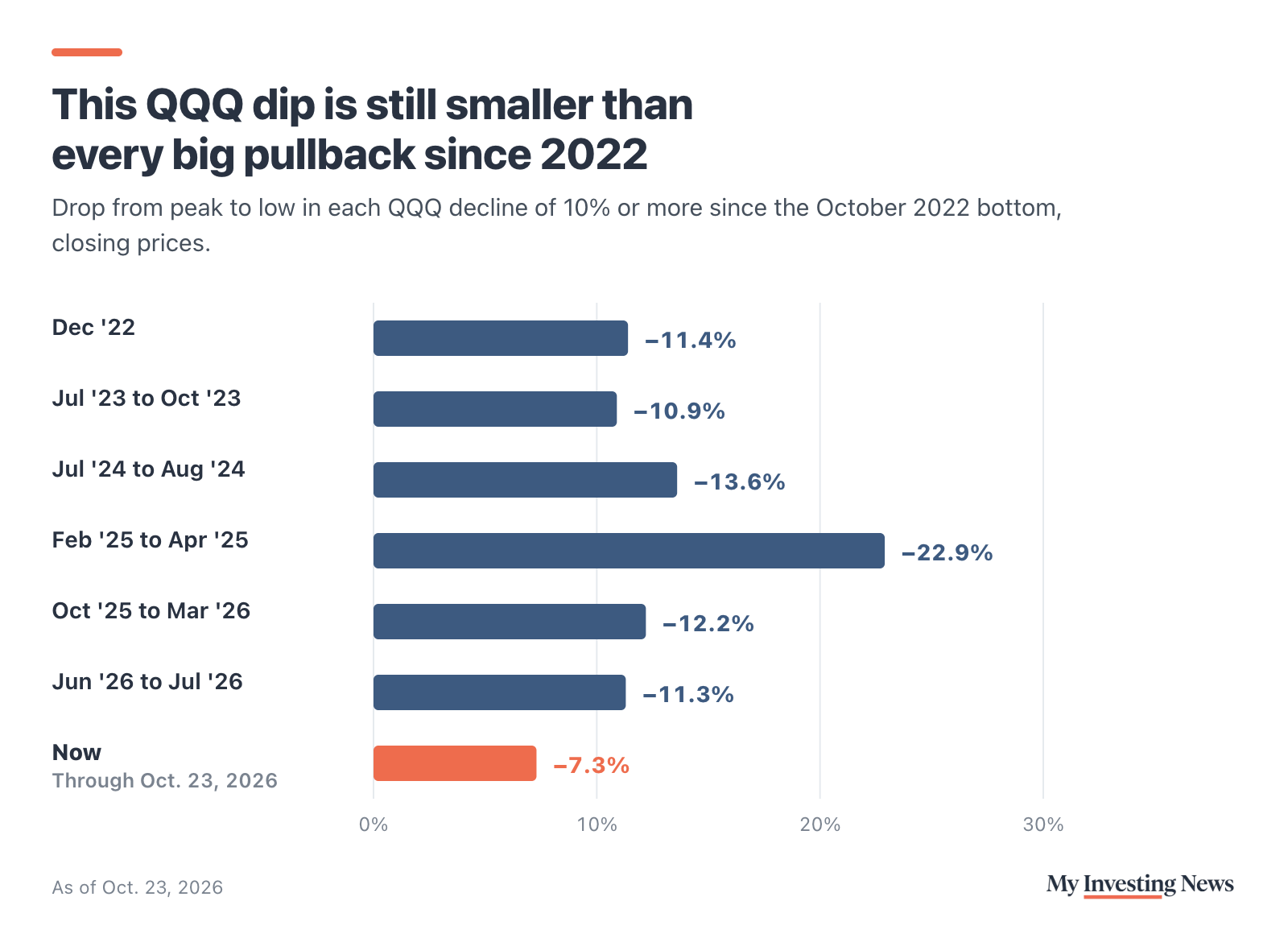
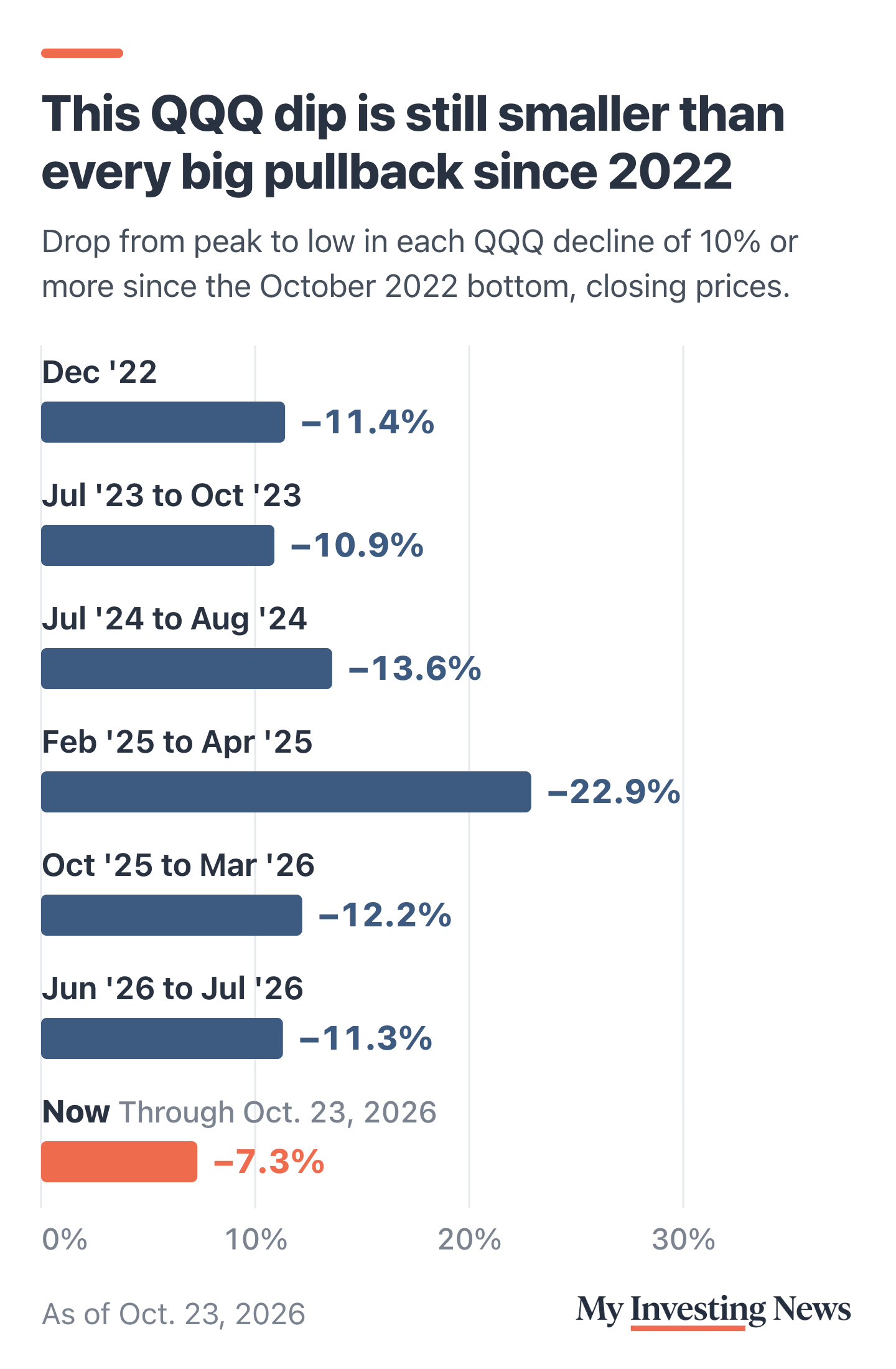
“If you kind of look at what has happened over the past few weeks, it feels a lot like a routine drawdown in a tech driven bull market. Right now on the QQQ, we’re down about 8% from the peak. And if you actually look back at the other five drawdowns we’ve had so far in this AI driven bull market back to 2022, on average, the QQQ in those corrections, it’s down. Call it 11 to 12%.”
A drawdown is the drop from a recent peak to a later low.
Clinton Says This Pullback Is Likely Near Its End
“I think that we are probably more likely closer to the end than the beginning. And I also would note we have a big piece of uncertainty that will come out of the markets with the election cycle. And so you put those things together. I think that things could get better for the AI trade in the near term.”
The QQQ closed Oct. 23 at $704.40, down 4.97% over the past month and up 14.67% year to date.
Two Buckets Clinton Is Holding: Chips and Agent Software
Clinton said:
“We have stayed long, Joe, in our portfolio. We continue to own a batch of. I think of it in two buckets. One is infrastructure names that we think will continue to benefit. NVIDIA is the most obvious one there, but I think that the Broadcoms, the Marvells of the world can continue to be good stocks as well. And then on the other side, I think there are selective software names that do support, especially what we’re seeing right now with this agent revolution.”
AI agents are software that acts on a user’s behalf, like making a purchase.
NVIDIANVDA increased fiscal second-quarter revenue 105.8% to $96.22 billion. BroadcomAVGO expects $21.7 billion in AI semiconductor revenue this quarter. Marvell TechnologyMRVL now gets 79% of revenue from data centers. Over the month through the Oct. 23 close, NVIDIA fell 6.45%, Broadcom 9.38% and Marvell 12.41%.
Marvell’s CEO has called a $30 billion custom chip target “not a stretch.”
Clinton’s chip bucket by the numbers
AI Money Is Moving to the Application Layer
“I actually think this summer, and really just the last couple of months, we’re sort of shifting now maybe into the application layer story for the AI trade. It’s been about the NVIDIAs of the world, the Broadcoms of the world, and how much demand there is for their chips. We’re starting to see some very rapid adoption now, millions of users in just a month for these platforms. I think that the average consumer is now starting to see the magic of AI.”
The application layer is the software people use directly, built on top of chips and data centers.
Clinton’s Muse Math for Meta
His example is Meta PlatformsMETA and its Muse AI agent app:
“For Muse, you’ve got a product that 10 million people have tried, maybe a few million people now use regularly. But I think the destination of Muse is to have more than a billion users. And if that happens, I think that they could monetize Muse on a per user basis. Many times the level that they monetize their users.”
Meta says Muse has over 10M users, with shopping a top activity, TechCrunch reported. Business Insider reported Mark Zuckerberg said many people have set up a Muse AI agent. Per the CNBC segment, Meta’s social business makes about $70 per user per year.
That math supports Clinton’s case that Meta’s heavy spending could pay off. Third-quarter capital expenditures reached $34.9 billion, per Meta’s earnings release, and Zuckerberg told analysts Meta expects to improve Muse’s cost efficiency “by more than 10x in the next year.”
What Investors Can Take From Clinton’s View
Pullbacks are routine in bull markets, and Clinton’s figures put this one inside the AI era’s historical range. His larger point: the next phase of AI may reward companies that turn users into revenue.
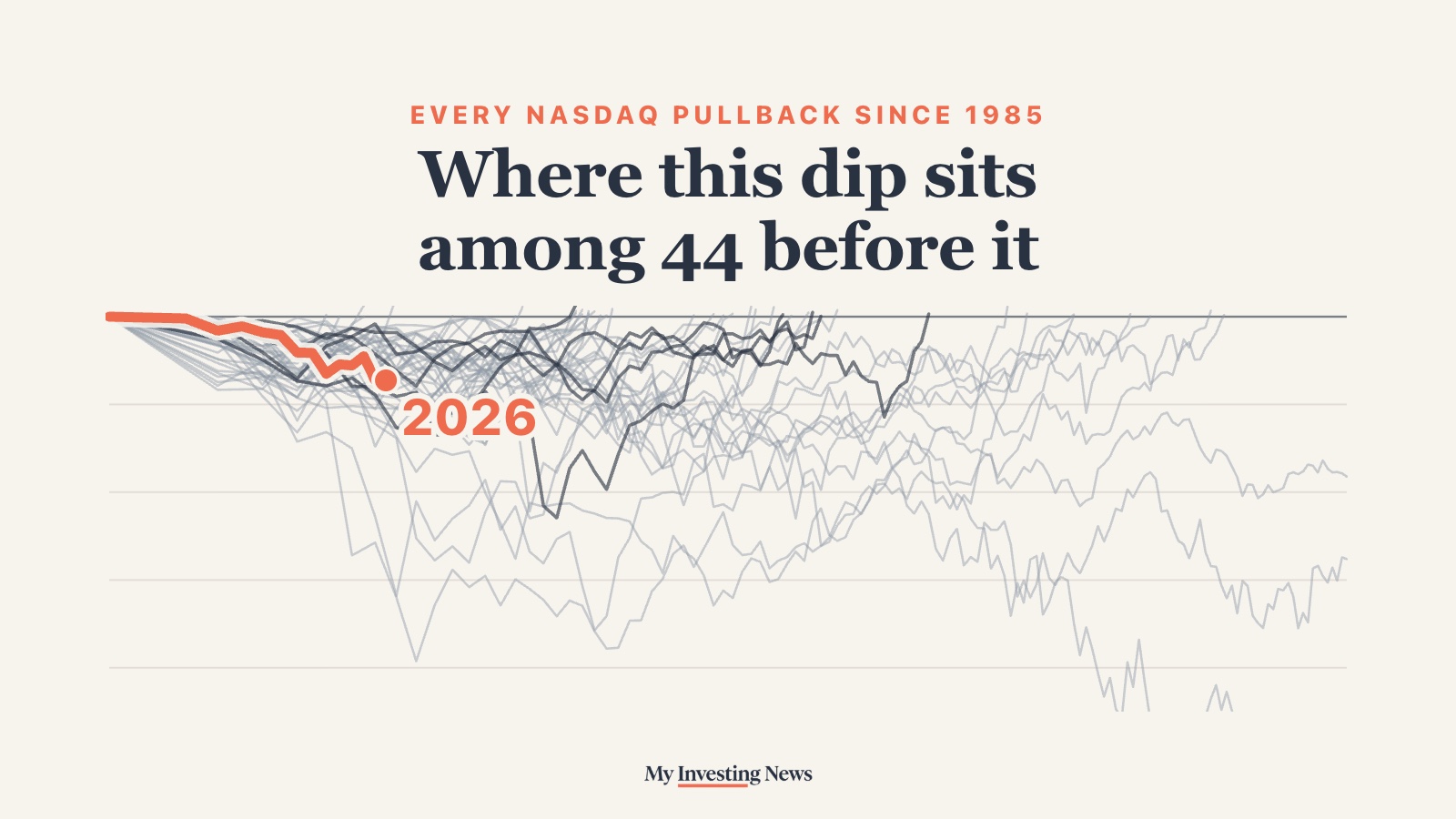
Half the Nasdaq pullbacks that hit 7% were over by 12%. Eight of 44 became bear markets.
Every Nasdaq-100 decline of 7% or more from a record close since 1985, drawn from the record until the index got back to it. The five since 2023 are dark. This one is coral.
Clinton’s case is that the AI trade is developing, with the focus extending from chips to the apps consumers use.
Clinton sees the AI selloff as a routine pullback that is probably closer to its end than its beginning, and he is still holding chip makers and selected agent software names. He expects the next leg of the trade to come from apps like Meta’s Muse that can turn users into revenue. The risk is that Meta is spending record sums now on a payoff that depends on an app only a few million people use regularly.