Where we heard itCNBC, Options Action, segment on semiconductor ETF options. Aired Oct. 23, 2026. Speaker: CNBC’s Oliver Renick.
Chip stocks extended their slide this week, and the options market is showing the stress. Semiconductor stocks broke down on Oct. 22 to their lowest close since late July, according to a CNBC Options Action segment that aired on Oct. 23. “Some lingering fear in the tech trade. It seems like lots of put activity in the semiconductor ETFs,” CNBC’s Oliver Renick said during the segment.
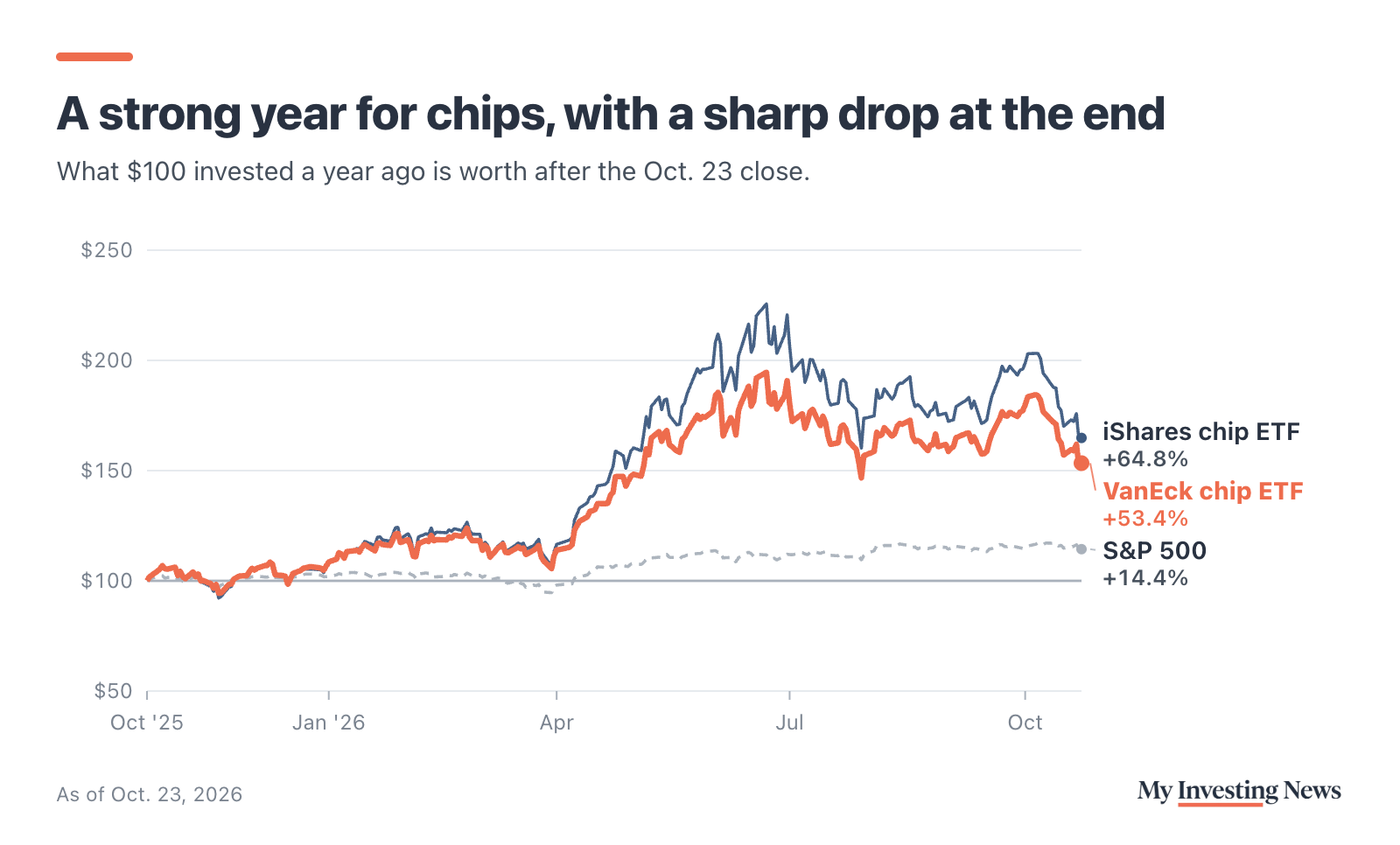
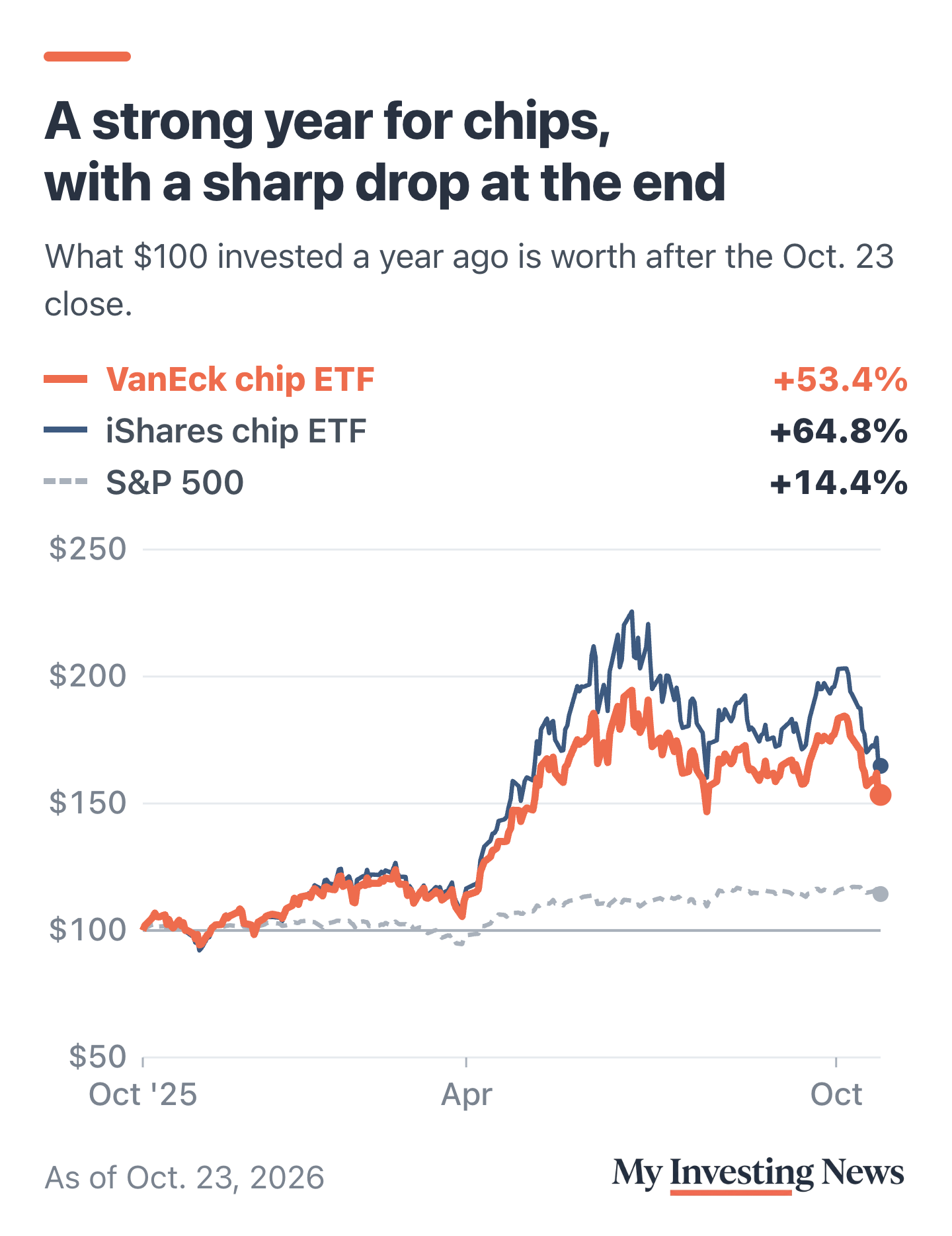
The VanEck Semiconductor ETFSMH is the most widely used proxy for the chip sector. It closed at $527.20 on Oct. 23, down 12.3% over the past month.
Options Basics Every Chip Investor Should Know
A put gives its buyer the right to sell shares at a set price, so it gains value when the stock falls. A call gives the right to buy at a set price and gains value when the stock rises. That set price is the strike. The premium is the price paid for the option, and the buyer loses it entirely if the trade fails to work out by expiration.
Put Buyers Took Control of SMH Trading
Renick said the morning’s flow leaned heavily bearish: “The top seven contracts traded by volume in SMH this morning were puts, and a little over 75% of the premium traded there looked like it was initiated by put buyers.”
The wider chain backs that up. SMH’s put-call ratio across all expirations stood at 2.78 on Friday, meaning puts outnumbered calls. Contracts expiring Oct. 28 carried a ratio of 4.07.
The chip slide in four numbers
One $4 Million Position Targets More Downside
A single trade stood out. “There was one big trade in particular at the 510 strike expiring next Wednesday, as someone opened a new position of more than 8,700 contracts worth just over $4 million. At $465 a contract, they need SMH to drop another 4.3% through next week,” Renick said.
In plain terms, the buyer paid about $465 per contract for the right to sell SMH at $510. The position profits at expiration only if SMH falls roughly 4.3% or more from where it traded. A put can also serve as a hedge that protects a large portfolio of chip stocks, so the trader’s reason is unknown. It could be insurance as easily as a directional view.
Leveraged Traders Are Positioning for a Bounce
The picture was more mixed in the Direxion Daily Semiconductor Bull 3X ETFSOXL. “The most popular contract to buy is the 80 strike put expiring today. But right behind it by volume is the 85 and 90 strike calls looking for a turnaround into the weekend,” Renick said.
SOXL seeks three times the daily move of a semiconductor index, according to the fund’s filings with the SEC. Because it resets every day, its returns over weeks can vary sharply from three times the index. SOXL also follows a different benchmark from SMH, the ICE Semiconductor Index, which fell about 15.5% over the month. Tripling that slide explains most of SOXL’s 42.9% monthly drop versus SMH’s 12.3%.
Even so, SOXL traded about 10 times as much volume as its bearish counterpart, per the CNBC segment, and its full-chain put-call ratio sat at 0.78, meaning calls outnumbered puts. MarketWatch reported Friday that investors poured a record sum into a leveraged semiconductor ETF last week, with poor results so far.
What This Flow Means for Everyday Investors
Options activity measures sentiment, and sentiment changes fast. Heavy put buying can signal bearish conviction, yet much of it often comes from funds hedging long stock holdings they plan to keep. Earlier this month, JPMorgan’s Jacob Manoukian called semiconductor stocks cheap against the market and their own average multiples. Call buying in a leveraged fund after a steep drop shows some traders expect a rebound, though short-dated contracts can expire worthless within days (if you do play around here, keep it small and rule-bound).
For long-term holders of chip stocks, the useful signal is the split: the unleveraged benchmark shows defensive positioning, while the leveraged fund attracts traders hunting for a bounce. Next week’s expirations, including the Wednesday contracts tied to the large SMH put, will show which group read the move correctly.
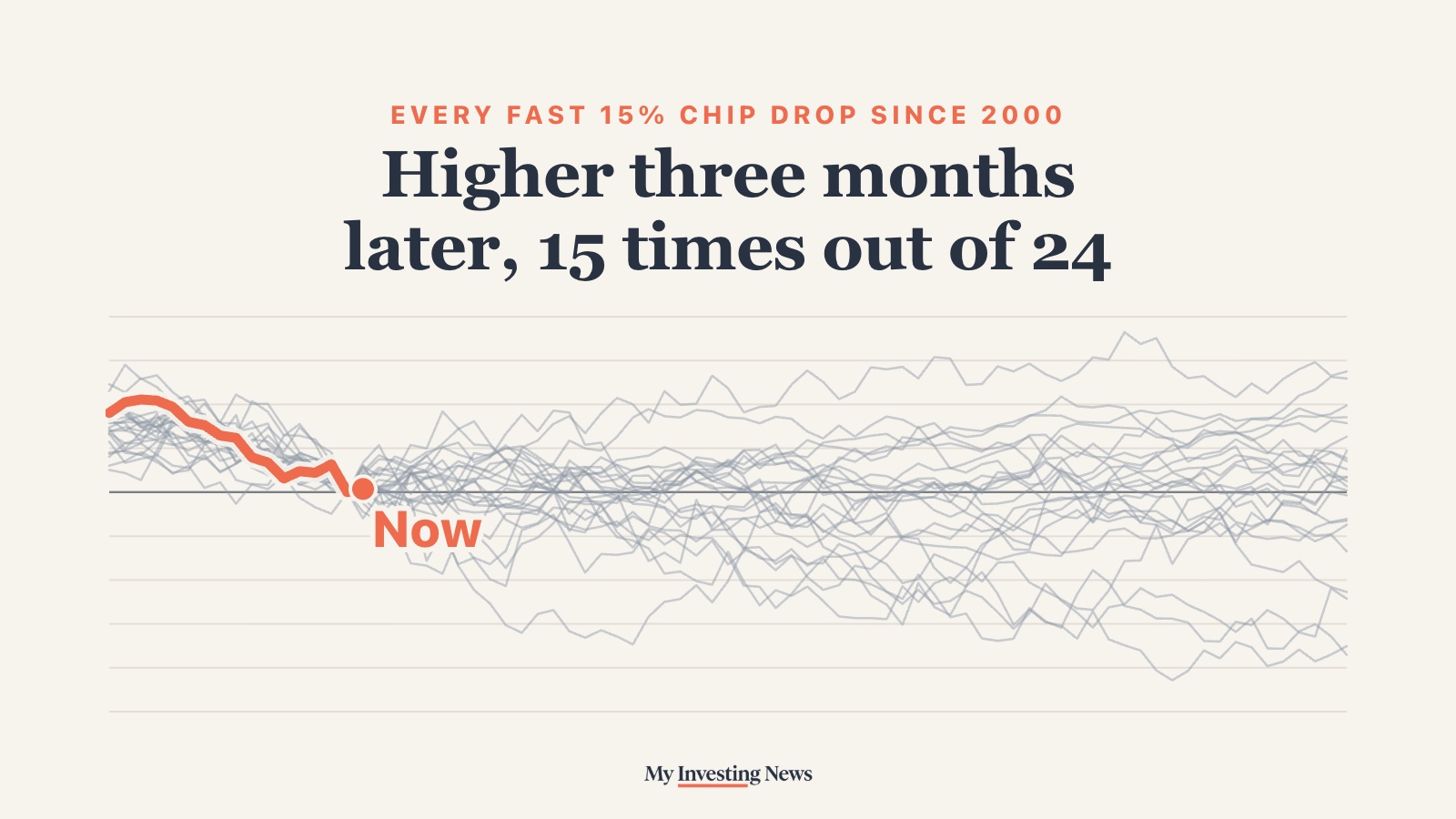
History gives a rough guide to what comes after a drop this fast. Since 2000, SMH had fallen 15% or more from its high of the past month 24 times before this one. Three months after each drop crossed that line, the fund was higher 15 times and lower nine, with a median gain of 3%. The worst outcomes came in 2002 and 2008, when it fell more than 35% further.
After 24 fast drops since 2000, chip stocks were higher three months later 15 times
The VanEck Semiconductor ETF after every drop of 15% or more from its high of the past month, lined up at the day it crossed 15% (0%). Gray lines are the 24 past drops. This one, which crossed on Oct. 22, is coral.
Fear is running high in chips, though Doug Clinton sees the AI selloff as a routine pullback. The options market works like a mood ring, showing how traders feel today, and that mood can change by next week.
Renick saw lingering fear in chip ETFs: put buyers drove SMH trading, and one trader paid about $4 million for puts that need another 4.3% drop to pay off at expiration. Traders in the 3x SOXL fund were split, with some betting on a quick bounce. The risk on both sides is speed, since short-dated options can expire worthless within days and leveraged funds can fall far faster than the chip index.