Where we heard itAll-In podcast, “CoreWeave Crash, AI Trade Cracks, Anthropic IPO Red Flags, Bill Gates Doomer.” Released Oct. 17, 2026. Speakers: David Sacks, Chamath Palihapitiya, Jason Calacanis and guest Ben Horowitz. Listen to the episode
CoreWeaveCRWV closed Friday, October 16 at $61.39. The stock fell 11.91% in that session alone. Through the same close, shares were down 25.21% over one week and 56.69% over one year. On the latest All-In podcast episode, Jason Calacanis said CoreWeave, Nebius GroupNBIS and IRENIREN each fell roughly 20% in the neocloud selloff.
The panel disagreed on what the drop means. Chamath Palihapitiya thinks the credit market is pricing a real chance of default. David Sacks called it volatility: “I don’t think that something fundamental has changed.”
How CoreWeave’s Debt Actually Works
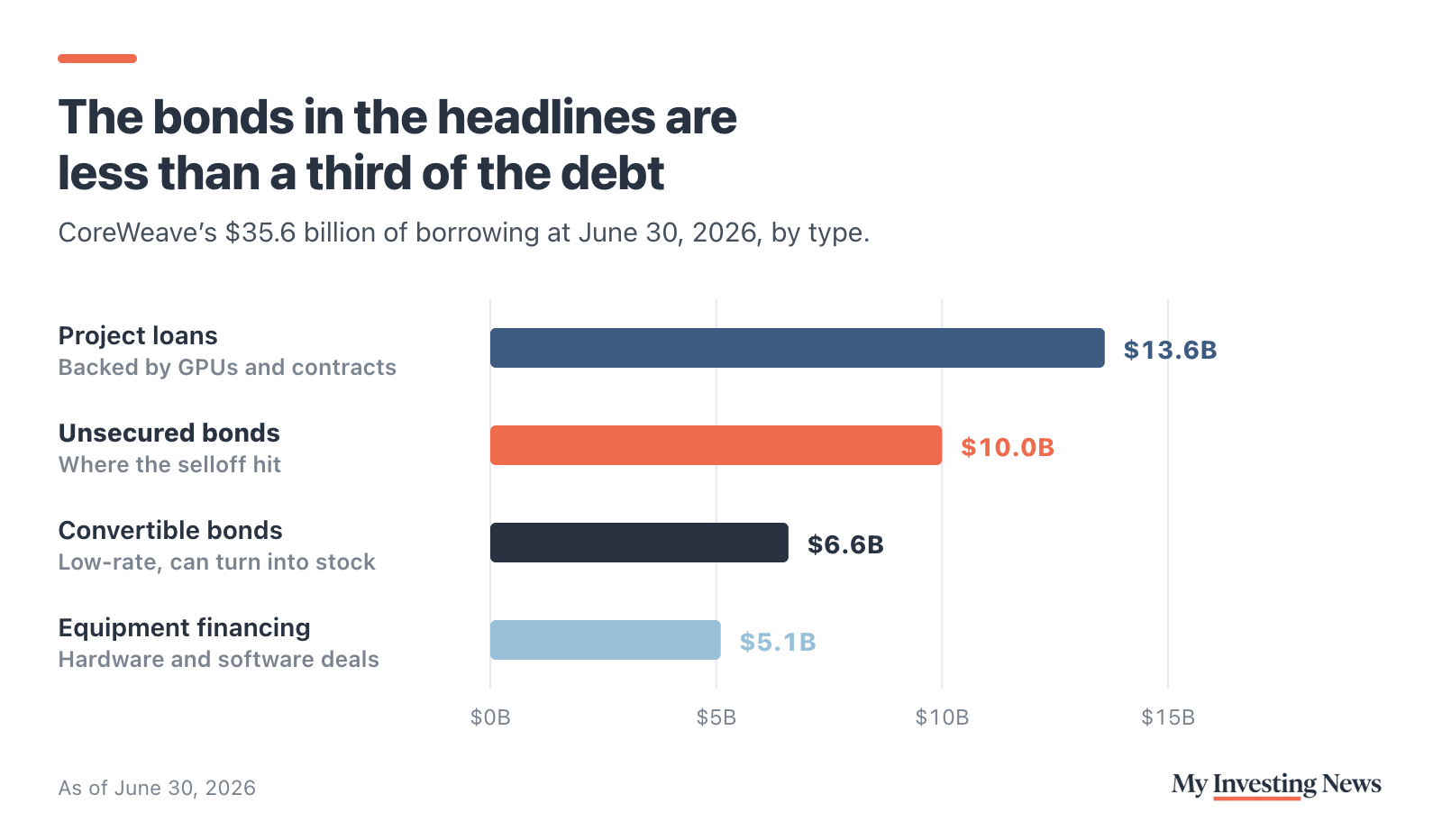
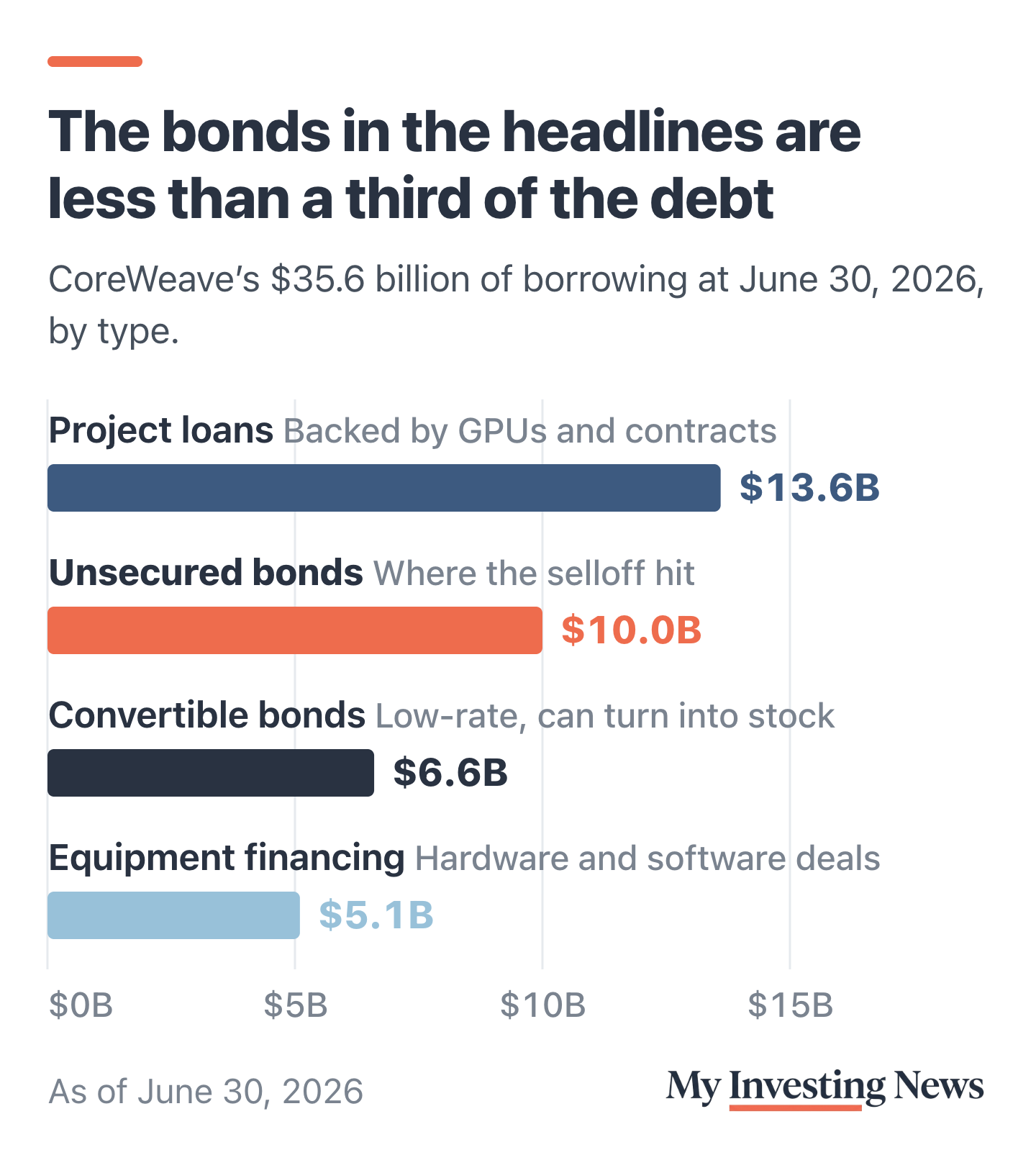
CoreWeave borrows in two ways. The first is unsecured corporate bonds, which are backed only by the company’s general promise to pay. The second is project-level financing, which Sacks calls a “box.” In his description, each data center deal is “backed by the credit of the tenant who’s entered into a five year commitment,” and “the lender is secured by those GPUs.”
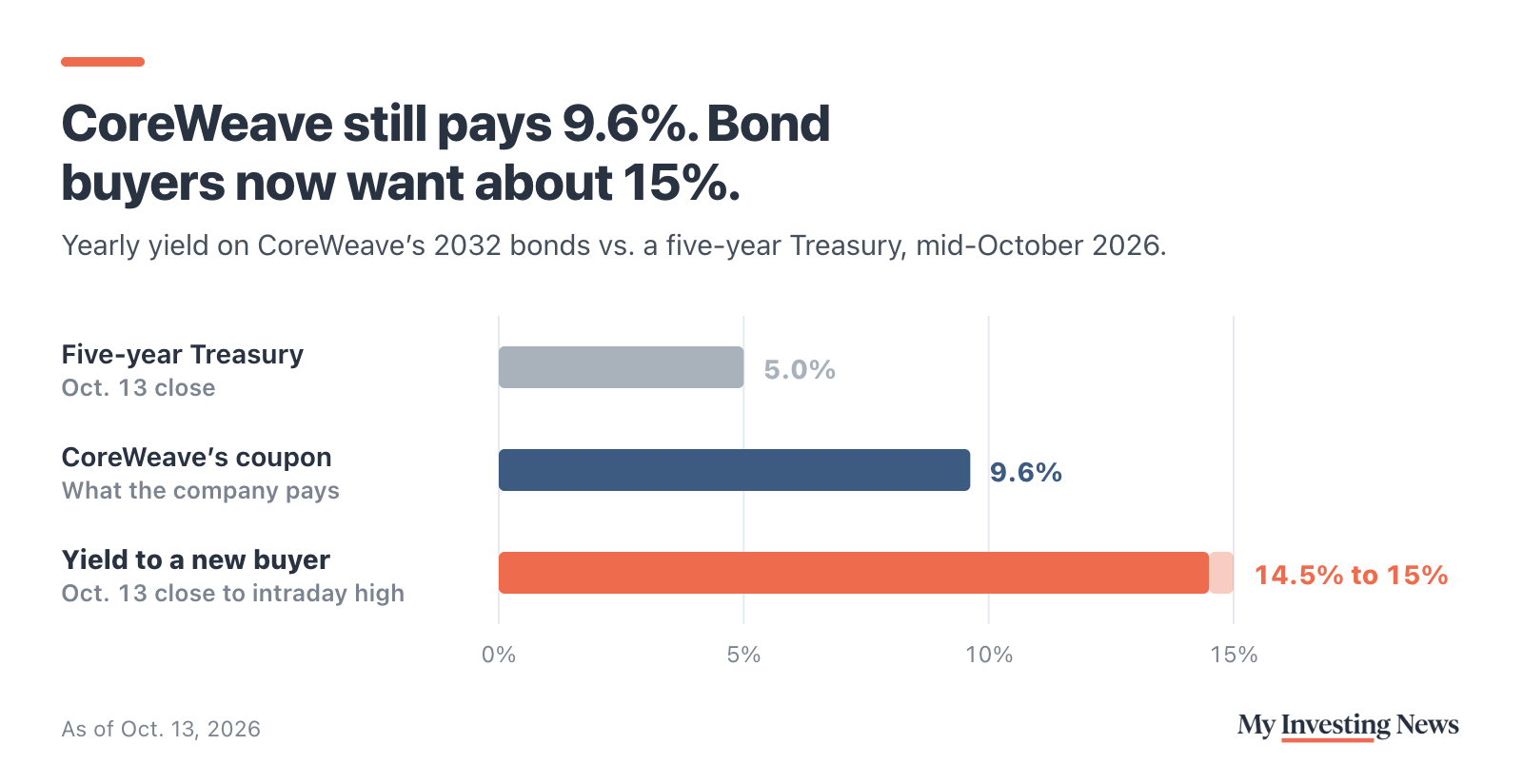
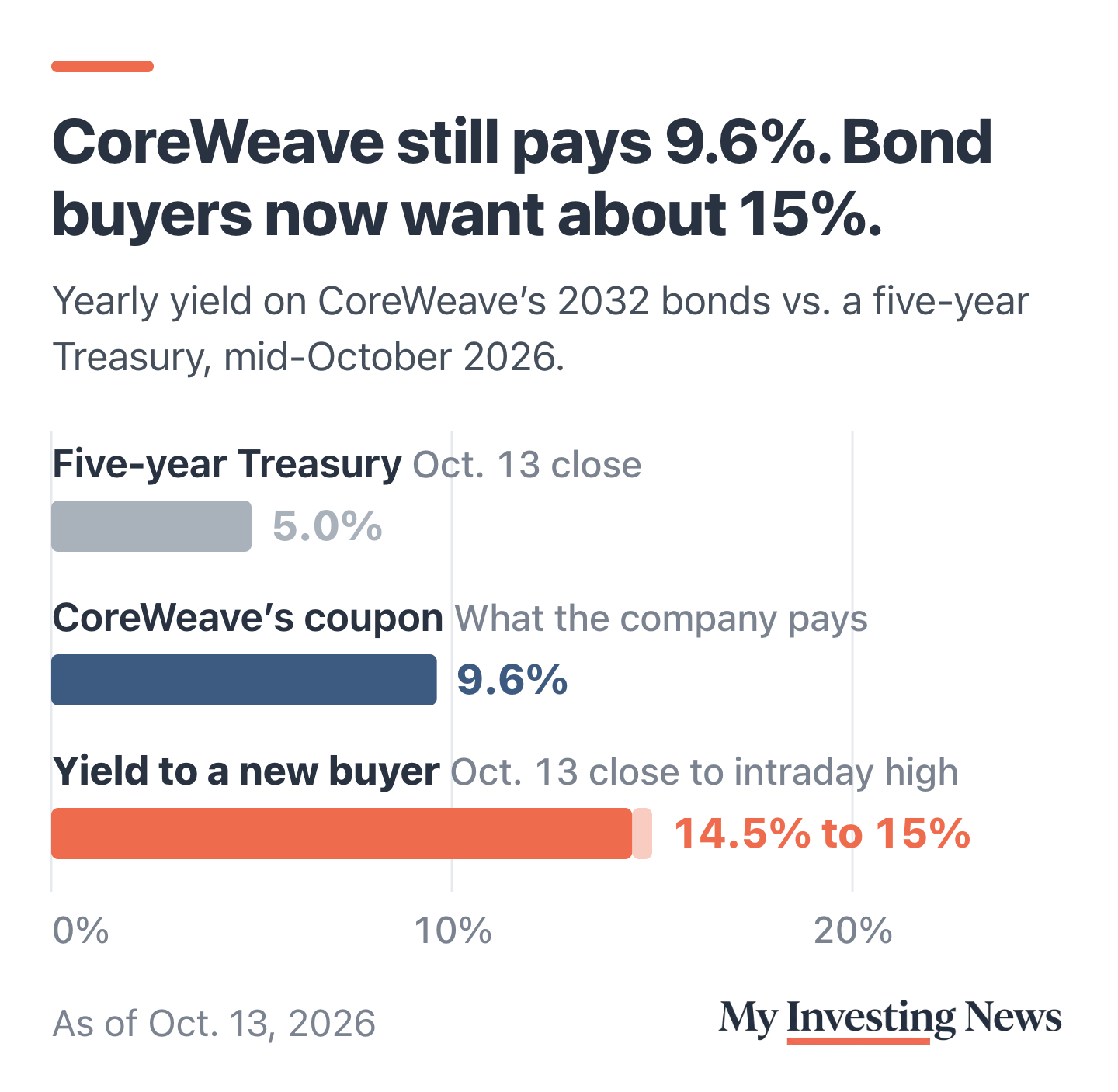
The selloff hit the unsecured bonds. Sacks said on the All-In Podcast that the market had marked those bonds down by 20%, which he said put them in distressed territory. Per the All-In Podcast, that markdown drove the implied yield, or what a new buyer earns at today’s lower price, to around 15%. CoreWeave still pays the original 9.6% coupon cited on the All-In Podcast. Sacks agreed the higher yield could raise the cost of future unsecured debt. He thinks new projects get funded through asset-backed financing instead.
A credit default swap is a contract that pays the buyer if a borrower defaults, so its price shows how likely traders think a default is. Earlier this month, SpaceX’s credit default swap spreads hit a record high after its plan to borrow $40 billion for Nvidia chips became known.
Chamath’s Bear Case: A Five-Year Coin Flip
Palihapitiya said credit default swaps price about a 55% chance that CoreWeave defaults within five years. “When your expected value is a coin flip in a five year window, that’s like Scarytown,” he said. The panel put CoreWeave’s debt at roughly $35 billion. The All-In panel also said the company needs to raise roughly another $35 billion to finance its remaining contracts.
Palihapitiya said CoreWeave is plus or minus about $5 billion away from breakeven. He called variable-rate financing priced off the risk-free rate the company’s Achilles heel, because CoreWeave’s borrowing costs go up whenever that rate rises. His suggested fix is to cancel some contracts and sell that capacity at spot prices.
Bloomberg’s Ed Ludlow cited a larger debt figure. He said CoreWeave has “$52 billion of debt on its balance sheet” and that its interest bill in the latest quarter was larger than its operating income. Interest expense reached $640M in Q2 2026, up from $267M a year earlier. Q3 guidance calls for $860 million to $940 million.
CoreWeave’s debt load at a glance
Bull Case: Demand Still Outruns Supply
Ben Horowitz compared the situation to Loudcloud’s bandwidth collapse, the dot-com example bulls have to answer. Sacks answered with demand, saying “everyone is saying that they are compute constrained,” the biggest model companies included. He added that older A100 and H100 chips “are still renting at premium prices.” That shows GPUs stay useful for inference longer than expected. His key metric: “CoreWeave says its payback period is 2.5 years on a 5-year deal. As long as payback periods are really short, I don’t see how these companies can lose.” Venture investor Eric Hippeau puts the useful life of AI chips at roughly five to seven years.
The reported results back up the demand story. According to the August 11 earnings release, Q2 2026 revenue reached $2.58B, up 112.3% year over year, and adjusted EBITDA came in at $1,510M. Backlog stood at about $104B, and the company added more than $25B in new commitments early in Q3. The GAAP net loss was still $626M.
Is Sacks Right? Follow the Bonds
Sacks has the better case on the business. Revenue, backlog and pricing for older GPUs all point to firm demand. Palihapitiya has the better case on the balance sheet, because CoreWeave needs open capital markets while 2026 capex runs $35 billion to $39 billion. The box structure makes a full bankruptcy less likely, since each project comes with its own collateral and tenant credit. Shareholders still carry the risk of dilution and higher borrowing costs.
The signal to watch is whether the unsecured bonds climb back from below 80 cents on the dollar. A recovery would support Sacks’s view that this is just volatility. Further weakness, or trouble closing the remaining financing, would point toward Palihapitiya’s coin flip.
Sacks sees the bond selloff as volatility: demand for computing power is still strong, and its project loans are backed by GPUs and long-term customer contracts. The risk is the balance sheet. CoreWeave owes $35.6 billion, expects its quarterly interest bill to approach $900 million, and needs open credit markets to fund $35 billion to $39 billion of spending this year.