Where we heard itCNBC, Squawk on the Street, the opening bell segment, Oct. 27, 2026. Jim Cramer and co-anchor Carl Quintanilla on Coca-Cola’s third quarter. Watch the clip
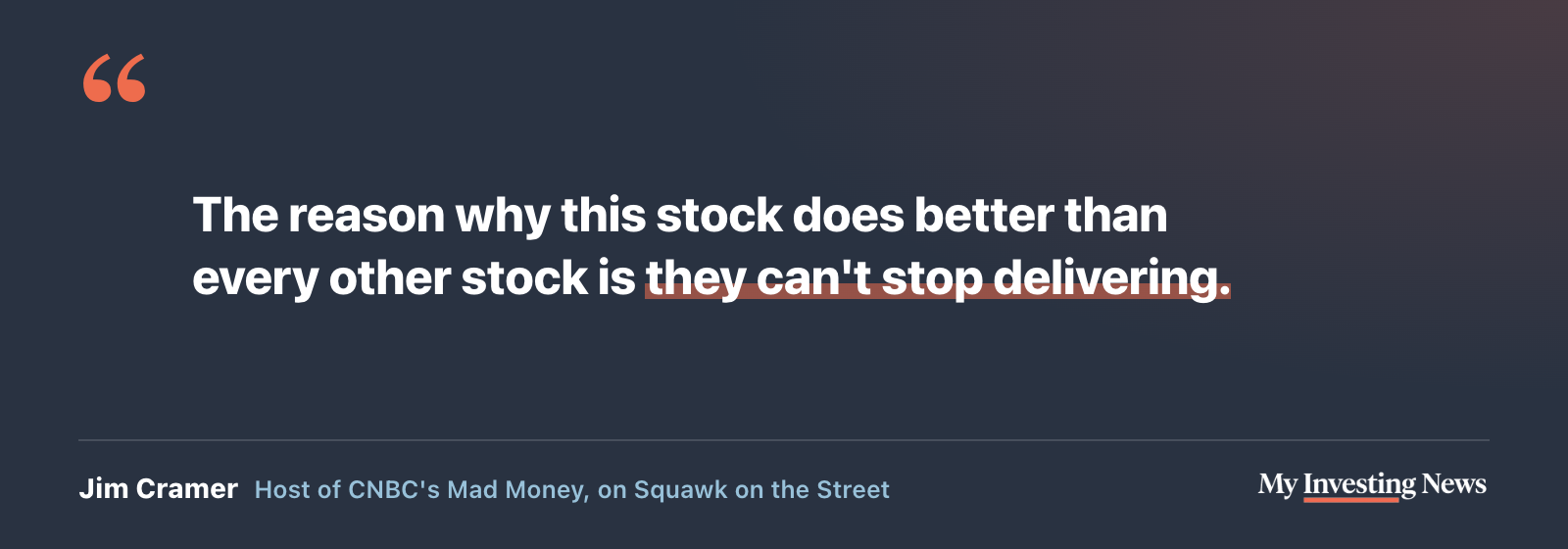
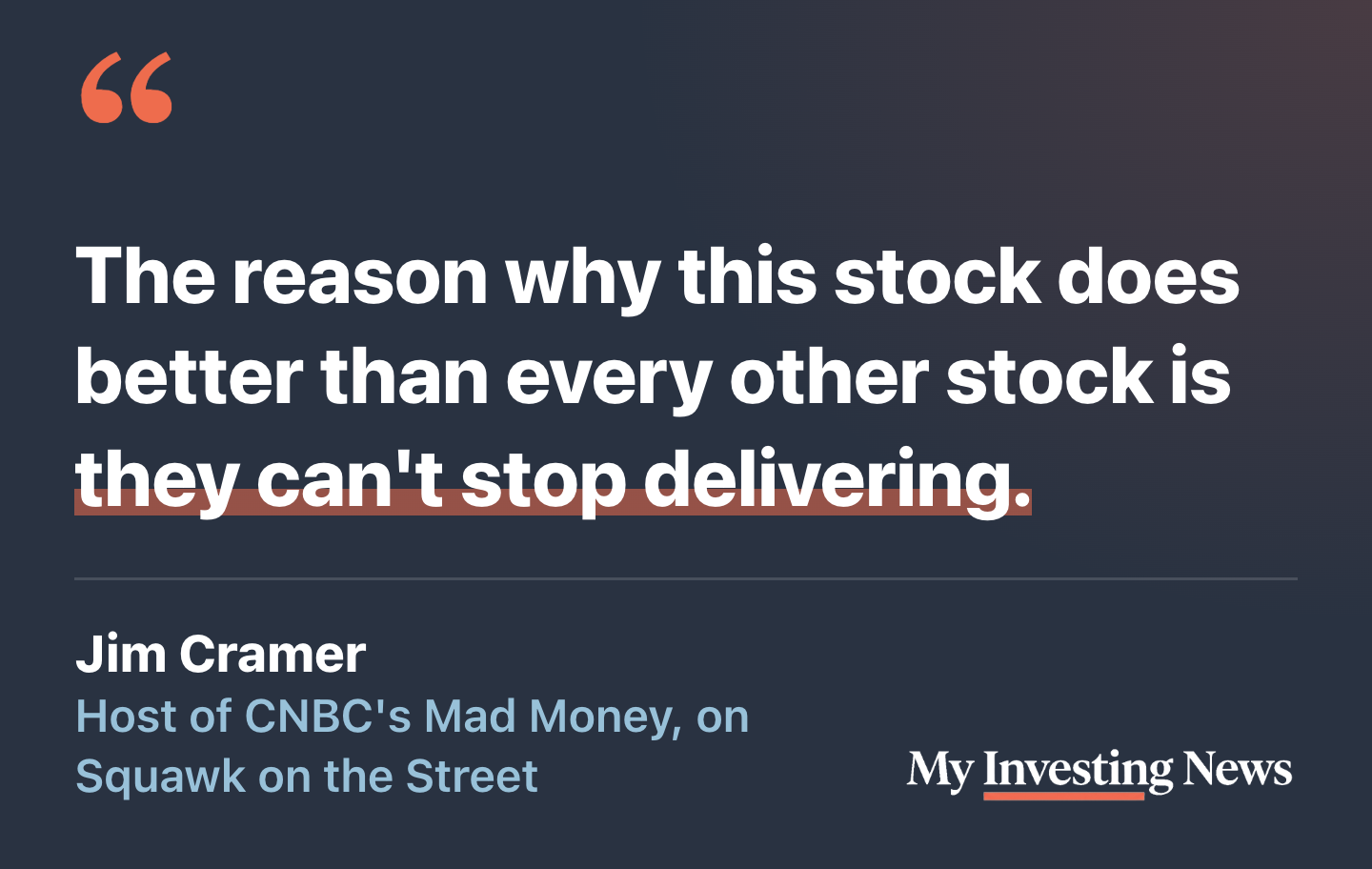
Coca-ColaKO released its third-quarter report before the open on Tuesday, Oct. 27, and the stock got a rave on CNBC’s Squawk on the Street minutes before the opening bell. Jim Cramer called Fairlife, Coke’s protein milk brand, “a great invention” and said of Coke’s leaders, “They are not hostage to the U.S.” Then he summed up the case: “The reason why this stock does better than every other stock is they can’t stop delivering. The numbers are great.” Co-anchor Carl Quintanilla put Coke’s gain at “30% so far for the year.”
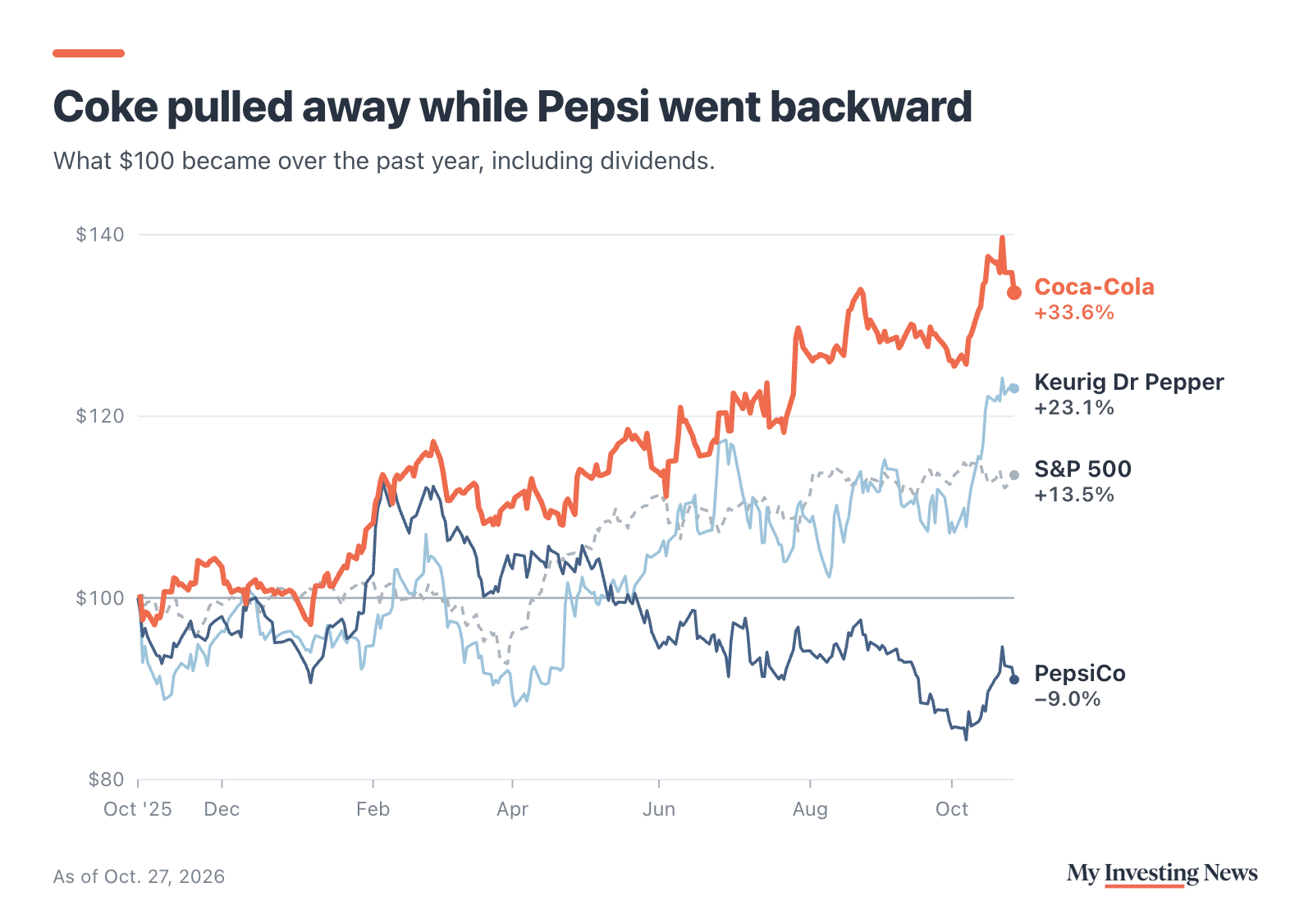
Quintanilla had it right. Coca-Cola shares are up 30.4% this year through the Oct. 27 close, or 33.0% including dividends. PepsiCoPEP shares are down 7.0%, or 4.2% with dividends. Over five years, Coke has returned 90.1% including dividends, while PepsiCo has lost 2.2%.
Coke’s Raise Was Built Outside America
Comparable earnings came in at 91 cents a share, against the 88 cents analysts surveyed by LSEG expected, and revenue rose 7% to $13.38 billion, according to the company’s release. Global unit case volume rose 5%, led by India, China, Mexico and Brazil. Latin America revenue grew 25%. North America revenue grew just 3%, and volume there was even. On the earnings call, management pointed to the timing of the July 4 holiday, temporary problems in some finished-goods businesses and a tough comparison with strong prior-year sales of premium brands such as Topo Chico.
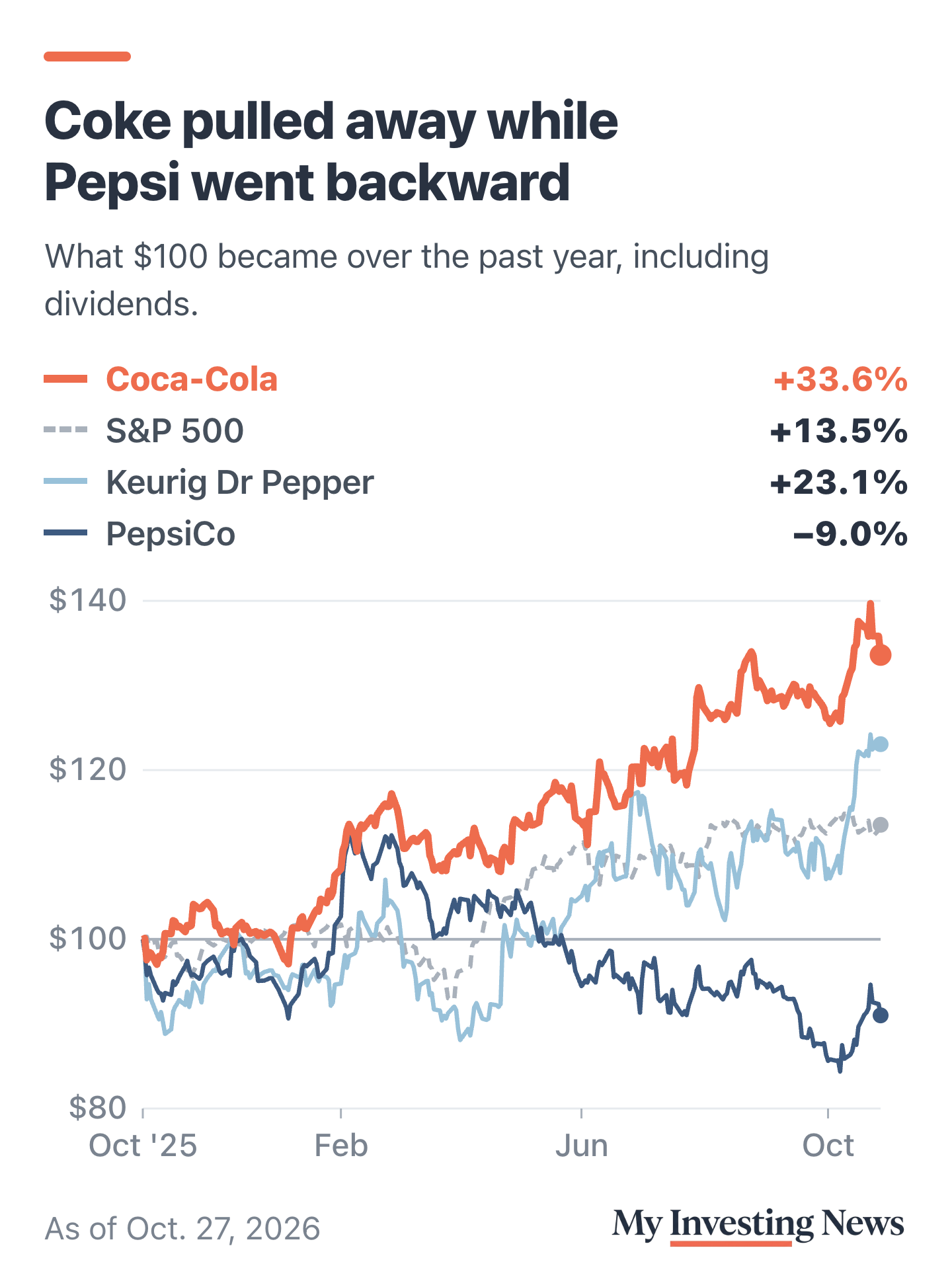
That makes the “not hostage” line accurate. Coke’s home market stalled and the global system made up the difference. Full-year guidance now calls for comparable EPS growth of at least 11%, up from 9% to 10%, and free cash flow of at least $13.0 billion, up from about $12.4 billion. Chief Executive Henrique Braun said, “Our results this quarter demonstrate our system’s sustained momentum, giving us confidence in our updated full year guidance.”
Coca-Cola’s third quarter
Even so, the stock ended the session down 1.6% at $91.18. Chief Financial Officer John Murphy told CNBC that wherever shoppers are on the income scale, “you’re looking for value,” a strain that shows up in how many Americans are spending more than they earn.
Pepsi Is Losing the Cola War at Home
PepsiCo also beat estimates when it reported on Oct. 8, posting $2.34 in core EPS, but it cut its core EPS growth forecast to 2.5% to 3.5%, from the low end of 5% to 7%. Core constant-currency operating profit at its North American foods unit dropped 12%. On the earnings call, Chief Executive Ramon Laguarta was frank: “We are not competing well in soft drinks.” Chief Financial Officer Steve Schmitt added, “It’s the margin piece that’s driving the guide down in EPS.”
A week later, KFC said it would move its U.S. restaurants from Pepsi to Coca-Cola drinks, ending a run that dates to PepsiCo’s purchase of the chain in 1986. KFC expects to pour Coke in all of its U.S. restaurants by the end of the first quarter of 2027. Back in 1986, KFC was Coke’s second-largest fountain account, behind only McDonald’s. PepsiCo did keep KFC’s sister chain Taco Bell, renewing that contract on Oct. 22.
Fifty Years of the Cola War, Scored
Cramer has his own explanation for the split. On Oct. 2, he told Mad Money viewers: “Live by junk food, die by junk food. PepsiCo crushed Coca-Cola back in the days when the Frito-Lay snacks business was much stronger than carbonated water or soda.” Now, he said, Frito-Lay is in the crosshairs of GLP-1 weight-loss drugs and health-conscious younger consumers.
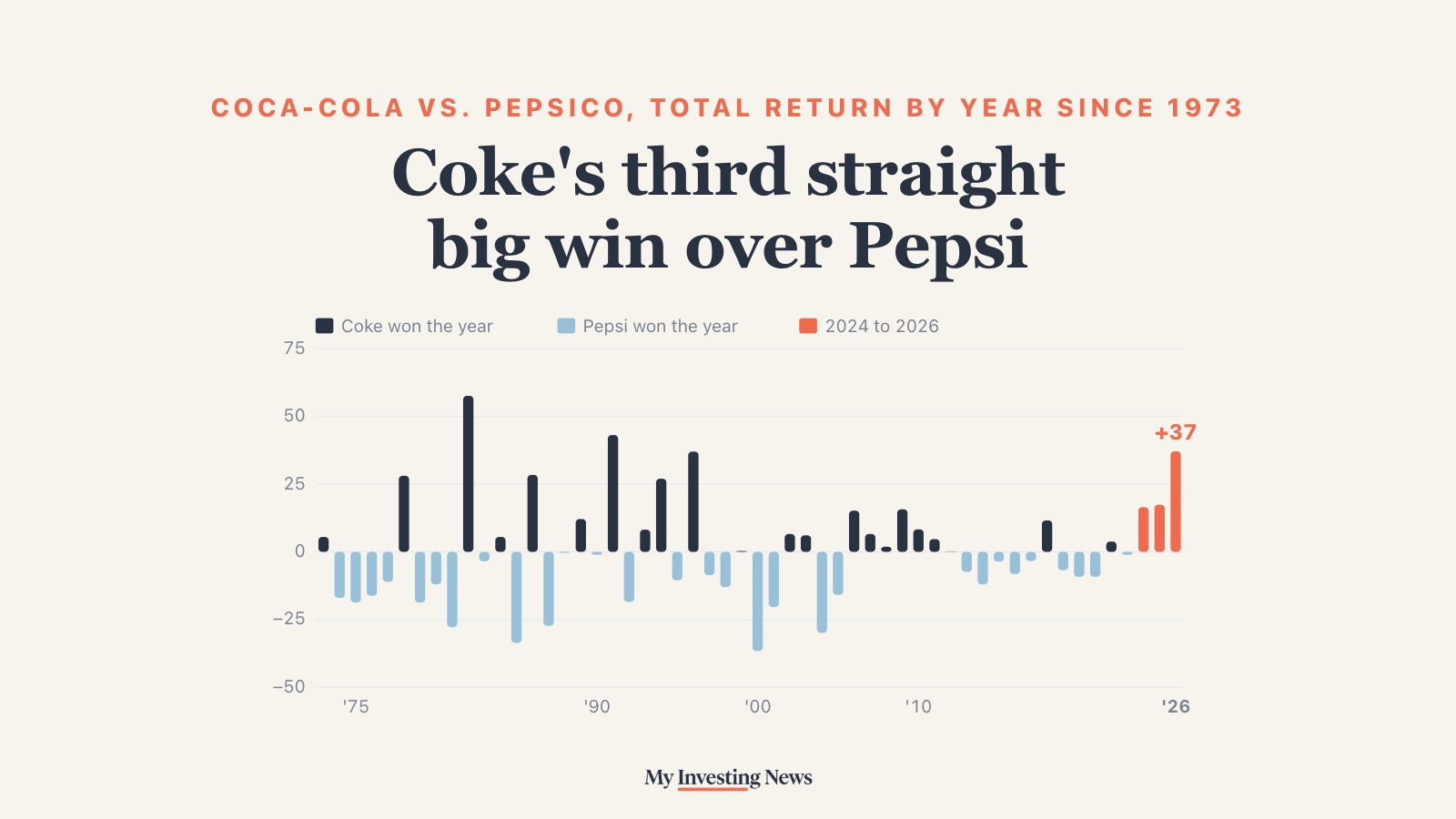
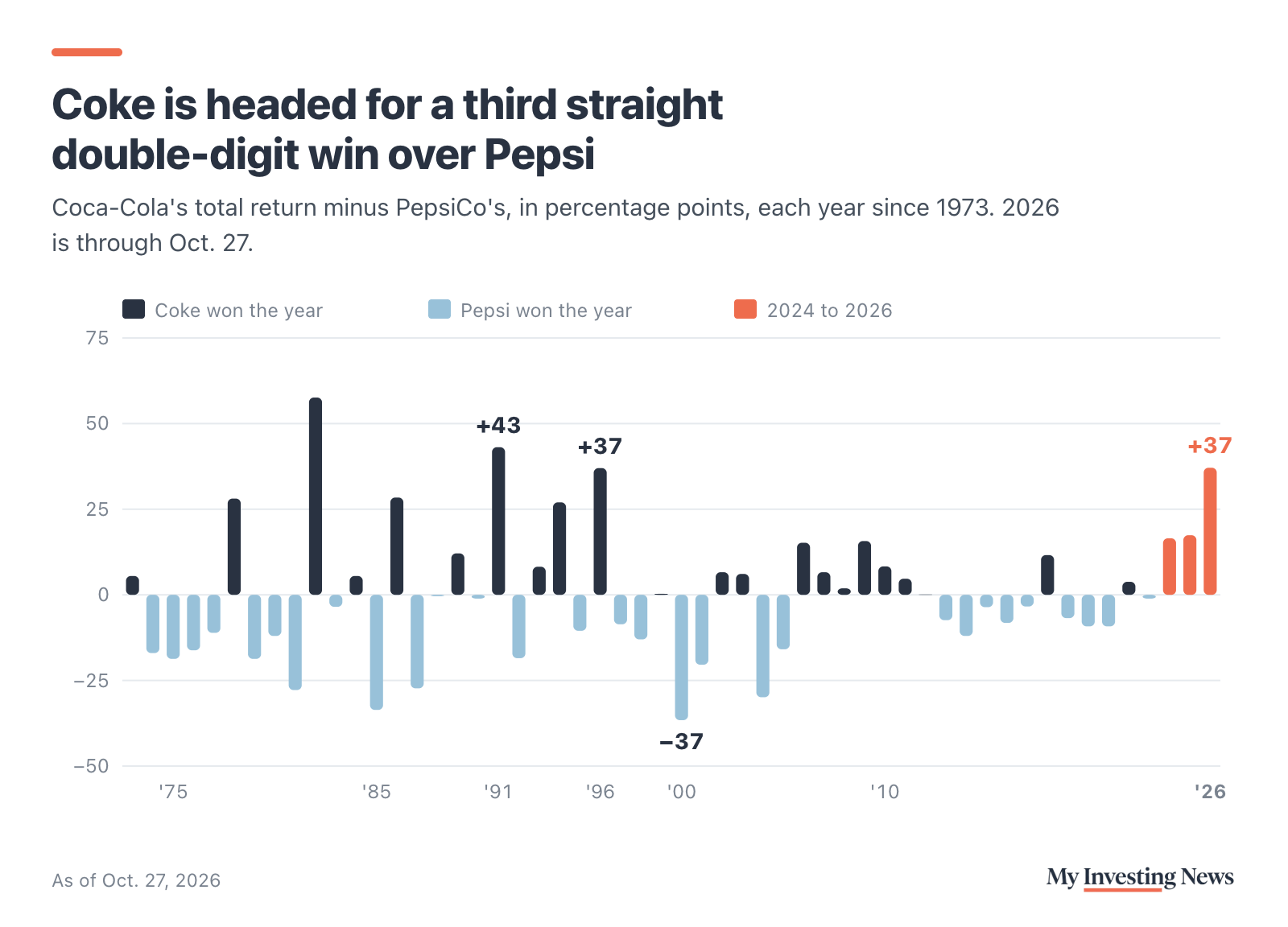
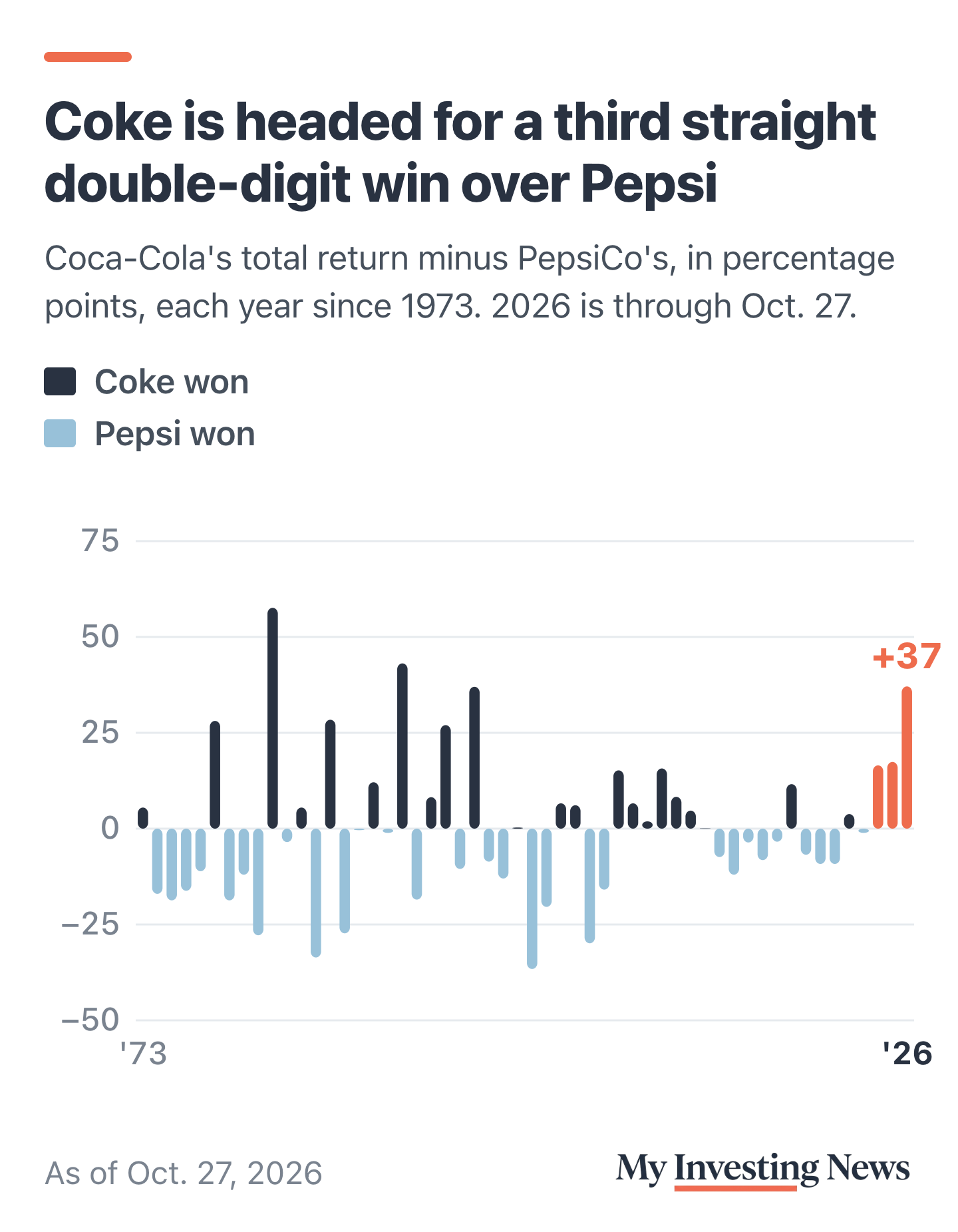
The long record backs the first half of that. With dividends reinvested, PepsiCo has returned about 35,700% since the end of 1972, against about 28,100% for Coca-Cola. PepsiCo is still ahead since the end of 1999, too, 658% to 561%. Pepsi won 29 of the 53 full calendar years since 1973.
What’s new is the streak. Coke beat Pepsi by 16.5 percentage points in 2024, 17.4 in 2025 and 37.1 so far in 2026, counting dividends. Coke has never beaten Pepsi by 10 points or more three years in a row in data going back to 1973. This year’s lead is about as wide as any since 1991; only 1996, at 37.0 points, comes close.
Cramer Called Pepsi a Buy Three Weeks Ago
Cramer has been bullish on Pepsi, too. On Oct. 8, the day PepsiCo cut its forecast and its shares rose 3.7%, Cramer said the stock traded at “just 15 times the midpoint of new earnings forecasts” and told Mad Money viewers, “You could do a lot worse than buying the stock of PepsiCo down here, especially if one day the war with Iran ends and oil plummets.” From the Oct. 8 close through Oct. 27, PepsiCo shares gained 4.0% and Coca-Cola shares gained 3.9%, while SPY slipped 0.6%. Three weeks is far too short to score the call, but so far his Pepsi pick has kept pace with the stock he says can’t stop delivering. Earlier this month, Cramer also called Dell an opportunity.
What to Watch Heading Into 2027
Keurig Dr PepperKDP shows there is still growth in U.S. drinks. Its shares are up 28.4% this year including dividends, and in the second quarter its U.S. Refreshment Beverages net sales rose 10.0%. The JDE Peet’s deal, though, left it with a pro-forma management leverage ratio of 4.4 times at June 30, and it plans to separate into two companies in early 2027. Coke’s net debt leverage is 1.3 times EBITDA.
Investors pay up for Coke’s consistency. It trades at about 26 times analysts’ earnings estimates for next year, against about 15 for PepsiCo, and Pepsi offers the higher dividend yield, about 4.4% to Coke’s 2.3%. Coke’s planned refranchising of Coca-Cola Beverages Africa will create an eight-point drag on 2027 comparable revenue, management said on the call. Coke will give full-year 2027 guidance with its fourth-quarter report, and North American volume is the number to watch in that release.
Cramer says Coca-Cola keeps beating rivals because it keeps delivering, and 2026 backs him: Coke is up 33.0% with dividends while PepsiCo is down, the third straight year Coke has won by double digits. Over 50 years, though, PepsiCo has been the better stock, and Coke now costs about 26 times next year’s earnings estimates while its home market sits flat. Cramer himself called Pepsi a buy three weeks ago.