Where we heard itThe Real Eisman Playbook, “Big Short Investor Explains How the AI Bubble Could Burst,” Nov. 9, 2026: host Steve Eisman, the investor known for The Big Short.
Steve Eisman spent part of his Nov. 9 episode on the cost of the AI build-out, and he picked Oracle ORCL as his example. Oracle is a large company, he said, but much smaller than the cloud giants it competes with, “but it is still trying to play in this game, expensive game. To do so, it has had to take on a considerable amount of leverage.”
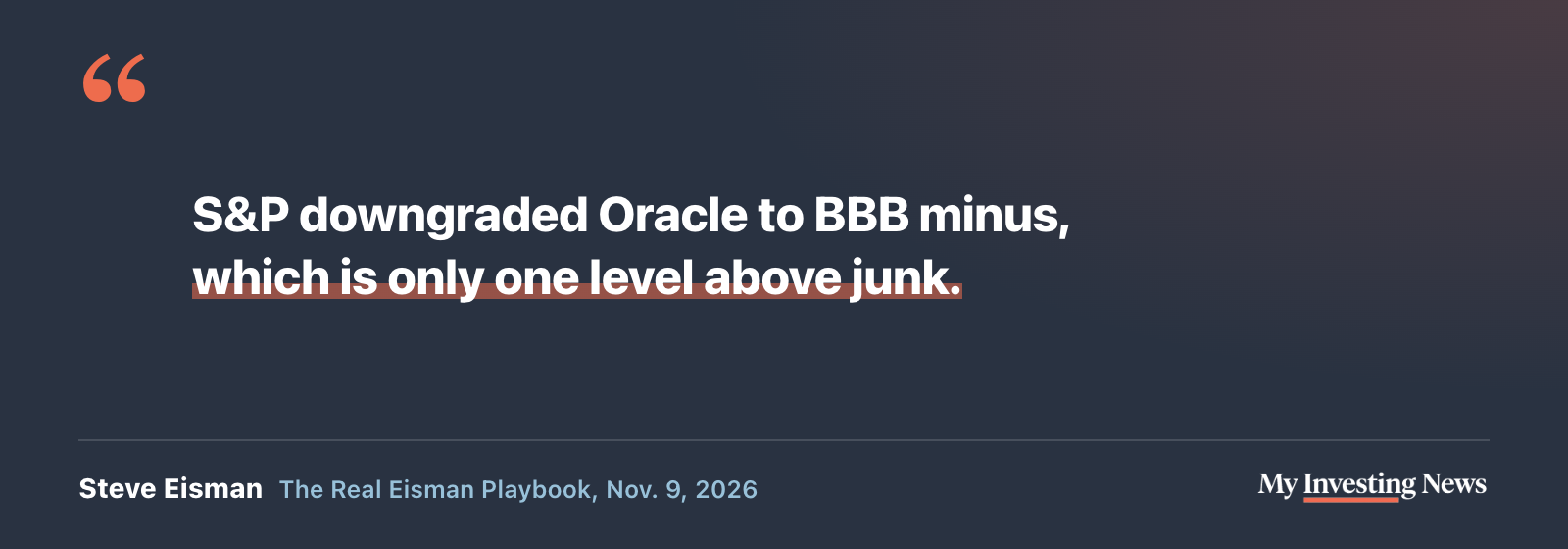
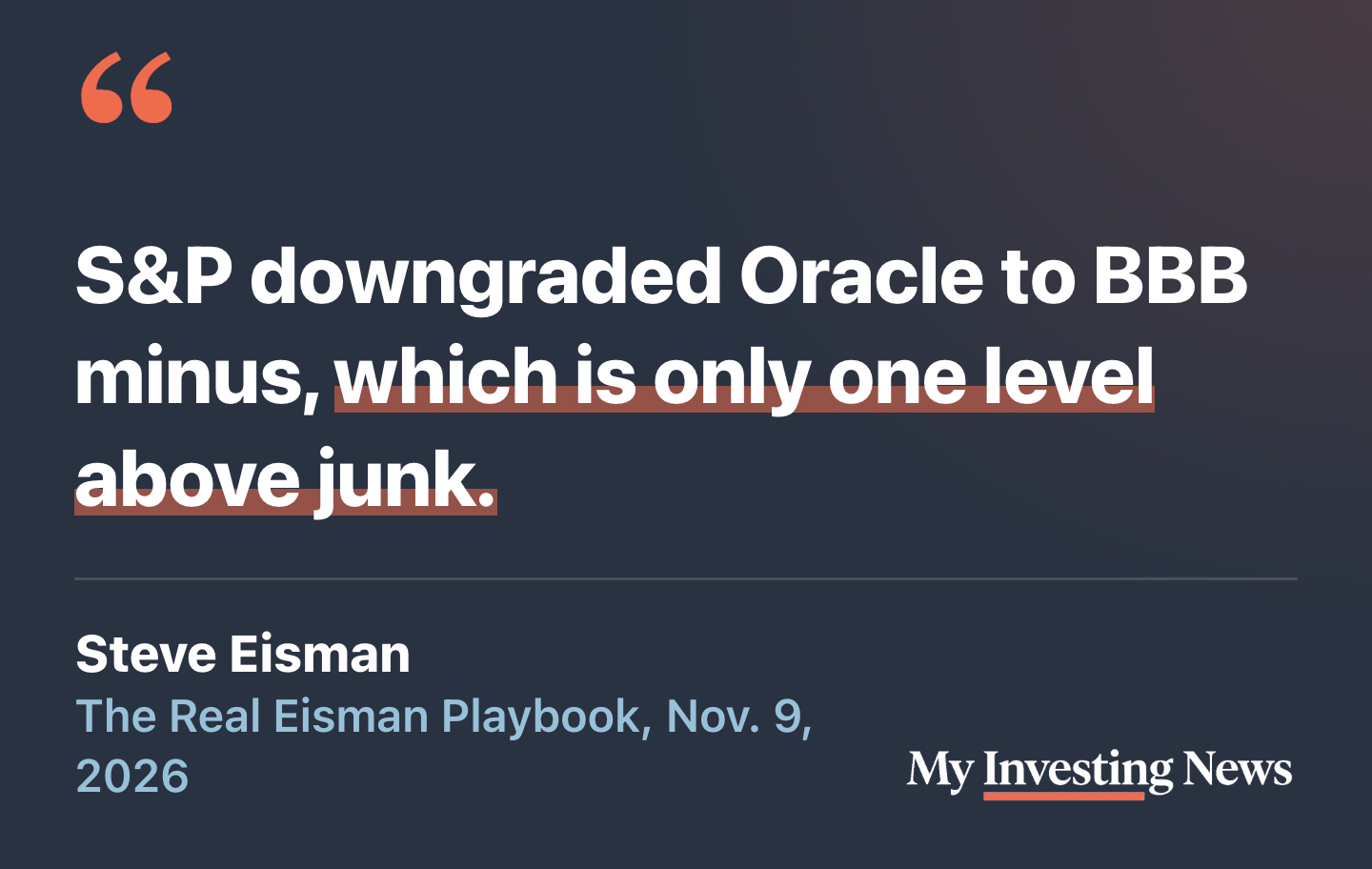
Just before that line, he gave the numbers: “In the past two years, Oracle’s total debt has increased from 94 billion to 155 billion. The ratings agencies are not amused.” A company cut from investment grade to junk is called a fallen angel, so we checked both claims and then asked how Oracle would compare with the biggest fallen angels of the past.
Checking the Debt
Oracle’s filings show a steep climb from a smaller base. Its notes payable and other borrowings were $125.3 billion on Aug. 31, 2026, the end of its latest reported quarter, up 48% from $84.5 billion two years earlier. The total peaked at $134.6 billion in February. On Nov. 2, Oracle sold another $10 billion of notes, with interest rates from 7% to 8.65%, which lifts the total to $135.3 billion on the basis the company used in its offering documents.
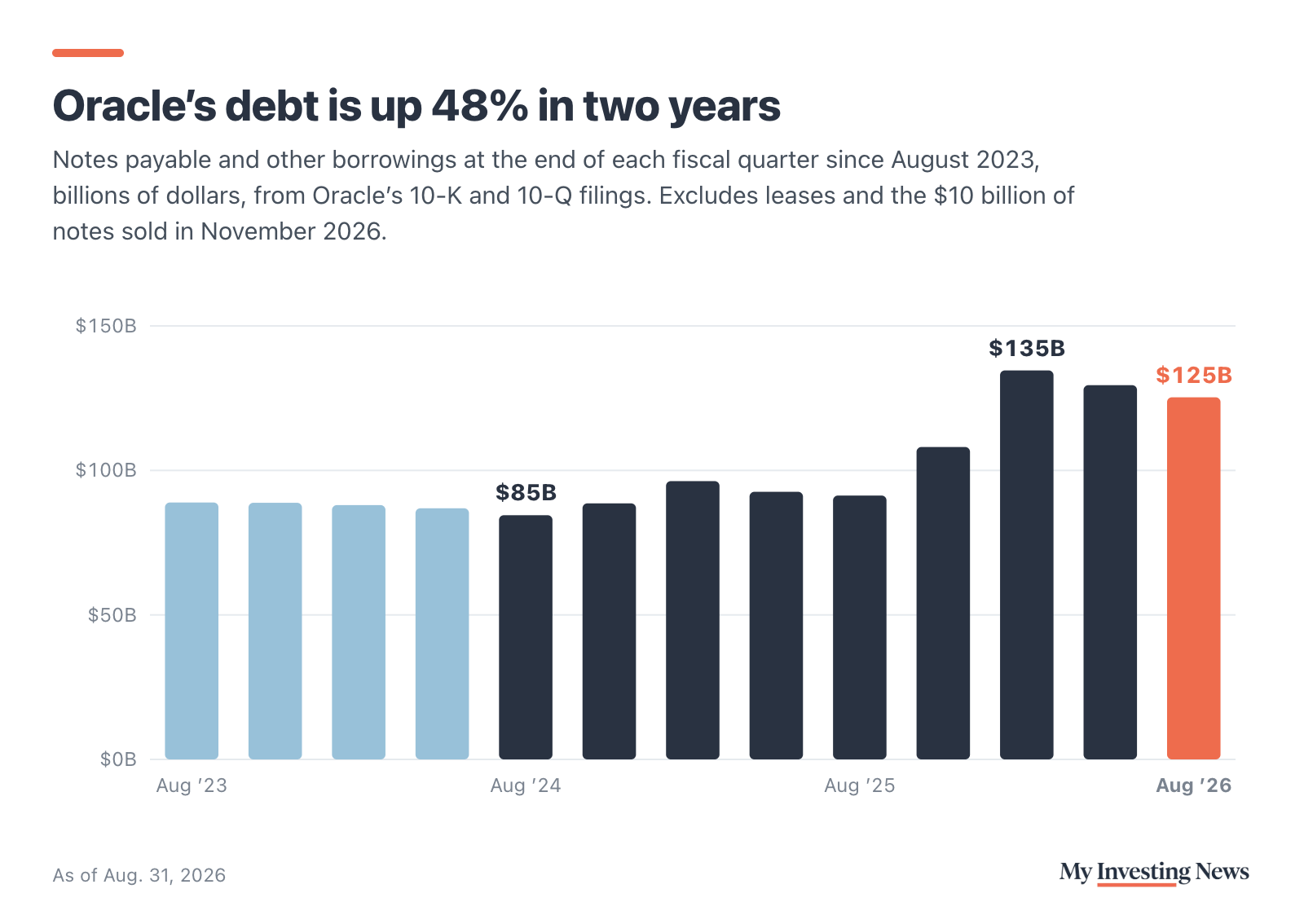
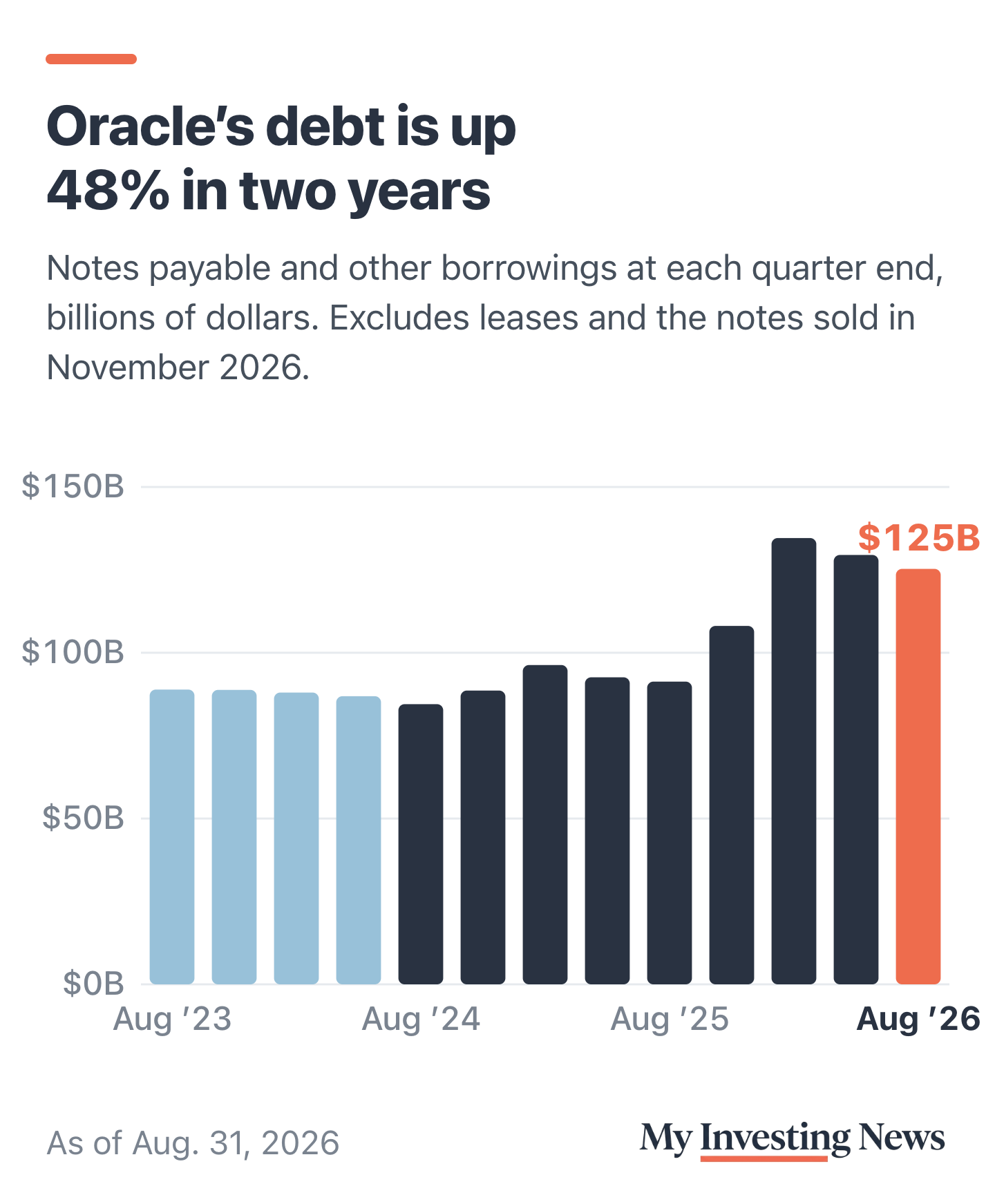
Eisman didn’t say which measure he used, and his figures sit between the narrow and the broad ones. Adding Oracle’s $9.2 billion of finance leases and $34.6 billion of operating leases on Aug. 31 gives $169.1 billion. Either way, the borrowing has risen fast. Eisman has also argued that AI borrowing is crowding out Treasuries.
The rating part checks out. S&P Global Ratings cut Oracle to BBB minus from BBB on July 9, 2026, with a stable outlook, according to news reports of the action. BBB minus is the lowest investment-grade rating; the next step down, BB plus, is junk. Moody’s is a step further away: it rates Oracle Baa2, two steps above junk, and kept a negative outlook when it affirmed that rating for the new notes on Nov. 2.
Oracle’s debt and rating, as of the Nov. 9, 2026 close
How Oracle Would Rank Among Fallen Angels
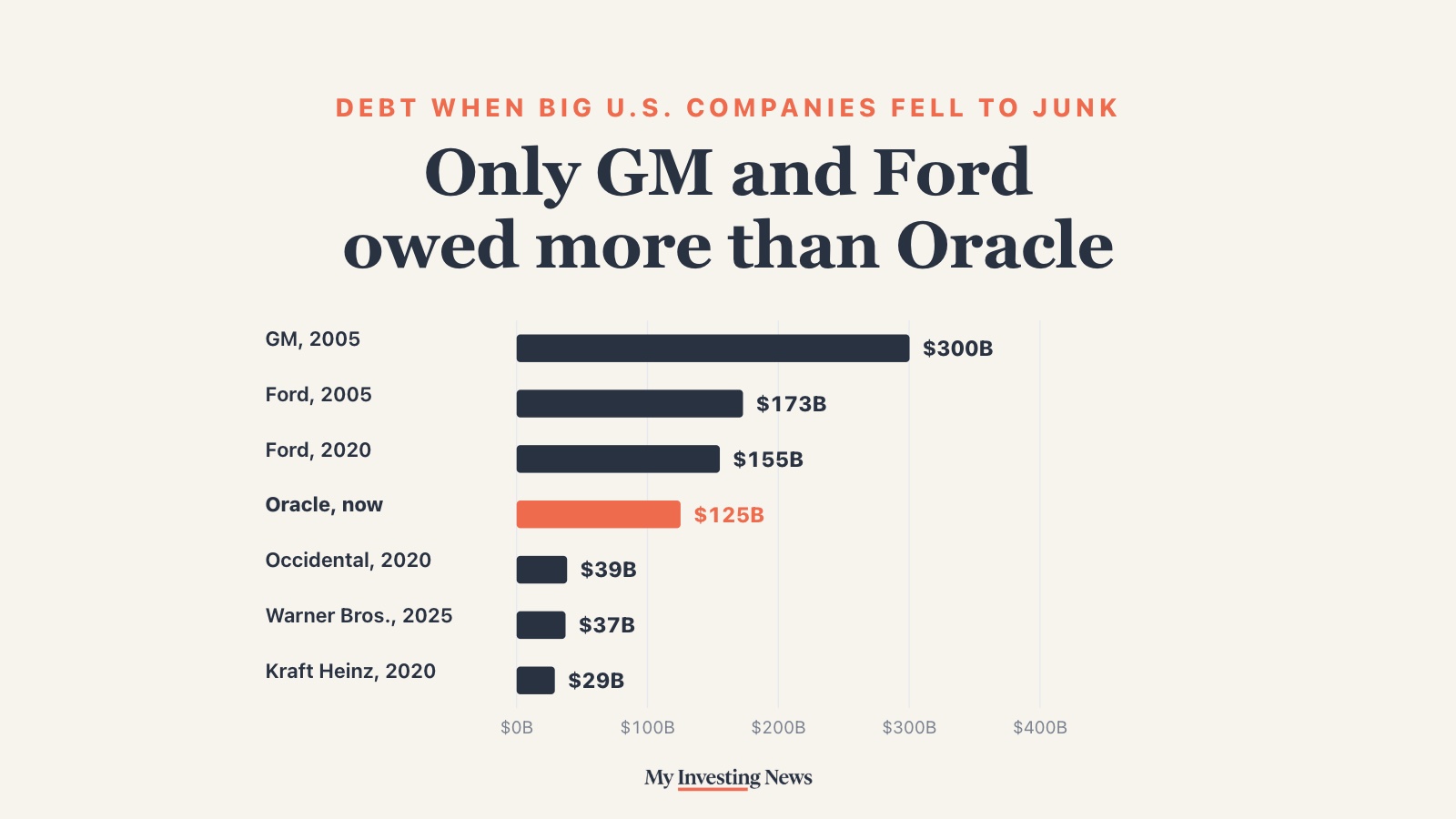
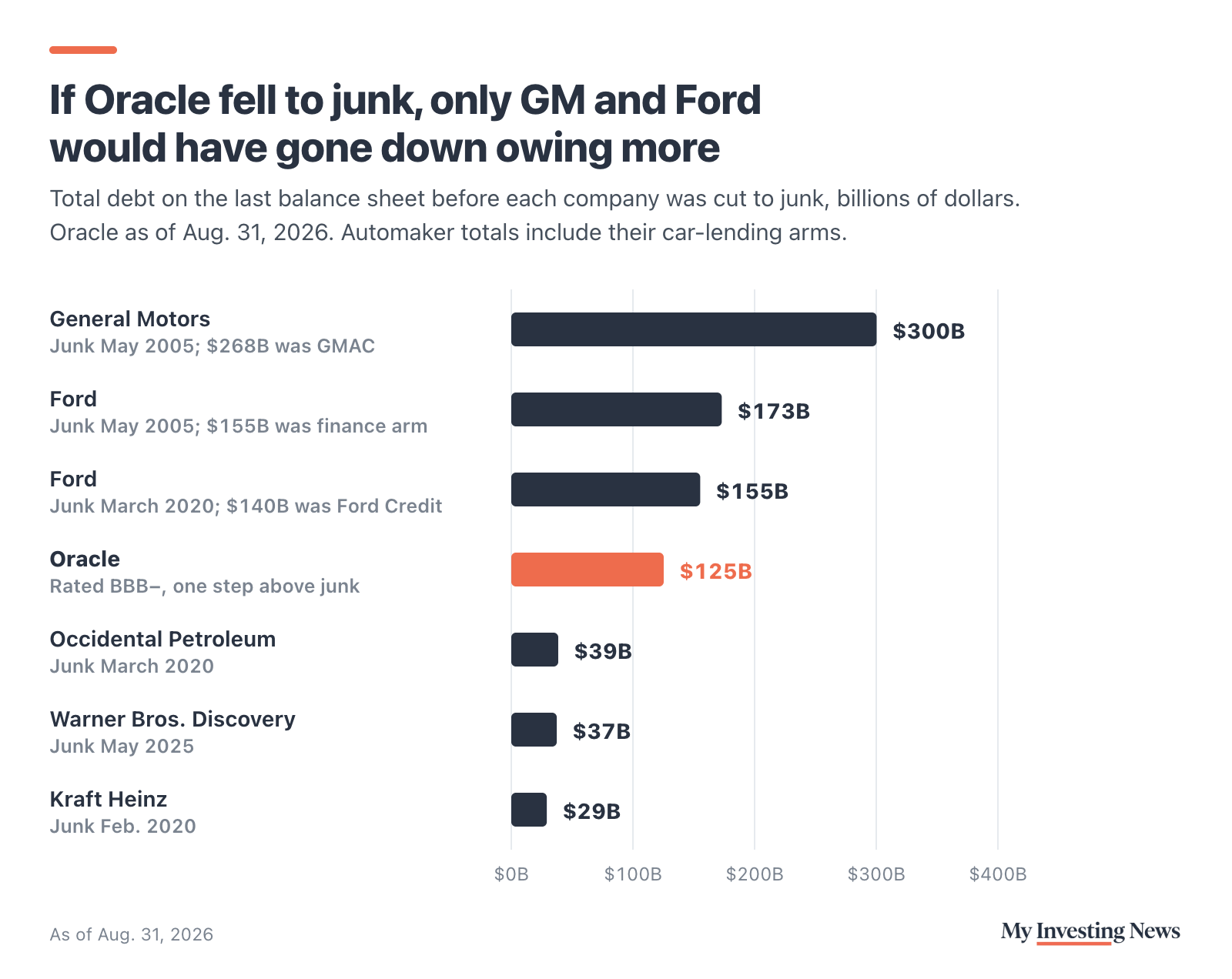
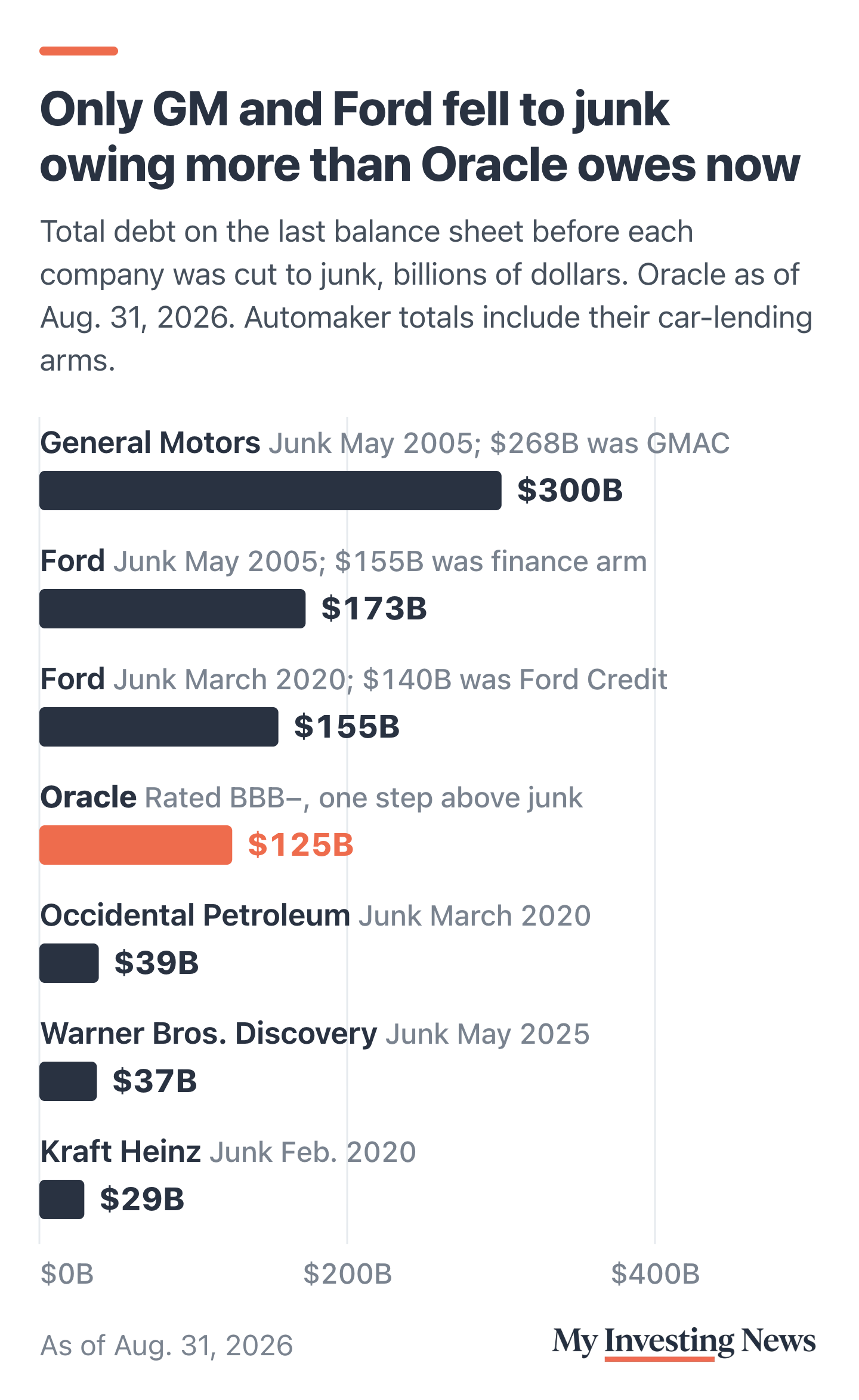
To size it up, we took the biggest U.S. companies we could find that fell to junk and looked up the debt on each one’s last balance sheet before the cut. Only three owed more than Oracle does now, and all three were automakers carrying giant lending arms: General Motors and Ford, both cut by S&P on May 5, 2005, and Ford again in March 2020. GMAC accounted for $268 billion of GM’s $300 billion, and Ford Credit for $140 billion of Ford’s $155 billion in 2020.
Outside the carmakers, the biggest were Occidental Petroleum, with $38.6 billion after its Anadarko purchase, Warner Bros. Discovery at $37.4 billion and Kraft Heinz at $29.2 billion. Oracle’s debt is 3.2 times Occidental’s.
What Happened to Their Stocks
For shareholders, the year after the cut depended on what caused it. Ford in 2005 was cut for its own troubles, and its stock lost 28% over the next 12 months, including dividends, while the S&P 500 returned 15%. General Motors went bankrupt four years later.
The 2020 group was cut in the pandemic crash and rose with the market. In the 12 months after their cuts, Ford returned 149%, Occidental 135% and Kraft Heinz 34%, against 63%, 58% and 19% for the S&P 500 over the same stretches.
Oracle’s case looks more like 2005 in one way: the worry is its own spending, with news reports of S&P’s action naming OpenAI as a key credit risk. Its stock has fallen 15% since the July 8 close, the last before the cut, and was 52% below its June 1 high at the Nov. 9 close.
What to Watch
Moody’s negative outlook is the next marker, along with any further move by S&P. Oracle’s fiscal second quarter ends Nov. 30, and that report will show whether borrowing kept rising after the new notes. The price of the new bonds is also worth watching, since high yields signal how close investors think the company is to junk. The same worry has already hit CoreWeave, whose bonds yield about 15%.
Eisman is right that S&P has Oracle one step above junk, and the debt has risen fast, to $125.3 billion on Aug. 31 by the filings’ narrowest measure. If Oracle did fall, only GM and Ford would have gone down owing more. The 2020 fallen angels recovered with the market; Ford in 2005, cut for its own problems, kept falling.