Where we heard itBarron’s Streetwise podcast, episode published Oct. 23, 2026. Host Jack Hough with Franklin Templeton portfolio manager Jonathan Curtis. Listen at Barron’s
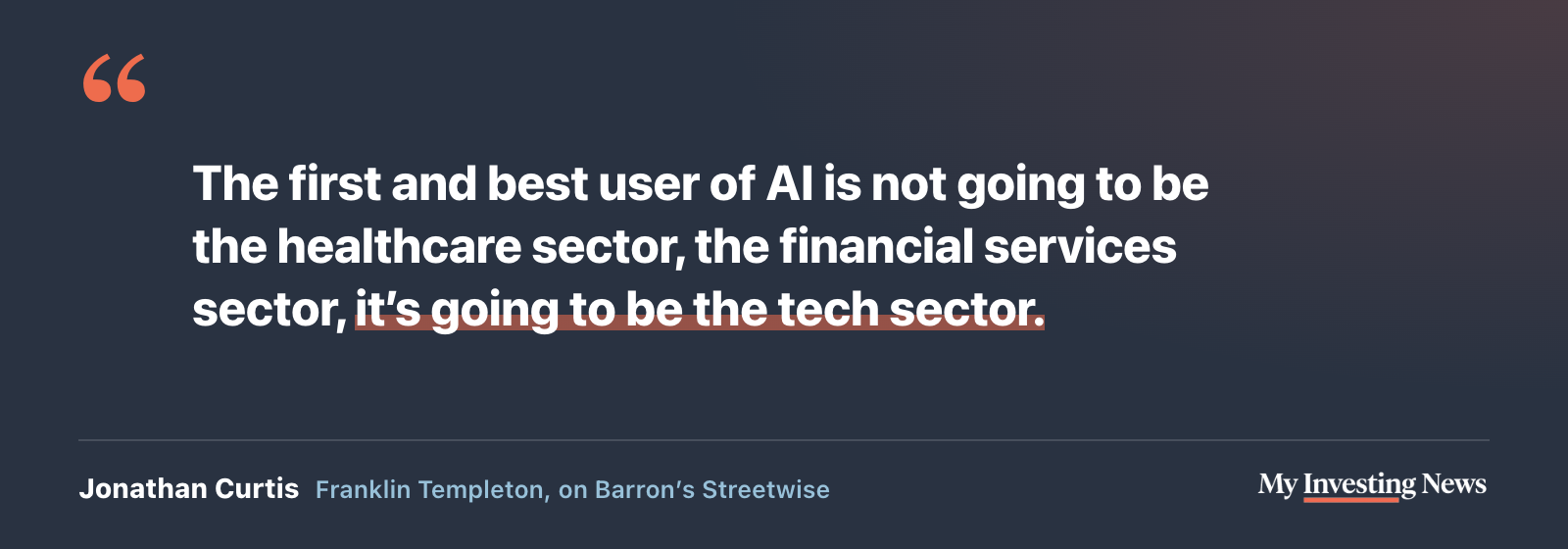
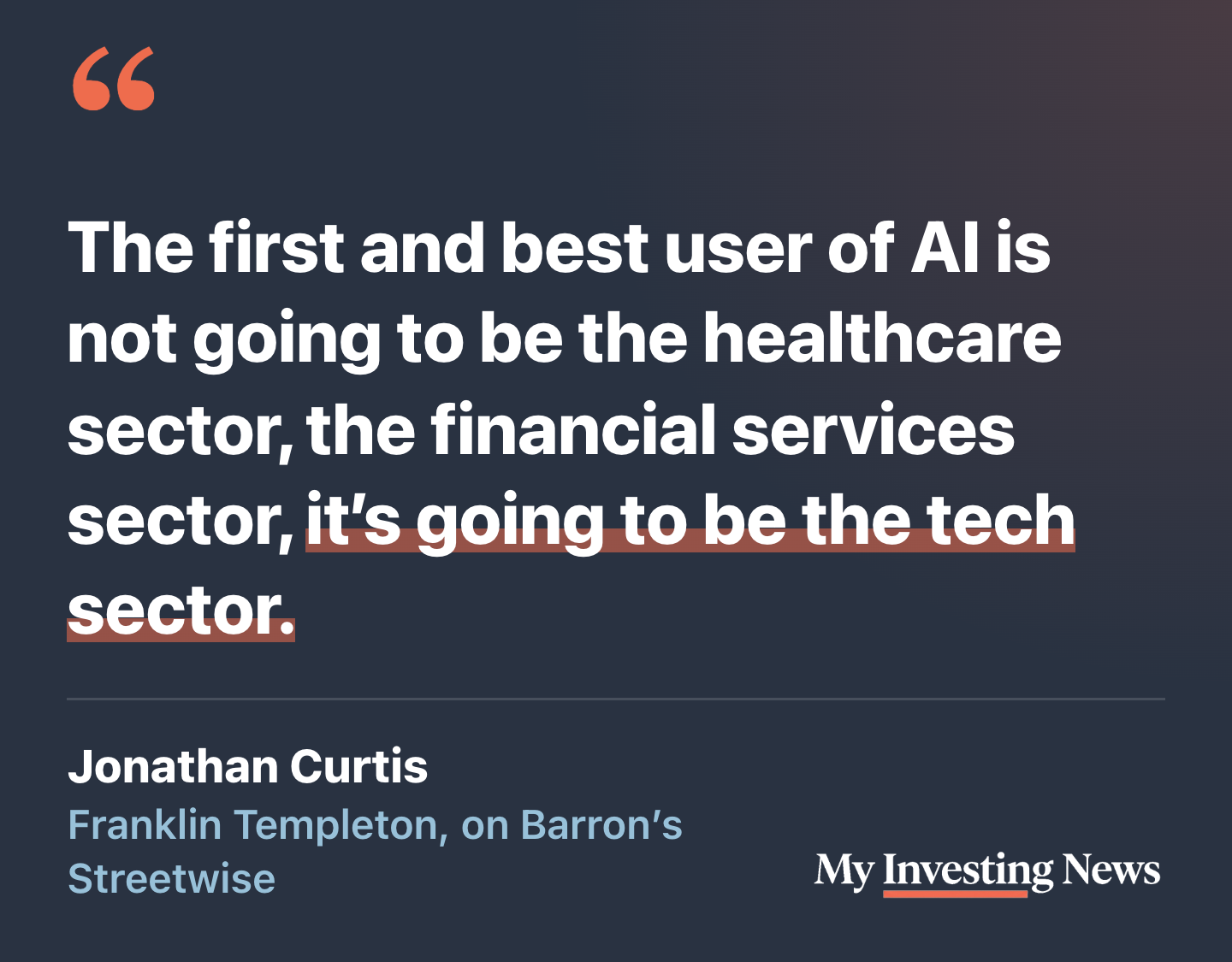
Franklin Templeton portfolio manager Jonathan Curtis thinks investors looking for AI’s biggest winners may be searching in the wrong places. On the Barron’s Streetwise podcast episode published October 23, 2026, host Jack Hough introduced Curtis as a manager on the Franklin Technology Fund. Curtis said: “This is something I think the market’s missing. The first and best user of AI is not going to be the healthcare sector, the financial services sector, it’s going to be the tech sector.”
Why Tech Companies Capture AI Gains First
Curtis gave four reasons. “A core part of their cost structure is engineers, software engineers. That’s been the area where we’ve seen a lot of leverage.” Leverage here means getting more output from the same costs. AI coding tools let an existing engineering team ship more product without adding staff. He also said tech firms “talk to their customers with digital techniques,” that “their data is all organized so it can be munged on by AI,” and that “critically, they have leadership who understands how to use these models.”
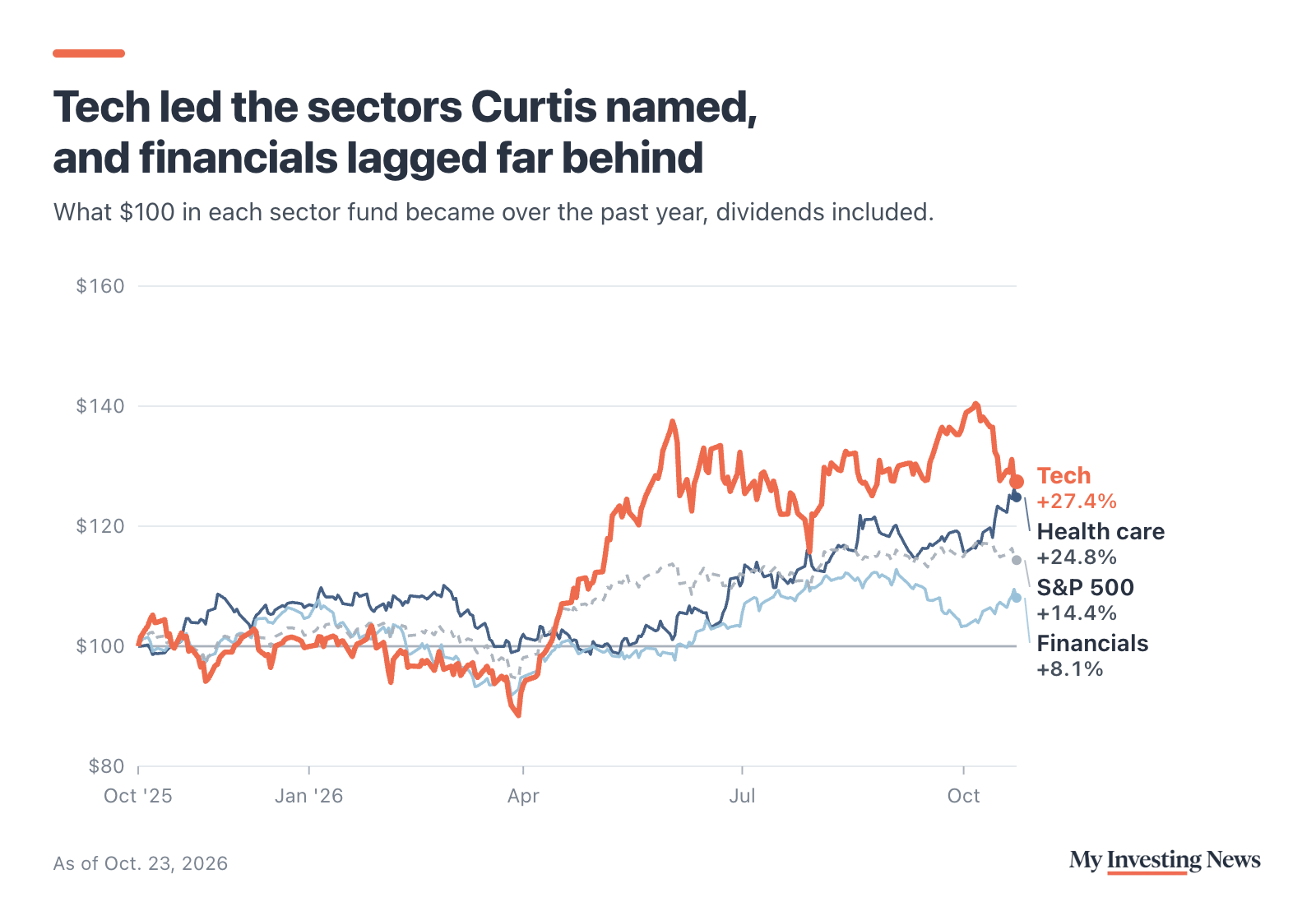
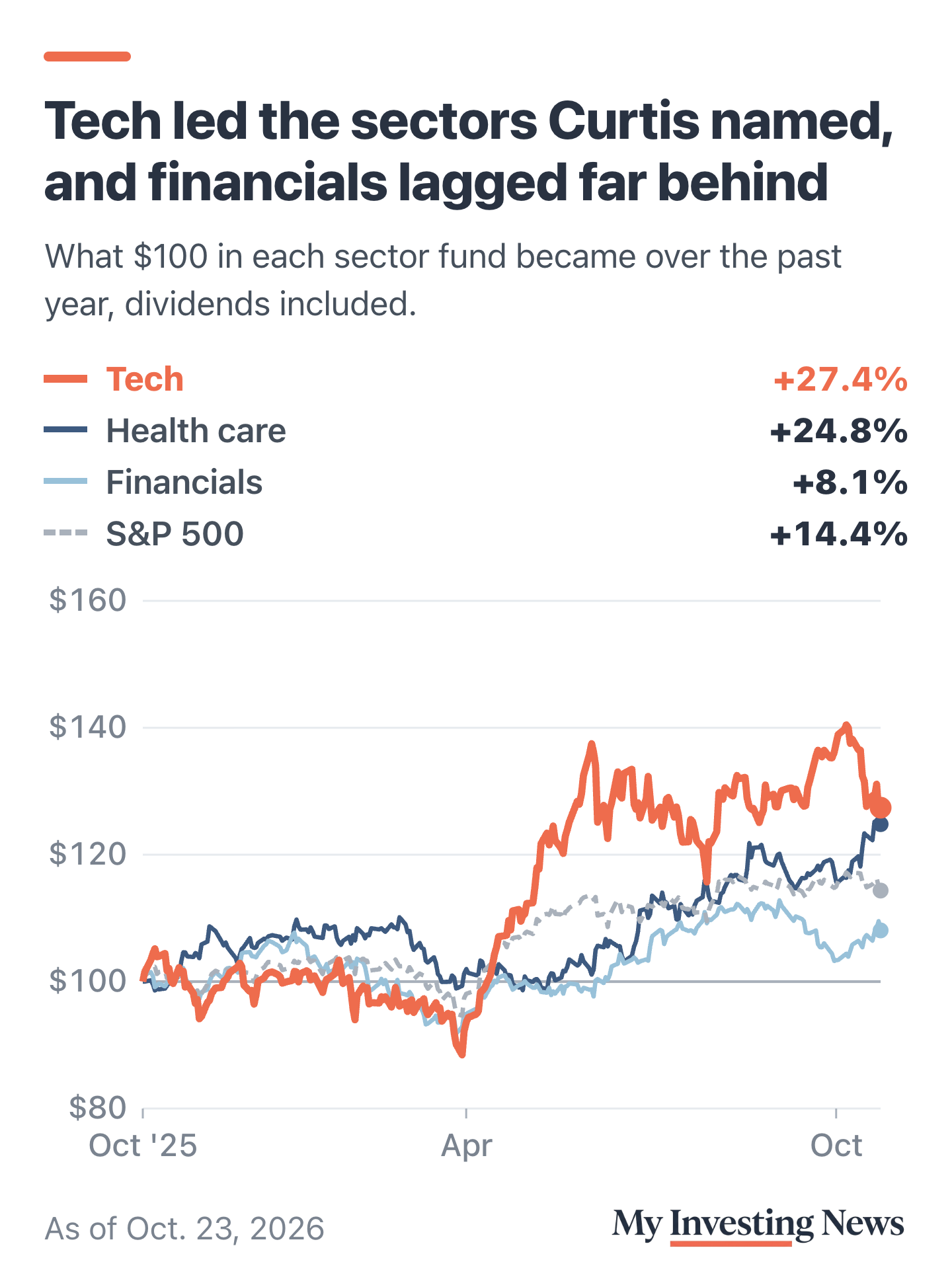
Recent results line up with that view. MicrosoftMSFT reported more than 30 million paid Microsoft 365 Copilot seats and Azure growth of 43% in its fiscal fourth quarter, after spending $115.95 billion on capex for the year. On GitHub, one in three pull requests now involves an agent. AlphabetGOOGL said Google Cloud revenue grew 82% to $24.77 billion in Q2, and capex reached $44.92 billion.
That spending lands at other tech companies. Data center revenue at NVIDIANVDA reached $89.02 billion, up 117%. BroadcomAVGO said AI semiconductor revenue rose 221% to $16.7 billion. Hyperscalers buy the chips and then sell AI services back to enterprises, so the tech sector books the first round of both revenue and productivity gains.
Where the AI money showed up last quarter
AI Users Hiding Outside Classic Tech
Hough said Curtis did not talk about his favorite stocks. Hough added that the fund’s reported top holdings as of the end of September were mostly familiar chip and cloud names, along with less obvious ones such as SpotifySPOT and Robinhood MarketsHOOD.
Curtis described Spotify as “a company that uses software and data and increasingly AI to deliver more compelling experiences to its users” at a lower cost. He said Robinhood is “using AI in a powerful way to take market share.” Spotify’s third quarter showed both sides of that trade-off. Management said AI let it ship features faster while keeping headcount flat. Even so, R&D jumped 35% on cloud and AI costs, and diluted EPS of €2.48 (about $2.78) fell short of analysts’ estimates. Management expects AI-related costs to moderate in the fourth quarter and into 2027.
Memory Bears May Be Overreaching, Curtis Says
Memory chips move in boom-and-bust cycles. Shortages lift prices and gross margin, which is the share of revenue left after production costs. Then new factory capacity comes online and prices fall. Micron TechnologyMU is deep in the boom phase: it reported a fiscal Q4 non-GAAP gross margin of 87.0% versus 45.7% a year prior.
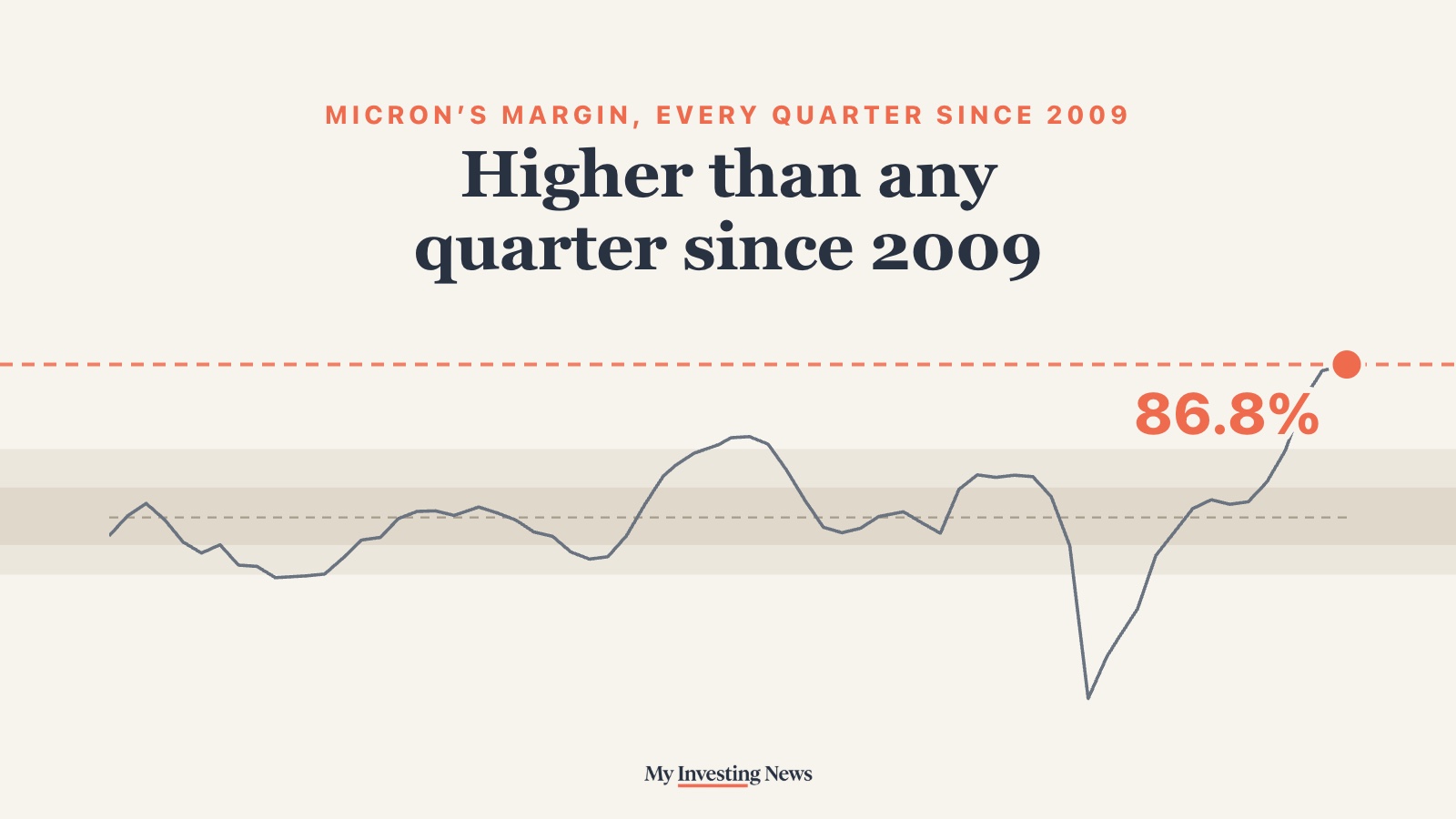
On a GAAP basis the margin was 86.8%, the highest of the 68 quarters Micron has reported since fiscal 2010, according to its SEC filings. The last boom peaked at 61.0% in the quarter that ended in August 2018. A year later the margin was down to 28.6%, and in early 2023 it fell below zero.
Micron’s margin is the highest of any quarter since 2009, 25.8 points above the last boom’s peak
Micron’s gross margin (GAAP), the share of sales left after production costs, every quarter from fiscal 2010 to fiscal 2026. The shaded bands hold the middle half and the middle 80% of all 68 quarters.
“Listen, I get sentiment wise things that move this fast, they cause anxiety,” Curtis said. He pointed out that SK Hynix, Samsung and Micron will all add capacity in 2028 and 2029. He expects demand to stay very, very strong in those years, and he believes “that memory incremental capacity will be consumed much faster than investors appreciate. So the gross margin trajectory will look better and the pricing will be firmer than the market appreciates.” His conclusion: “the bearishness around the impact of the memory cycle is a little too excessive.”
Micron’s management sounds similar. More than 75% of fiscal 2027 shipments are already committed, and executives said they lack “line of sight to when supply and demand balance.”
How Investors Can Use Curtis’ AI Framework
Curtis’ framework comes down to one question: can a company use AI to lower its own costs or win share? Firms built around engineers, with digital customers and clean data, fit his profile best. Cyclical industries carry extra risk. Micron shares fell about 18% in the month through Oct. 23 despite record results, which shows how fast views on memory can swing. Spotify’s quarter shows that AI spending can weigh on earnings before the return shows up.
Upcoming guidance gives investors ways to test the thesis. Microsoft expects Azure growth of about 45% in constant currency, NVIDIA guided fiscal Q3 revenue to $108.0B ±2%, and Micron guided fiscal Q1 revenue to $61.5B ±$1.5B. Curtis expects AI’s first return to show up at the companies building it.
Curtis expects tech companies to profit from AI first, because their costs are mostly engineers, their customers are digital and their data is ready to use. He also thinks investors are too gloomy about the memory cycle. The risk is that AI spending can squeeze earnings before it pays off, and chip stocks like Micron can swing hard on sentiment.