Where we heard itCNBC’s Fast Money, “Stocks Drop After Post-Election Rally… And The Future Of The AI Trade,” Nov. 5, 2026. Panelist Brian Kelly of BKCM on where crypto goes with Democrats running Congress.
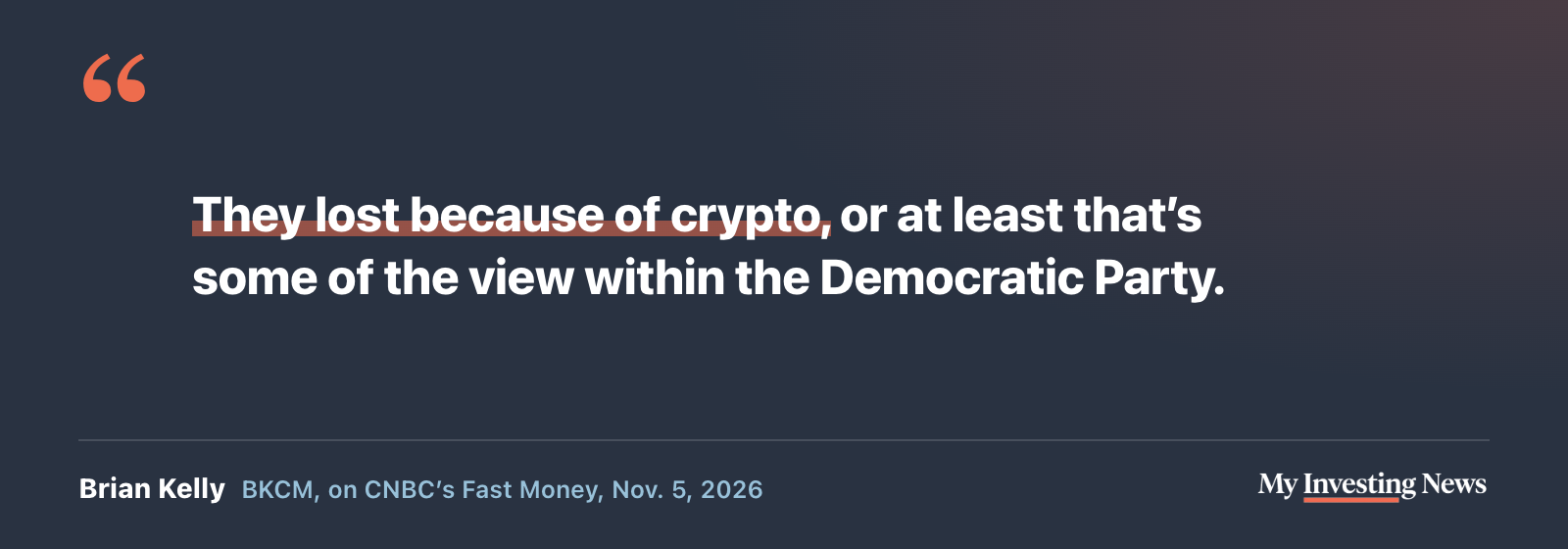
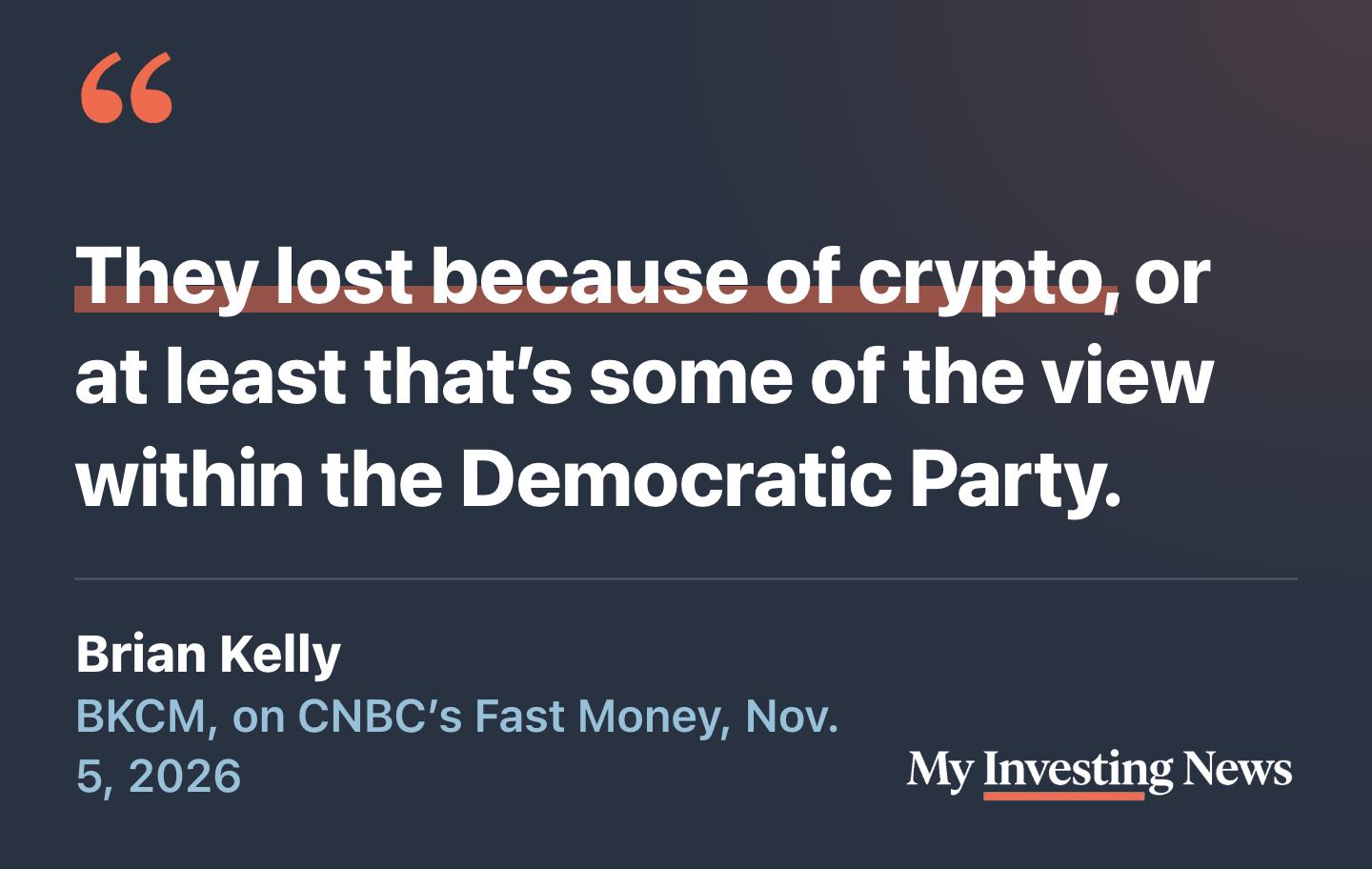
Two days after Democrats won the House and Senate, Fast Money host Melissa Lee asked Brian Kelly whether crypto was now a flat trade, “with the Clarity Act basically dead at this point.” Kelly, who runs the digital-asset firm BKCM, said no. His first reason was political: “the Democrats have a incentive to embrace crypto because they lost because of crypto,” he said, adding a hedge in the same breath.
It is a popular idea in the industry. In 2024, the crypto industry’s biggest political target, Ohio Sen. Sherrod Brown, lost his seat. Whether crypto decided any race is beyond what filings can show. What they can show is where the money went and whether it backed winners. We matched every independent expenditure that Fairshake and its two affiliates, Defend American Jobs and Protect Progress, reported to the Federal Election Commission against the results of the 2024 and 2026 general elections, the same method we used for the AI industry’s super PACs, whose side won 69 of 74 races.
The 2024 Record Was Nearly Perfect
In the 2024 cycle, the three PACs reported $133.0 million in independent spending, $87.3 million of it in general elections. The side they paid for won 24 of 29 general-election races, and 89% of the general-election money landed on the winning side. The largest single item was $40.1 million for Republican Bernie Moreno against Brown, who chaired the Senate Banking Committee. Moreno won, 50.1% to 46.5%.
The money was not one-sided. About $34.3 million helped Democrats, including $10 million each behind Elissa Slotkin in Michigan and Ruben Gallego in Arizona, both of whom won Senate seats. Money helping Republicans made up 61% of the general-election total. So the case that Democrats lost “because of crypto” rests mostly on one race, Ohio, where the industry beat a Democrat while helping elect two others.
2026: More Money, One Big Loss
This cycle, the PACs spent more: $154.5 million in filings through Nov. 9, with Defend American Jobs, the Republican-facing arm, at $104.9 million. In general elections they again won most races, 32 of 36 called so far. But the big money went to the races they lost. They put $56.6 million into Ohio’s Senate race, $36.9 million for Republican Sen. Jon Husted and $19.7 million against Brown, who was running to win back a seat. That was two-thirds of all their general-election spending. The AP called the race for Brown on election night.
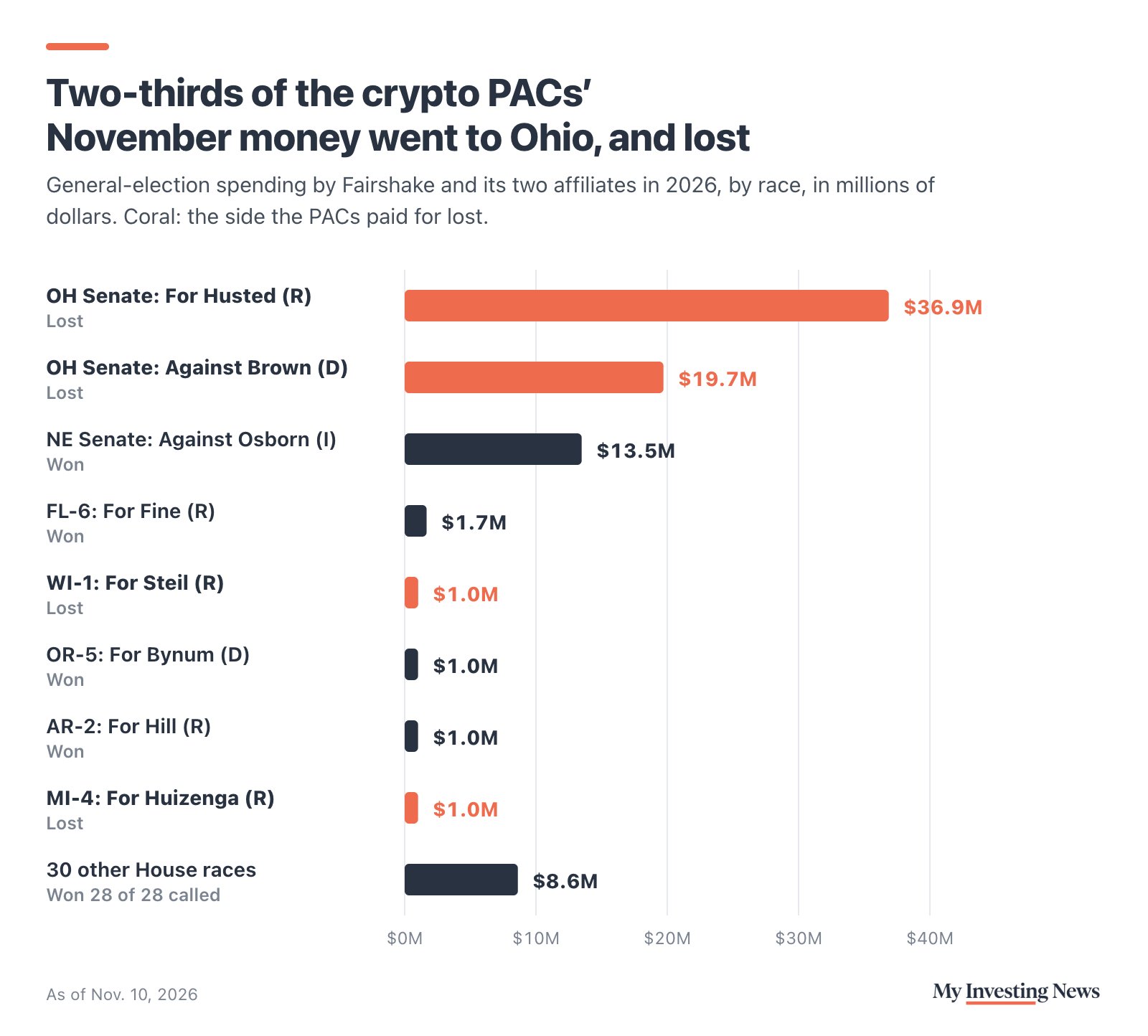
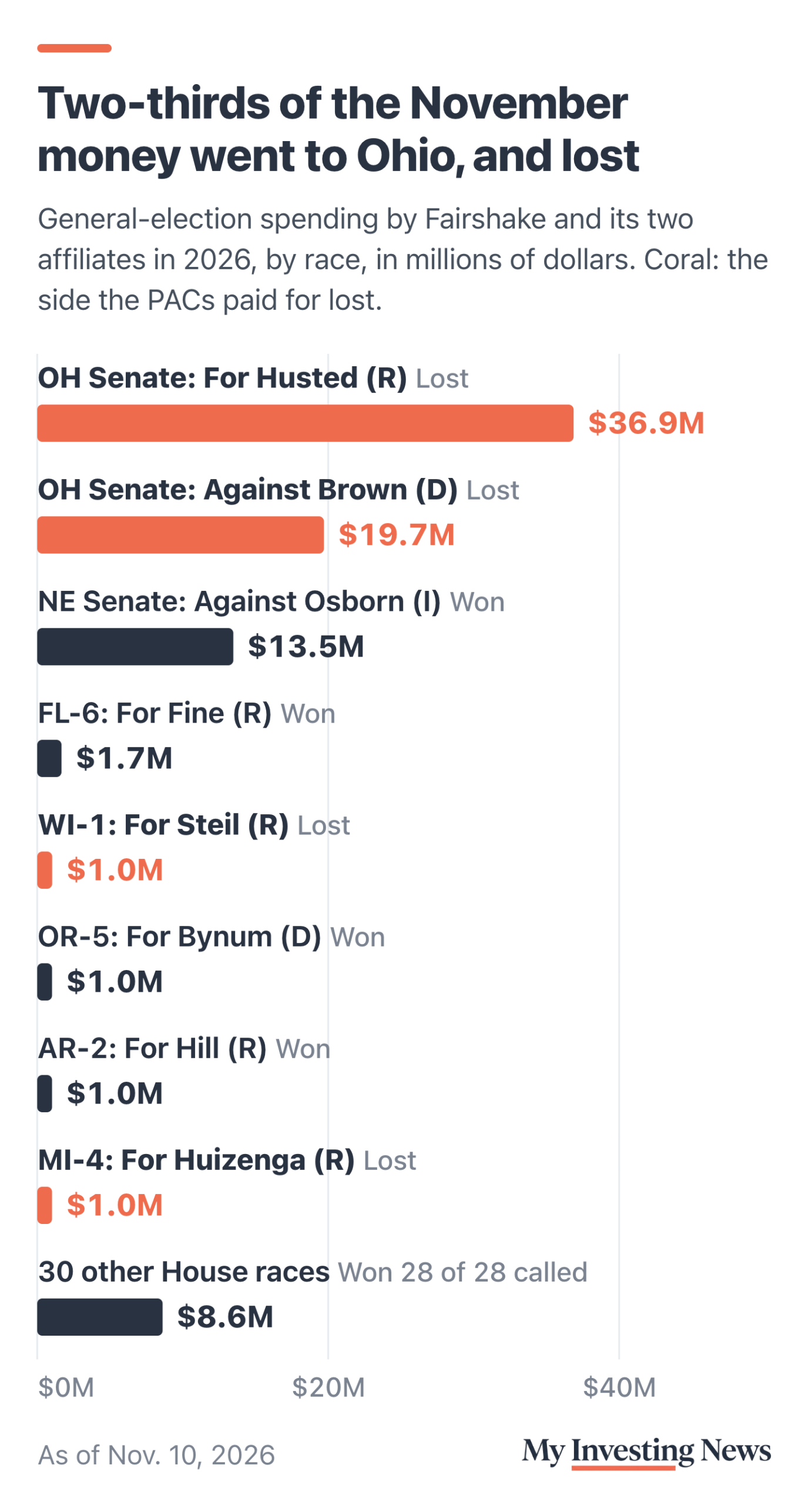
Their other big Senate bet paid off: $13.5 million against independent Dan Osborn in Nebraska, where Republican Pete Ricketts won. In the House, they lost with Republicans Bryan Steil in Wisconsin and Bill Huizenga in Michigan and won almost everywhere else, mostly with about $150,000 apiece for sitting members of Congress. Two of their 2026 House winners make the shift plain. Democrats Derek Tran in California and Janelle Bynum in Oregon each got about $1 million from the PACs this year. In 2024, both had beaten Republicans the same PACs had backed.
The crypto super PACs, as of Nov. 10, 2026
The Money Tilted Right as Democrats Gained
The bigger change was in who the money helped. In 2026, 92% of the PACs’ general-election spending backed Republicans or opposed their opponents, up from 61% in 2024. The $6.7 million that helped Democrats went 14 for 14. Of the $77.5 million that helped Republicans, only 24% ended up on the winning side. Brandice Canes-Wrone of Stanford had argued that AI and crypto money moves primaries more than general elections, and this year’s record fits: the general-election wins came cheap, and the expensive bets failed.
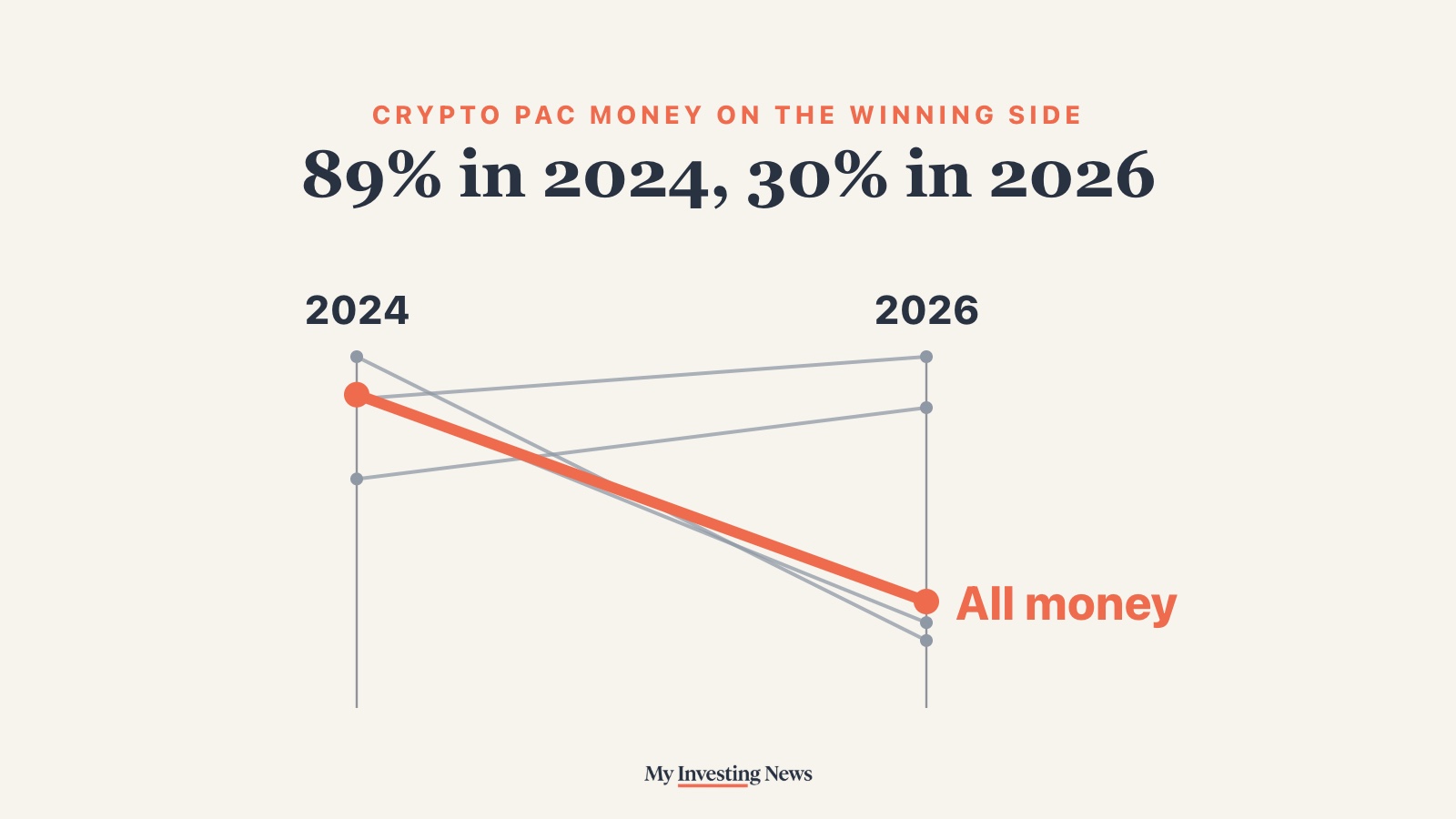
In 2024, 89% of the crypto PACs’ general-election money backed the winning side. In 2026, 30%
Share of general-election spending by Fairshake, Defend American Jobs and Protect Progress that went to the side that won, by type of race. Money helping Republicans backs a Republican or opposes their opponent.
Even the 2024 wins did not buy votes on the bill the industry wanted most. On Sept. 15, the Senate voted 49 to 50 on a motion to start debate on the Clarity Act, the crypto market-structure bill, 11 short of the 60 needed. Every Democrat who voted said no, including Slotkin and Gallego, along with four Republicans. Husted, Moreno and Ricketts voted yes.
What to Watch
Bettors had already given up on this Congress. Polymarket’s market on the Clarity Act becoming law in 2026 traded at 1.5% as of Nov. 10, down from 81.5% on Feb. 19, with about $25 million traded. That leaves Kelly’s bet on the Democratic majorities that take over in January, won in what David Sacks has called the biggest midterm loss since Watergate. Ron Biscardi, whose firm runs events where funds pitch institutional investors, said on The Pomp Podcast on Nov. 6 that “a huge disappointment frankly of the Trump administration has been the inability to get regulations passed” for crypto. The next scorecard comes Dec. 3, when the PACs file post-general reports with the FEC, and the next test is whether any Democrat on the incoming Banking Committee takes up a market-structure bill.
Kelly’s point has some support in 2024, when the crypto PACs’ biggest bet beat a leading Democratic critic and 89% of their general-election money backed winners. In 2026 they spent more, leaned harder Republican and put two-thirds of their November money into Ohio, where Brown won. The risk for crypto is that Democrats read this year’s results as proof the industry’s money can be beaten.