Where we heard itCNBC’s Fast Money, Nov. 4, 2026, the day after the midterm elections. The show introduced Jared Holz as Mizuho’s health care sector specialist.
Health care stocks jumped across the board on Nov. 4, the day after Democrats won both chambers of Congress. Jared Holz, Mizuho’s health care sector specialist, told CNBC’s Fast Money the move looked off. He said “large cap pharma is overdone to the upside,” because Democrats tend to be adversarial on drug prices. Then he made a valuation call:
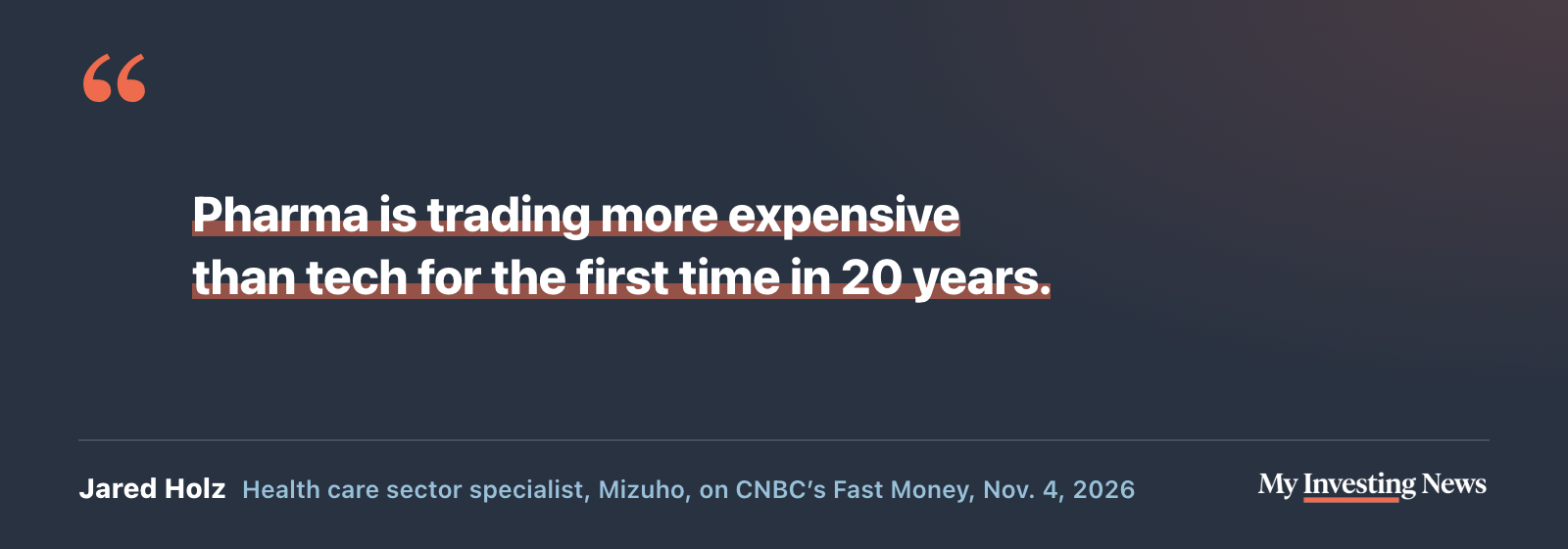
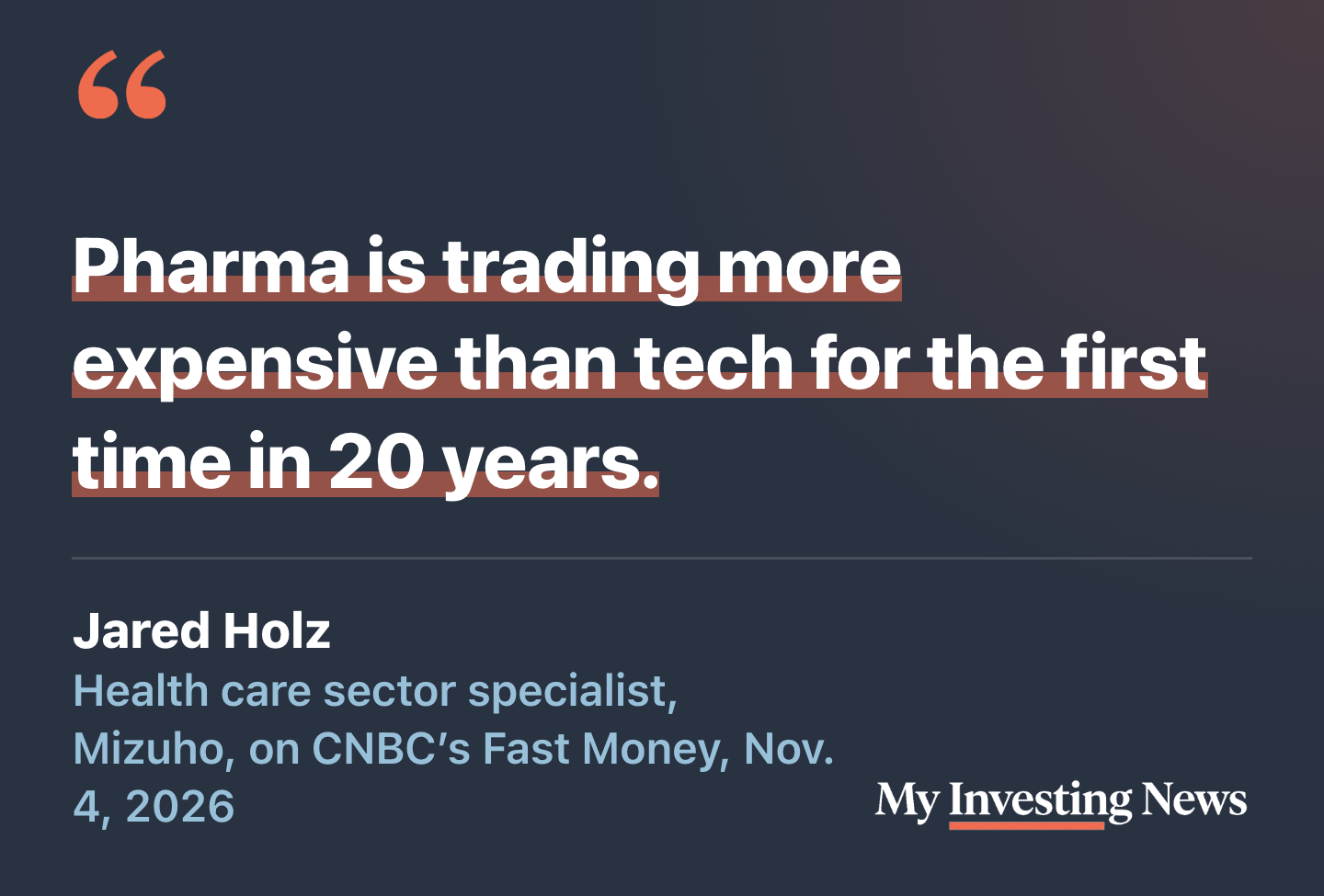
He said he would back away from pharma and look at medical device makers instead, which he called the one corner of health care that hadn’t already rallied. We checked his valuation claim with forward price-to-earnings ratios, the price of a group of stocks divided by the profits analysts expect over the next 12 months.
Health Care Now Costs More Than Tech
The present-tense part holds. In FactSet’s Nov. 6 Earnings Insight, the S&P 500 health care sector traded at 19.8 times forward earnings on Nov. 5 and the information technology sector at 17.3. That was tech’s lowest reading since March 23, 2020, according to FactSet. Over the past 10 years, tech has averaged 23.1 times and health care 16.6.
FactSet reports sectors, not the pharmaceutical industry on its own. Using Alpha Vantage’s consensus forward P/Es for the seven big drugmakers we count in the S&P 500’s pharmaceuticals industry, led by Eli Lilly LLY and Johnson & Johnson JNJ, we get about 19.7 times when weighted by market value. That is our estimate, but it points the same way.
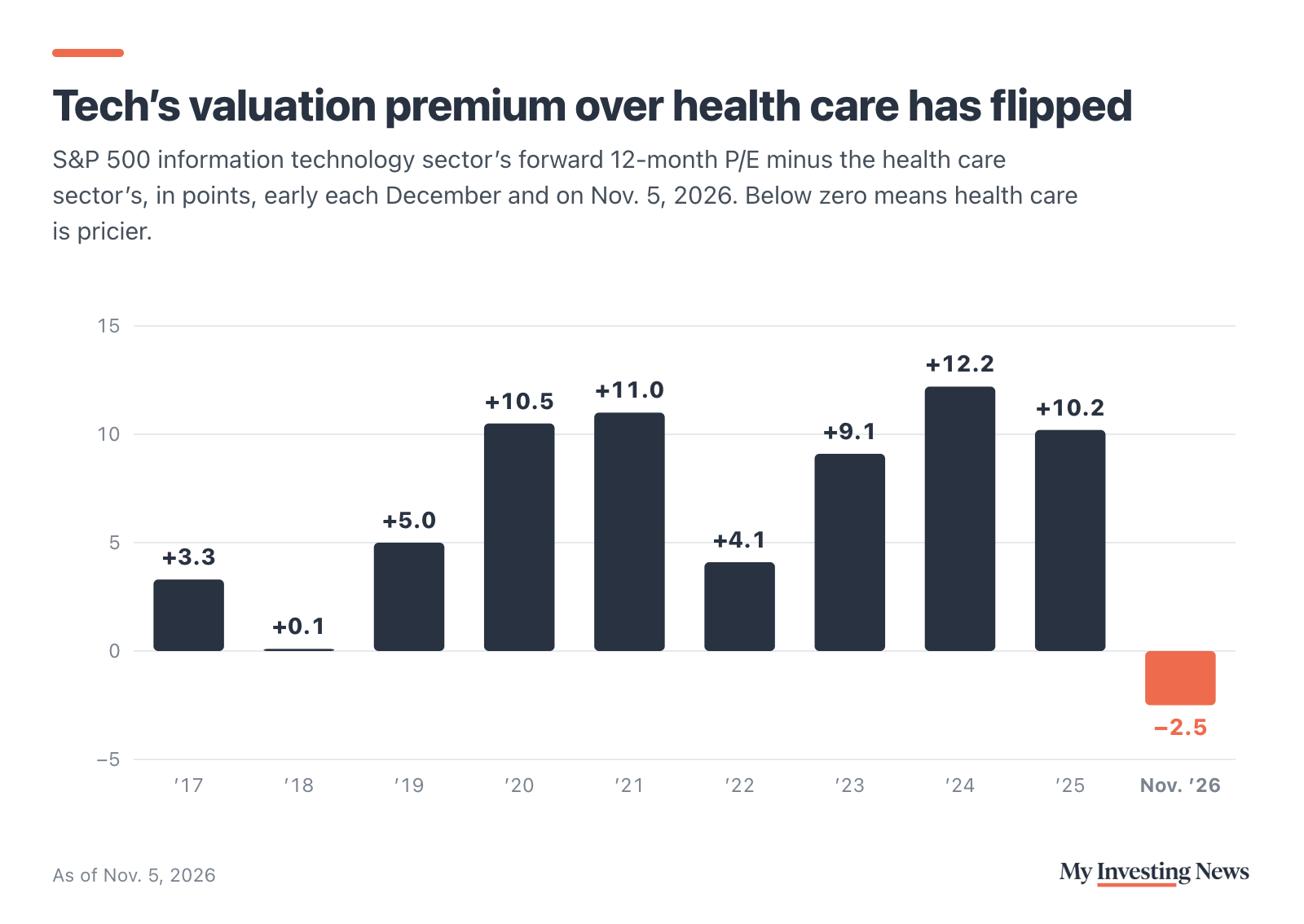
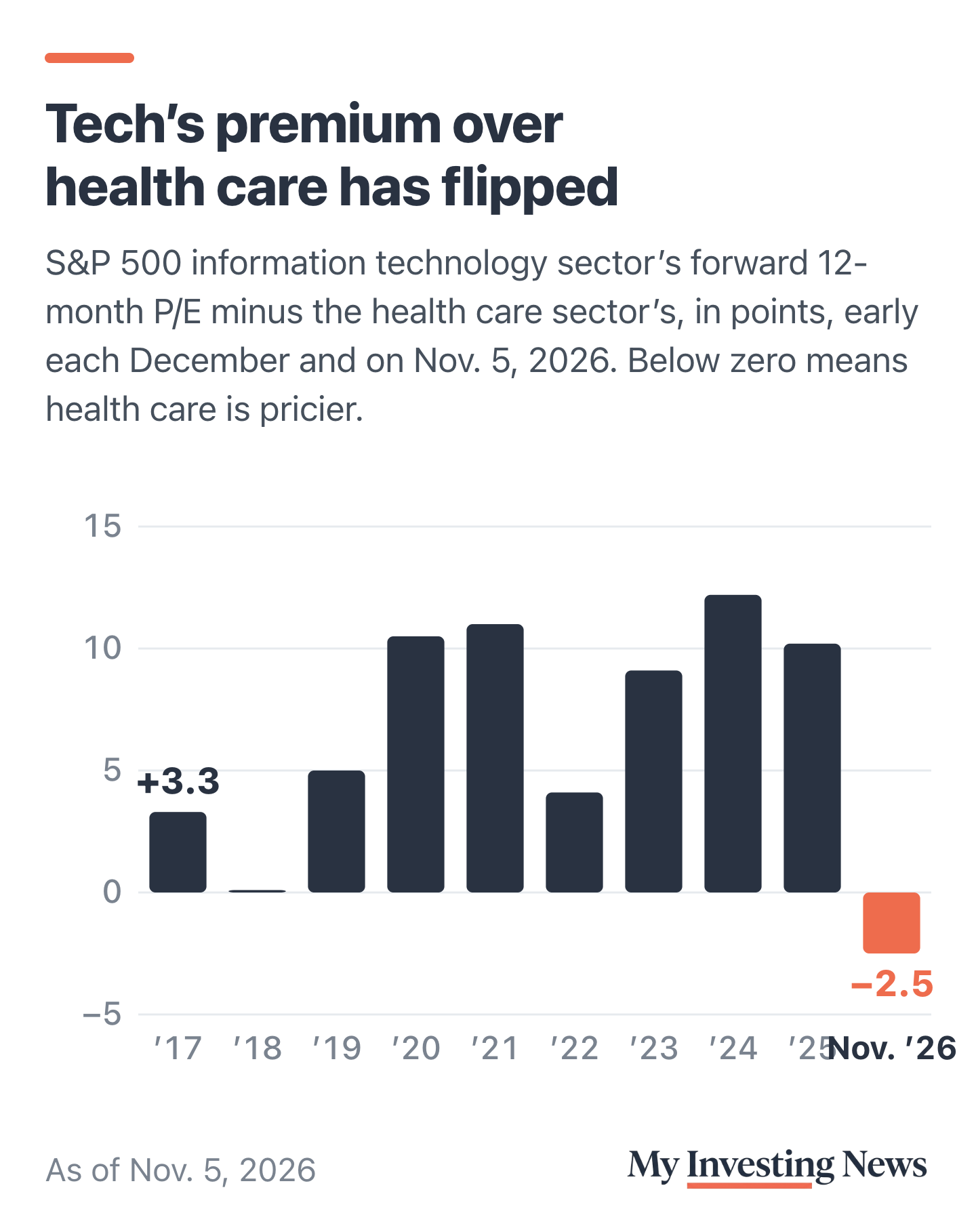
Most of the flip came from tech’s earnings rather than pharma’s price. Tech traded at 28.4 times in early December 2025, against 18.2 for health care. Since then analysts have raised profit forecasts so fast that tech’s multiple fell even as the Technology Select Sector SPDR fund XLK returned 19.1% this year through the Nov. 9 close, including dividends. Health care’s multiple rose modestly while its sector fund XLV returned 23.2% and the iShares U.S. Pharmaceuticals ETF IHE returned 30.5%. Lower multiples have shown up in single big tech names too: Carson Group’s Ryan Detrick has said Amazon is the cheapest it has been as a public company.
Pharma vs. tech, by the multiples
The Last Time Was About a Decade Ago
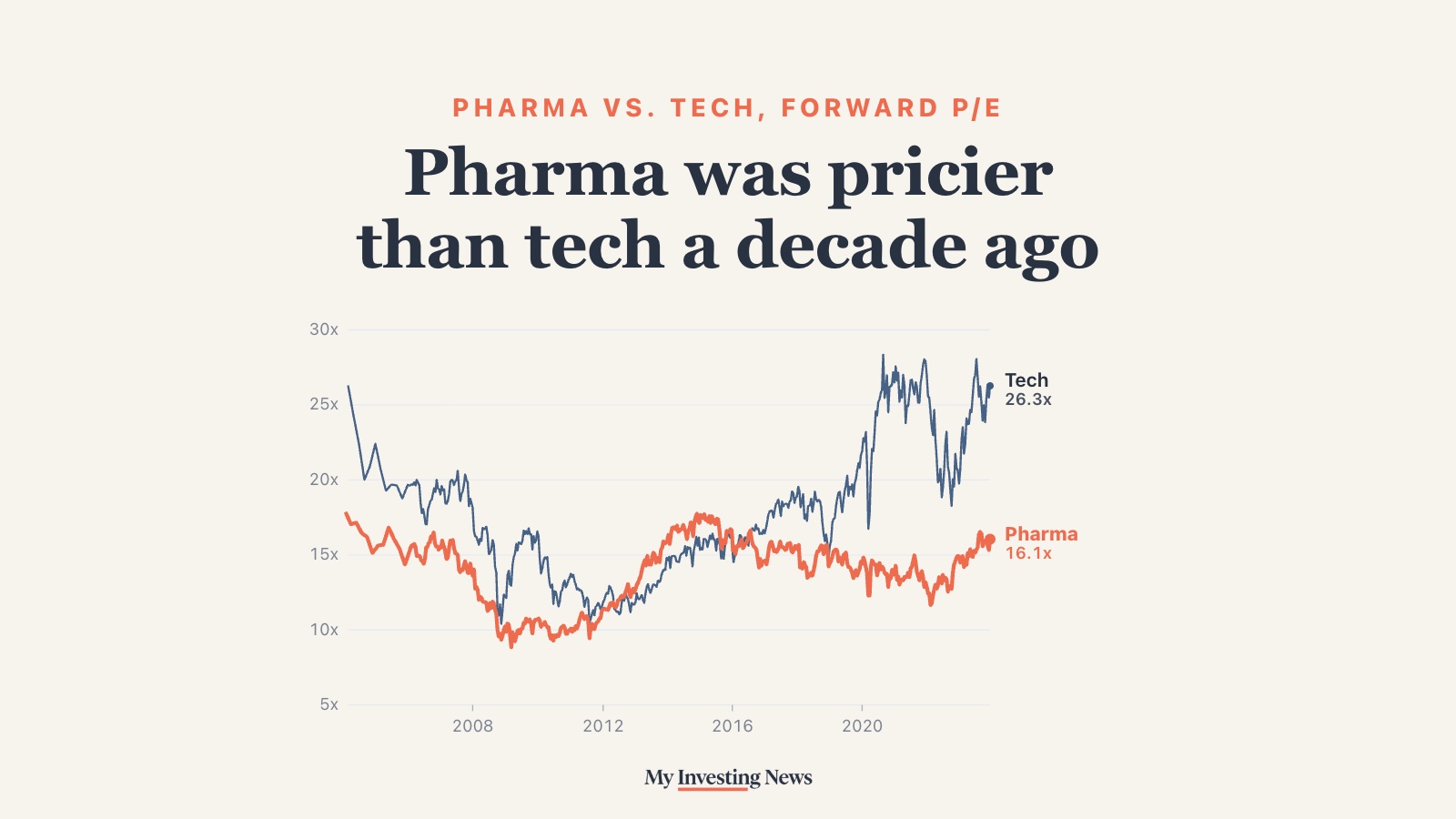
The “first time in 20 years” part is too long. Yardeni Research’s chart book of sector and industry forward P/Es, built on I/B/E/S analyst estimates and updated through December 2023, shows the S&P 500 pharmaceuticals industry trading above the tech sector from May 2012 to October 2015, by as much as 2.6 points, and again from late 2015 to March 2016. The health care sector as a whole was pricier than tech for most of the same stretch. Before that, pharma last carried the higher multiple in the late 1990s, before the dot-com peak.
FactSet’s own readings since 2017 show how rare the current gap is. Tech was pricier in every early-December reading, by up to 12.2 points in 2024. The closest call came in December 2018, after a fourth-quarter selloff hit tech, when the gap was a tenth of a point.
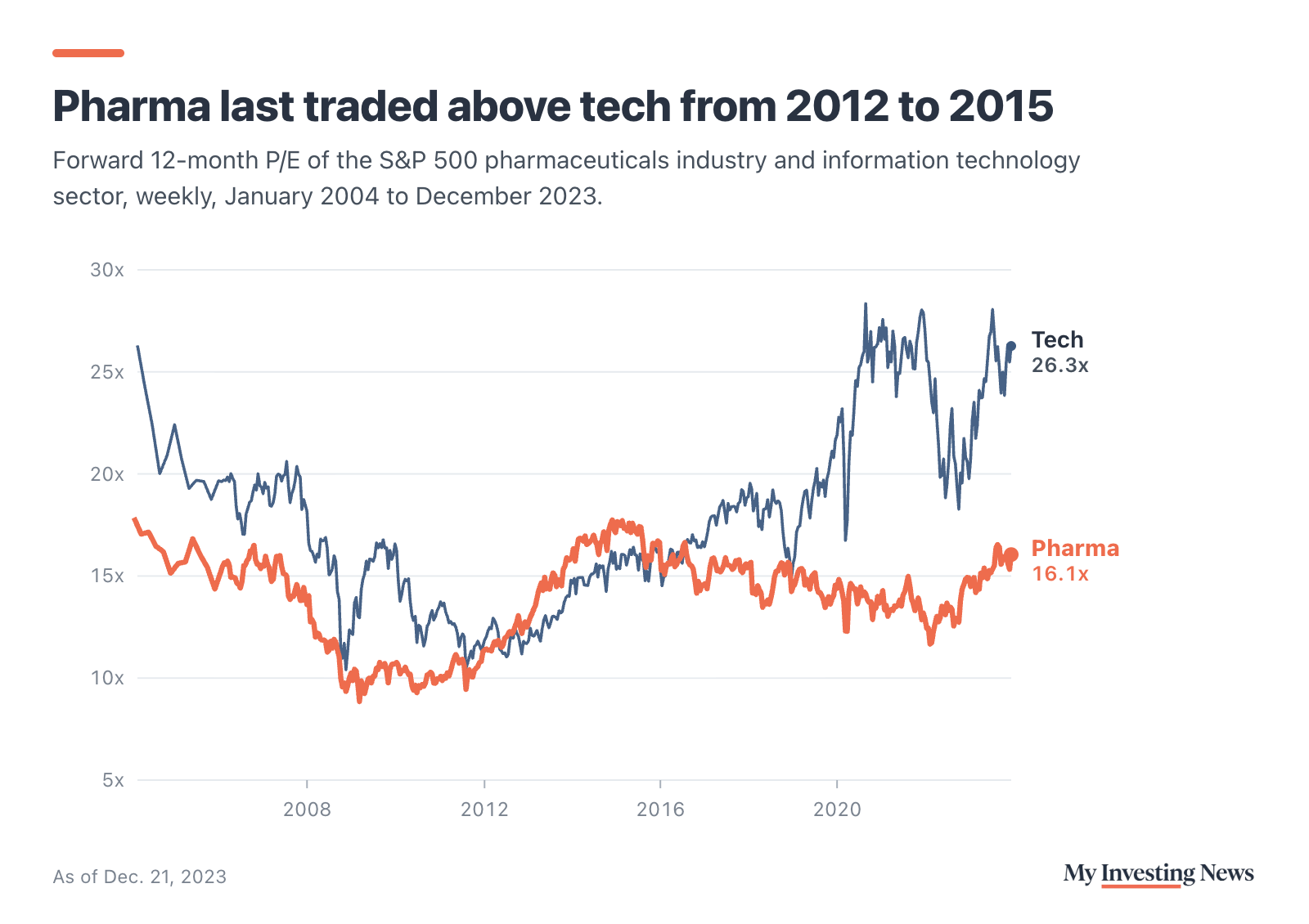
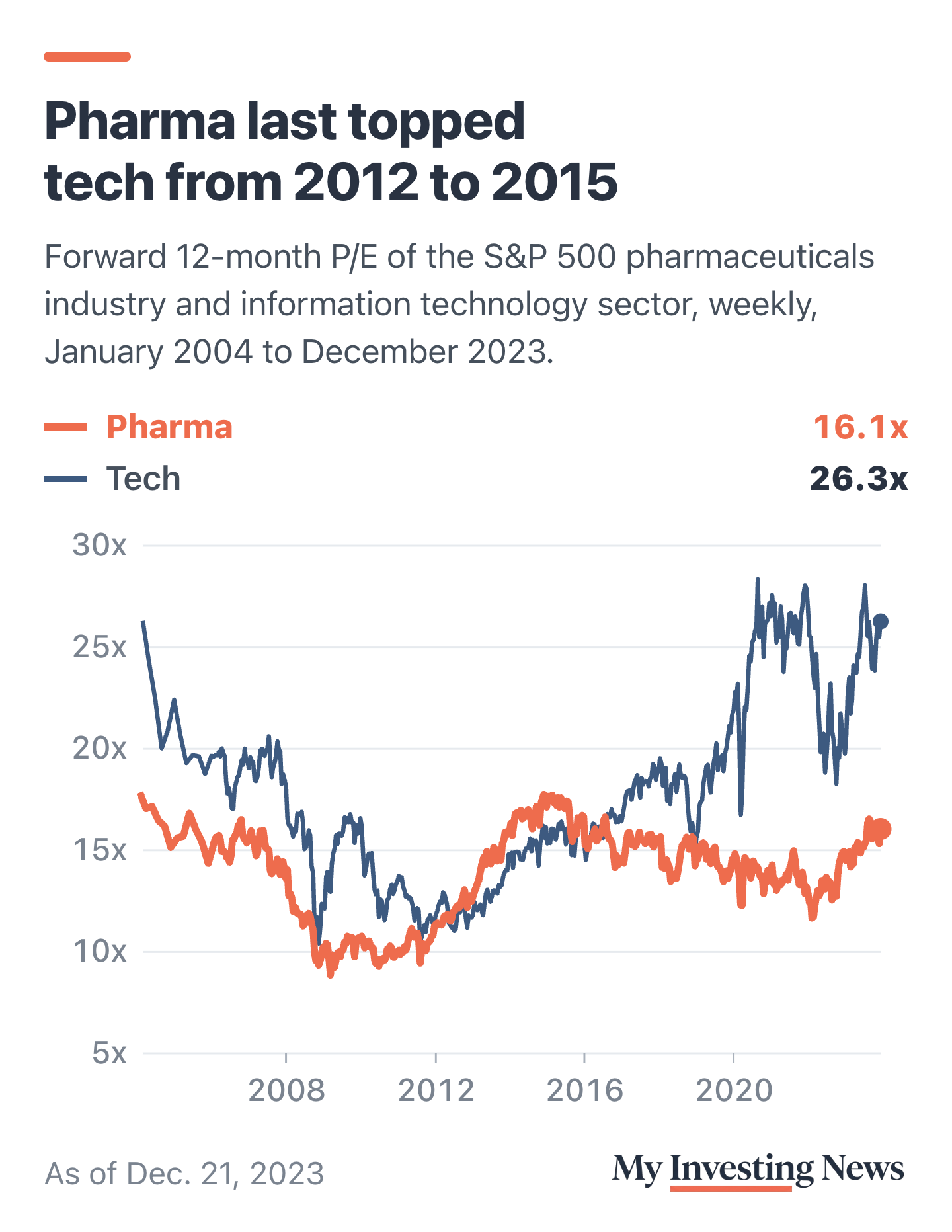
There is only one recent precedent, so treat it as an anecdote. While pharma held its premium from May 2012 through October 2015, the Health Care Select Sector SPDR returned 104.1% and the tech fund 62.2%, including dividends. In the 12 months after Oct. 30, 2015, when tech first moved back ahead, the pharma ETF lost 10.7% while the tech fund gained 10.7%.
The Politics and the Counterpoint
Holz’s caution is partly political. He noted that a lot had already been done on drug prices through the Inflation Reduction Act and by President Trump, but said Democrats “could come back at some point.” He also said investors are split between the next couple of years, when he doesn’t expect much to change, and 2028, when a Democratic president could change the picture.
Not everyone is fading the group. Lou Miller, global head of Goldman Sachs’ custom baskets business, said on the firm’s The Markets podcast on Nov. 6 that health care is the next leg of the AI trade, and “really one of the few sectors that we’re going to see accelerating growth next year.” That view runs against Franklin Templeton’s Jonathan Curtis, who said tech will be AI’s first and best user. Holz himself credited much of the Nov. 4 jump to money moving out of tech and into health care as a defensive or value sector.
What to Watch
FactSet updates the sector multiples every Friday. Watch whether tech’s earnings estimates keep rising, which would keep its multiple low even if the stocks climb, and whether drug-pricing bills gain traction in the new Congress, which takes office in January. Holz’s preferred alternative, medical device stocks, is the group to watch if he is right that pharma has run too far.
Holz is right that pharma now costs more than tech: health care traded at 19.8 times forward earnings on Nov. 5, against 17.3 for tech. But it isn’t a 20-year first. Pharma carried the higher multiple from 2012 into early 2016, and the flip this year came mostly from tech’s soaring profit forecasts.